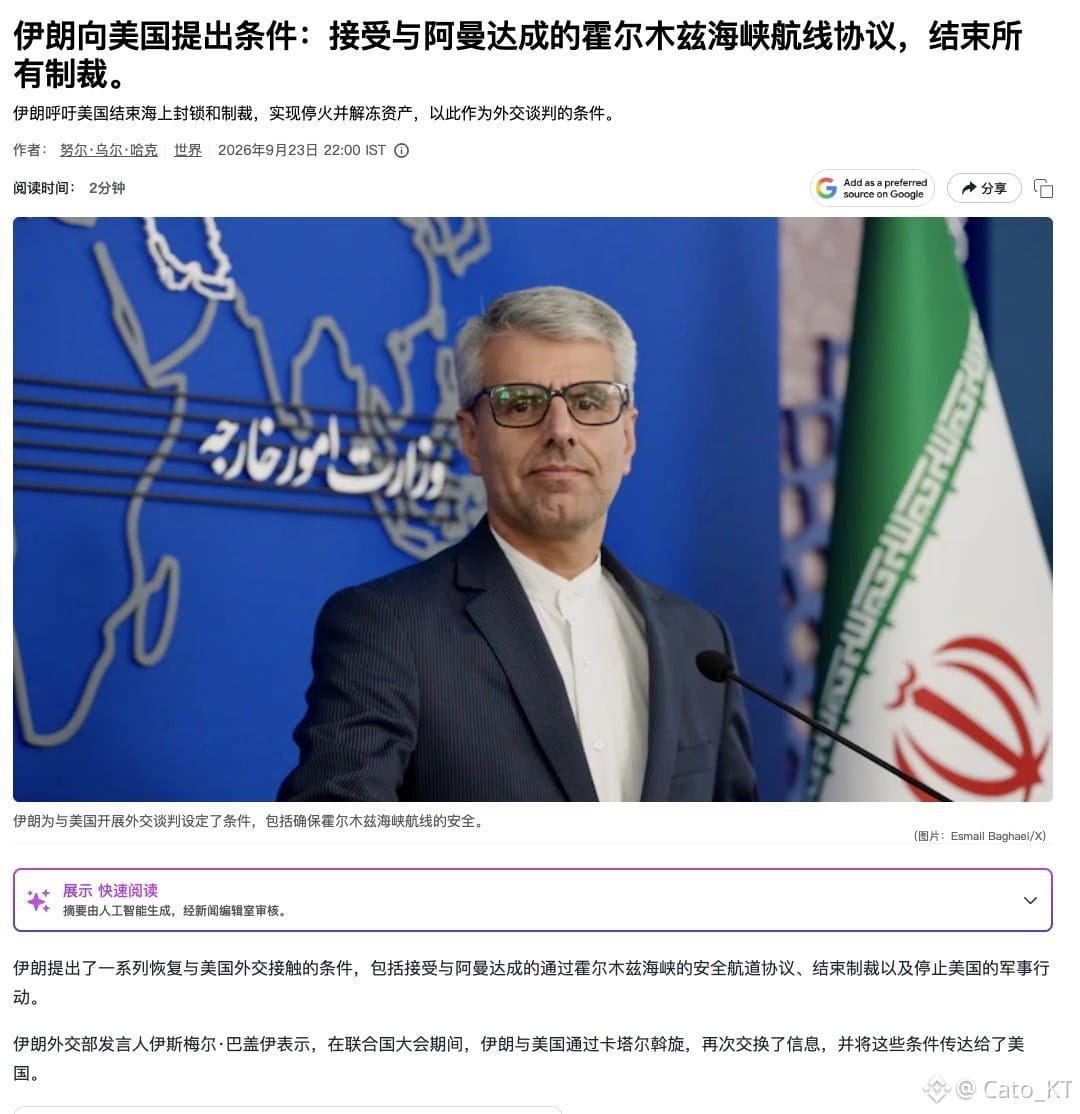
Optimistic expectations for the US-Iran return-to-talks negotiations should still be downgraded
Although the US and Iran delegations still have another meeting opportunity in the United States, before the meeting is confirmed, both sides have frequently raised the threshold for ceasefire and negotiations
Trump believes that an agreement can be reached only after the midterm elections; in reality, he wants to demonstrate that Iran cannot threaten his midterm election, which is an expression of political and diplomatic stance—but it also raises the threshold for US-Iran return-to-talks negotiations
As for Iran, there are internal doubts within the country about a meeting between Foreign Minister Hossein Amir-Abdollahian and the US envoy; this suggests a division of power internally in Iran, and that the authority granted to the foreign minister is constrained
On the other hand, Iran has already set a new Strait management plan with Oman as one of the key conditions for negotiations with the US, requiring the US to agree that if the US recognizes this plan, it would mean it has completely lost control over the strait and its influence in the Middle East
In the original plan, I thought Pakistan’s interior minister being in Tehran could play a “lubricating” role, but based on the current situation, both sides have raised the negotiation threshold. In the short term, it is indeed not possible to be too optimistic
#美国拟推动美元稳定币海外使用
Of course, in terms of the overall trend, I believe the US-Iran issue must eventually be resolved, but it requires a de-escalation opportunity. Whether it’s Iran or the US, both need to de-escalate from the existing conditions in order to truly return to the main track of negotiations. This is where China’s ability to mediate comes into play—ordinary people can’t mediate effectively!
Although the US and Iran delegations still have another meeting opportunity in the United States, before the meeting is confirmed, both sides have frequently raised the threshold for ceasefire and negotiations
Trump believes that an agreement can be reached only after the midterm elections; in reality, he wants to demonstrate that Iran cannot threaten his midterm election, which is an expression of political and diplomatic stance—but it also raises the threshold for US-Iran return-to-talks negotiations
As for Iran, there are internal doubts within the country about a meeting between Foreign Minister Hossein Amir-Abdollahian and the US envoy; this suggests a division of power internally in Iran, and that the authority granted to the foreign minister is constrained
On the other hand, Iran has already set a new Strait management plan with Oman as one of the key conditions for negotiations with the US, requiring the US to agree that if the US recognizes this plan, it would mean it has completely lost control over the strait and its influence in the Middle East
In the original plan, I thought Pakistan’s interior minister being in Tehran could play a “lubricating” role, but based on the current situation, both sides have raised the negotiation threshold. In the short term, it is indeed not possible to be too optimistic
#美国拟推动美元稳定币海外使用
Of course, in terms of the overall trend, I believe the US-Iran issue must eventually be resolved, but it requires a de-escalation opportunity. Whether it’s Iran or the US, both need to de-escalate from the existing conditions in order to truly return to the main track of negotiations. This is where China’s ability to mediate comes into play—ordinary people can’t mediate effectively!