For friends whose contract principal is less than 3000 USDT, spend one minute reading this first—it can help you avoid half a year of detours and say goodbye to blind trading decisions.
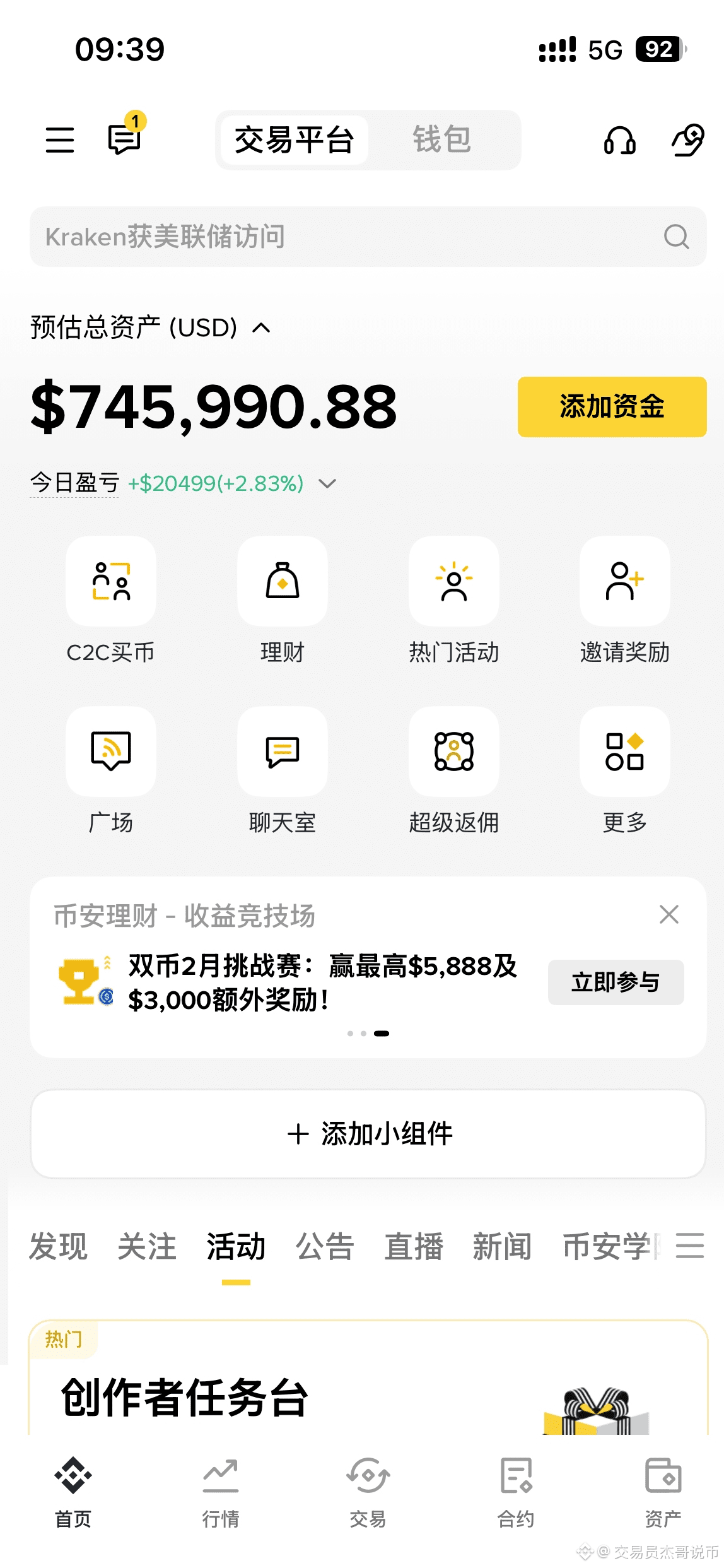
I once knew a new trader who had just entered the market. At his lowest, his account only had 1900 USDT left. He was standing right on the edge of liquidation and almost quit on the spot. Later, he calmed down and changed his strategy. Over five months, he slowly grew it to 110,000 USDT. Now his account is already stable above 320,000 USDT. Throughout the whole time, he didn’t rely on luck—he just followed three hands-on ideas that nobody casually explains.
First, completely quit the bad habit of “all-in.” Split your available funds evenly into three parts: one part for short-term trades—only take clearly defined, small intraday swings, and once you reach your preset target, exit immediately. Never get greedy for the last bit of profit; one part reserved specifically for waiting for major trend opportunities—don’t use it for frequent short-term trading and fiddling; and the final part as emergency capital—unless you have absolute confidence, don’t use it. The biggest advantage of small capital has never been making money quickly; it’s being able to stay in the market longer.
Second, only trade the certain trends you can actually understand. Most of the time, the market is just grinding sideways and wearing people down. If there’s no opportunity, wait patiently. Only act after you truly confirm the trend. People who open trades every day are mostly just helping the platform rack up fees. Those who can consistently profit are usually the ones who can endure and wait for signals.
Third, use iron discipline to contain your trading. Risk on any single trade loss must be strictly capped within what you can tolerate; once your stop-loss triggers, you exit immediately. When profits reach a stage target, take a portion of the gains off the table first, and let the remaining position move with the market. Never “average down” a losing trade—don’t use new mistakes to cover up earlier judgment errors.
There’s no shortcut for growing large with small capital. Trade less, keep positions light, and follow the rules. Step by step, one trade at a time, and time will naturally give you the results.
I once knew a new trader who had just entered the market. At his lowest, his account only had 1900 USDT left. He was standing right on the edge of liquidation and almost quit on the spot. Later, he calmed down and changed his strategy. Over five months, he slowly grew it to 110,000 USDT. Now his account is already stable above 320,000 USDT. Throughout the whole time, he didn’t rely on luck—he just followed three hands-on ideas that nobody casually explains.
First, completely quit the bad habit of “all-in.” Split your available funds evenly into three parts: one part for short-term trades—only take clearly defined, small intraday swings, and once you reach your preset target, exit immediately. Never get greedy for the last bit of profit; one part reserved specifically for waiting for major trend opportunities—don’t use it for frequent short-term trading and fiddling; and the final part as emergency capital—unless you have absolute confidence, don’t use it. The biggest advantage of small capital has never been making money quickly; it’s being able to stay in the market longer.
Second, only trade the certain trends you can actually understand. Most of the time, the market is just grinding sideways and wearing people down. If there’s no opportunity, wait patiently. Only act after you truly confirm the trend. People who open trades every day are mostly just helping the platform rack up fees. Those who can consistently profit are usually the ones who can endure and wait for signals.
Third, use iron discipline to contain your trading. Risk on any single trade loss must be strictly capped within what you can tolerate; once your stop-loss triggers, you exit immediately. When profits reach a stage target, take a portion of the gains off the table first, and let the remaining position move with the market. Never “average down” a losing trade—don’t use new mistakes to cover up earlier judgment errors.
There’s no shortcut for growing large with small capital. Trade less, keep positions light, and follow the rules. Step by step, one trade at a time, and time will naturally give you the results.