I compared and filtered a range of candidates. After taking into account each asset’s current valuation level, volatility, and risk-reward ratio, I reviewed both US stocks and the crypto market. In the end, I chose to set up a position in ETH with #ETH .
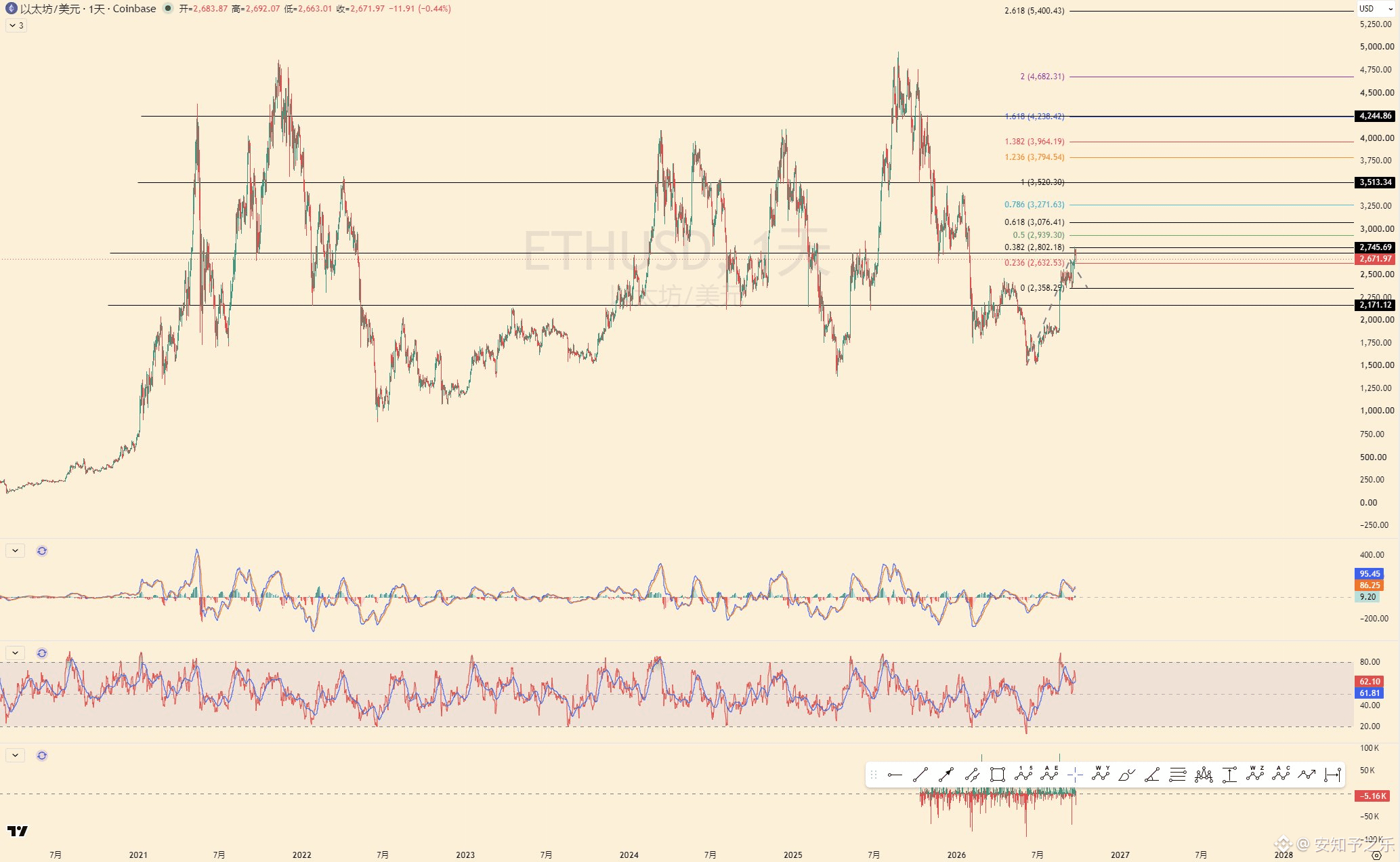
ETH’s price movement has always been quite orderly: below 2200 is a weak range; 2100–2800 is a neutral consolidation range; only after it holds above 2800 can it be considered a strong range.
The current market is gradually switching from the weak phase into the middle range. Based on past performance, once ETH effectively breaks above 2800, it’s very likely to kick off an accelerated uptrend.
So this time’s trading plan: use 10% of the profit funds. Pre-set the maximum loss for this tranche at 10%. Enter the ETH position with an opening reference price of 2400.
This order is defined as a “faith-driven flexible position,” intended for a medium-term hold. As for whether to add to the position later—and at what level to add—I'll decide while watching how the market evolves. There are two key points to weigh:
1. Should I add to the position when the current price reaches the 2400 area? If I don’t add, is it guaranteed that the market will drop to 2400—or even break below it?
2. The 2200–2400 zone is a high-value entry area, but the closer it is to 2200, the higher the risk. This level is an “extreme test” zone. The characteristic of this ETH cycle is that it doesn’t dip deeply; it replaces pullbacks with sideways consolidation. If the trading style changes, it will be important to determine whether it’s just a bull trap/stop-run or whether the trend has truly deteriorated.
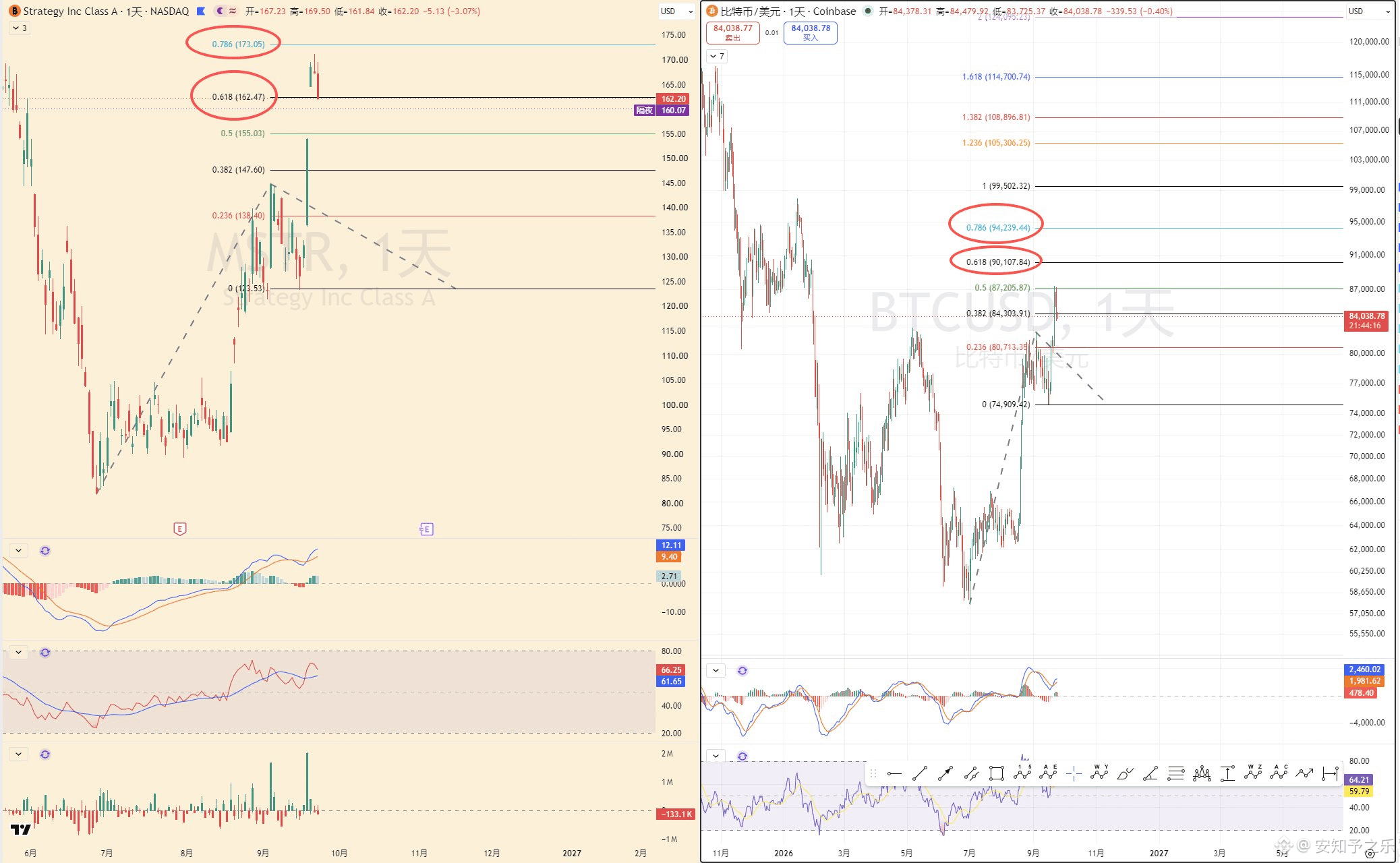
By the way, regarding BTC (the big pie), the current chart pattern somewhat resembles the first segment of a 5-wave structure. But compared with MSTR’s走势, the two look and feel completely different on the chart.
Given the current market, you can use profits to bet on this wave. At this stage, the bigger risk actually comes from missing the opportunity (being left behind).
ETH’s price movement has always been quite orderly: below 2200 is a weak range; 2100–2800 is a neutral consolidation range; only after it holds above 2800 can it be considered a strong range.
The current market is gradually switching from the weak phase into the middle range. Based on past performance, once ETH effectively breaks above 2800, it’s very likely to kick off an accelerated uptrend.
So this time’s trading plan: use 10% of the profit funds. Pre-set the maximum loss for this tranche at 10%. Enter the ETH position with an opening reference price of 2400.
This order is defined as a “faith-driven flexible position,” intended for a medium-term hold. As for whether to add to the position later—and at what level to add—I'll decide while watching how the market evolves. There are two key points to weigh:
1. Should I add to the position when the current price reaches the 2400 area? If I don’t add, is it guaranteed that the market will drop to 2400—or even break below it?
2. The 2200–2400 zone is a high-value entry area, but the closer it is to 2200, the higher the risk. This level is an “extreme test” zone. The characteristic of this ETH cycle is that it doesn’t dip deeply; it replaces pullbacks with sideways consolidation. If the trading style changes, it will be important to determine whether it’s just a bull trap/stop-run or whether the trend has truly deteriorated.
By the way, regarding BTC (the big pie), the current chart pattern somewhat resembles the first segment of a 5-wave structure. But compared with MSTR’s走势, the two look and feel completely different on the chart.
Given the current market, you can use profits to bet on this wave. At this stage, the bigger risk actually comes from missing the opportunity (being left behind).