#21shares推出欧洲首只zcash实物etp
This news is actually a bit strange..
💰 实时行情追踪
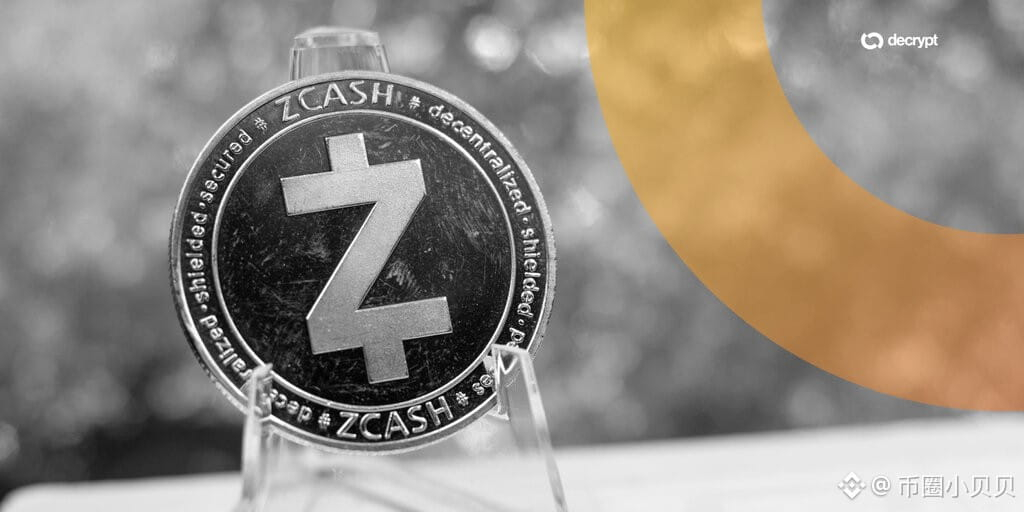
Europe just listed the first physical ZEC-backed ETP. The issuer is 21Shares. On September 22, it was posted on the pan-European exchanges in Paris and Amsterdam under the ticker ZCASH.. A kind of asset that earns its place by being “unseen,” yet this time it chose the most disclosure-heavy venue possible.
Most people, when they get here, focus on the line: “Privacy coins are being accepted by the mainstream.”..
But what’s truly worth watching is the fee tag.. The product charges an annual fee of 2.5%, which is far higher than the Bitcoin and Ethereum ETPs on the same batch of exchanges.. Even more interesting: on its first day it only listed 5,000 units, with a NAV of $20.04, for a total size of roughly $100,000.
Charging the highest fee while operating at the smallest scale—that’s where things start to get different..
What it’s selling now isn’t scale, it’s eligibility.. The product is physically held, with the custodian BitGo. Orders can be placed directly from European brokerage accounts—no need to open an exchange account, and no need to deal with private keys.. Put simply, people willing to pay that 2.5% aren’t buying “privacy” itself; they’re buying the action of finally being able to put this thing into their account.
The funding route is already pretty clear.. On August 25, Grayscale’s ZEC trust converted into an ETF and listed on NYSE Arca. Since then, it has accumulated nearly $890 million. On September 30, it will still do a 3-for-1 split, pushing the price per share down so retail investors can buy smaller units.. Europe’s version only had $100,000 on day one, but what it obtained is the entry point to determine whether European capital can touch ZEC. First comes the container, then the funds—this order can’t be reversed.
This is where it gets a little thought-provoking.. ZEC is up 2,700% this year, with market cap reaching $27.5 billion, ranking ninth among crypto assets.. Last week, token holders voted: 98.9% chose to keep the Bitcoin-style halving model—meaning the supply-side rules remain locked in.. On one side, supply is controlled by rules; on the other, demand has just started lining up at traditional brokerages. Both sides are squeezing in the same direction.
But here’s the question: what exactly is the price trading.. Today it surged to around $1,680 intraday, then fell back to $1,522—down 6.6% in a day.. If it were only that “privacy demand is increasing,” this product likely wouldn’t have produced such a pattern in its very first week on the European venue.. It feels more like it’s trading a position: among privacy assets that can currently be wrapped into compliance-friendly accounts, only it exists. The scarcity is this position, not the technology itself.
What’s really worth watching is whether this channel can actually connect with volume.. If it does, privacy-type assets will, for the first time, have continuous price discovery on the traditional shelf. After that, there will likely be a second and third similar product that goes through the same approval process; if it doesn’t, then today is just another product filling a slot.
The twist is on the other end.. For an asset built on “not being seen,” the most expensive selling point right now is precisely that it can be custodied in a way that is visible.. If, one day, rules require these products to disclose the flow of underlying addresses, then the premise that the container exists weakens. When that happens, looking back at the 2.5% annual fee will taste very different.
This news is actually a bit strange..
💰 实时行情追踪
Europe just listed the first physical ZEC-backed ETP. The issuer is 21Shares. On September 22, it was posted on the pan-European exchanges in Paris and Amsterdam under the ticker ZCASH.. A kind of asset that earns its place by being “unseen,” yet this time it chose the most disclosure-heavy venue possible.
Most people, when they get here, focus on the line: “Privacy coins are being accepted by the mainstream.”..
But what’s truly worth watching is the fee tag.. The product charges an annual fee of 2.5%, which is far higher than the Bitcoin and Ethereum ETPs on the same batch of exchanges.. Even more interesting: on its first day it only listed 5,000 units, with a NAV of $20.04, for a total size of roughly $100,000.
Charging the highest fee while operating at the smallest scale—that’s where things start to get different..
What it’s selling now isn’t scale, it’s eligibility.. The product is physically held, with the custodian BitGo. Orders can be placed directly from European brokerage accounts—no need to open an exchange account, and no need to deal with private keys.. Put simply, people willing to pay that 2.5% aren’t buying “privacy” itself; they’re buying the action of finally being able to put this thing into their account.
The funding route is already pretty clear.. On August 25, Grayscale’s ZEC trust converted into an ETF and listed on NYSE Arca. Since then, it has accumulated nearly $890 million. On September 30, it will still do a 3-for-1 split, pushing the price per share down so retail investors can buy smaller units.. Europe’s version only had $100,000 on day one, but what it obtained is the entry point to determine whether European capital can touch ZEC. First comes the container, then the funds—this order can’t be reversed.
This is where it gets a little thought-provoking.. ZEC is up 2,700% this year, with market cap reaching $27.5 billion, ranking ninth among crypto assets.. Last week, token holders voted: 98.9% chose to keep the Bitcoin-style halving model—meaning the supply-side rules remain locked in.. On one side, supply is controlled by rules; on the other, demand has just started lining up at traditional brokerages. Both sides are squeezing in the same direction.
But here’s the question: what exactly is the price trading.. Today it surged to around $1,680 intraday, then fell back to $1,522—down 6.6% in a day.. If it were only that “privacy demand is increasing,” this product likely wouldn’t have produced such a pattern in its very first week on the European venue.. It feels more like it’s trading a position: among privacy assets that can currently be wrapped into compliance-friendly accounts, only it exists. The scarcity is this position, not the technology itself.
What’s really worth watching is whether this channel can actually connect with volume.. If it does, privacy-type assets will, for the first time, have continuous price discovery on the traditional shelf. After that, there will likely be a second and third similar product that goes through the same approval process; if it doesn’t, then today is just another product filling a slot.
The twist is on the other end.. For an asset built on “not being seen,” the most expensive selling point right now is precisely that it can be custodied in a way that is visible.. If, one day, rules require these products to disclose the flow of underlying addresses, then the premise that the container exists weakens. When that happens, looking back at the 2.5% annual fee will taste very different.