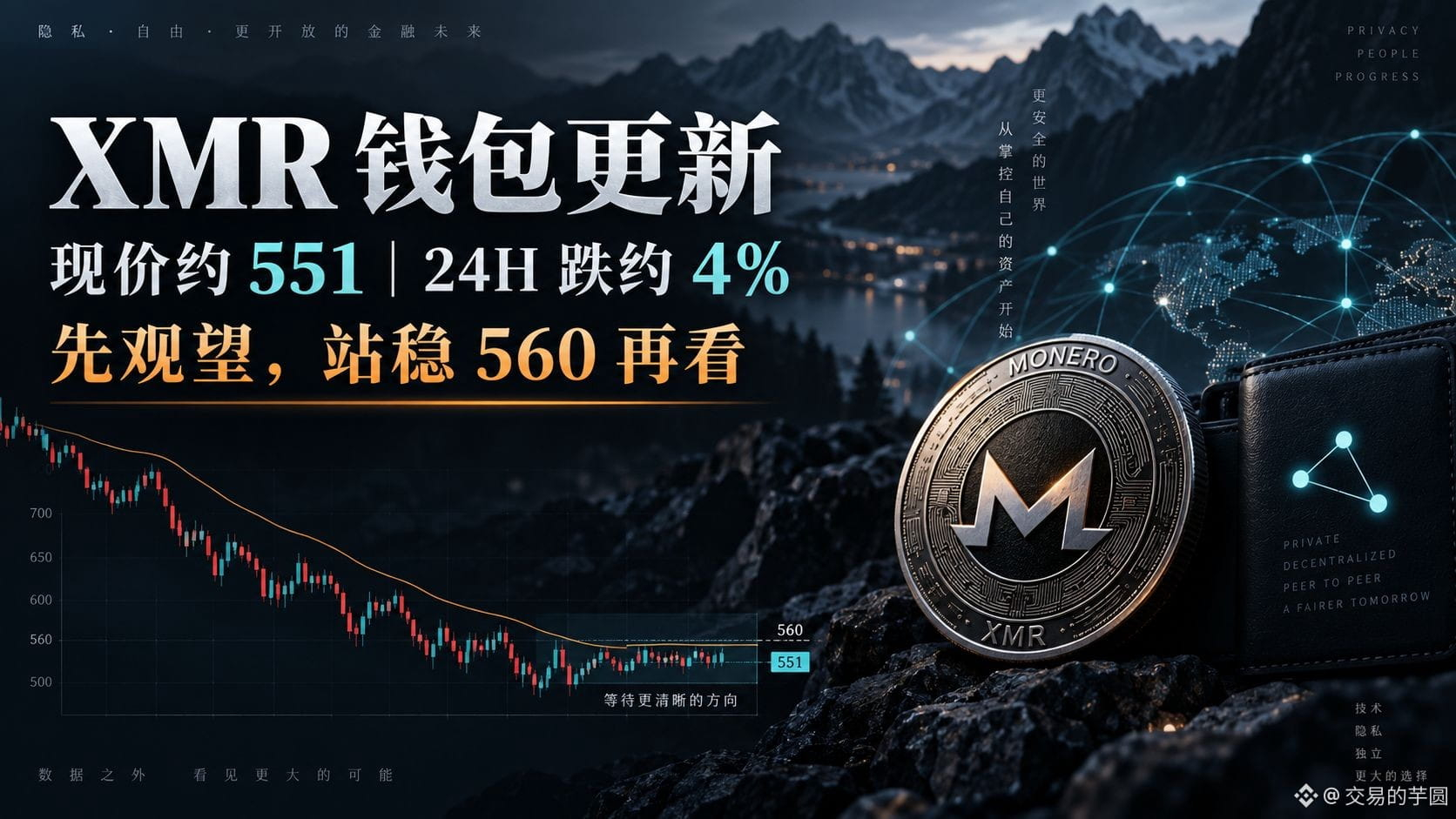
XMR wallet update released|Price still down about 4%|I’ll wait for confirmation of a reversal
My stance is cautious observation—I don’t equate immediate wallet-experience improvements with the coin price hitting the bottom. Cake Wallet’s official GitHub published v6.4.5 on September 20, indicating optimizations to the Monero core back-end performance, synchronization speed, and node-connection stability. It also includes improvements to the Trezor experience, UI, and bug fixes. Here we need to draw clear boundaries for the facts: this is a third-party wallet version update, not a Monero mainnet hard fork, not FCMP++ already launched, and you also can’t infer from it that on-chain transaction volume or new capital inflows have increased. The official release page lists installation packages and SHA-256 checksums. If holders want to upgrade, they should download from official channels and verify the files—never enter seed phrases in community links.
Why is this worth traders looking at? The long-term usage threshold for privacy coins isn’t only in the protocol—it’s also in synchronization, node connectivity, and the self-custody experience. A more stable wallet connection, in theory, can reduce friction from new users’ failed operations and from older users dropping off. But this is a slow-moving variable; its transmission to short-term price is far weaker than whole-market liquidity, regulatory expectations, and options/contract positioning. If you treat this product iteration as an instant buy-side catalyst, it’s easy to overestimate the good news during a downtrend. Especially for XMR, trading depth differs from mainstream coins, so sharp selloffs and quick rebounds can amplify slippage. Your plan must first consider whether you can exit on a stop loss.
The market has provided a fairly restrained answer: when I checked KuCoin’s public XMR perpetual contract, the latest trade was about $550.82. The page shows a 24-hour high of 578.8 and a low of 518.24, with a 24-hour change of roughly -4.35%. This can only indicate where the current quote sits within that range—it does not prove the drop was caused by the wallet update. The news has been out for several days. What matters now is whether the price can re-establish itself above 550 and reclaim the short-term sell-pressure zone. The area near 518 is the day’s already-seen low and shouldn’t be claimed as a guaranteed effective support. If that low is broken again and the rebound lacks strength, my short-term “stabilizing” view will be invalidated. If price puts volume behind it and returns to 560–565, then there’s room to discuss a repair toward around 578.
If I were trading this myself, I wouldn’t chase shorts or buy the dip. Direction is currently set to wait and watch, with position size at 0%. Only if the spot price prints two consecutive complete 15-minute candles closing above $560, then pulls back to 556–560 without breaking it, and trading activity doesn’t visibly fade, would I consider going long with at most 0.5% of total funds. First target: 568–572—reduce half on first touch. Second target: 576–579—close the remaining position in batches. I won’t add on because of the wallet news. After entry, if the 15-minute close falls below 552, I’ll first cut half of the remaining position. If it breaks 545, I’ll stop out and close everything. If it breaks 518 first, my original plan is canceled and I’ll wait for a new structure—no adding to losses with leverage. When message news and price action conflict, I prioritize price. I’d rather do less, rather than mistakenly read “long-term experience improvements” as “short-term buy-side confirmation.”
#XMR
The above is only my personal market observation and does not constitute investment advice.
My stance is cautious observation—I don’t equate immediate wallet-experience improvements with the coin price hitting the bottom. Cake Wallet’s official GitHub published v6.4.5 on September 20, indicating optimizations to the Monero core back-end performance, synchronization speed, and node-connection stability. It also includes improvements to the Trezor experience, UI, and bug fixes. Here we need to draw clear boundaries for the facts: this is a third-party wallet version update, not a Monero mainnet hard fork, not FCMP++ already launched, and you also can’t infer from it that on-chain transaction volume or new capital inflows have increased. The official release page lists installation packages and SHA-256 checksums. If holders want to upgrade, they should download from official channels and verify the files—never enter seed phrases in community links.
Why is this worth traders looking at? The long-term usage threshold for privacy coins isn’t only in the protocol—it’s also in synchronization, node connectivity, and the self-custody experience. A more stable wallet connection, in theory, can reduce friction from new users’ failed operations and from older users dropping off. But this is a slow-moving variable; its transmission to short-term price is far weaker than whole-market liquidity, regulatory expectations, and options/contract positioning. If you treat this product iteration as an instant buy-side catalyst, it’s easy to overestimate the good news during a downtrend. Especially for XMR, trading depth differs from mainstream coins, so sharp selloffs and quick rebounds can amplify slippage. Your plan must first consider whether you can exit on a stop loss.
The market has provided a fairly restrained answer: when I checked KuCoin’s public XMR perpetual contract, the latest trade was about $550.82. The page shows a 24-hour high of 578.8 and a low of 518.24, with a 24-hour change of roughly -4.35%. This can only indicate where the current quote sits within that range—it does not prove the drop was caused by the wallet update. The news has been out for several days. What matters now is whether the price can re-establish itself above 550 and reclaim the short-term sell-pressure zone. The area near 518 is the day’s already-seen low and shouldn’t be claimed as a guaranteed effective support. If that low is broken again and the rebound lacks strength, my short-term “stabilizing” view will be invalidated. If price puts volume behind it and returns to 560–565, then there’s room to discuss a repair toward around 578.
If I were trading this myself, I wouldn’t chase shorts or buy the dip. Direction is currently set to wait and watch, with position size at 0%. Only if the spot price prints two consecutive complete 15-minute candles closing above $560, then pulls back to 556–560 without breaking it, and trading activity doesn’t visibly fade, would I consider going long with at most 0.5% of total funds. First target: 568–572—reduce half on first touch. Second target: 576–579—close the remaining position in batches. I won’t add on because of the wallet news. After entry, if the 15-minute close falls below 552, I’ll first cut half of the remaining position. If it breaks 545, I’ll stop out and close everything. If it breaks 518 first, my original plan is canceled and I’ll wait for a new structure—no adding to losses with leverage. When message news and price action conflict, I prioritize price. I’d rather do less, rather than mistakenly read “long-term experience improvements” as “short-term buy-side confirmation.”
#XMR
The above is only my personal market observation and does not constitute investment advice.