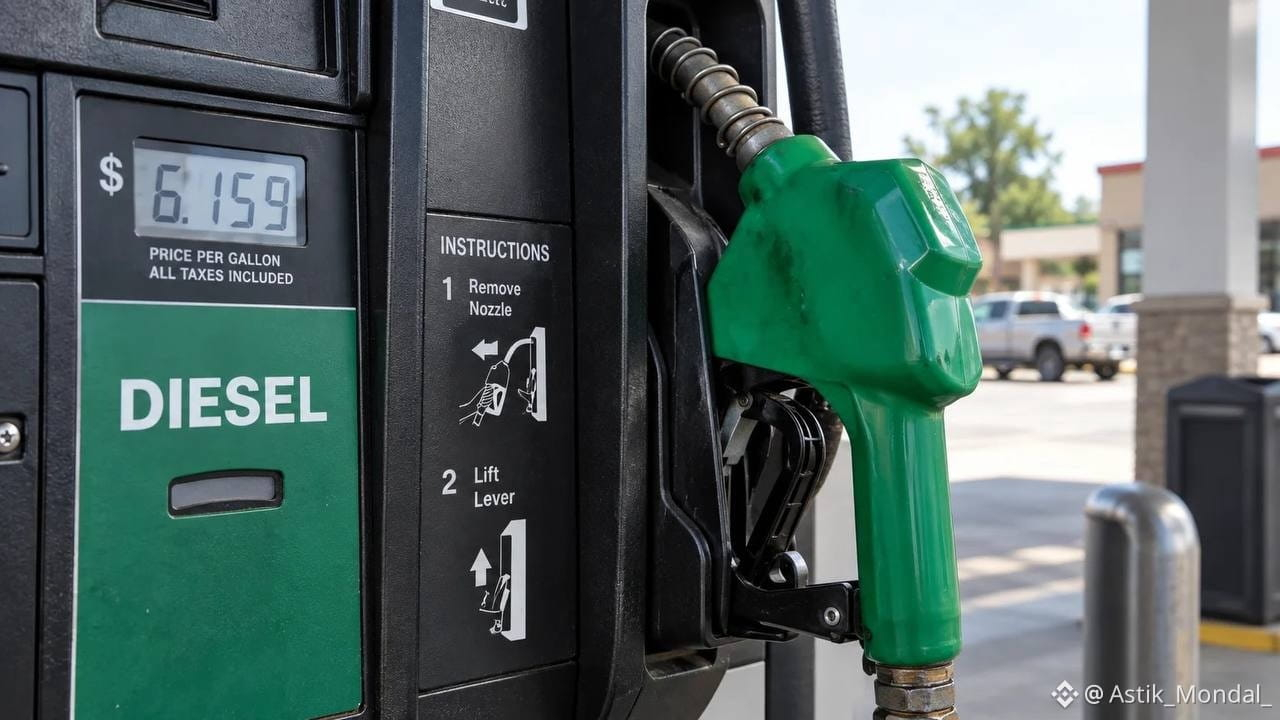
🚨 BREAKING: TRUMP IS CONSIDERING A 90-DAY U.S. DIESEL EXPORT BAN AND THE PLAN COULD SEND SHOCKWAVES THROUGH ENERGY MARKETS.
U.S. diesel prices have surged to a record around $6.52 per gallon, putting enormous pressure on farmers, truckers and businesses ahead of the November midterms. Trump has backed the idea and said a decision could come quickly.
But there’s a major problem:
Energy Secretary Chris Wright now says an outright diesel export ban “definitely doesn’t work.”
Why?
U.S. refineries don’t only produce diesel.
If exports are blocked and storage fills up, refiners could be forced to cut production.
That means LESS diesel refining capacity while gasoline and jet-fuel output could also fall.
Analysts estimate a full ban could force U.S. refinery runs down by roughly 1.9–2 MILLION barrels per day.
That’s roughly 12% of total U.S. refinery throughput.
And the consequences could spread far beyond diesel:
Higher gasoline prices.
Higher jet-fuel costs.
Higher transportation expenses.
Higher food costs.
More inflation pressure.
The policy is intended to make fuel cheaper for Americans.
But the refining bottleneck means the exact opposite could happen.
The U.S. is now caught between two forces:
Protect domestic consumers from record diesel prices Or keep fuel flowing through global markets to preserve refinery economics.
The decision could become one of the biggest energy-market stories heading into the midterms.
And traders are watching closely.
#Diesel #Oil #Energy #Inflation #Markets $CL $BZ
U.S. diesel prices have surged to a record around $6.52 per gallon, putting enormous pressure on farmers, truckers and businesses ahead of the November midterms. Trump has backed the idea and said a decision could come quickly.
But there’s a major problem:
Energy Secretary Chris Wright now says an outright diesel export ban “definitely doesn’t work.”
Why?
U.S. refineries don’t only produce diesel.
If exports are blocked and storage fills up, refiners could be forced to cut production.
That means LESS diesel refining capacity while gasoline and jet-fuel output could also fall.
Analysts estimate a full ban could force U.S. refinery runs down by roughly 1.9–2 MILLION barrels per day.
That’s roughly 12% of total U.S. refinery throughput.
And the consequences could spread far beyond diesel:
Higher gasoline prices.
Higher jet-fuel costs.
Higher transportation expenses.
Higher food costs.
More inflation pressure.
The policy is intended to make fuel cheaper for Americans.
But the refining bottleneck means the exact opposite could happen.
The U.S. is now caught between two forces:
Protect domestic consumers from record diesel prices Or keep fuel flowing through global markets to preserve refinery economics.
The decision could become one of the biggest energy-market stories heading into the midterms.
And traders are watching closely.
#Diesel #Oil #Energy #Inflation #Markets $CL $BZ