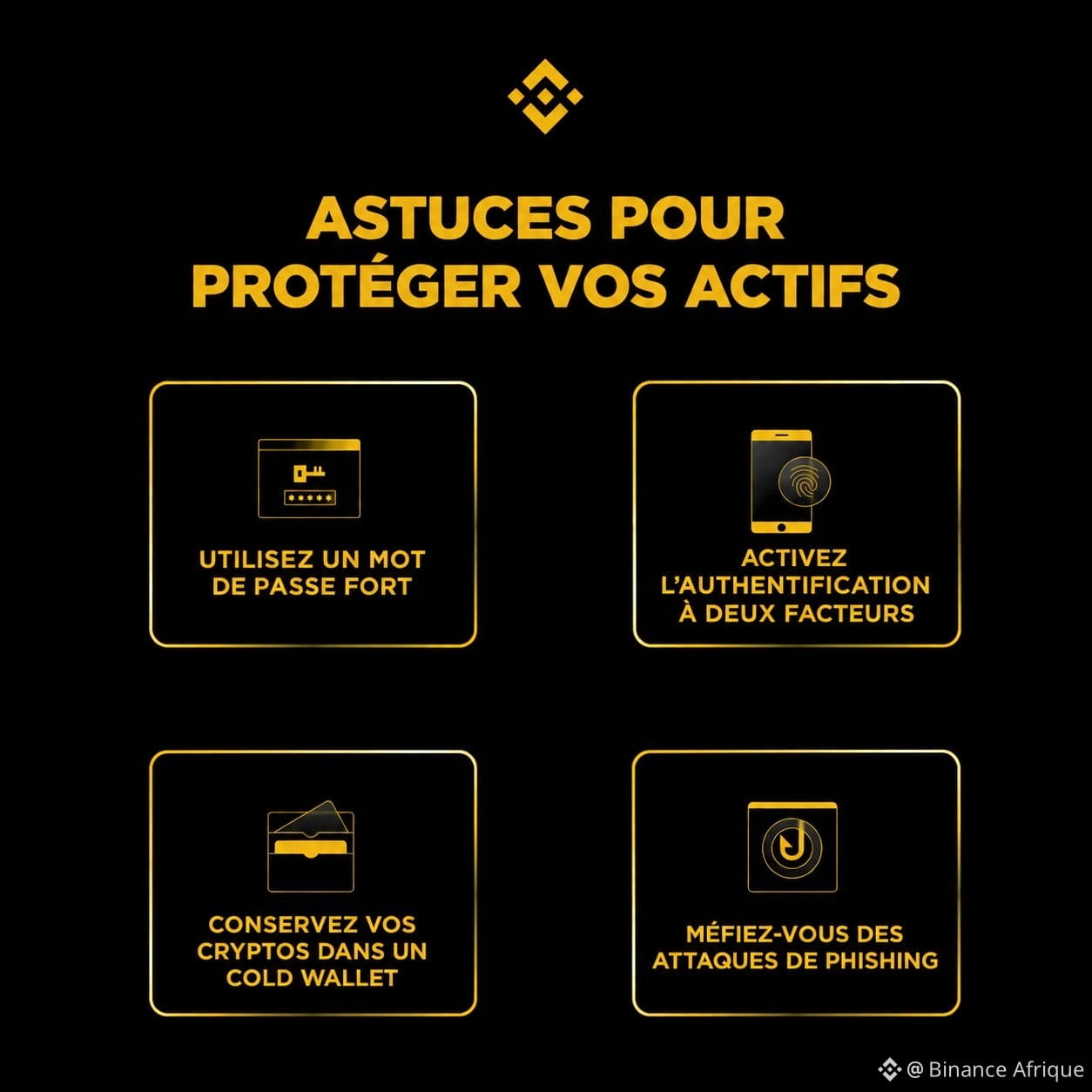

Security works like overlapping layers. Each one addresses a specific risk.
Layer 1 - Authentication: a complex password prevents basic brute-force attacks. No patterns, no dictionary words. It’s the first barrier.
Layer 2 - Verification: 2FA (two-factor authentication) requires a second element after the password. Even if someone cracks it, they’re still blocked. Use an app, not SMS.
Layer 3 - Isolation: a cold wallet removes assets from the internet network. No servers to hack. No active connections. The attacker must gain physical access to the device.
Layer 4 - Visibility: phishing exploits user error. Attackers create fake websites to trick you into entering your credentials. Recognizing the signals (URLs, domains, unusual requests) prevents 90% of attacks.
Together, these four layers create a step-by-step defense. Compromising one layer isn’t enough.
Layer 1 - Authentication: a complex password prevents basic brute-force attacks. No patterns, no dictionary words. It’s the first barrier.
Layer 2 - Verification: 2FA (two-factor authentication) requires a second element after the password. Even if someone cracks it, they’re still blocked. Use an app, not SMS.
Layer 3 - Isolation: a cold wallet removes assets from the internet network. No servers to hack. No active connections. The attacker must gain physical access to the device.
Layer 4 - Visibility: phishing exploits user error. Attackers create fake websites to trick you into entering your credentials. Recognizing the signals (URLs, domains, unusual requests) prevents 90% of attacks.
Together, these four layers create a step-by-step defense. Compromising one layer isn’t enough.