This time, Kalshi isn’t here to do “another contract.” Instead, it’s bringing the logic of perpetual contracts into the U.S. stock market.
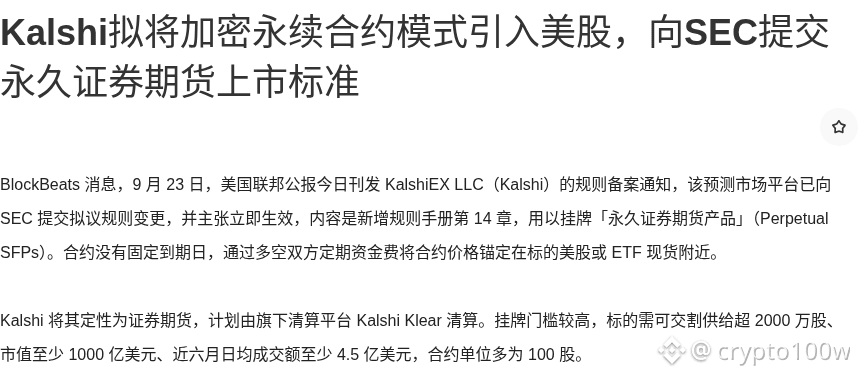
BlockBeats news: On September 23, the U.S. Federal Register published today a notice of KalshiEX LLC (Kalshi) rule filing. Kalshi has submitted proposed rule changes to the SEC and argues for immediate effectiveness. The core of the change is the addition of Chapter 14 to the rulebook, which is intended for listing “perpetual security futures products” (Perpetual SFPs). These contracts have no fixed expiration date. Instead, the two sides—long and short—settle periodic funding fees to anchor the price near the underlying U.S. stock or ETF spot.
The product is classified as securities futures, and it is planned to be cleared by its in-house clearing platform, Kalshi Klear. The listing threshold is also not low: the underlying must have a deliverable supply of over 20 million shares, a market value of at least $100 billion, and an average daily trading value of at least $450 million over the past six months. Contract units are generally multiple 100 shares. Two key points for the market are (1) the progress of Kalshi’s subsequent approvals, and (2) whether this kind of product will make competition in compliant perpetual instruments even fiercer.
A more direct observation is: if this path works, traditional securities markets may encounter more frequently the 7x24 model, leverage, and funding-fee structures. On the other hand, regulators will also scrutinize more closely clearing, manipulation, and retail investor risks. Which are you more focused on—whether it will roll out successfully first, or the regulatory frictions it may bring?
Figure 1: Kalshi plans to introduce perpetual contracts into the U.S. stock market · Source: partial screenshot of the page
Image source: https://www.theblockbeats.info/flash/368628
BlockBeats news: On September 23, the U.S. Federal Register published today a notice of KalshiEX LLC (Kalshi) rule filing. Kalshi has submitted proposed rule changes to the SEC and argues for immediate effectiveness. The core of the change is the addition of Chapter 14 to the rulebook, which is intended for listing “perpetual security futures products” (Perpetual SFPs). These contracts have no fixed expiration date. Instead, the two sides—long and short—settle periodic funding fees to anchor the price near the underlying U.S. stock or ETF spot.
The product is classified as securities futures, and it is planned to be cleared by its in-house clearing platform, Kalshi Klear. The listing threshold is also not low: the underlying must have a deliverable supply of over 20 million shares, a market value of at least $100 billion, and an average daily trading value of at least $450 million over the past six months. Contract units are generally multiple 100 shares. Two key points for the market are (1) the progress of Kalshi’s subsequent approvals, and (2) whether this kind of product will make competition in compliant perpetual instruments even fiercer.
A more direct observation is: if this path works, traditional securities markets may encounter more frequently the 7x24 model, leverage, and funding-fee structures. On the other hand, regulators will also scrutinize more closely clearing, manipulation, and retail investor risks. Which are you more focused on—whether it will roll out successfully first, or the regulatory frictions it may bring?
Figure 1: Kalshi plans to introduce perpetual contracts into the U.S. stock market · Source: partial screenshot of the page
Image source: https://www.theblockbeats.info/flash/368628