#BinanceBStocks @Binance_Ukraine
Let’s skip the philosophy and break down how bStock works as collateral for margin trading. Many people think that if they deposit tokens worth $10,000, they’ll get exactly $10,000 in collateral value. That’s a mistake. 🧮
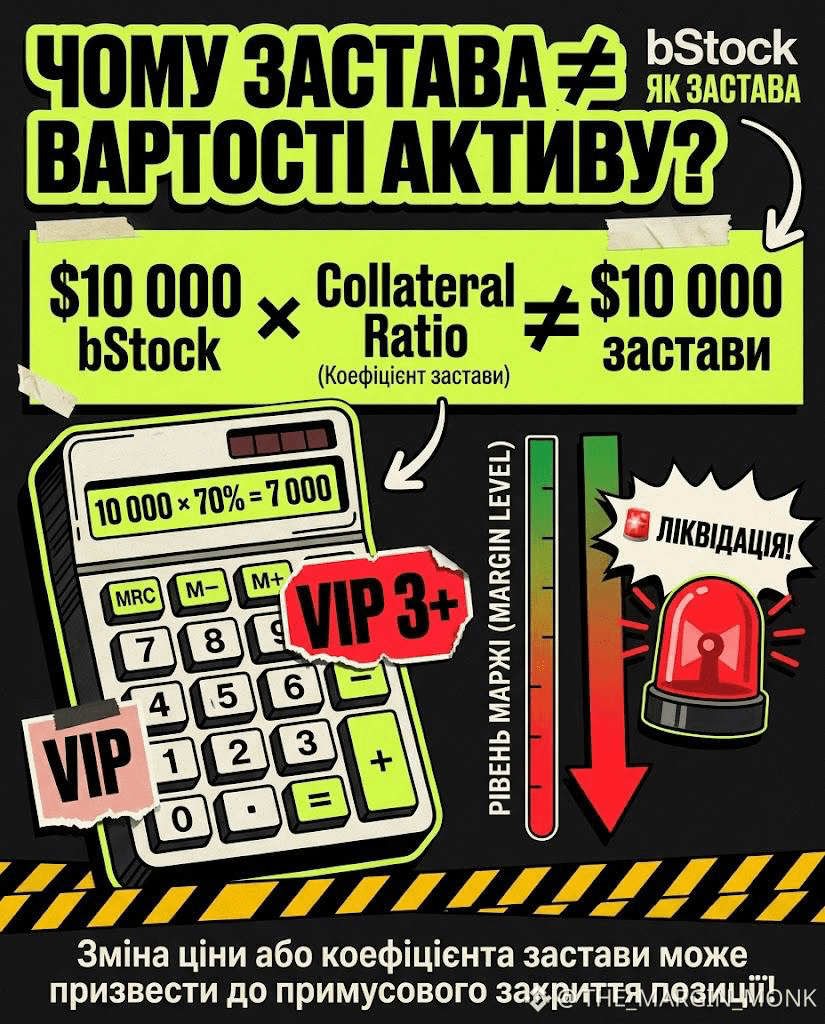
Remember: $10,000 in bStock ≠ $10,000 collateral! 💵
Binance calculates the collateral value using a special price index and applies a collateral ratio (margin collateral coefficient) ⚙️ This metric differs for each token and changes depending on market volatility.
Collateral calculation formula: Current value of bStocks × current collateral ratio = final collateral balance.
The exchange constantly updates the list of tokens accepted as collateral. But access to these products is limited 🔑 Typically, you need VIP 3 status or higher, as well as compliance with your jurisdiction.
The biggest risk here is liquidation. 🚨 If the underlying stock starts falling in price, the value of your collateral decreases, which immediately pressures your Margin Level and can lead to forced position closures.
Before taking leverage on tokenized stocks, always check the current collateral coefficients for the specific token in the exchange’s reference guide and keep a safety buffer. This will protect your deposit. ⏱️
Let’s skip the philosophy and break down how bStock works as collateral for margin trading. Many people think that if they deposit tokens worth $10,000, they’ll get exactly $10,000 in collateral value. That’s a mistake. 🧮
Remember: $10,000 in bStock ≠ $10,000 collateral! 💵
Binance calculates the collateral value using a special price index and applies a collateral ratio (margin collateral coefficient) ⚙️ This metric differs for each token and changes depending on market volatility.
Collateral calculation formula: Current value of bStocks × current collateral ratio = final collateral balance.
The exchange constantly updates the list of tokens accepted as collateral. But access to these products is limited 🔑 Typically, you need VIP 3 status or higher, as well as compliance with your jurisdiction.
The biggest risk here is liquidation. 🚨 If the underlying stock starts falling in price, the value of your collateral decreases, which immediately pressures your Margin Level and can lead to forced position closures.
Before taking leverage on tokenized stocks, always check the current collateral coefficients for the specific token in the exchange’s reference guide and keep a safety buffer. This will protect your deposit. ⏱️