

钱包会呼吸
164 Posts

钱包会呼吸
Report
Block User
与市场同行,与时间做朋友。少一点情绪,多一点耐心,让认知慢慢兑现财富。
16 Following
171 Followers
8.0K+ Liked
Posts
·
--
Bitcoin isn’t a shitcoin
It’s lived this long—11 years without dying—on consensus, hash power, and a narrative, not on a single chart or a hype call
In the short term, it’s driven by emotions; in the long term, it’s supported by scarcity. Most people lose money not on Bitcoin itself, but on leverage, chasing the highs, and failing to wait for the next halving
Those who can hold profit from time, not from candlestick charts. Shitcoins filter out undisciplined people; Bitcoin filters out the impatient
Bitcoin isn’t a shitcoin
It’s lived this long—11 years without dying—on consensus, hash power, and a narrative, not on a single chart or a hype call
In the short term, it’s driven by emotions; in the long term, it’s supported by scarcity. Most people lose money not on Bitcoin itself, but on leverage, chasing the highs, and failing to wait for the next halving
Those who can hold profit from time, not from candlestick charts. Shitcoins filter out undisciplined people; Bitcoin filters out the impatient
It’s lived this long—11 years without dying—on consensus, hash power, and a narrative, not on a single chart or a hype call
In the short term, it’s driven by emotions; in the long term, it’s supported by scarcity. Most people lose money not on Bitcoin itself, but on leverage, chasing the highs, and failing to wait for the next halving
Those who can hold profit from time, not from candlestick charts. Shitcoins filter out undisciplined people; Bitcoin filters out the impatient

6
13
11.1k
·
--
$龙虾 After the house (main party) fled
many people think the Chinese meme is already over
but after the big players liquidated, the funds weren’t withdrawn
instead, they were split into multiple smaller wallets to keep searching for a new narrative
usually, this kind of thing means that later they will withdraw the funds
these days, it’s recommended that you don’t do anything impulsive—just observe and see
$龙虾 $LSK
$龙虾 After the house (main party) fled
many people think the Chinese meme is already over
but after the big players liquidated, the funds weren’t withdrawn
instead, they were split into multiple smaller wallets to keep searching for a new narrative
usually, this kind of thing means that later they will withdraw the funds
these days, it’s recommended that you don’t do anything impulsive—just observe and see
$龙虾 $LSK
many people think the Chinese meme is already over
but after the big players liquidated, the funds weren’t withdrawn
instead, they were split into multiple smaller wallets to keep searching for a new narrative
usually, this kind of thing means that later they will withdraw the funds
these days, it’s recommended that you don’t do anything impulsive—just observe and see
$龙虾 $LSK
5
9
3.2k
·
--
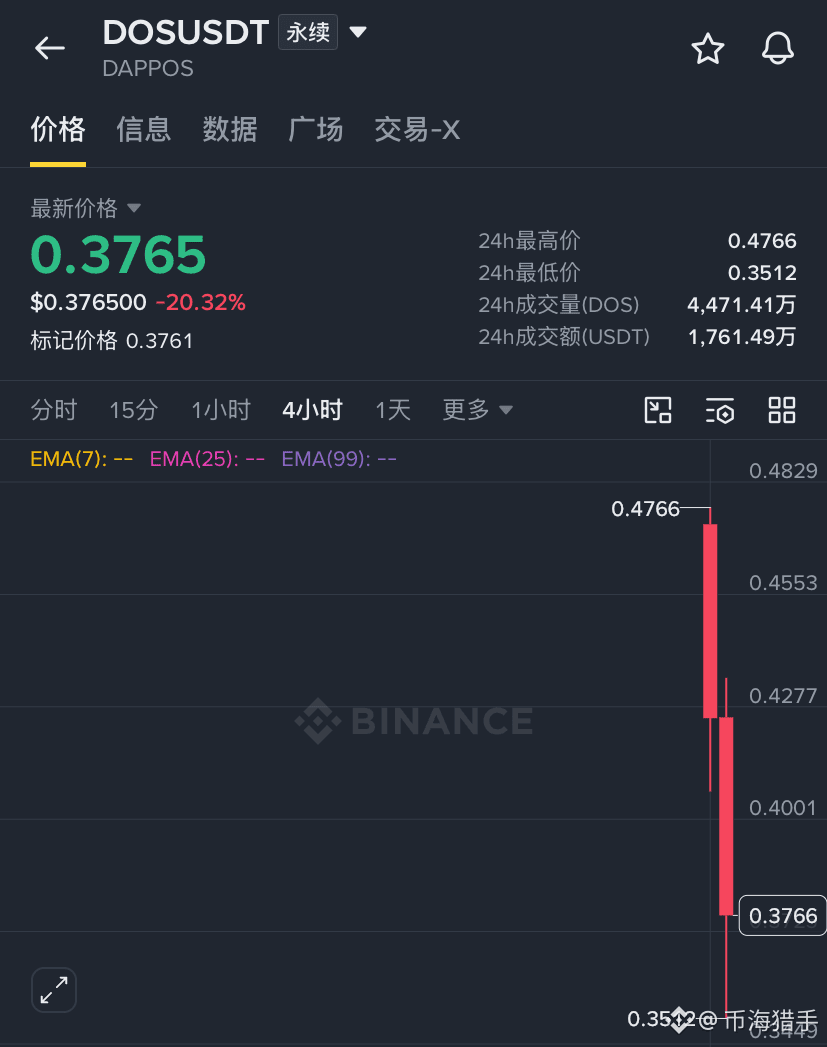
$DOS said many times: don't touch new coins
These are the kind that launch and never even bother to put on a show
At minimum, wait three days before operating on a new coin
$DOS said many times: don't touch new coins
These are the kind that launch and never even bother to put on a show
At minimum, wait three days before operating on a new coin
These are the kind that launch and never even bother to put on a show
At minimum, wait three days before operating on a new coin
1
2
862
·
--
To the people who are trading in Changxin Technology, wake up!
Big players are already starting to sell with their original lots
And you retail traders, at the open, keep疯狂 buying
Go check how many lots the big players took, will you?
So many companies invested in Changxin at an early stage, including Alibaba, Hefei state-owned assets, and even Lei Jun personally
Now they’ve made dozens of times—wouldn’t they be selling now?
I’ll say one thing: anyone buying Changxin now has a bit of something not quite right in the head 😂
To the people who are trading in Changxin Technology, wake up!
Big players are already starting to sell with their original lots
And you retail traders, at the open, keep疯狂 buying
Go check how many lots the big players took, will you?
So many companies invested in Changxin at an early stage, including Alibaba, Hefei state-owned assets, and even Lei Jun personally
Now they’ve made dozens of times—wouldn’t they be selling now?
I’ll say one thing: anyone buying Changxin now has a bit of something not quite right in the head 😂
Big players are already starting to sell with their original lots
And you retail traders, at the open, keep疯狂 buying
Go check how many lots the big players took, will you?
So many companies invested in Changxin at an early stage, including Alibaba, Hefei state-owned assets, and even Lei Jun personally
Now they’ve made dozens of times—wouldn’t they be selling now?
I’ll say one thing: anyone buying Changxin now has a bit of something not quite right in the head 😂
2
184
·
--
Now there are still bloggers
who can collect membership fees in the square and make a fortune
what kind of people believe those bloggers?
If they’re really that capable, would they miss out on those membership fees from you?
Open up your mind, brothers
Now there are still bloggers
who can collect membership fees in the square and make a fortune
what kind of people believe those bloggers?
If they’re really that capable, would they miss out on those membership fees from you?
Open up your mind, brothers
who can collect membership fees in the square and make a fortune
what kind of people believe those bloggers?
If they’re really that capable, would they miss out on those membership fees from you?
Open up your mind, brothers
1
103
·
--
Lucid plunges more than 50% during trading; market worries the company may face bankruptcy
On Tuesday, electric vehicle maker Lucid Group (LCID) saw its share price plunge, with the intraday low dropping as much as 55%; it still closed down nearly 50%. Due to the extreme selloff, the stock triggered three circuit breakers and was halted during the trading session, falling to as low as $2.37.
Citing industry media reports, BeInCrypto said that restructuring adviser AlixPartners may submit several strategic proposals to Lucid’s board, including options such as taking the company private and filing for Chapter 11 bankruptcy protection. It also reportedly advised pausing expansion into the European market and concentrating resources on the Gravity SUV project.
However, Lucid quickly responded and denied the rumors, saying that AlixPartners’ role is only to help improve operational efficiency and did not propose bankruptcy. The company also stressed that its current funding is sufficient to support operations through next year, in an effort to calm market sentiment.
Lucid plunges more than 50% during trading; market worries the company may face bankruptcy
On Tuesday, electric vehicle maker Lucid Group (LCID) saw its share price plunge, with the intraday low dropping as much as 55%; it still closed down nearly 50%. Due to the extreme selloff, the stock triggered three circuit breakers and was halted during the trading session, falling to as low as $2.37.
Citing industry media reports, BeInCrypto said that restructuring adviser AlixPartners may submit several strategic proposals to Lucid’s board, including options such as taking the company private and filing for Chapter 11 bankruptcy protection. It also reportedly advised pausing expansion into the European market and concentrating resources on the Gravity SUV project.
However, Lucid quickly responded and denied the rumors, saying that AlixPartners’ role is only to help improve operational efficiency and did not propose bankruptcy. The company also stressed that its current funding is sufficient to support operations through next year, in an effort to calm market sentiment.
On Tuesday, electric vehicle maker Lucid Group (LCID) saw its share price plunge, with the intraday low dropping as much as 55%; it still closed down nearly 50%. Due to the extreme selloff, the stock triggered three circuit breakers and was halted during the trading session, falling to as low as $2.37.
Citing industry media reports, BeInCrypto said that restructuring adviser AlixPartners may submit several strategic proposals to Lucid’s board, including options such as taking the company private and filing for Chapter 11 bankruptcy protection. It also reportedly advised pausing expansion into the European market and concentrating resources on the Gravity SUV project.
However, Lucid quickly responded and denied the rumors, saying that AlixPartners’ role is only to help improve operational efficiency and did not propose bankruptcy. The company also stressed that its current funding is sufficient to support operations through next year, in an effort to calm market sentiment.
1
111
·
--
The renminbi is rising too fast, are exporters unable to bear it? The central bank subtly intervenes: buy US dollars to slow down appreciation
This wave of renminbi appreciation has been a bit rapid.
Since April last year, the renminbi's exchange rate against the US dollar has been climbing, with a cumulative increase of nearly 7%. At first glance, this seems like good news — the renminbi is worth more, making international travel and online shopping more affordable. However, from the perspective of exporters and technology companies, this appreciation is akin to a "profit harvesting machine": the dollars earned overseas shrink significantly when exchanged for renminbi, resulting in increasing foreign exchange losses.
According to NS3 reports, in response to this situation, the People's Bank of China is quietly taking action — encouraging state-owned banks to increase the purchase of US dollars to slow the rapid appreciation of the renminbi. This move appears simple but is actually quite clever: banks buying US dollars is equivalent to cooling off the renminbi, while also providing a safety net for the profits of exporting companies.
Industry insiders analyze that this operation is not aimed at reversing the appreciation trend, but rather at putting a "seatbelt" on the runaway renminbi. After all, for export-oriented companies, a stable exchange rate makes accounting easier; when the accounts are clear, business can continue.
In summary: The central bank's purchase is not opposing the market but is helping exporters gradually reclaim the money lost to exchange rate fluctuations.
The renminbi is rising too fast, are exporters unable to bear it? The central bank subtly intervenes: buy US dollars to slow down appreciation
This wave of renminbi appreciation has been a bit rapid.
Since April last year, the renminbi's exchange rate against the US dollar has been climbing, with a cumulative increase of nearly 7%. At first glance, this seems like good news — the renminbi is worth more, making international travel and online shopping more affordable. However, from the perspective of exporters and technology companies, this appreciation is akin to a "profit harvesting machine": the dollars earned overseas shrink significantly when exchanged for renminbi, resulting in increasing foreign exchange losses.
According to NS3 reports, in response to this situation, the People's Bank of China is quietly taking action — encouraging state-owned banks to increase the purchase of US dollars to slow the rapid appreciation of the renminbi. This move appears simple but is actually quite clever: banks buying US dollars is equivalent to cooling off the renminbi, while also providing a safety net for the profits of exporting companies.
Industry insiders analyze that this operation is not aimed at reversing the appreciation trend, but rather at putting a "seatbelt" on the runaway renminbi. After all, for export-oriented companies, a stable exchange rate makes accounting easier; when the accounts are clear, business can continue.
In summary: The central bank's purchase is not opposing the market but is helping exporters gradually reclaim the money lost to exchange rate fluctuations.
This wave of renminbi appreciation has been a bit rapid.
Since April last year, the renminbi's exchange rate against the US dollar has been climbing, with a cumulative increase of nearly 7%. At first glance, this seems like good news — the renminbi is worth more, making international travel and online shopping more affordable. However, from the perspective of exporters and technology companies, this appreciation is akin to a "profit harvesting machine": the dollars earned overseas shrink significantly when exchanged for renminbi, resulting in increasing foreign exchange losses.
According to NS3 reports, in response to this situation, the People's Bank of China is quietly taking action — encouraging state-owned banks to increase the purchase of US dollars to slow the rapid appreciation of the renminbi. This move appears simple but is actually quite clever: banks buying US dollars is equivalent to cooling off the renminbi, while also providing a safety net for the profits of exporting companies.
Industry insiders analyze that this operation is not aimed at reversing the appreciation trend, but rather at putting a "seatbelt" on the runaway renminbi. After all, for export-oriented companies, a stable exchange rate makes accounting easier; when the accounts are clear, business can continue.
In summary: The central bank's purchase is not opposing the market but is helping exporters gradually reclaim the money lost to exchange rate fluctuations.
1
216
·
--
Risk aversion sweeps across Asia! Bitcoin surged and then fell back, losing the 67,000 mark, while the South Korean stock market experienced a "black two days" crash
Global markets are undergoing an "indiscriminate sell-off" triggered by geopolitical tensions.
On March 4th, Bitcoin's price experienced a rollercoaster: after briefly rising to the upper end of its trading range, it faced fierce resistance from bears and quickly fell back to the $67,000 mark. Behind this surge and subsequent drop is the widespread risk aversion panic in the Asian market.
According to NS3, the ongoing geopolitical tensions in the Middle East have directly ignited an epic crash in the South Korean stock market—where the KOSPI index recorded its largest two-day drop since the 2008 global financial crisis. This market, known for its "retail resilience," is now unable to withstand the concentrated release of panic.
The movement of Bitcoin reflects the sentiment in this market: it attempted to act as a "safe-haven asset" in the morning but ultimately was dragged down in the face of systemic selling pressure. As of the time of publication, the price has tested the $67,000 support level, where both bulls and bears are engaged in intense tug-of-war.
Meanwhile, mainstream cryptocurrencies are under pressure across the board. Ethereum and Solana prices have significantly declined, with further widening losses, reflecting that the risk aversion sentiment during the Asian trading hours is rapidly transmitting from the stock market to the cryptocurrency market. On-chain data shows that some Asian whales are reducing their positions in mainstream coins and turning to stablecoins for safety.
Analysts point out that when the South Korean stock market recorded its worst drop in 16 years, it indicated that both institutional and individual investors are fleeing risk assets en masse. Although Bitcoin is viewed by some as "digital gold," it remains difficult to stand apart in the face of tightening systemic liquidity in the short term.
Can the $67,000 defense line hold? Tonight's performance of the U.S. stock market may become a crucial turning point signal.
Risk aversion sweeps across Asia! Bitcoin surged and then fell back, losing the 67,000 mark, while the South Korean stock market experienced a "black two days" crash
Global markets are undergoing an "indiscriminate sell-off" triggered by geopolitical tensions.
On March 4th, Bitcoin's price experienced a rollercoaster: after briefly rising to the upper end of its trading range, it faced fierce resistance from bears and quickly fell back to the $67,000 mark. Behind this surge and subsequent drop is the widespread risk aversion panic in the Asian market.
According to NS3, the ongoing geopolitical tensions in the Middle East have directly ignited an epic crash in the South Korean stock market—where the KOSPI index recorded its largest two-day drop since the 2008 global financial crisis. This market, known for its "retail resilience," is now unable to withstand the concentrated release of panic.
The movement of Bitcoin reflects the sentiment in this market: it attempted to act as a "safe-haven asset" in the morning but ultimately was dragged down in the face of systemic selling pressure. As of the time of publication, the price has tested the $67,000 support level, where both bulls and bears are engaged in intense tug-of-war.
Meanwhile, mainstream cryptocurrencies are under pressure across the board. Ethereum and Solana prices have significantly declined, with further widening losses, reflecting that the risk aversion sentiment during the Asian trading hours is rapidly transmitting from the stock market to the cryptocurrency market. On-chain data shows that some Asian whales are reducing their positions in mainstream coins and turning to stablecoins for safety.
Analysts point out that when the South Korean stock market recorded its worst drop in 16 years, it indicated that both institutional and individual investors are fleeing risk assets en masse. Although Bitcoin is viewed by some as "digital gold," it remains difficult to stand apart in the face of tightening systemic liquidity in the short term.
Can the $67,000 defense line hold? Tonight's performance of the U.S. stock market may become a crucial turning point signal.
Global markets are undergoing an "indiscriminate sell-off" triggered by geopolitical tensions.
On March 4th, Bitcoin's price experienced a rollercoaster: after briefly rising to the upper end of its trading range, it faced fierce resistance from bears and quickly fell back to the $67,000 mark. Behind this surge and subsequent drop is the widespread risk aversion panic in the Asian market.
According to NS3, the ongoing geopolitical tensions in the Middle East have directly ignited an epic crash in the South Korean stock market—where the KOSPI index recorded its largest two-day drop since the 2008 global financial crisis. This market, known for its "retail resilience," is now unable to withstand the concentrated release of panic.
The movement of Bitcoin reflects the sentiment in this market: it attempted to act as a "safe-haven asset" in the morning but ultimately was dragged down in the face of systemic selling pressure. As of the time of publication, the price has tested the $67,000 support level, where both bulls and bears are engaged in intense tug-of-war.
Meanwhile, mainstream cryptocurrencies are under pressure across the board. Ethereum and Solana prices have significantly declined, with further widening losses, reflecting that the risk aversion sentiment during the Asian trading hours is rapidly transmitting from the stock market to the cryptocurrency market. On-chain data shows that some Asian whales are reducing their positions in mainstream coins and turning to stablecoins for safety.
Analysts point out that when the South Korean stock market recorded its worst drop in 16 years, it indicated that both institutional and individual investors are fleeing risk assets en masse. Although Bitcoin is viewed by some as "digital gold," it remains difficult to stand apart in the face of tightening systemic liquidity in the short term.
Can the $67,000 defense line hold? Tonight's performance of the U.S. stock market may become a crucial turning point signal.
1
64
·
--
Bank of Japan Governor Kazuo Ueda: The integration of AI and blockchain must ensure transaction transparency
Bank of Japan Governor Kazuo Ueda recently made a public statement, pointing out that against the backdrop of the deep integration of artificial intelligence and blockchain technology, it is essential to establish corresponding mechanisms to ensure the transparency and authenticity of transactions for the robust development of new financial services and financial ecosystems. According to Jin Ten Data, Ueda particularly emphasized that the security and stability of the payment process are crucial, and only with guaranteed transparency can technological innovation truly drive the financial system forward.
Bank of Japan Governor Kazuo Ueda: The integration of AI and blockchain must ensure transaction transparency
Bank of Japan Governor Kazuo Ueda recently made a public statement, pointing out that against the backdrop of the deep integration of artificial intelligence and blockchain technology, it is essential to establish corresponding mechanisms to ensure the transparency and authenticity of transactions for the robust development of new financial services and financial ecosystems. According to Jin Ten Data, Ueda particularly emphasized that the security and stability of the payment process are crucial, and only with guaranteed transparency can technological innovation truly drive the financial system forward.
Bank of Japan Governor Kazuo Ueda recently made a public statement, pointing out that against the backdrop of the deep integration of artificial intelligence and blockchain technology, it is essential to establish corresponding mechanisms to ensure the transparency and authenticity of transactions for the robust development of new financial services and financial ecosystems. According to Jin Ten Data, Ueda particularly emphasized that the security and stability of the payment process are crucial, and only with guaranteed transparency can technological innovation truly drive the financial system forward.
1
25
·
--
Foom Cash was hacked for 2.26 million, white hat hacker's 81% recovery rate shocks the crypto world! 320,000 bounty is worth it!
If there are “good guys” and “bad guys” among hackers, then the story of Foom Cash this time is a classic case of “good guys beating bad guys”!
Last Friday, the anonymous lottery protocol Foom Cash, based on zero-knowledge proofs, suffered a heavy blow, with 2.26 million dollars targeted by hackers. But just as the malicious attackers were preparing to close the net, a white hat hacker named Duha emerged halfway, directly intercepting on the Base chain and protecting most of the funds. At the same time, Decurity acted in sync on the Ethereum chain, with dual-chain coordination, ultimately recovering 1.84 million dollars—81% of the assets were successfully rescued!
When Foom Cash officially announced this news on Monday, the entire network exploded! The project team was also straightforward, immediately awarding Duha a bounty of 320,000 dollars, while Decurity received a security fee of 100,000 dollars. Was the money well spent? Absolutely! Without them, this 2.26 million might have been washed clean in the mixer.
Duha stated in an interview: “Foom Cash quickly fulfilled the bounty policy, showing that they really value the security of the protocol and the contributions of researchers.” This translates to: the project team is reliable, and will help you next time!
As for how the vulnerability occurred? Foom Cash exposed its own shortcomings on platform X: a command line interface (CLI) was missing during deployment, leading to the absence of “Phase 2 Trusted Setup.” The attacker exploited this vulnerability to forge proofs and deceive the protocol. In simple terms: a line of code was missing, and it almost cost 2.26 million!
This incident has once again brought attention to the important role of white hat hackers in the DeFi world. In August 2023, well-known white hat Samczsun led the establishment of the SEAL team, specifically to deal with hacker attacks, conducting over 900 investigations in the first year. These people are like the “firefighters” of the crypto world, rushing to wherever there is a fire, and the key is—they don’t take dirty money, only bounties!
Foom Cash was hacked for 2.26 million, white hat hacker's 81% recovery rate shocks the crypto world! 320,000 bounty is worth it!
If there are “good guys” and “bad guys” among hackers, then the story of Foom Cash this time is a classic case of “good guys beating bad guys”!
Last Friday, the anonymous lottery protocol Foom Cash, based on zero-knowledge proofs, suffered a heavy blow, with 2.26 million dollars targeted by hackers. But just as the malicious attackers were preparing to close the net, a white hat hacker named Duha emerged halfway, directly intercepting on the Base chain and protecting most of the funds. At the same time, Decurity acted in sync on the Ethereum chain, with dual-chain coordination, ultimately recovering 1.84 million dollars—81% of the assets were successfully rescued!
When Foom Cash officially announced this news on Monday, the entire network exploded! The project team was also straightforward, immediately awarding Duha a bounty of 320,000 dollars, while Decurity received a security fee of 100,000 dollars. Was the money well spent? Absolutely! Without them, this 2.26 million might have been washed clean in the mixer.
Duha stated in an interview: “Foom Cash quickly fulfilled the bounty policy, showing that they really value the security of the protocol and the contributions of researchers.” This translates to: the project team is reliable, and will help you next time!
As for how the vulnerability occurred? Foom Cash exposed its own shortcomings on platform X: a command line interface (CLI) was missing during deployment, leading to the absence of “Phase 2 Trusted Setup.” The attacker exploited this vulnerability to forge proofs and deceive the protocol. In simple terms: a line of code was missing, and it almost cost 2.26 million!
This incident has once again brought attention to the important role of white hat hackers in the DeFi world. In August 2023, well-known white hat Samczsun led the establishment of the SEAL team, specifically to deal with hacker attacks, conducting over 900 investigations in the first year. These people are like the “firefighters” of the crypto world, rushing to wherever there is a fire, and the key is—they don’t take dirty money, only bounties!
If there are “good guys” and “bad guys” among hackers, then the story of Foom Cash this time is a classic case of “good guys beating bad guys”!
Last Friday, the anonymous lottery protocol Foom Cash, based on zero-knowledge proofs, suffered a heavy blow, with 2.26 million dollars targeted by hackers. But just as the malicious attackers were preparing to close the net, a white hat hacker named Duha emerged halfway, directly intercepting on the Base chain and protecting most of the funds. At the same time, Decurity acted in sync on the Ethereum chain, with dual-chain coordination, ultimately recovering 1.84 million dollars—81% of the assets were successfully rescued!
When Foom Cash officially announced this news on Monday, the entire network exploded! The project team was also straightforward, immediately awarding Duha a bounty of 320,000 dollars, while Decurity received a security fee of 100,000 dollars. Was the money well spent? Absolutely! Without them, this 2.26 million might have been washed clean in the mixer.
Duha stated in an interview: “Foom Cash quickly fulfilled the bounty policy, showing that they really value the security of the protocol and the contributions of researchers.” This translates to: the project team is reliable, and will help you next time!
As for how the vulnerability occurred? Foom Cash exposed its own shortcomings on platform X: a command line interface (CLI) was missing during deployment, leading to the absence of “Phase 2 Trusted Setup.” The attacker exploited this vulnerability to forge proofs and deceive the protocol. In simple terms: a line of code was missing, and it almost cost 2.26 million!
This incident has once again brought attention to the important role of white hat hackers in the DeFi world. In August 2023, well-known white hat Samczsun led the establishment of the SEAL team, specifically to deal with hacker attacks, conducting over 900 investigations in the first year. These people are like the “firefighters” of the crypto world, rushing to wherever there is a fire, and the key is—they don’t take dirty money, only bounties!
1
157
·
--
The Grand Scheme of Crazy Saylor: BTC Holdings Break 717,000 Coins, Dividend Hits 11.5%, What Are the Retail Investors Waiting For?
In the crypto world, there is a stubbornness called Michael Saylor! Just as MSTR's stock price has fallen for the 8th consecutive month, and the market is in mourning, this top Bitcoin bull has struck again—releasing Bitcoin Tracker signals, and a new round of buying is underway!
Meanwhile, Strategy has directly raised the dividend yield of perpetual preferred shares STRC to 11.5%, an increase of 25 basis points from last month. What does this operation mean? It means Saylor is using high yields to attract more funds into the market, and then continuing to—buy! Bit! Coin!
As of now, Strategy has accumulated 717,722 BTC, with an average cost of $56,020. In mid-February, they purchased 592 coins at an average price of $67,286. This is not a company, it's clearly a giant vacuum cleaner for Bitcoin!
Recently, Saylor also confronted those who worry that quantum computing threatens Bitcoin: Can quantum computing crack Bitcoin? Don't dream about it in the next decade! Even if that day comes, Bitcoin would have upgraded long ago.
In my opinion, with this kind of faith backing it, isn't an 11.5% dividend attractive?
The Grand Scheme of Crazy Saylor: BTC Holdings Break 717,000 Coins, Dividend Hits 11.5%, What Are the Retail Investors Waiting For?
In the crypto world, there is a stubbornness called Michael Saylor! Just as MSTR's stock price has fallen for the 8th consecutive month, and the market is in mourning, this top Bitcoin bull has struck again—releasing Bitcoin Tracker signals, and a new round of buying is underway!
Meanwhile, Strategy has directly raised the dividend yield of perpetual preferred shares STRC to 11.5%, an increase of 25 basis points from last month. What does this operation mean? It means Saylor is using high yields to attract more funds into the market, and then continuing to—buy! Bit! Coin!
As of now, Strategy has accumulated 717,722 BTC, with an average cost of $56,020. In mid-February, they purchased 592 coins at an average price of $67,286. This is not a company, it's clearly a giant vacuum cleaner for Bitcoin!
Recently, Saylor also confronted those who worry that quantum computing threatens Bitcoin: Can quantum computing crack Bitcoin? Don't dream about it in the next decade! Even if that day comes, Bitcoin would have upgraded long ago.
In my opinion, with this kind of faith backing it, isn't an 11.5% dividend attractive?
In the crypto world, there is a stubbornness called Michael Saylor! Just as MSTR's stock price has fallen for the 8th consecutive month, and the market is in mourning, this top Bitcoin bull has struck again—releasing Bitcoin Tracker signals, and a new round of buying is underway!
Meanwhile, Strategy has directly raised the dividend yield of perpetual preferred shares STRC to 11.5%, an increase of 25 basis points from last month. What does this operation mean? It means Saylor is using high yields to attract more funds into the market, and then continuing to—buy! Bit! Coin!
As of now, Strategy has accumulated 717,722 BTC, with an average cost of $56,020. In mid-February, they purchased 592 coins at an average price of $67,286. This is not a company, it's clearly a giant vacuum cleaner for Bitcoin!
Recently, Saylor also confronted those who worry that quantum computing threatens Bitcoin: Can quantum computing crack Bitcoin? Don't dream about it in the next decade! Even if that day comes, Bitcoin would have upgraded long ago.
In my opinion, with this kind of faith backing it, isn't an 11.5% dividend attractive?
1
276
·
--
The Middle East is not just about 'firing a shot' so simply.
The market is making a fatal optimistic error.
The situation in the Middle East is sliding into the abyss, but Wall Street seems to remain calm. As missile attacks cut off trade arteries, geopolitical games have escalated from 'war of words' to a prolonged war of attrition. Analysts warn that the biggest risk to the market right now is misjudging the nature of the situation—this is no longer a transient conflict but may involve deeper risks of regime change.
According to NS3, in the face of this structural uncertainty, experts' advice seems calm, even cold: do not rush into the fire for small gains. Current asset prices do not fully reflect the costs of this long-term confrontation. If the S&P 500 index cannot digest risks through a drop of more than 10%, then every so-called 'bounce' may be a trap to lure in buyers. Before the market's complacency crumbles, holding cash may be the best strategy.
The Middle East is not just about 'firing a shot' so simply.
The market is making a fatal optimistic error.
The situation in the Middle East is sliding into the abyss, but Wall Street seems to remain calm. As missile attacks cut off trade arteries, geopolitical games have escalated from 'war of words' to a prolonged war of attrition. Analysts warn that the biggest risk to the market right now is misjudging the nature of the situation—this is no longer a transient conflict but may involve deeper risks of regime change.
According to NS3, in the face of this structural uncertainty, experts' advice seems calm, even cold: do not rush into the fire for small gains. Current asset prices do not fully reflect the costs of this long-term confrontation. If the S&P 500 index cannot digest risks through a drop of more than 10%, then every so-called 'bounce' may be a trap to lure in buyers. Before the market's complacency crumbles, holding cash may be the best strategy.
The market is making a fatal optimistic error.
The situation in the Middle East is sliding into the abyss, but Wall Street seems to remain calm. As missile attacks cut off trade arteries, geopolitical games have escalated from 'war of words' to a prolonged war of attrition. Analysts warn that the biggest risk to the market right now is misjudging the nature of the situation—this is no longer a transient conflict but may involve deeper risks of regime change.
According to NS3, in the face of this structural uncertainty, experts' advice seems calm, even cold: do not rush into the fire for small gains. Current asset prices do not fully reflect the costs of this long-term confrontation. If the S&P 500 index cannot digest risks through a drop of more than 10%, then every so-called 'bounce' may be a trap to lure in buyers. Before the market's complacency crumbles, holding cash may be the best strategy.
8
302
·
--
Risk aversion fluctuates | U.S.-Israel actions against Iran disturb the market, gold trends show significant differentiation
On February 28 local time, the military actions by the United States and Israel against Iran triggered a rapid rise in global market risk aversion. As a result, the prices of precious metals like gold strengthened at one point, with the market generally expecting funds to accelerate into safe-haven assets.
According to PANews, some market analysts believe that against the backdrop of escalating geopolitical conflicts, the conditions for gold prices to continue rising were originally in place. However, after a significant increase in the gold dark market on February 28, there was a rapid decline on March 1, contrasting with previous expectations.
In this regard, economist Pan Helin pointed out that the changes in market sentiment may be related to news about Ali Khamenei. Related events have changed some investors' judgments about the situation in Iran in the short term, leading the market to begin anticipating a rapid cooling of the conflict and stabilization of the situation.
Pan Helin further analyzed that if it can be confirmed later that Iran can achieve a relatively smooth power transition after changes in key personnel, there is a possibility of a reversal in market risk pricing, manifested as a decline in gold and oil prices, while the U.S. stock market, especially industrial stocks, may benefit and rise. However, he also emphasized that war itself carries a high degree of uncertainty, and related events may further complicate the situation, thereby raising safe-haven demand again.
Risk aversion fluctuates | U.S.-Israel actions against Iran disturb the market, gold trends show significant differentiation
On February 28 local time, the military actions by the United States and Israel against Iran triggered a rapid rise in global market risk aversion. As a result, the prices of precious metals like gold strengthened at one point, with the market generally expecting funds to accelerate into safe-haven assets.
According to PANews, some market analysts believe that against the backdrop of escalating geopolitical conflicts, the conditions for gold prices to continue rising were originally in place. However, after a significant increase in the gold dark market on February 28, there was a rapid decline on March 1, contrasting with previous expectations.
In this regard, economist Pan Helin pointed out that the changes in market sentiment may be related to news about Ali Khamenei. Related events have changed some investors' judgments about the situation in Iran in the short term, leading the market to begin anticipating a rapid cooling of the conflict and stabilization of the situation.
Pan Helin further analyzed that if it can be confirmed later that Iran can achieve a relatively smooth power transition after changes in key personnel, there is a possibility of a reversal in market risk pricing, manifested as a decline in gold and oil prices, while the U.S. stock market, especially industrial stocks, may benefit and rise. However, he also emphasized that war itself carries a high degree of uncertainty, and related events may further complicate the situation, thereby raising safe-haven demand again.
On February 28 local time, the military actions by the United States and Israel against Iran triggered a rapid rise in global market risk aversion. As a result, the prices of precious metals like gold strengthened at one point, with the market generally expecting funds to accelerate into safe-haven assets.
According to PANews, some market analysts believe that against the backdrop of escalating geopolitical conflicts, the conditions for gold prices to continue rising were originally in place. However, after a significant increase in the gold dark market on February 28, there was a rapid decline on March 1, contrasting with previous expectations.
In this regard, economist Pan Helin pointed out that the changes in market sentiment may be related to news about Ali Khamenei. Related events have changed some investors' judgments about the situation in Iran in the short term, leading the market to begin anticipating a rapid cooling of the conflict and stabilization of the situation.
Pan Helin further analyzed that if it can be confirmed later that Iran can achieve a relatively smooth power transition after changes in key personnel, there is a possibility of a reversal in market risk pricing, manifested as a decline in gold and oil prices, while the U.S. stock market, especially industrial stocks, may benefit and rise. However, he also emphasized that war itself carries a high degree of uncertainty, and related events may further complicate the situation, thereby raising safe-haven demand again.
12
153
·
--
Prediction market heavy loss
Polymarket users suffered a loss of 6.74 million USD in a single day due to U.S. strikes against Iran
According to BlockBeats, on February 28, monitoring data showed that an active user on the prediction market platform Polymarket experienced a significant drawdown during a geopolitical event.
Data indicates that this user had long bet that the U.S. would not take military action against Iran, typically choosing to increase positions when the probability of relevant events was between 70% and 90%. With this strategy, their account had previously accumulated over 2 million USD in floating profits.
However, after the U.S. announced strikes against Iran, market expectations quickly reversed, and the value of the user's positions plummeted, resulting in a single-day loss of over 6.74 million USD, wiping out all previously accumulated gains in one go. Statistics show that the total loss in their account has expanded to approximately 4.49 million USD over the entire participation period.
Industry insiders pointed out that this case once again highlights the high-risk characteristics of prediction markets in geopolitical events. Although long-term strategies may yield substantial returns during stable phases, encountering low-probability, high-impact unforeseen events can often lead to extreme results due to excessively concentrated positions.
Prediction market heavy loss
Polymarket users suffered a loss of 6.74 million USD in a single day due to U.S. strikes against Iran
According to BlockBeats, on February 28, monitoring data showed that an active user on the prediction market platform Polymarket experienced a significant drawdown during a geopolitical event.
Data indicates that this user had long bet that the U.S. would not take military action against Iran, typically choosing to increase positions when the probability of relevant events was between 70% and 90%. With this strategy, their account had previously accumulated over 2 million USD in floating profits.
However, after the U.S. announced strikes against Iran, market expectations quickly reversed, and the value of the user's positions plummeted, resulting in a single-day loss of over 6.74 million USD, wiping out all previously accumulated gains in one go. Statistics show that the total loss in their account has expanded to approximately 4.49 million USD over the entire participation period.
Industry insiders pointed out that this case once again highlights the high-risk characteristics of prediction markets in geopolitical events. Although long-term strategies may yield substantial returns during stable phases, encountering low-probability, high-impact unforeseen events can often lead to extreme results due to excessively concentrated positions.
Polymarket users suffered a loss of 6.74 million USD in a single day due to U.S. strikes against Iran
According to BlockBeats, on February 28, monitoring data showed that an active user on the prediction market platform Polymarket experienced a significant drawdown during a geopolitical event.
Data indicates that this user had long bet that the U.S. would not take military action against Iran, typically choosing to increase positions when the probability of relevant events was between 70% and 90%. With this strategy, their account had previously accumulated over 2 million USD in floating profits.
However, after the U.S. announced strikes against Iran, market expectations quickly reversed, and the value of the user's positions plummeted, resulting in a single-day loss of over 6.74 million USD, wiping out all previously accumulated gains in one go. Statistics show that the total loss in their account has expanded to approximately 4.49 million USD over the entire participation period.
Industry insiders pointed out that this case once again highlights the high-risk characteristics of prediction markets in geopolitical events. Although long-term strategies may yield substantial returns during stable phases, encountering low-probability, high-impact unforeseen events can often lead to extreme results due to excessively concentrated positions.
14
96
Log in to explore more content
Join global crypto users on Binance Square
⚡️ Get latest and useful information about crypto.
💬 Trusted by the world’s largest crypto exchange.
👍 Discover real insights from verified creators.
Email / Phone number