#Three-hour Iran-U.S. Talks Send Positive Signal
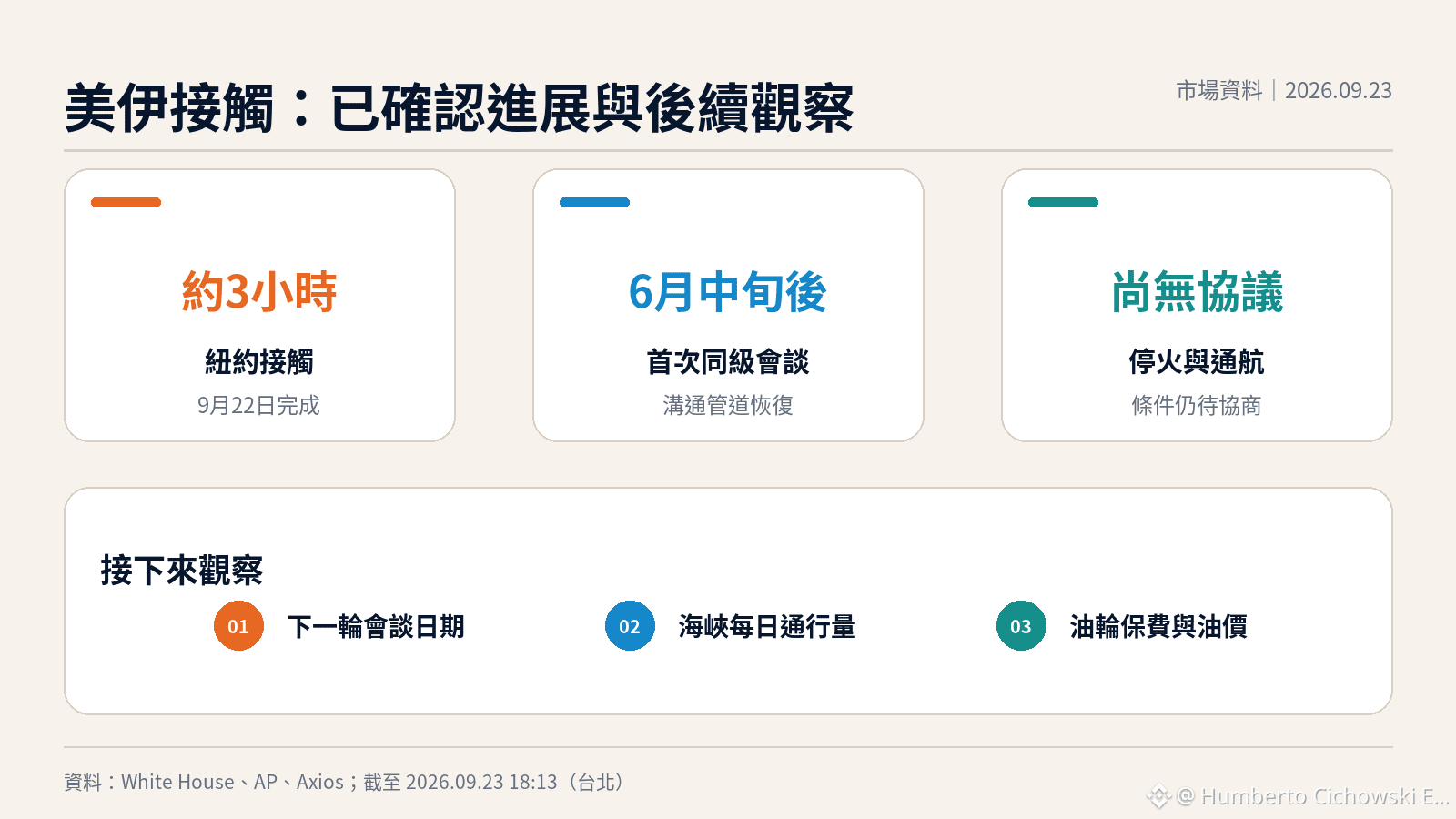
The resumption of high-level contacts between Iran and the U.S. is a sign that the risk premium in oil prices is cooling. However, it is still only a negotiation restart, not a ceasefire or an agreement to resume navigation through the Strait of Hormuz. On September 22, U.S. special envoys Witkoff and Kushner met with Iranian Foreign Minister Araghchi in New York for about three hours—marking the first same-level talks between the two sides since mid-June. The U.S. said the talks were constructive, while Iran proposed conditions such as lifting the maritime blockade and releasing frozen assets. The U.S. has not yet publicly agreed to these terms, and no date has been announced for the next round. If written arrangements are subsequently made and normal operations resume, uncertainty in energy supply, freight costs, and pressure on import-related inflation may ease. If military threats escalate again, the risk premium could quickly return. Monitor the timing of the next round of talks, the daily number of vessels transiting the strait, oil tanker insurance premiums, and volatility in Brent crude.
This article is for informational purposes only and does not constitute investment advice.
The resumption of high-level contacts between Iran and the U.S. is a sign that the risk premium in oil prices is cooling. However, it is still only a negotiation restart, not a ceasefire or an agreement to resume navigation through the Strait of Hormuz. On September 22, U.S. special envoys Witkoff and Kushner met with Iranian Foreign Minister Araghchi in New York for about three hours—marking the first same-level talks between the two sides since mid-June. The U.S. said the talks were constructive, while Iran proposed conditions such as lifting the maritime blockade and releasing frozen assets. The U.S. has not yet publicly agreed to these terms, and no date has been announced for the next round. If written arrangements are subsequently made and normal operations resume, uncertainty in energy supply, freight costs, and pressure on import-related inflation may ease. If military threats escalate again, the risk premium could quickly return. Monitor the timing of the next round of talks, the daily number of vessels transiting the strait, oil tanker insurance premiums, and volatility in Brent crude.
This article is for informational purposes only and does not constitute investment advice.