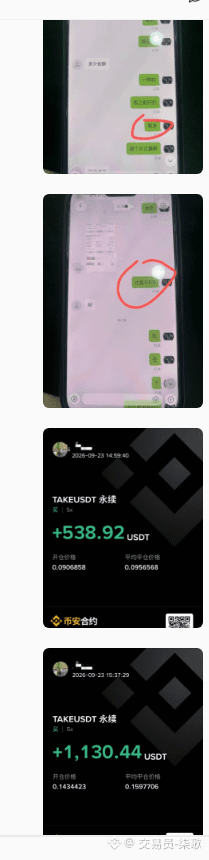
“After experiencing a major drawdown once, I finally understood these little facts.”#纳指创历史新高
Some truths sound meaningless when you first hear them. Only after you’ve truly lost money do you realize that every sentence behind it is tuition.¥$SNDK
Buying more lowers your average cost, but what it actually increases is your risk. If you invest 10U for 10,000U, and the price drops to 5U and you add another 10,000U, your average price can indeed drop to about 6.67U. But your position size doubles—from 10,000U to 20,000U. As the price keeps falling, your losses accelerate too. Many people don’t make the first mistake in a single trade; instead, they keep averaging down, turning small losses into an unbearable big one.
1% daily compounding looks terrifying on paper. If you start with 100,000U, after 250 days you could grow it to 1.2 million U. But that’s only a mathematical model. In real life, the hardest part isn’t earning 1%, it’s executing the plan correctly for many consecutive times.
A slightly lower win rate doesn’t mean you can’t make money. If the win rate is 60% and your risk and reward control is good, you can still achieve positive returns over the long run. You don’t need to be right every time. The key is to lose less when you’re wrong, and be able to hold when you’re right.
The higher the leverage, the less reaction time you have. With a 10,000U principal—even if you only test with 2% to 5%—high leverage is enough to amplify volatility noticeably. One unexpected event is often enough to throw your rhythm off.
In the end, trading comes down to whether you can control your position size and keep your emotions in check. You can be wrong about the market and adjust your methods, but don’t so easily hand over your principal.
Some truths sound meaningless when you first hear them. Only after you’ve truly lost money do you realize that every sentence behind it is tuition.¥$SNDK
Buying more lowers your average cost, but what it actually increases is your risk. If you invest 10U for 10,000U, and the price drops to 5U and you add another 10,000U, your average price can indeed drop to about 6.67U. But your position size doubles—from 10,000U to 20,000U. As the price keeps falling, your losses accelerate too. Many people don’t make the first mistake in a single trade; instead, they keep averaging down, turning small losses into an unbearable big one.
1% daily compounding looks terrifying on paper. If you start with 100,000U, after 250 days you could grow it to 1.2 million U. But that’s only a mathematical model. In real life, the hardest part isn’t earning 1%, it’s executing the plan correctly for many consecutive times.
A slightly lower win rate doesn’t mean you can’t make money. If the win rate is 60% and your risk and reward control is good, you can still achieve positive returns over the long run. You don’t need to be right every time. The key is to lose less when you’re wrong, and be able to hold when you’re right.
The higher the leverage, the less reaction time you have. With a 10,000U principal—even if you only test with 2% to 5%—high leverage is enough to amplify volatility noticeably. One unexpected event is often enough to throw your rhythm off.
In the end, trading comes down to whether you can control your position size and keep your emotions in check. You can be wrong about the market and adjust your methods, but don’t so easily hand over your principal.