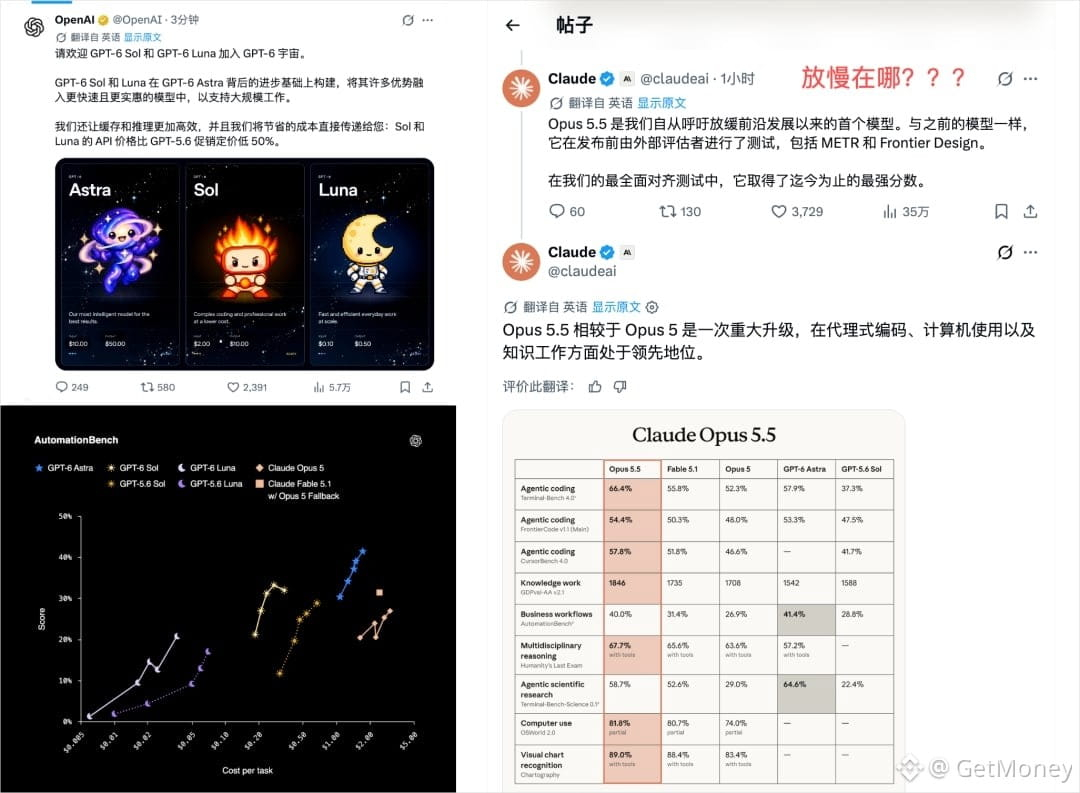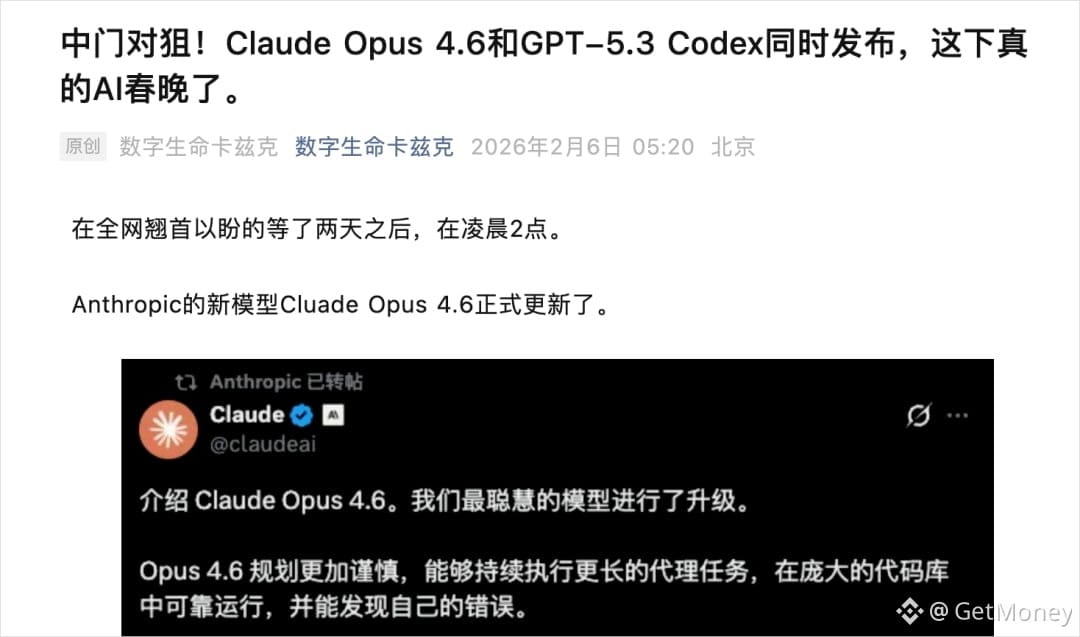
📰 So much for slowing down? OpenAI and Anthropic both made their moves on almost the same day. GPT-6 Sol, GPT-6 Luna, and Claude Opus 5.5 were released together. This AI model showdown has clearly sped up again.
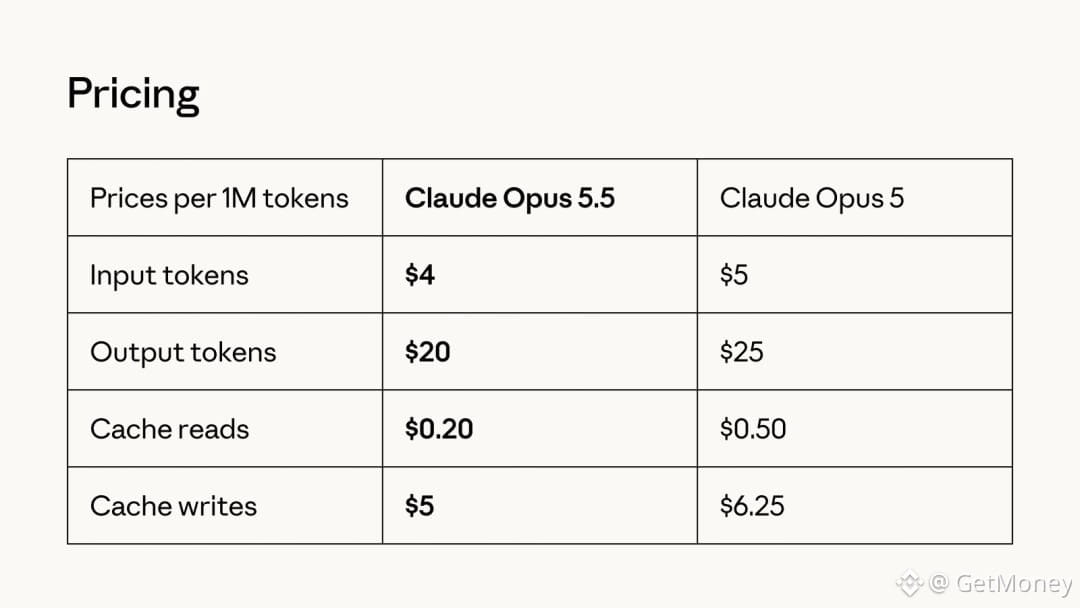
🔥 Claude Opus 5.5 is positioning itself as “cheap yet powerful.” It reaches 1M tokens of context, with a maximum output of 128K tokens. Input costs $4 per million tokens, and output costs $20 per million tokens. Compared to the previous Opus 5, its overall operating cost is down 40%, and its speed is also up by more than 30%.
💡 More importantly, it brings many tasks that previously could only be handled by flagship models into a price tier that’s easier to use long-term. Terminal-Bench 4.0 scores 66.4%. Coding performance is strong, but for research and cross-software operations, GPT-6 Astra still edges it out slightly.
Honestly, Opus 5.5 feels more like a frontline workhorse: everyday coding, debugging, and code review—it's all it can handle. For truly complex tasks where results can’t be wrong, you still have to bring in the flagship model. “Cheap” doesn’t mean it can replace a bigger model in every scenario. Especially when you get stuck, long deliberation may end up burning even more tokens.
👀 This time, both companies’ directions are also pretty clear: Anthropic is more focused on coding, expression, and details, while OpenAI continues to compete on reasoning, software operation, and research capabilities. One pursues extreme performance in execution, while the other wants to cover every kind of task. Turns out the so-called “slowing down” ended up turning into new model releases on the same day.
🤔 Do you think the first real price drop will be in model call costs, or in developers’ wallets?
#AI #OpenAI #Anthropic #Claude
🔥 Claude Opus 5.5 is positioning itself as “cheap yet powerful.” It reaches 1M tokens of context, with a maximum output of 128K tokens. Input costs $4 per million tokens, and output costs $20 per million tokens. Compared to the previous Opus 5, its overall operating cost is down 40%, and its speed is also up by more than 30%.
💡 More importantly, it brings many tasks that previously could only be handled by flagship models into a price tier that’s easier to use long-term. Terminal-Bench 4.0 scores 66.4%. Coding performance is strong, but for research and cross-software operations, GPT-6 Astra still edges it out slightly.
Honestly, Opus 5.5 feels more like a frontline workhorse: everyday coding, debugging, and code review—it's all it can handle. For truly complex tasks where results can’t be wrong, you still have to bring in the flagship model. “Cheap” doesn’t mean it can replace a bigger model in every scenario. Especially when you get stuck, long deliberation may end up burning even more tokens.
👀 This time, both companies’ directions are also pretty clear: Anthropic is more focused on coding, expression, and details, while OpenAI continues to compete on reasoning, software operation, and research capabilities. One pursues extreme performance in execution, while the other wants to cover every kind of task. Turns out the so-called “slowing down” ended up turning into new model releases on the same day.
🤔 Do you think the first real price drop will be in model call costs, or in developers’ wallets?
#AI #OpenAI #Anthropic #Claude