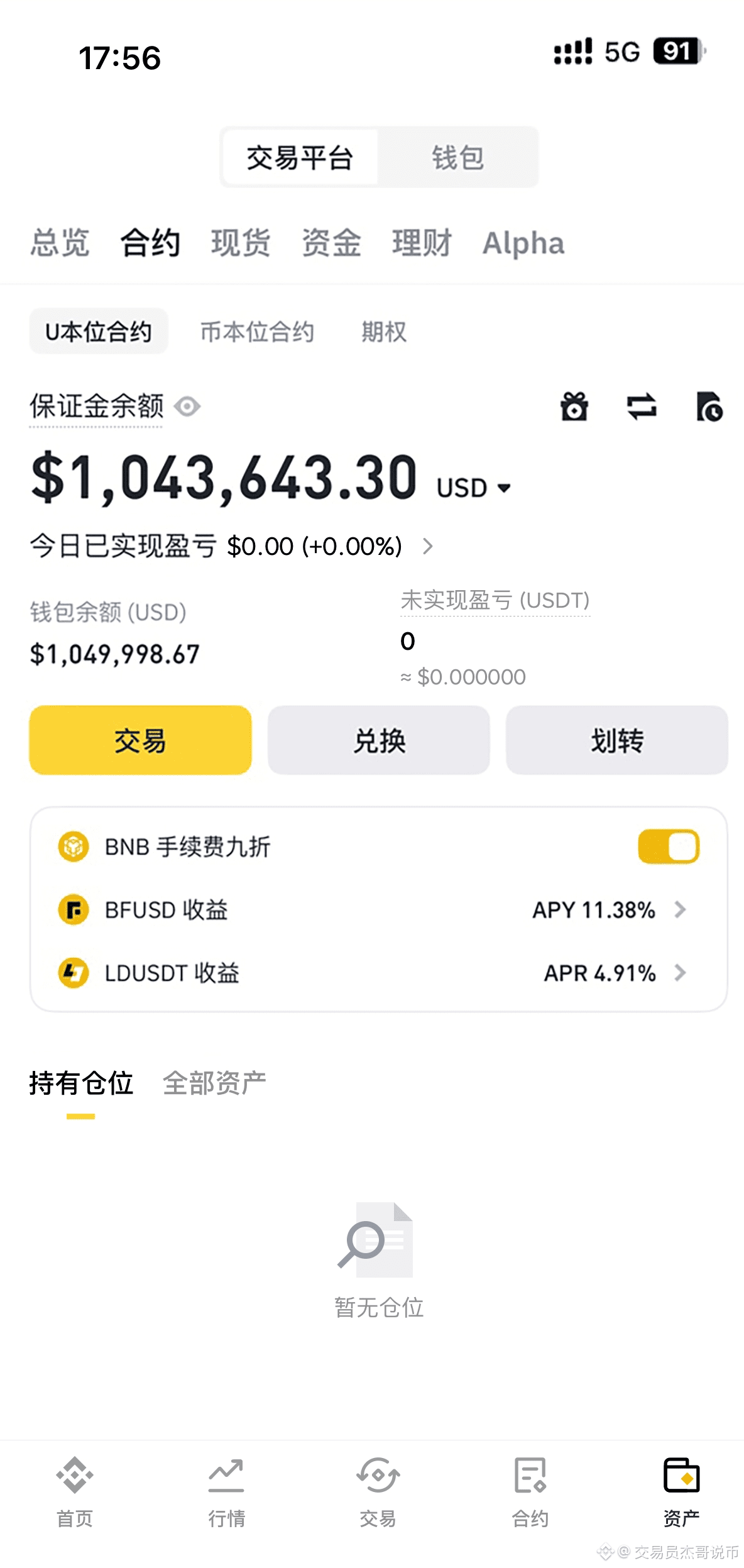
$BTC Many new friends who just entered the market are holding onto a few thousand USDT, worried they might miss opportunities. They chase the price action back and forth, running around with the market—yet often they don’t even manage to mess with it for a few days before their account shrinks by a large margin. The truth is, for small capital to grow slowly, you don’t need any secret techniques. What matters instead is a plain, tried-and-true method that’s been used for years.
I once met a complete beginner with zero trading experience. They entered with 900 USDT. At first, they couldn’t even really understand the candlestick charts and were afraid that making one wrong call would wipe out all the principal. I didn’t make them chew through a bunch of complicated indicator formulas. I just asked them to stick to three simple habits. Before two months were up, their account had steadily reached 10,000 USDT. Then they followed the rhythm step by step and gradually worked their way up to around 50,000 USDT. $ZEC
First, split your funds. Take 900 USDT and divide it into three parts: one part for small-lot trades to test short-term moves—if there’s a certain small profit, lock it in. One part is reserved specifically to wait for swings; you only trade when the direction is clear enough. The last part stays untouched at all times and you don’t open trades casually. The most fatal issue for small capital is never that you earn too slowly—it’s that one oversized position mistake can instantly block all the chances you’d have later to recover.
Second, don’t force yourself to trade every segment of the market. Most of the time, the market spends hours grinding in a range. Trading frequently only completely disrupts your rhythm. When the trend isn’t clear, wait patiently. Only act when the market has truly moved into a clear direction. When profits reach your target, take some off first, and then let the remaining position follow the market gradually.
Third, use fixed rules to control your emotions. If a loss hits a predefined level, exit decisively. When you’re in profit, reduce the position first. If your direction is wrong, never add more on a whim. If the next two or three trades don’t go well, stop right away and take a break. In the end, what you’re competing on in trading is never who can watch the charts the longest—it’s who can consistently carry out the same simple set of rules.
Small capital can grow slowly because it’s never about catching a sudden moonshot coin. It’s about a stable rhythm that can protect your principal and preserve your profits. #AI股持续上涨还有哪些投资机会
#比特币突破8.7万美元创八个月新高
I once met a complete beginner with zero trading experience. They entered with 900 USDT. At first, they couldn’t even really understand the candlestick charts and were afraid that making one wrong call would wipe out all the principal. I didn’t make them chew through a bunch of complicated indicator formulas. I just asked them to stick to three simple habits. Before two months were up, their account had steadily reached 10,000 USDT. Then they followed the rhythm step by step and gradually worked their way up to around 50,000 USDT. $ZEC
First, split your funds. Take 900 USDT and divide it into three parts: one part for small-lot trades to test short-term moves—if there’s a certain small profit, lock it in. One part is reserved specifically to wait for swings; you only trade when the direction is clear enough. The last part stays untouched at all times and you don’t open trades casually. The most fatal issue for small capital is never that you earn too slowly—it’s that one oversized position mistake can instantly block all the chances you’d have later to recover.
Second, don’t force yourself to trade every segment of the market. Most of the time, the market spends hours grinding in a range. Trading frequently only completely disrupts your rhythm. When the trend isn’t clear, wait patiently. Only act when the market has truly moved into a clear direction. When profits reach your target, take some off first, and then let the remaining position follow the market gradually.
Third, use fixed rules to control your emotions. If a loss hits a predefined level, exit decisively. When you’re in profit, reduce the position first. If your direction is wrong, never add more on a whim. If the next two or three trades don’t go well, stop right away and take a break. In the end, what you’re competing on in trading is never who can watch the charts the longest—it’s who can consistently carry out the same simple set of rules.
Small capital can grow slowly because it’s never about catching a sudden moonshot coin. It’s about a stable rhythm that can protect your principal and preserve your profits. #AI股持续上涨还有哪些投资机会
#比特币突破8.7万美元创八个月新高