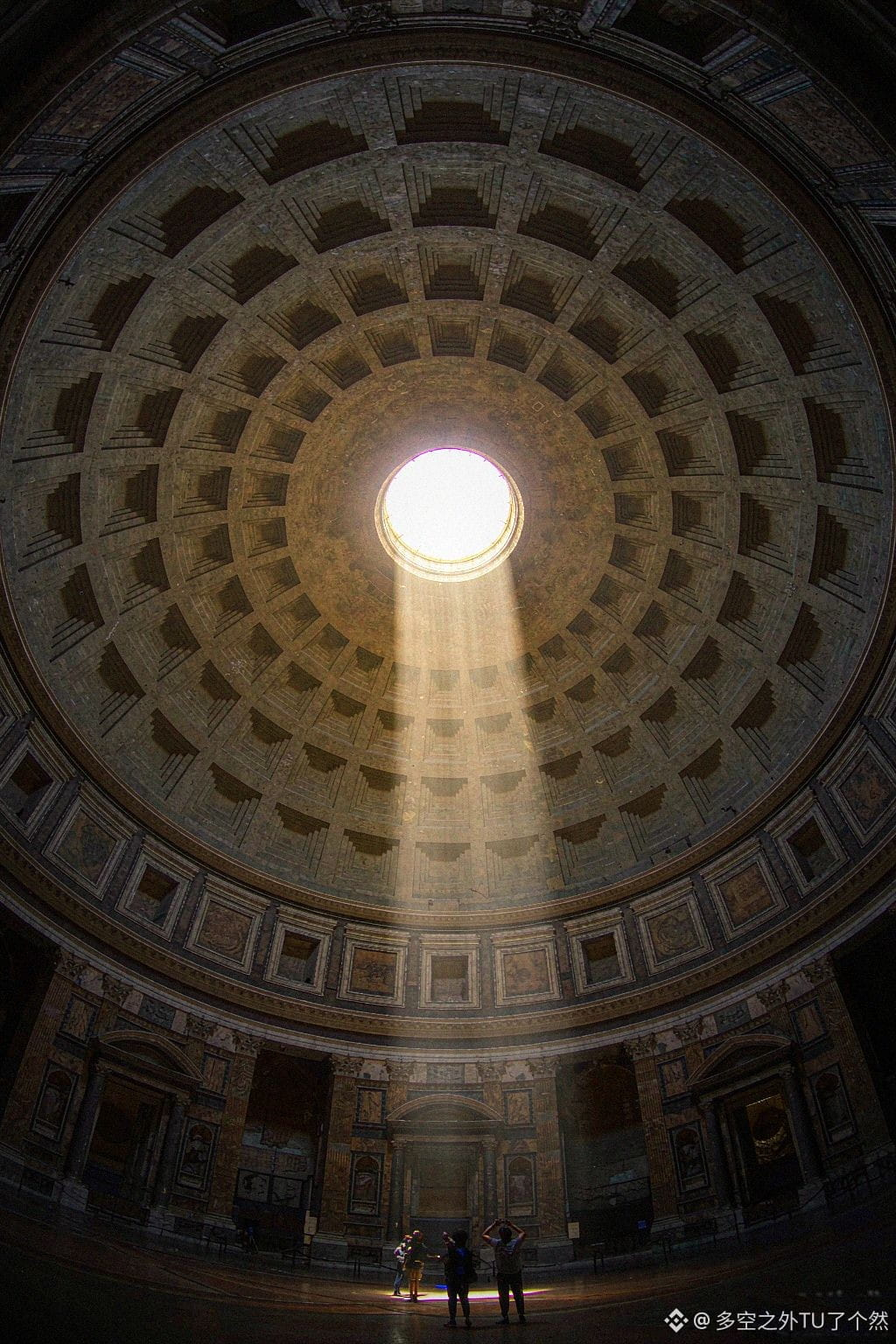
Modern concrete cracks within decades—why did ancient Roman buildings last for over two thousand years?
If you’ve been to Rome, you probably wonder: the Pantheon’s dome hasn’t collapsed in two thousand years, and the aqueducts that sit in rivers are still solid. But today’s concrete bridges generally have a design life of only about a hundred years, and they start cracking, spalling, and falling apart after just a few decades. So what recipe did the ancients actually use?
In fact, Roman concrete contains a scattering of small white fragments. For more than a hundred years, researchers have assumed these were flaws left behind by “uneven mixing.” In January 2023, an MIT team published in Science Advances: this is precisely the building’s “first-aid kit.” The Romans used a hot-mixing process, directly mixing quicklime with volcanic ash and water. The reaction releases heat, and unreacted quicklime pieces remain as those little fragments. When the concrete cracks, the fissures cut right through the fragments. Once rainwater seeps in, the fragments recrystallize into calcium carbonate—like glue—sealing the cracks shut.
The team recreated the recipe in the lab: a cracked Roman-style concrete mix, intentionally fractured, then soaked in water for two weeks—the cracks all healed completely, and not even a single drop could pass through. In the control group without quicklime, water kept flowing through.
In other words, the Romans intentionally left behind “defects,” so the structure could effectively heal itself. The Pantheon’s dome truly is the largest existing unreinforced concrete dome in the world.
Next time you pass an old building in the historic district, consider this: which building of ours do you think will still be standing in the same place after two thousand years?
If you’ve been to Rome, you probably wonder: the Pantheon’s dome hasn’t collapsed in two thousand years, and the aqueducts that sit in rivers are still solid. But today’s concrete bridges generally have a design life of only about a hundred years, and they start cracking, spalling, and falling apart after just a few decades. So what recipe did the ancients actually use?
In fact, Roman concrete contains a scattering of small white fragments. For more than a hundred years, researchers have assumed these were flaws left behind by “uneven mixing.” In January 2023, an MIT team published in Science Advances: this is precisely the building’s “first-aid kit.” The Romans used a hot-mixing process, directly mixing quicklime with volcanic ash and water. The reaction releases heat, and unreacted quicklime pieces remain as those little fragments. When the concrete cracks, the fissures cut right through the fragments. Once rainwater seeps in, the fragments recrystallize into calcium carbonate—like glue—sealing the cracks shut.
The team recreated the recipe in the lab: a cracked Roman-style concrete mix, intentionally fractured, then soaked in water for two weeks—the cracks all healed completely, and not even a single drop could pass through. In the control group without quicklime, water kept flowing through.
In other words, the Romans intentionally left behind “defects,” so the structure could effectively heal itself. The Pantheon’s dome truly is the largest existing unreinforced concrete dome in the world.
Next time you pass an old building in the historic district, consider this: which building of ours do you think will still be standing in the same place after two thousand years?