


**Gold (XAU) outlook: major players are adding positions, with a target of $5,000.**
According to the latest data, global gold ETFs attracted **$18 billion** in August alone—this is the second-largest monthly inflow in history. The total assets under management have grown to $615 billion, and metal holdings reached a record 4,189 tonnes.
What does this mean? Institutional money is returning to gold more actively than during the height of the 2020 pandemic and after the start of the conflict in Ukraine in 2022. French bank Societe Generale states directly: “Gold has entered a new phase of the bull market in 2026—now growth is driven not by speculative momentum, but by steady structural buying of ETFs, futures, and options.”
**Technical picture** on your chart: the price is trading around 4343, with key resistance at the 4400 zone. A breakout and consolidation above this level paves the way to 4500, and then to the psychological mark of 5000 dollars per ounce.
**Why it’s not just “dreams”:** Goldman Sachs and UBS keep long-term targets—5400 dollars by the end of 2027. UBS expects 5000 as early as March 2027. Meanwhile, central banks (China, Poland, Kazakhstan) continue buying gold for reserves—during the second quarter of 2026 they acquired 289 tons, five times more than in the first quarter.
**Risks:** The Fed is still maintaining a tough stance—US inflation is at 3.4%, which limits room for rate cuts. If bond yields continue to rise, gold may face pressure in the short term. But structural demand for gold—from central banks and institutional investors—remains strong support.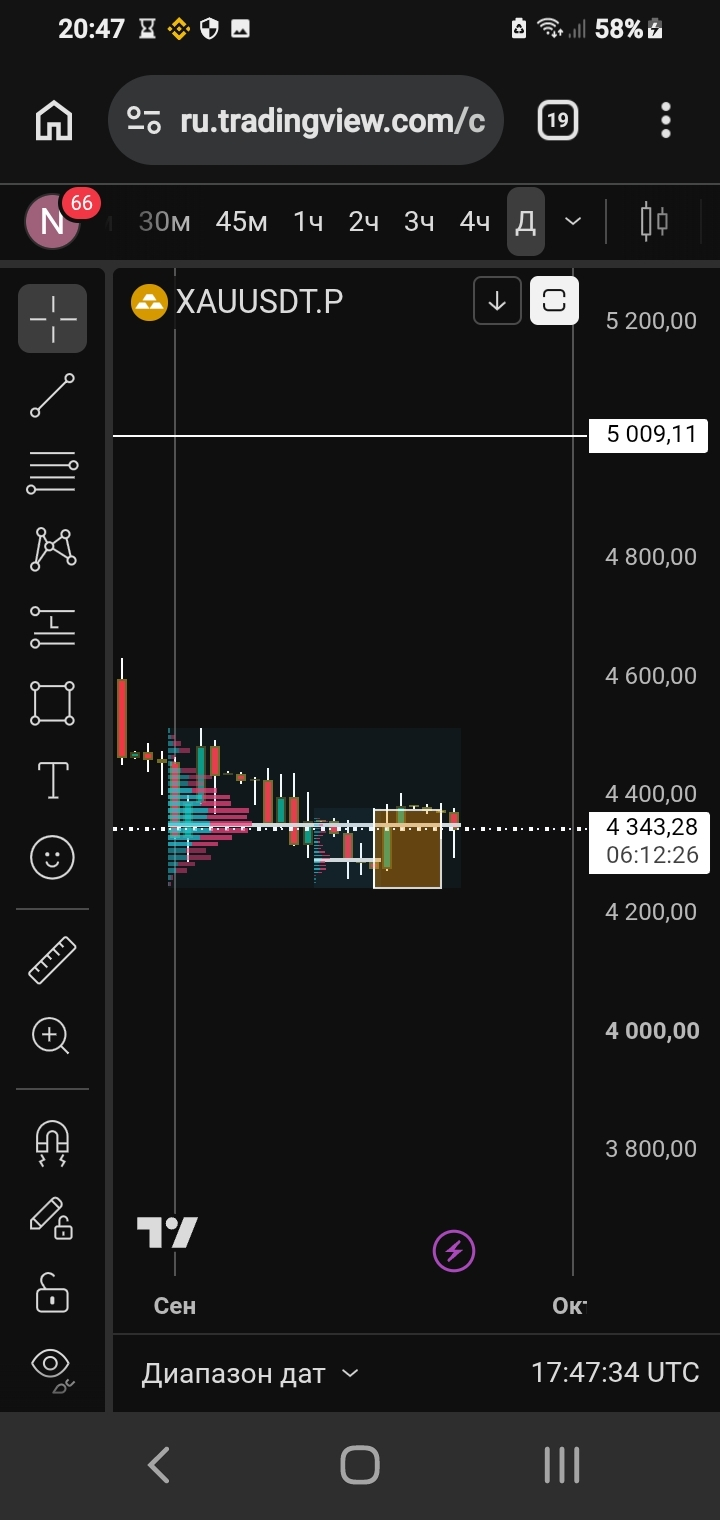
**Conclusion:** data on capital volumes and flows confirms: large money is entering gold, not leaving it. The 5000 level looks like a realistic medium-term target.$XAU