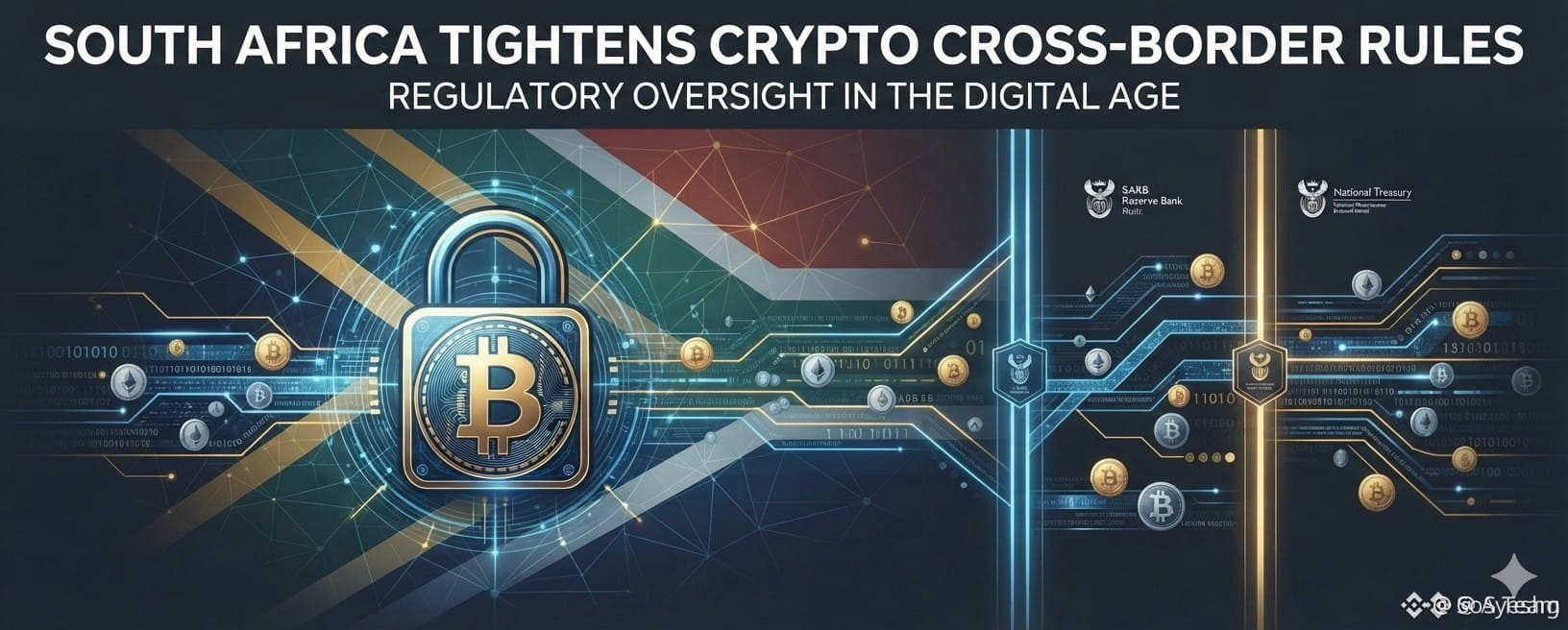
Tightening exchange regulations usually triggers panic selling, yet historically, formal regulatory frameworks have marked the exact bottom before major institutional inflows.
Most traders see headlines about compliance and instantly imagine their portfolios frozen or liquidity draining away overnight. That sinking feeling of watching your funds get caught in cross-border red tape is something every veteran in this space has lived through at least once.
Back in 2017 and again in 2020, every time a regional economy pushed for exchange surveillance, retail panicked into fiat while smart capital quietly built on-ramps. South Africa proposing stricter exchange controls is not an isolated clampdown; it is part of a broader global playbook where sovereign borders try to catch up with borderless liquidity. When rails tighten, capital does not disappear. Instead, it seeks stability in assets like $USDT for settlement or migrates toward deeply integrated layer-one infrastructure like $AVAX and $ARB that can handle high-throughput, compliant transfer volume.
The lesson from past cycles is simple: regulations create short-term friction, but they also clear the path for the kind of liquidity that retail alone could never provide. The pain of adaptation is real, but the structural maturity it brings usually outlasts the panic.
How do you usually adjust your exchange custody when local regulations start tightening?
#SouthAfricaProposesCryptoExchangeControls #ECBStartsBlockchainEuroSettlement
Most traders see headlines about compliance and instantly imagine their portfolios frozen or liquidity draining away overnight. That sinking feeling of watching your funds get caught in cross-border red tape is something every veteran in this space has lived through at least once.
Back in 2017 and again in 2020, every time a regional economy pushed for exchange surveillance, retail panicked into fiat while smart capital quietly built on-ramps. South Africa proposing stricter exchange controls is not an isolated clampdown; it is part of a broader global playbook where sovereign borders try to catch up with borderless liquidity. When rails tighten, capital does not disappear. Instead, it seeks stability in assets like $USDT for settlement or migrates toward deeply integrated layer-one infrastructure like $AVAX and $ARB that can handle high-throughput, compliant transfer volume.
The lesson from past cycles is simple: regulations create short-term friction, but they also clear the path for the kind of liquidity that retail alone could never provide. The pain of adaptation is real, but the structural maturity it brings usually outlasts the panic.
How do you usually adjust your exchange custody when local regulations start tightening?
#SouthAfricaProposesCryptoExchangeControls #ECBStartsBlockchainEuroSettlement