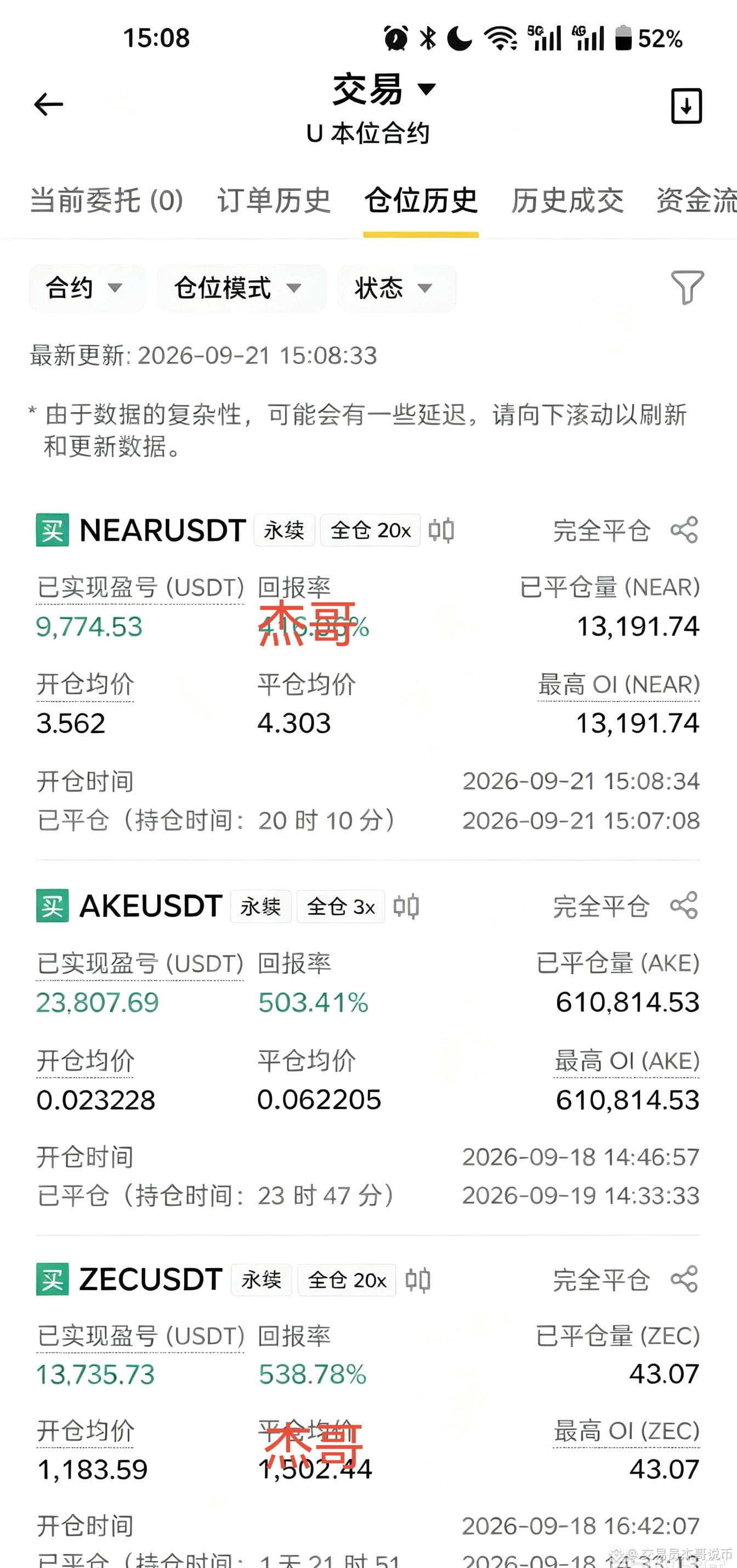
Having fought and struggled in the crypto market for 9 years, I’ve seen too many people come in with a small amount of capital, always thinking they can turn things around by going all-in with a single trade. In the end, they usually don’t even make it through half a month before their account gets wiped out. The truth is, if you want small capital to grow steadily, you don’t need any flashy “magic” strategies. Just stick to a set of boring, tried-and-true methods—the results are far better than constantly messing around.
I once met a complete beginner with no trading experience. His starting capital was only 900 USDT. The thing that troubled him most was that his principal was too small—he worried that if he lost twice, there’d be no room left to try again. I didn’t tell him to go chew through dozens of indicator tutorials, and I didn’t have him staring at charts and burning the midnight oil every day. I just taught him three old rules I’ve used for 7 years, and told him to repeat them exactly. That’s it—follow the rhythm. After two months, his account had grown to 10,000 USDT. Later, he pushed forward steadily, and eventually got to around 50,000 USDT.
First, split your funds into three parts. Each part is 300 USDT. One portion is for short-term trades—small-scale trial and error. When you have a definite unrealized profit, take profit decisively. Another portion is reserved specifically for swing trading—waiting until the trend is completely clear before entering. The remaining portion stays as a reserve card at all times. Unless the opportunity has extremely high certainty, you don’t use it. What’s most dangerous for small capital is never that profits come slowly—it’s making one wrong judgment that blocks every future chance to turn things around.
Second, only wait for the market conditions that are truly worth acting on. Most of the time, the market is grinding through range-bound noise. The more frequently you open positions, the easier it is to get slapped around and mess up your pace. When the trend is unclear, just stay calm and wait. Once the direction becomes clear, then trade. After your profit reaches the preset target, take half off first to lock in gains. Let the remaining position follow the market in line with the trend.
Third, use fixed rules to control your emotions. If your loss hits the stop-loss level you set in advance, exit without hesitation. When profits come in, reduce positions in batches. If you judge the direction wrong, never blindly add to average down. After two or three consecutive trades go wrong, stop immediately and take a break. In the end, trading isn’t about who stares at the screen longer—it’s about who can keep executing the same simple set of rules, without emotions, consistently.
Growing 900 USDT to around 50,000 USDT has nothing to do with sudden luck. It’s always these three things: splitting your funds to keep enough room, filtering out ineffective market conditions, and using rules to control your actions. Many people don’t lack the next coin that will pump—they lack a stable trading rhythm that truly fits small capital.
I once met a complete beginner with no trading experience. His starting capital was only 900 USDT. The thing that troubled him most was that his principal was too small—he worried that if he lost twice, there’d be no room left to try again. I didn’t tell him to go chew through dozens of indicator tutorials, and I didn’t have him staring at charts and burning the midnight oil every day. I just taught him three old rules I’ve used for 7 years, and told him to repeat them exactly. That’s it—follow the rhythm. After two months, his account had grown to 10,000 USDT. Later, he pushed forward steadily, and eventually got to around 50,000 USDT.
First, split your funds into three parts. Each part is 300 USDT. One portion is for short-term trades—small-scale trial and error. When you have a definite unrealized profit, take profit decisively. Another portion is reserved specifically for swing trading—waiting until the trend is completely clear before entering. The remaining portion stays as a reserve card at all times. Unless the opportunity has extremely high certainty, you don’t use it. What’s most dangerous for small capital is never that profits come slowly—it’s making one wrong judgment that blocks every future chance to turn things around.
Second, only wait for the market conditions that are truly worth acting on. Most of the time, the market is grinding through range-bound noise. The more frequently you open positions, the easier it is to get slapped around and mess up your pace. When the trend is unclear, just stay calm and wait. Once the direction becomes clear, then trade. After your profit reaches the preset target, take half off first to lock in gains. Let the remaining position follow the market in line with the trend.
Third, use fixed rules to control your emotions. If your loss hits the stop-loss level you set in advance, exit without hesitation. When profits come in, reduce positions in batches. If you judge the direction wrong, never blindly add to average down. After two or three consecutive trades go wrong, stop immediately and take a break. In the end, trading isn’t about who stares at the screen longer—it’s about who can keep executing the same simple set of rules, without emotions, consistently.
Growing 900 USDT to around 50,000 USDT has nothing to do with sudden luck. It’s always these three things: splitting your funds to keep enough room, filtering out ineffective market conditions, and using rules to control your actions. Many people don’t lack the next coin that will pump—they lack a stable trading rhythm that truly fits small capital.