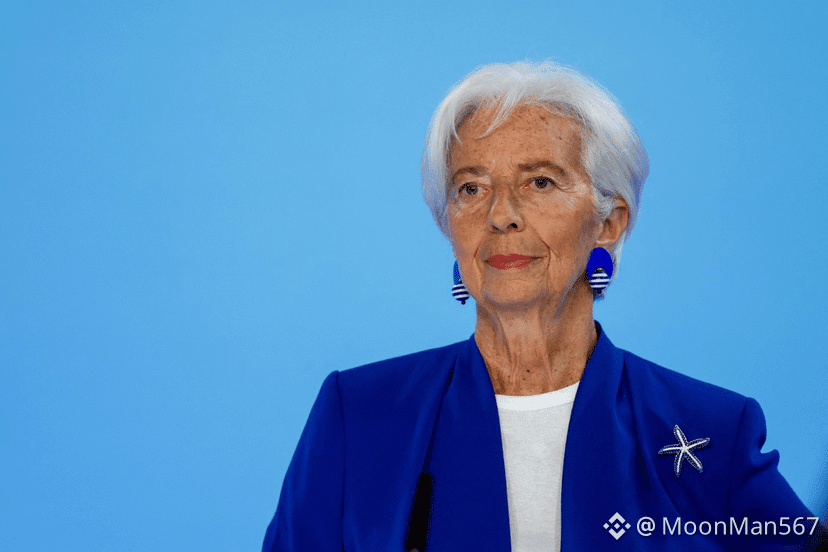
Lagarde personally intervened in an attempt by Binance to obtain an EU-wide MiCA license through Greece—this investigation was published by The Wall Street Journal.
According to the WSJ, in early June the Greek regulator HCMC had already informed ESMA of its intention to approve Binance’s application. After that, the HCMC vice president allegedly told Binance that Christine Lagarde had asked the Greek prime minister not to grant approval.
There is a nuance, and it is very important: the ECB does not formally license crypto exchanges under MiCA. In Greece, this is handled by HCMC. The regulator itself said that it evaluated the application “independently.”
Binance ultimately withdrew its Greek application on June 24 and said it would seek a license in another EU country.
According to the WSJ, among the reasons behind Lagarde’s position were Binance’s prior problems with U.S. regulators and concerns about the spread of dollar-backed stablecoins in Europe.
I wouldn’t draw the conclusion “the ECB banned Binance” here. We do not have that fact. We have a journalistic investigation into informal influence, official denials, and a very telling conflict over who actually shapes EU crypto regulation.
What interests me most in this story is the latter. Because sometimes the most important part of regulation happens not where the stamp is.
According to the WSJ, in early June the Greek regulator HCMC had already informed ESMA of its intention to approve Binance’s application. After that, the HCMC vice president allegedly told Binance that Christine Lagarde had asked the Greek prime minister not to grant approval.
There is a nuance, and it is very important: the ECB does not formally license crypto exchanges under MiCA. In Greece, this is handled by HCMC. The regulator itself said that it evaluated the application “independently.”
Binance ultimately withdrew its Greek application on June 24 and said it would seek a license in another EU country.
According to the WSJ, among the reasons behind Lagarde’s position were Binance’s prior problems with U.S. regulators and concerns about the spread of dollar-backed stablecoins in Europe.
I wouldn’t draw the conclusion “the ECB banned Binance” here. We do not have that fact. We have a journalistic investigation into informal influence, official denials, and a very telling conflict over who actually shapes EU crypto regulation.
What interests me most in this story is the latter. Because sometimes the most important part of regulation happens not where the stamp is.