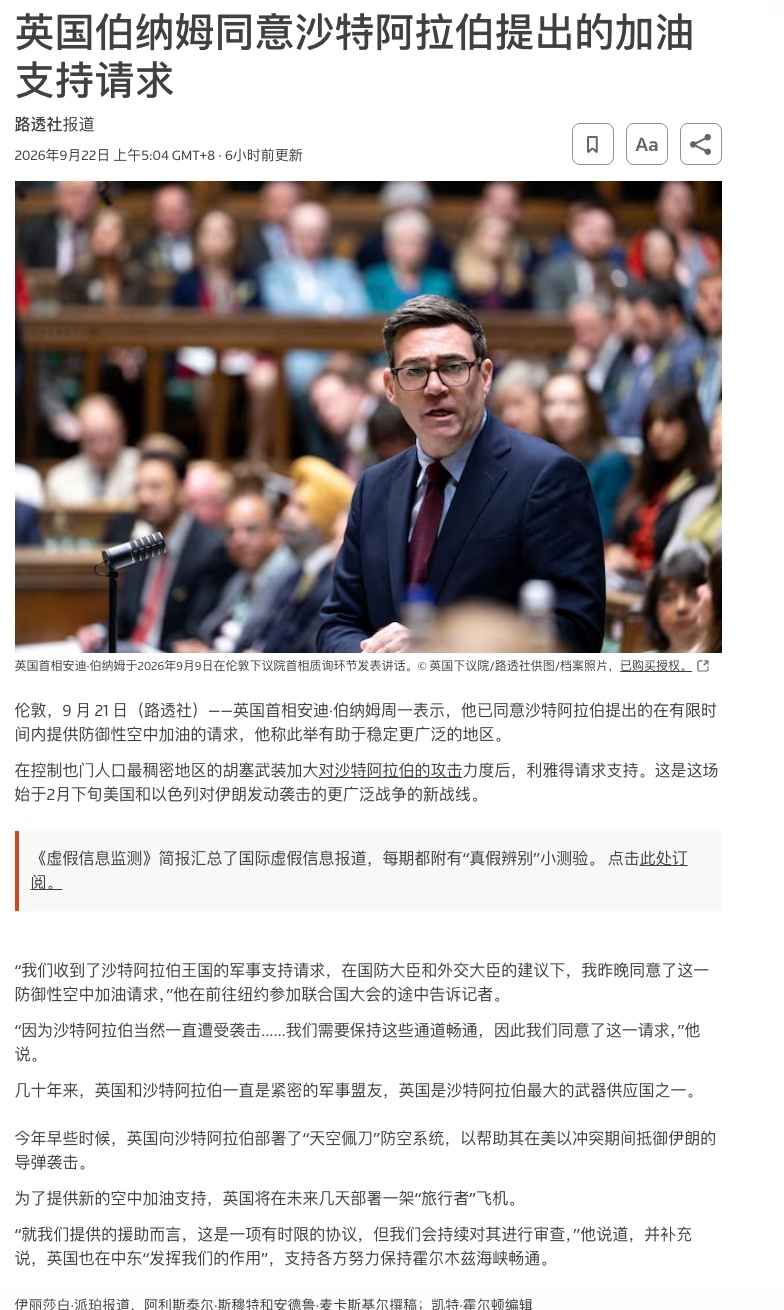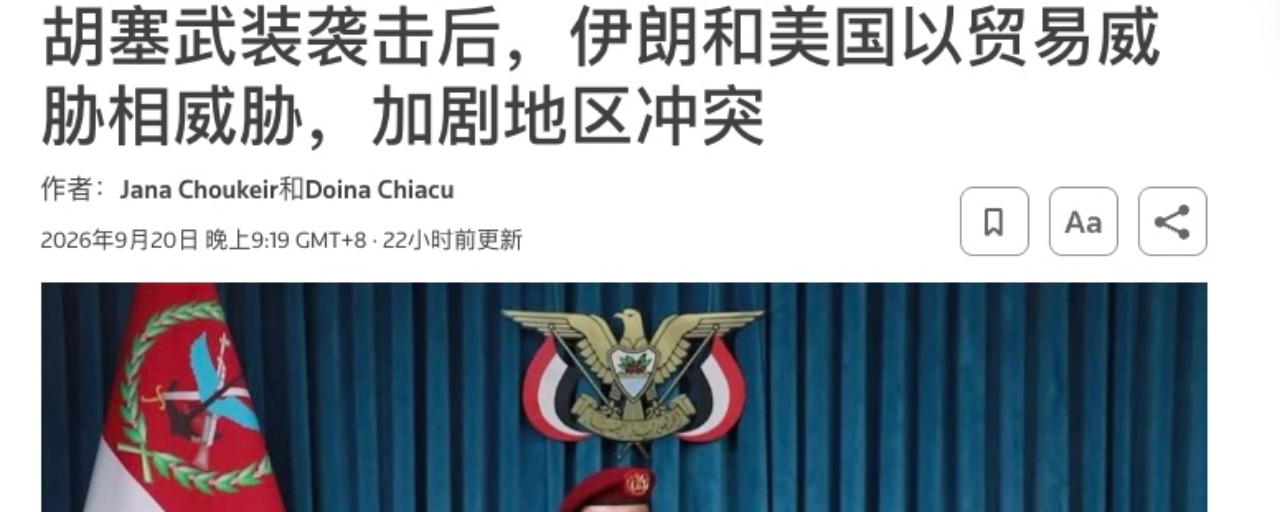

Latest developments in the Iran–U.S. situation—under simultaneous military and diplomatic games in the Middle East, multiple parties are frequently mediating. Is this aimed at bringing the Iran–U.S. sides back to the negotiating table?
Two days later, with regard to the Middle East and the Iran–U.S. situation, various sides have begun frequently displaying diplomatic moves #苹果谷歌招募稳定币与代币化存款人才
In terms of Iran, the foreign minister will travel to New York to attend the United Nations General Assembly. Before going to the United States, he will transit in Qatar, which is currently a key bridge for communication between Iran and the United States. Trump has also explicitly said he will meet the Iranian foreign minister in New York. Given that this timing also coincides with China’s top leader being in New York, the Iran–U.S. situation is very likely to see rapid behind-the-scenes mediation and progress in New York at the time.
As the Iranian foreign minister travels to the United States, Pakistan—an important mediator in the U.S.-Iran situation—sends its interior minister, Mohsin Naqvi, to Tehran on the 21st. Although Naqvi’s visit is clearly meant to convey key U.S. views, his presence in Tehran at this time very likely serves as advance preparation for subsequent mediation.
As for the two sides—U.S. and Iran—continue applying military and diplomatic pressure. The Iran-backed Houthis remain a threat to the Strait of Hormuz, and the Strait of Hormuz is still operating under low navigability. Iran continues to pressure the United States through military threats against energy transport.
On the U.S. side, it continues to upgrade sanctions against Iran’s economy. It responds to Iran through diplomatic and economic means. Clearly, at this stage, negotiation and pressure are not in conflict. Military, diplomatic, and economic sanctions are all important bargaining chips in the talks between the two sides. Until there is a clear turning point, neither side’s力度 will temporarily stop.
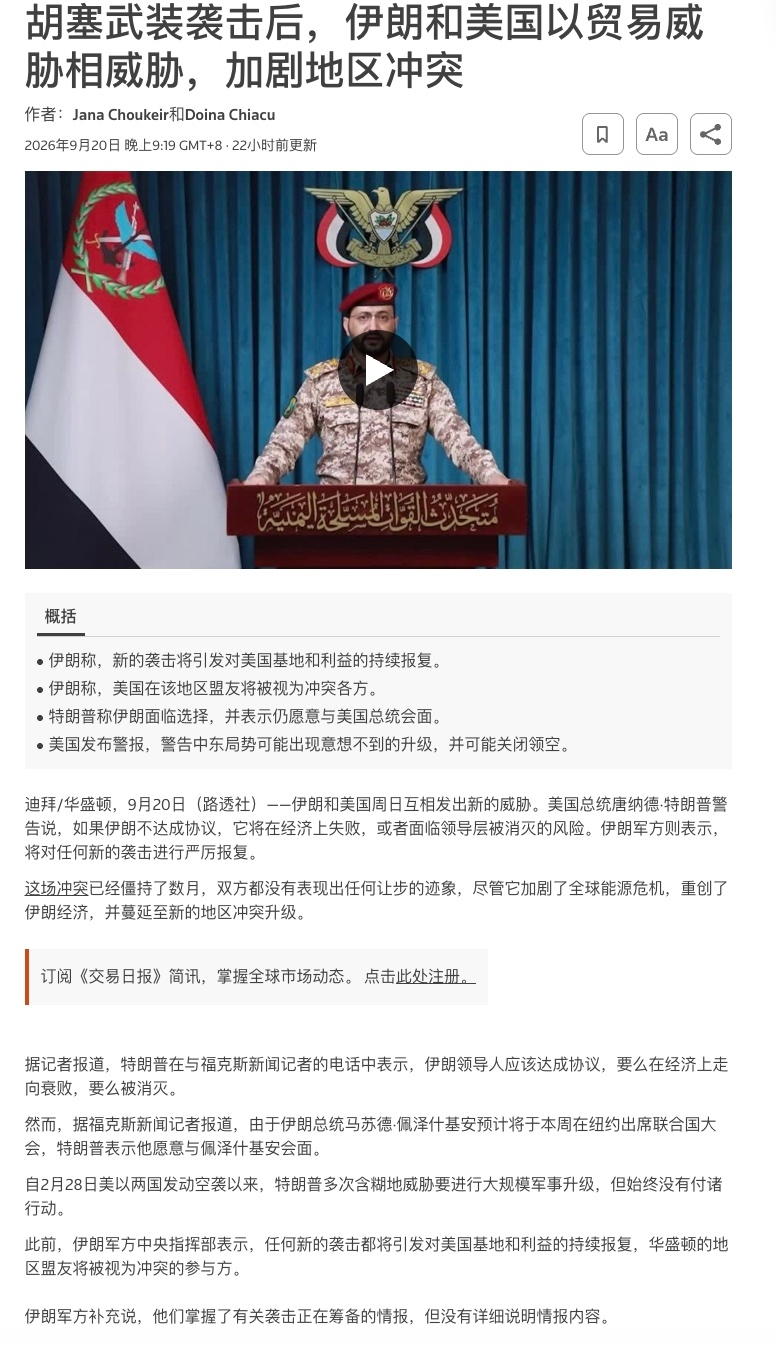
On Saudi Arabia and the Houthis: Saudi Arabia has begun seeking help because it has received continuous attacks from the Houthis. Britain has promised to provide Saudi Arabia with refueling aircraft, but in limited numbers. I think this kind of help is more like a show of support; with such a limited number of refueling aircraft, it likely cannot provide Saudi Arabia with much substantive assistance.
Although the current situation is complicated, the route is already very clear. Iran’s foreign minister appears in the United States alongside Chinese leaders. Once a new solution is proposed for the U.S.-Iran situation, Pakistan’s interior minister can, first thing, deliver the information to Iran’s senior leadership and begin mediation to promote a ceasefire and negotiations.
Regarding the U.S. economic sanctions and Iran’s control over the straits: once both sides return to the negotiation agenda, the level of pressure from both sides is very likely to noticeably weaken or even stop. So over the next 3 days this week, I think it may quickly bring a turning point in the current phase of U.S.-Iran relations. Due to everyone’s efforts, the effectiveness of the feedback this time may be higher, and perhaps we can get an answer soon!