

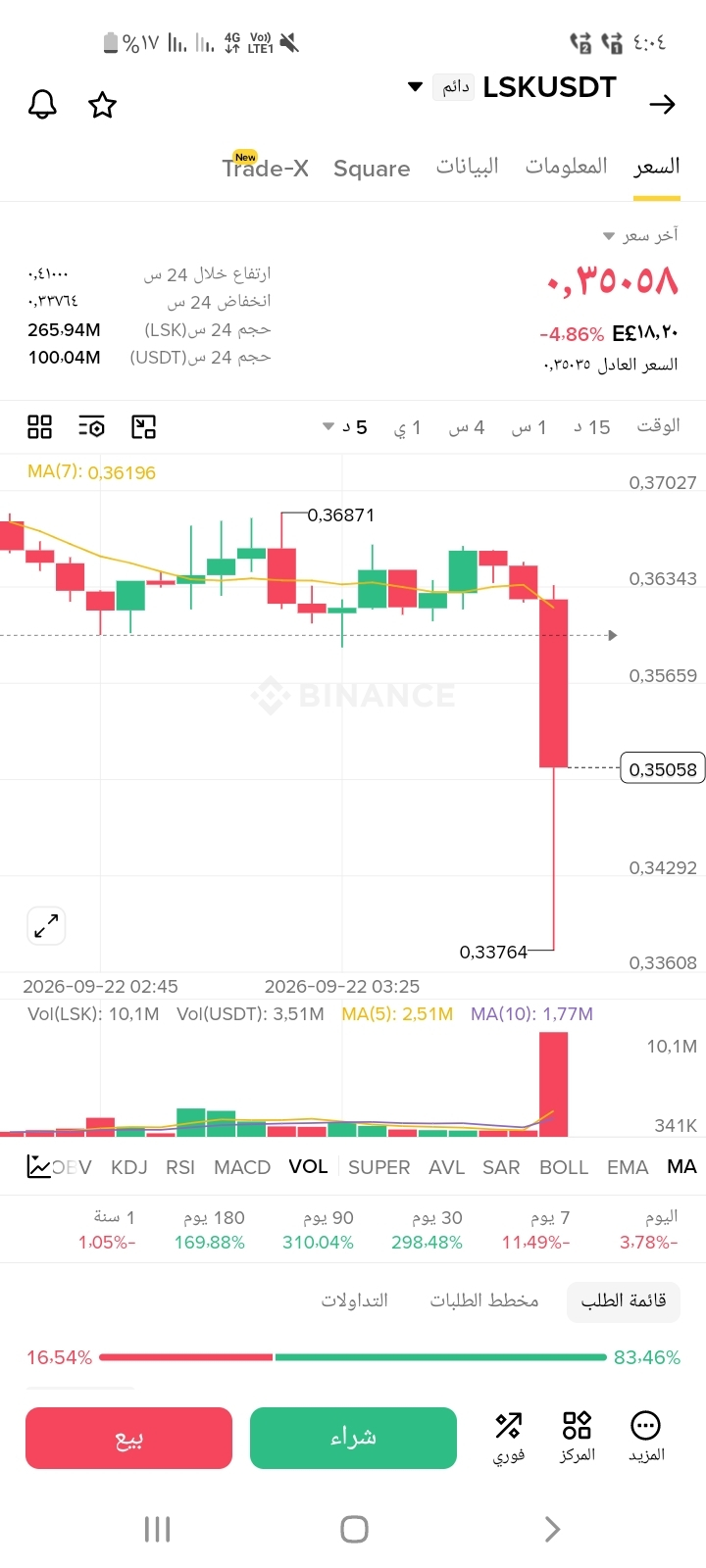
In recent times, the Lisk (LSK) coin has witnessed major developments that have brought attention back to it, especially after the project announced the burning of 100 million LSK—reducing the total supply from about 400 million to 300 million tokens upon completion of the burn process.
But the irony that draws traders' attention is that the price did not move in the direction some might expect from a burn of this magnitude.
So, at the same time that discussions focus on reducing supply, the coin experienced clear selling pressure. Strong bearish candles appeared on the chart, accompanied by a noticeable rise in trading volume. This highlights an important point in the digital-asset market: burning tokens does not automatically mean the price will rise.
The burn reduces supply, but the price ultimately is determined by the balance of supply and demand, liquidity, investors’ confidence, and their expectations about the project’s future.
And most importantly, the current LSK story is not only about burning.
According to Lisk’s official announcement, Lisk Chain is scheduled to stop on October 31, 2026. Users are required to withdraw their assets from the network and move them to Ethereum before the deadline. Lisk also announced its transition to a new direction focused on providing financial-operations solutions for companies.
This is where the full picture emerges.
On one hand, 100 million LSK will be burned, reducing the targeted total supply to 300 million tokens.
On the other hand, there is a major change in the project’s strategy and the closure of the Lisk Chain and the DAO—factors that could lead the market to reassess the coin based on the future of the new project approach, not just on the burn news.
Even the burn proposal itself makes clear that one of its goals is to reduce the growth of future supply and limit the sell pressure associated with spending from the DAO treasury, but this does not represent a guarantee that the price will rise after the burn.
Therefore, describing what is happening as “burning tokens = confirmed price explosion” may give an inaccurate picture.
The burn is real, but its impact on the price depends on how the market responds to it and on the actual demand for LSK during the next phase.
It’s also notable that LSK holders on Lisk Chain face an important deadline. The project announced that the network will close on October 31, 2026, and that withdrawal and transfer operations may take several days. Therefore, it urged users to start early and not wait until the last days.
Summary:
LSK is not just facing a “burn of 100 million tokens” story. We are looking at a major burn + a radical change in the project strategy + the closure of Lisk Chain + a transition to a new model. Therefore, tracking the price alone isn’t enough; you also need to monitor the execution of the project plan and whether the new direction will create a real, sustainable demand for LSK.
⚠️ **This content is educational and not a recommendation to buy or sell. Cryptocurrencies are highly volatile, and the price may fall even with positive news such as a token burn.**