Russia’s crypto industry could be brought under a regulatory framework by the end of the year
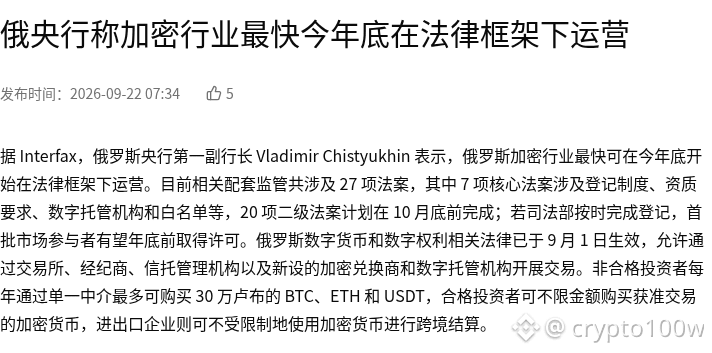
Russia’s crypto industry may enter the legal framework for operation as early as this year’s end. The Central Bank’s related supporting regulations involve 27 pieces of legislation in total, including 7 core bills covering registration systems, qualification requirements, digital custody institutions, and whitelist rules. The remaining 20 secondary bills are planned to be completed by the end of October. If the Ministry of Justice completes the registrations on schedule, the first batch of market participants may obtain licenses by year-end. Market commentary highlights a split between bullish and bearish views: it is favorable for regulated trading platforms, custody providers, and banking channels, meaning local crypto services are moving from the gray area toward licensing. However, it is unfavorable for unlicensed exchange operators and OTC intermediaries, since subsequent enforcement and entry costs are likely to rise.
Russian laws related to digital currency and digital rights took effect on September 1, allowing trading via exchanges, brokers, trust management institutions, as well as newly established crypto exchanges and digital custody institutions. The transition period for relevant market participants has been extended to July 2027. This event does not directly correspond to a single token; instead, it mainly affects Russia’s local channels for capital inflows and outflows and compliant liquidity.
Source: Wu Shuo
Figure 1: Russia’s crypto industry could be brought under a regulatory framework by the end of the year · Source page partial screenshot
Image source: https://www.wublock123.com/news/russian-central-bank-says-crypto-to-operate-under-law-by-year-end-68768
Russia’s crypto industry may enter the legal framework for operation as early as this year’s end. The Central Bank’s related supporting regulations involve 27 pieces of legislation in total, including 7 core bills covering registration systems, qualification requirements, digital custody institutions, and whitelist rules. The remaining 20 secondary bills are planned to be completed by the end of October. If the Ministry of Justice completes the registrations on schedule, the first batch of market participants may obtain licenses by year-end. Market commentary highlights a split between bullish and bearish views: it is favorable for regulated trading platforms, custody providers, and banking channels, meaning local crypto services are moving from the gray area toward licensing. However, it is unfavorable for unlicensed exchange operators and OTC intermediaries, since subsequent enforcement and entry costs are likely to rise.
Russian laws related to digital currency and digital rights took effect on September 1, allowing trading via exchanges, brokers, trust management institutions, as well as newly established crypto exchanges and digital custody institutions. The transition period for relevant market participants has been extended to July 2027. This event does not directly correspond to a single token; instead, it mainly affects Russia’s local channels for capital inflows and outflows and compliant liquidity.
Source: Wu Shuo
Figure 1: Russia’s crypto industry could be brought under a regulatory framework by the end of the year · Source page partial screenshot
Image source: https://www.wublock123.com/news/russian-central-bank-says-crypto-to-operate-under-law-by-year-end-68768