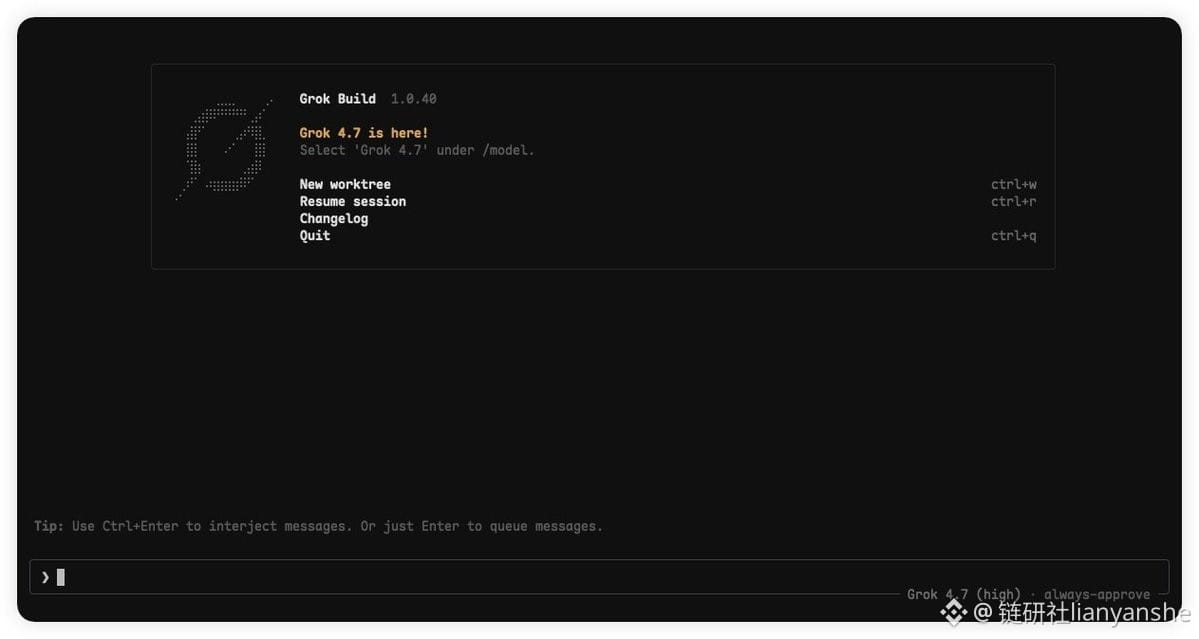
Delayed several times, Grok 4.7 is finally here, with a parameter scale of 2.1 trillion.
According to Musk’s earlier revelations, version 4.7 added SpaceX’s supplemented training data, including Starlink satellite telemetry data, manufacturing records, and engineering incident logs. They really went all out.
This version is roughly equivalent to Claude Opus 5.0, and future releases are expected to target the latest models from Claude and OpenAI. I initially thought Musk was just talking big—but it turns out he actually delivered on everything, one by one.
Grok fell behind for about a year, and the turning point came after the acquisition of the Cursor team. This shows that Cursor’s team—and the training data they have—aren’t simple. It also suggests that the talent gap between large model teams isn’t as big as people think; what truly widens the gap is training data and compute. On that front, at least SpaceX already has a ticket to the future.
According to Musk’s earlier revelations, version 4.7 added SpaceX’s supplemented training data, including Starlink satellite telemetry data, manufacturing records, and engineering incident logs. They really went all out.
This version is roughly equivalent to Claude Opus 5.0, and future releases are expected to target the latest models from Claude and OpenAI. I initially thought Musk was just talking big—but it turns out he actually delivered on everything, one by one.
Grok fell behind for about a year, and the turning point came after the acquisition of the Cursor team. This shows that Cursor’s team—and the training data they have—aren’t simple. It also suggests that the talent gap between large model teams isn’t as big as people think; what truly widens the gap is training data and compute. On that front, at least SpaceX already has a ticket to the future.