

In the crypto world, many people are too focused on price movements. When the market rises, attention turns to the potential for profit. When the market drops, many people simply choose to wait. However, there’s one thing that’s often overlooked: how to manage crypto assets that are not currently being used?
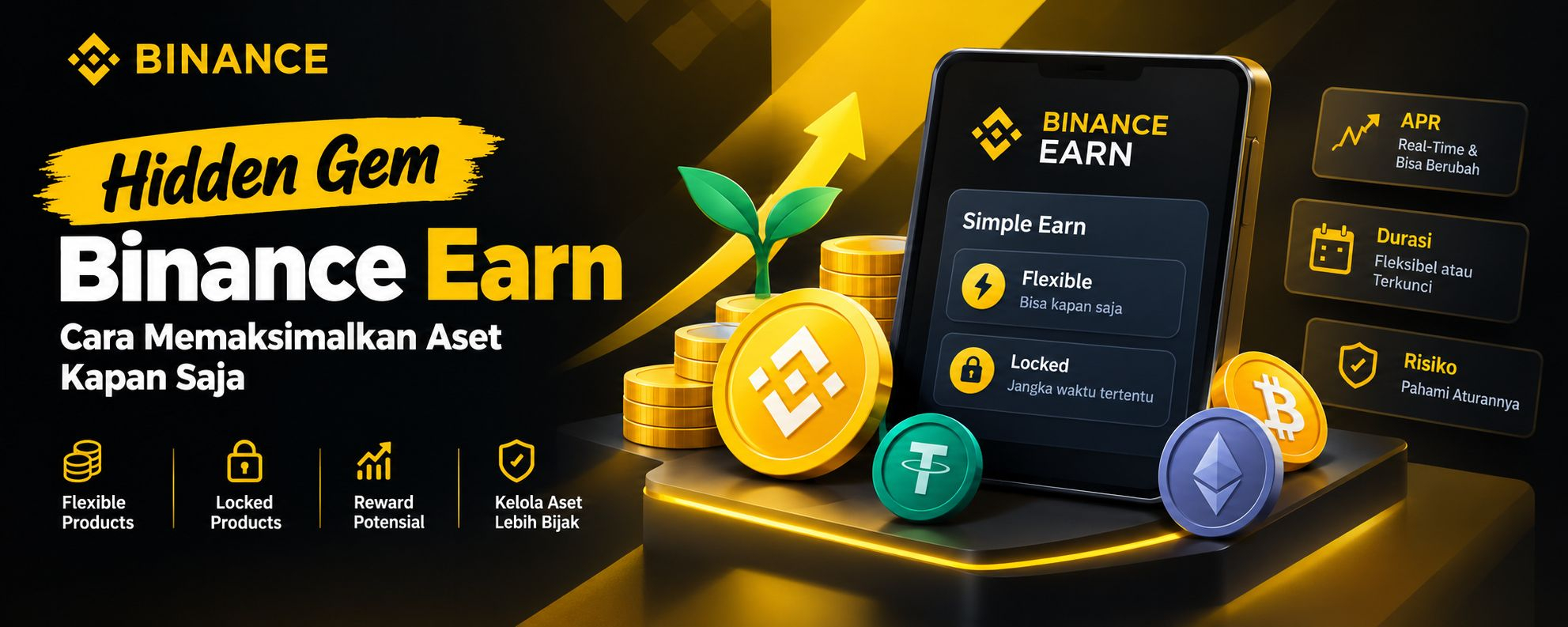
This is where Binance Earn becomes an interesting feature to understand. Binance Earn offers a variety of products that allow users to earn rewards from the digital assets they already have. One section that’s quite easy to understand is Simple Earn, which provides flexible or locked product options according to users’ needs.
In my opinion, the “hidden gem” of Binance Earn isn’t just the APR number you see on the screen. What’s more interesting is the concept of asset management: crypto that was previously only stored in a wallet can be placed into specific products to potentially generate rewards, while users can still choose a structure that matches their liquidity needs.
Flexible or Locked? Need Is the Key
One of the first things you need to understand when learning how to use Binance Earn is the difference between Flexible Products and Locked Products.
Flexible Products are designed so users can subscribe anytime and start earning rewards. Binance explains that rewards on Flexible Products are calculated based on Real-Time APR and can change according to the prevailing conditions. Rewards can also accumulate every minute.
Models like this can be more relevant for someone who still wants to maintain asset flexibility. For example, when we don’t know exactly when the asset will be used, redemption flexibility can be an important consideration.
Meanwhile, Locked Products use a specific time period. In these products, assets are locked for the chosen period and rewards are usually distributed periodically. Binance also explains that the APR on Locked Products generally can change, except for certain products that have a Fixed Rate.
This means product selection should not be based only on the largest reward number. You also need to consider the duration, liquidity needs, and your ability to hold the asset for a specific period.
How to Use Binance Earn?
The basic process is quite simple. Users can go to the Earn section, choose Simple Earn, then find the asset they want to use. After that, users can view the available products, check the duration and the rewards displayed, enter the amount of assets, and then confirm.
For Locked Products, there is also an Auto-Subscribe feature available for certain products. This feature can help automatically update positions when the previous period ends. However, users still need to understand the rules of the selected product because quota availability and Auto-Subscribe terms may differ.
Therefore, a good Binance Earn tutorial shouldn’t only explain which buttons to press, but should also teach users to read the product details before subscribing.
Binance Earn Rewards Don’t Mean No Risk
Another important point is understanding that rewards are not free money and APR is not a guarantee of profit in fiat terms. The value of crypto assets can change, and the reward rate on some products can also change.
Binance explains that Simple Earn is designed as a product with relatively lower risk compared to some other Earn product types, but risks still exist, including the possibility of losing principal under extreme market conditions.
For Locked Products, users indeed may have the opportunity to earn rewards during the lock-up period. However, early redemption can cause previously earned rewards to be lost or reduced according to the product terms. Binance also states that the process of returning assets after early redemption may take some time.
So don’t just look at the APR number. Also look at the duration, redemption rules, APR changes, subscription limits, and the risks of the assets being used.
Simple Strategy: Don’t Let Assets Sit Idle Without a Plan
For me, the interesting value of Simple Earn is its ability to be part of an asset management strategy, not just a place to chase APR.
For example, someone who needs higher liquidity might consider Flexible Products. Meanwhile, assets that won’t be used for a certain period could be considered for Locked products, after users understand the terms.
With that approach, Binance Earn can help turn the habit of “save and forget” into “save with a plan.” Even when users aren’t actively monitoring the market, certain assets can still generate rewards according to the selected product and applicable conditions.
However, each user has different circumstances. There is no single product that automatically fits everyone. Understanding your own needs before choosing a product matters much more than simply chasing the highest APR.
Conclusion
Binance Earn’s hidden gem is not really only about earning Binance Earn rewards. The bigger value lies in how we manage crypto assets in a more structured way.
By understanding the differences between Flexible and Locked Products, reading the APR and its terms, and choosing based on liquidity needs, users can use Simple Earn in a more informed way.
Crypto isn’t just about when to buy and when to sell. There’s also a commonly overlooked question: while the asset is waiting, are we managing it properly?
That’s why Binance Earn is worth understanding more deeply. Not to blindly chase numbers, but to give each asset a clearer purpose.