
Web3 X先生
1.1k Posts
 LIVE
LIVEWeb3 X先生
Report
Block User
X先生 6年Web3观察 | 每日策略 热点解读 | 公众号:比特春天
Frequent Trader
5.3 Months
37 Following
1.9K+ Followers
467 Liked
Posts
All
Quotes
Live
·
--
See translation
【美股创新高,却有30只股票跌出新低?上次这样是1999🔥😱】
群聊:[📲 加入X先生的粉丝群聊](https://app.binance.com/uni-qr/XP5J3ynH)
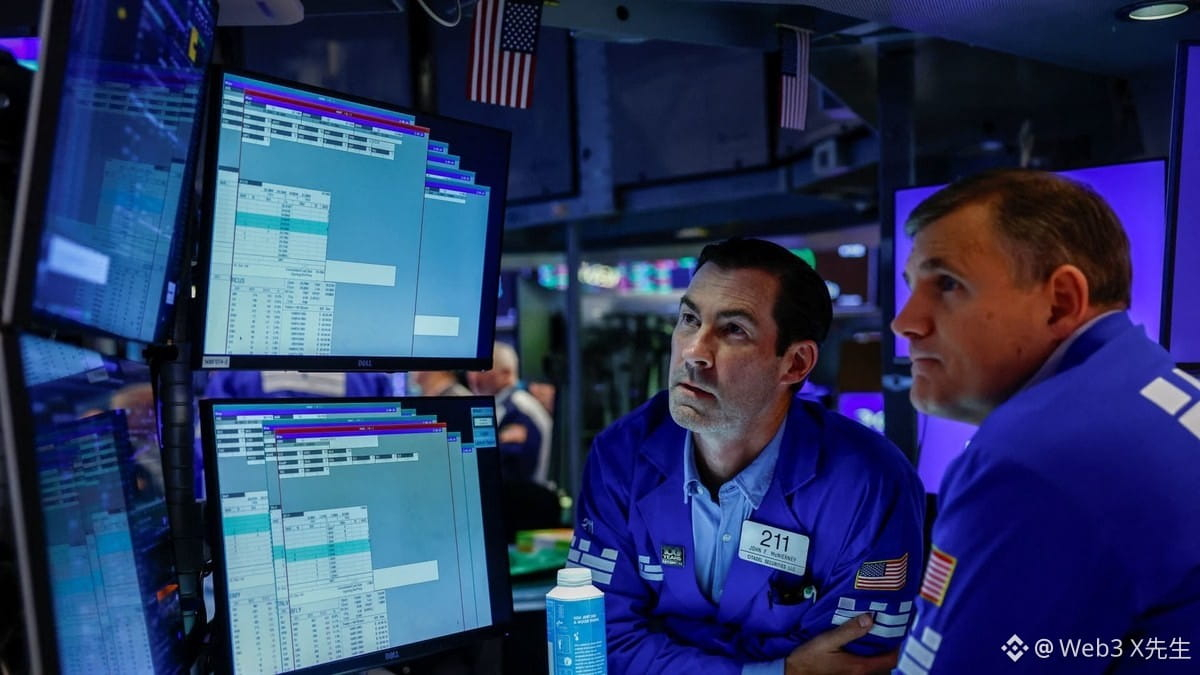
周一美股表面上一片大好。纳斯达克涨2%,又创了新高。标普500涨1.5%,离新高不到1%。今年标普已经涨了13%。最近半年更是涨了19%。屏幕上到处都是绿色。📈
但底下藏着一个很扎眼的数字。标普500里,30只股票创下52周新低。同一天,只有7只股票创出新高。新低比新高多出一大截。平时这俩数字是反过来的。按常理,指数新高不该长这样。📉
这套组合,上次是1999年12月21日。那会儿纳斯达克正冲向互联网泡沫顶。几个月后泡沫就炸了。再往前一次是1929年7月23日。那次离大崩盘也没剩多久。两次都不是什么好回忆。⚠️
指数为什么还能涨?因为抬轿子的就那几只。通信服务、科技、非必需消费在硬扛。别的板块离自己高点还差4%到7%。钱只往少数票里挤。盘面看着热闹,其实很窄。🎯
另一头,风险资产也一样没闲着。比特币头一回站上8.7万美元。这是今年一月底以来的第一次。以太坊一天涨6%,回到2770美元。BNB也重新站上800美元。钱还在到处找出路。🚀
能不能持续,其实就看三个条件。中东那边的仗还在打。能源价格一直压不下来。美联储9月刚加了25个基点。加息的手还没松开。这三样不松,新高就难站住。🌍
📌 指数在冲高,地基却在变薄,窄行情最怕的就是没人接。
这个位置,你敢加仓还是先撤?评论区聊聊。
【美股创新高,却有30只股票跌出新低?上次这样是1999🔥😱】
群聊:📲 加入X先生的粉丝群聊
周一美股表面上一片大好。纳斯达克涨2%,又创了新高。标普500涨1.5%,离新高不到1%。今年标普已经涨了13%。最近半年更是涨了19%。屏幕上到处都是绿色。📈
但底下藏着一个很扎眼的数字。标普500里,30只股票创下52周新低。同一天,只有7只股票创出新高。新低比新高多出一大截。平时这俩数字是反过来的。按常理,指数新高不该长这样。📉
这套组合,上次是1999年12月21日。那会儿纳斯达克正冲向互联网泡沫顶。几个月后泡沫就炸了。再往前一次是1929年7月23日。那次离大崩盘也没剩多久。两次都不是什么好回忆。⚠️
指数为什么还能涨?因为抬轿子的就那几只。通信服务、科技、非必需消费在硬扛。别的板块离自己高点还差4%到7%。钱只往少数票里挤。盘面看着热闹,其实很窄。🎯
另一头,风险资产也一样没闲着。比特币头一回站上8.7万美元。这是今年一月底以来的第一次。以太坊一天涨6%,回到2770美元。BNB也重新站上800美元。钱还在到处找出路。🚀
能不能持续,其实就看三个条件。中东那边的仗还在打。能源价格一直压不下来。美联储9月刚加了25个基点。加息的手还没松开。这三样不松,新高就难站住。🌍
📌 指数在冲高,地基却在变薄,窄行情最怕的就是没人接。
这个位置,你敢加仓还是先撤?评论区聊聊。
群聊:📲 加入X先生的粉丝群聊
周一美股表面上一片大好。纳斯达克涨2%,又创了新高。标普500涨1.5%,离新高不到1%。今年标普已经涨了13%。最近半年更是涨了19%。屏幕上到处都是绿色。📈
但底下藏着一个很扎眼的数字。标普500里,30只股票创下52周新低。同一天,只有7只股票创出新高。新低比新高多出一大截。平时这俩数字是反过来的。按常理,指数新高不该长这样。📉
这套组合,上次是1999年12月21日。那会儿纳斯达克正冲向互联网泡沫顶。几个月后泡沫就炸了。再往前一次是1929年7月23日。那次离大崩盘也没剩多久。两次都不是什么好回忆。⚠️
指数为什么还能涨?因为抬轿子的就那几只。通信服务、科技、非必需消费在硬扛。别的板块离自己高点还差4%到7%。钱只往少数票里挤。盘面看着热闹,其实很窄。🎯
另一头,风险资产也一样没闲着。比特币头一回站上8.7万美元。这是今年一月底以来的第一次。以太坊一天涨6%,回到2770美元。BNB也重新站上800美元。钱还在到处找出路。🚀
能不能持续,其实就看三个条件。中东那边的仗还在打。能源价格一直压不下来。美联储9月刚加了25个基点。加息的手还没松开。这三样不松,新高就难站住。🌍
📌 指数在冲高,地基却在变薄,窄行情最怕的就是没人接。
这个位置,你敢加仓还是先撤?评论区聊聊。
381
·
--
See translation
【一家美股公司,囤下近5%的以太坊🔥🐋】
群聊:[📲 加入X先生的粉丝群聊](https://app.binance.com/uni-qr/XP5J3ynH)
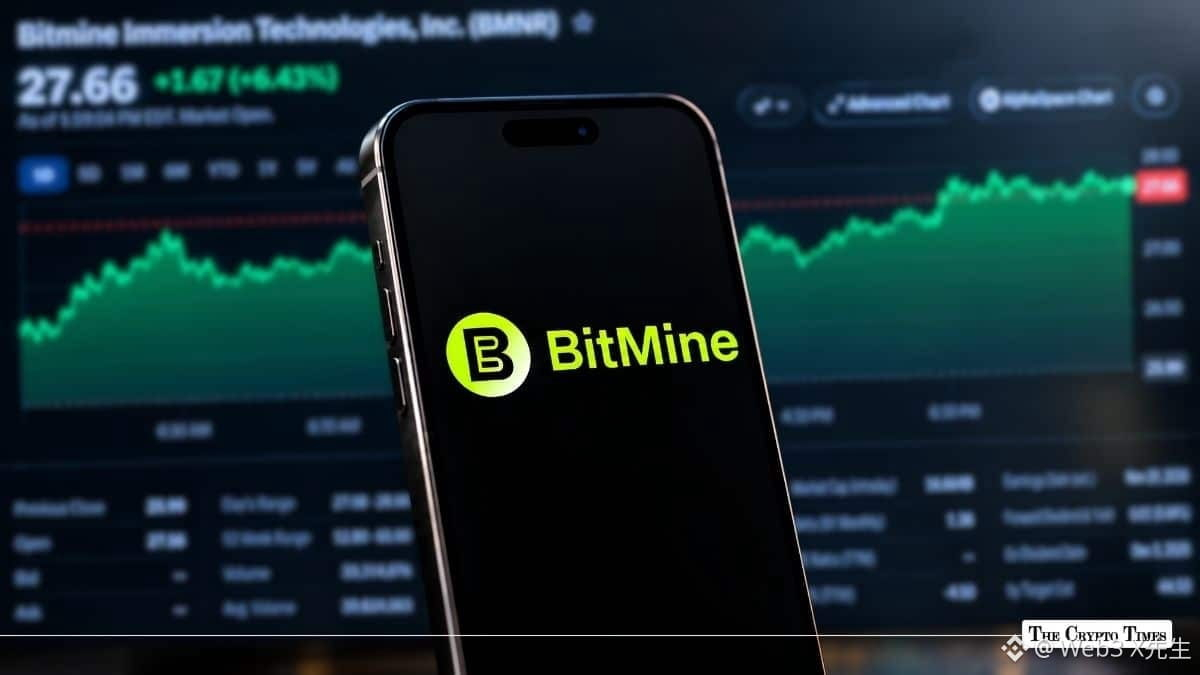
这家公司叫Bitmine,是家美股。它手里躺着598万个以太坊。占了全网总量的差不多5%。论以太坊储备它排第一。按2688美元算下来值161亿。它还顺手囤了212个比特币。🐳
更狠的是它每周的买入节奏。8月24号手里才585万个。9月8号就到了593万个。9月14号涨到596万个。上周又加了27562个。三个月不到,仓位一路上抬。📈
光囤着还不够,它还要收租。506万个以太坊拿去做质押。占它全部持仓的85%。按2688美元算值136亿美元。七天收益折算成年化2.62%。董事长说一年能收3.57亿美元。💰
再看它的家底到底有多厚。加密资产加现金一共171亿美元。纯现金和可售证券7.14亿美元。另外投了1.8亿给一家公司。又拿1.05亿投了另一家。这两笔它自己叫作“赌一把”。🏦
这么干的不止它一家公司。微策略早把比特币装进上市公司。现在轮到以太坊走同一条路。区别是ETH还能质押生息。股票涨跌之外还能多收一笔租金。机构不像只是来玩两天的。🏛️
不过先别急着跟这波。它披露用的参考价2688美元。以太坊现在才2741美元。一天涨了4.4%而已。差不多刚站上它的成本线。这个位置其实不算高。😬
📌 一家公司吃掉近5%的以太坊,85%拿去质押,一年躺收3.57亿美元。
这波机构囤币潮,你会跟吗?评论区聊聊。
【一家美股公司,囤下近5%的以太坊🔥🐋】
群聊:📲 加入X先生的粉丝群聊
这家公司叫Bitmine,是家美股。它手里躺着598万个以太坊。占了全网总量的差不多5%。论以太坊储备它排第一。按2688美元算下来值161亿。它还顺手囤了212个比特币。🐳
更狠的是它每周的买入节奏。8月24号手里才585万个。9月8号就到了593万个。9月14号涨到596万个。上周又加了27562个。三个月不到,仓位一路上抬。📈
光囤着还不够,它还要收租。506万个以太坊拿去做质押。占它全部持仓的85%。按2688美元算值136亿美元。七天收益折算成年化2.62%。董事长说一年能收3.57亿美元。💰
再看它的家底到底有多厚。加密资产加现金一共171亿美元。纯现金和可售证券7.14亿美元。另外投了1.8亿给一家公司。又拿1.05亿投了另一家。这两笔它自己叫作“赌一把”。🏦
这么干的不止它一家公司。微策略早把比特币装进上市公司。现在轮到以太坊走同一条路。区别是ETH还能质押生息。股票涨跌之外还能多收一笔租金。机构不像只是来玩两天的。🏛️
不过先别急着跟这波。它披露用的参考价2688美元。以太坊现在才2741美元。一天涨了4.4%而已。差不多刚站上它的成本线。这个位置其实不算高。😬
📌 一家公司吃掉近5%的以太坊,85%拿去质押,一年躺收3.57亿美元。
这波机构囤币潮,你会跟吗?评论区聊聊。
群聊:📲 加入X先生的粉丝群聊
这家公司叫Bitmine,是家美股。它手里躺着598万个以太坊。占了全网总量的差不多5%。论以太坊储备它排第一。按2688美元算下来值161亿。它还顺手囤了212个比特币。🐳
更狠的是它每周的买入节奏。8月24号手里才585万个。9月8号就到了593万个。9月14号涨到596万个。上周又加了27562个。三个月不到,仓位一路上抬。📈
光囤着还不够,它还要收租。506万个以太坊拿去做质押。占它全部持仓的85%。按2688美元算值136亿美元。七天收益折算成年化2.62%。董事长说一年能收3.57亿美元。💰
再看它的家底到底有多厚。加密资产加现金一共171亿美元。纯现金和可售证券7.14亿美元。另外投了1.8亿给一家公司。又拿1.05亿投了另一家。这两笔它自己叫作“赌一把”。🏦
这么干的不止它一家公司。微策略早把比特币装进上市公司。现在轮到以太坊走同一条路。区别是ETH还能质押生息。股票涨跌之外还能多收一笔租金。机构不像只是来玩两天的。🏛️
不过先别急着跟这波。它披露用的参考价2688美元。以太坊现在才2741美元。一天涨了4.4%而已。差不多刚站上它的成本线。这个位置其实不算高。😬
📌 一家公司吃掉近5%的以太坊,85%拿去质押,一年躺收3.57亿美元。
这波机构囤币潮,你会跟吗?评论区聊聊。
376
·
--
See translation
【比特币冲回86000,被套大半年的ETF持有人终于回本了📈🔥】
群聊:[📲 加入X先生的粉丝群聊](https://app.binance.com/uni-qr/XP5J3ynH)
这组数据很有意思。比特币一夜冲到8.6万美元。最开心的不是老矿工。是去年高位买ETF的那批人。熬了大半年,终于回本了。很多人本来已经准备割肉。📈
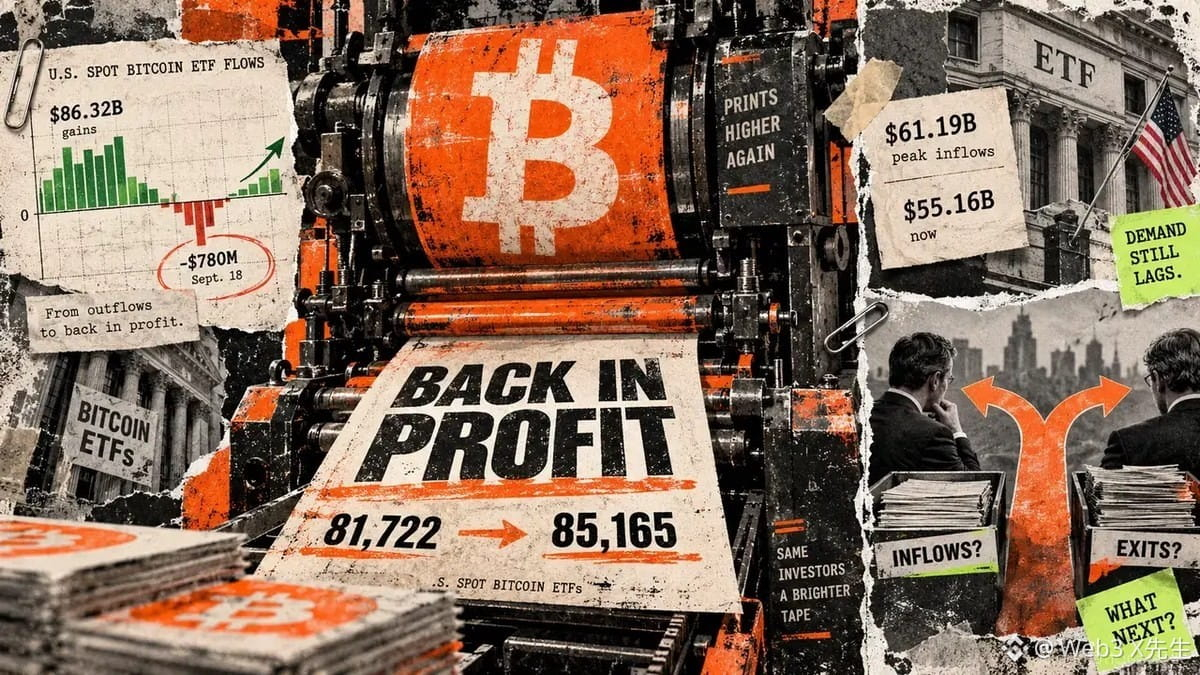
他们的平均买入成本是8.17万美元。去年10月,账上还浮盈863亿美元。后来一路往下砸,最低到5.86万。浮盈全没了,还倒亏7.8亿。从山顶到地下,只用了一个季度。有人是在8.5万才上的车。😰
现在价格反弹超2.6万美元。账面从亏又变回了赚。有意思的是,钱还没全回来。累计净流入比高点少60亿美元。ETF的需求恢复得慢。价格跑得比资金快得多。🚀
上周五单日流入4.35亿美元。最大的赢家不是老大哥。Fidelity一天吸走3.1亿。把BlackRock挤到了后面。上一次这么热闹还是去年。这种反超,很久没见过了。🥇
同一天,空头爆仓超6亿美元。押错方向的人,一夜归零。美联储10月加息概率还有53%。债券收益率倒是先回落了。油价也跟着一起往下走。有人觉得这是流动性的顺风。⚡
不过别急着开香槟。RSI已经逼近70的超买线。分析师警告可能有顶背离。能不能站稳8.6万,没人敢保证。追高的人心里要有数。回本和赚钱,是两回事。🤔
📌 价格先回了本,资金还在门口站着。
这波你回本了吗?评论区聊聊你的成本价。
#比特币突破8.5万美元 #以太坊突破2700美元
【比特币冲回86000,被套大半年的ETF持有人终于回本了📈🔥】
群聊:📲 加入X先生的粉丝群聊
这组数据很有意思。比特币一夜冲到8.6万美元。最开心的不是老矿工。是去年高位买ETF的那批人。熬了大半年,终于回本了。很多人本来已经准备割肉。📈
他们的平均买入成本是8.17万美元。去年10月,账上还浮盈863亿美元。后来一路往下砸,最低到5.86万。浮盈全没了,还倒亏7.8亿。从山顶到地下,只用了一个季度。有人是在8.5万才上的车。😰
现在价格反弹超2.6万美元。账面从亏又变回了赚。有意思的是,钱还没全回来。累计净流入比高点少60亿美元。ETF的需求恢复得慢。价格跑得比资金快得多。🚀
上周五单日流入4.35亿美元。最大的赢家不是老大哥。Fidelity一天吸走3.1亿。把BlackRock挤到了后面。上一次这么热闹还是去年。这种反超,很久没见过了。🥇
同一天,空头爆仓超6亿美元。押错方向的人,一夜归零。美联储10月加息概率还有53%。债券收益率倒是先回落了。油价也跟着一起往下走。有人觉得这是流动性的顺风。⚡
不过别急着开香槟。RSI已经逼近70的超买线。分析师警告可能有顶背离。能不能站稳8.6万,没人敢保证。追高的人心里要有数。回本和赚钱,是两回事。🤔
📌 价格先回了本,资金还在门口站着。
这波你回本了吗?评论区聊聊你的成本价。
#比特币突破8.5万美元 #以太坊突破2700美元
群聊:📲 加入X先生的粉丝群聊
这组数据很有意思。比特币一夜冲到8.6万美元。最开心的不是老矿工。是去年高位买ETF的那批人。熬了大半年,终于回本了。很多人本来已经准备割肉。📈
他们的平均买入成本是8.17万美元。去年10月,账上还浮盈863亿美元。后来一路往下砸,最低到5.86万。浮盈全没了,还倒亏7.8亿。从山顶到地下,只用了一个季度。有人是在8.5万才上的车。😰
现在价格反弹超2.6万美元。账面从亏又变回了赚。有意思的是,钱还没全回来。累计净流入比高点少60亿美元。ETF的需求恢复得慢。价格跑得比资金快得多。🚀
上周五单日流入4.35亿美元。最大的赢家不是老大哥。Fidelity一天吸走3.1亿。把BlackRock挤到了后面。上一次这么热闹还是去年。这种反超,很久没见过了。🥇
同一天,空头爆仓超6亿美元。押错方向的人,一夜归零。美联储10月加息概率还有53%。债券收益率倒是先回落了。油价也跟着一起往下走。有人觉得这是流动性的顺风。⚡
不过别急着开香槟。RSI已经逼近70的超买线。分析师警告可能有顶背离。能不能站稳8.6万,没人敢保证。追高的人心里要有数。回本和赚钱,是两回事。🤔
📌 价格先回了本,资金还在门口站着。
这波你回本了吗?评论区聊聊你的成本价。
#比特币突破8.5万美元 #以太坊突破2700美元
1
494
·
--
[Buffett at 96 has retired—but he has been cursing Bitcoin for decades 😮💼]
Visit the home page to join Mr. X’s fan group chat 🔥
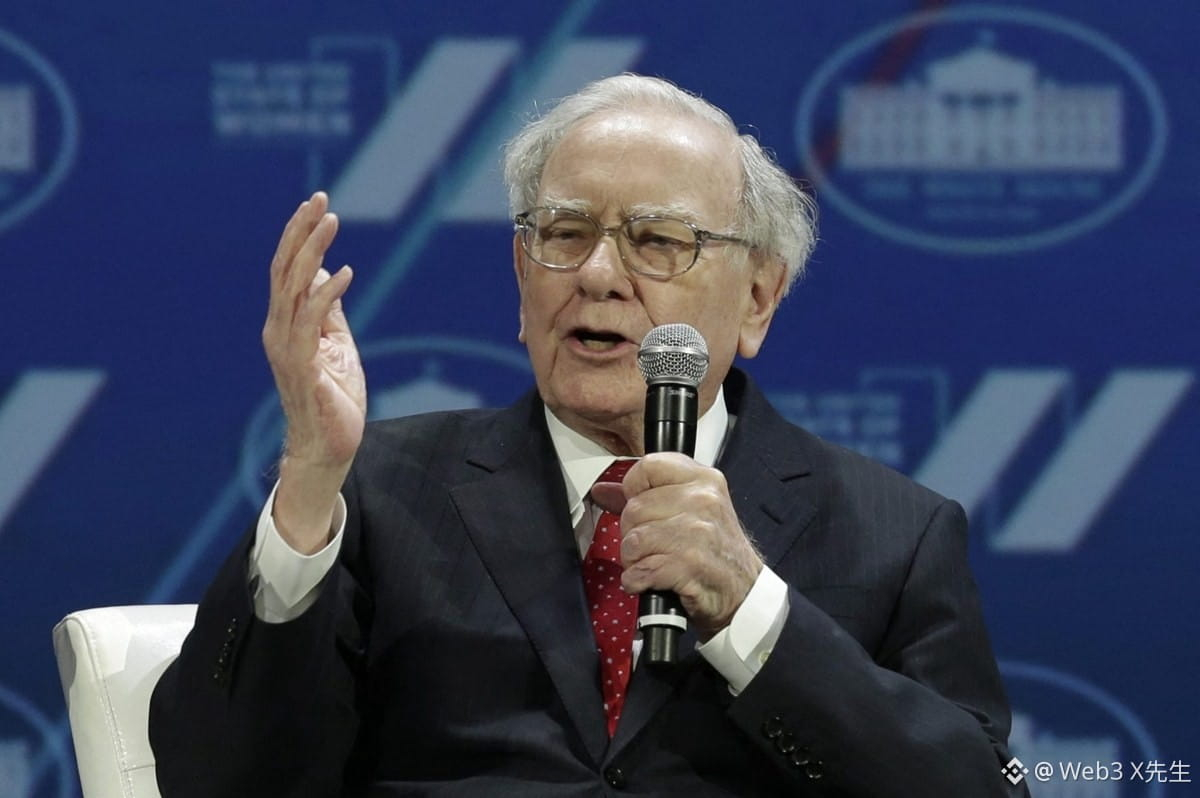
At 96 years old, this time Buffett has truly stepped down. The CEO seat was handed over at the end of last year. A few days ago, he even set aside the title of chairman. Now he only holds the nominal position of director. After sitting in the investment world for sixty years, the old gentleman simply walked away. 🪑
Even more outrageous is his net worth when he left. According to Forbes, his net worth is $145 billion. He ranks tenth globally. Almost all of that number comes from a single company. He holds 37.2% of Berkshire’s Class A shares. The company’s market value is roughly $1.1 trillion. 💰
But this company is, according to the words in his mouth, his “most stupid investment.” In 1962, he took a liking to a textile mill that was nearly bankrupt. They negotiated a deal: sell the company back at $11.5 per share. In the end, the other side only agreed to $11.375. For just those 12 cents, he turned hostile. He bought the company anyway—and even fired the CEO of the time. 🧵
He stayed in the textile business for twenty years, but ultimately the factory was still shut down. He calculated it himself: if he’d put that money into insurance instead, it would have been worth about $200 billion more. Over sixty years, Berkshire’s stock price has increased by 5.5 million times. Annualized return of 19.7%. In 2025, revenue was $371.4 billion. Doing just one thing his whole life was enough to make him legendary. 📈
What’s interesting is that this old gentleman has always looked down on Bitcoin. He and his longtime partner Munger called Bitcoin “rat poison.” In Berkshire’s holdings list, there isn’t a single one. He said he couldn’t understand it—so he really bought none. Today, Bitcoin is above $85,000. On the day he retired, the number is still rising. 🐀
Sixty years, annualized 19.7%—that performance is indeed brutal. But he also missed an entire generation’s worth of wealth. The old man himself said that when opportunity comes, you need to go big. The problem is, this time at the game table, he didn’t even sit down. A $145 billion fortune—and not a single Bitcoin. Believe it or not. 🤔
📌 In sixty years, rolling 11 cents into $1.1 trillion—yet treating Bitcoin as rat poison.
Would you leave a 1% position for something you “don’t understand”?
[Buffett at 96 has retired—but he has been cursing Bitcoin for decades 😮💼]
Visit the home page to join Mr. X’s fan group chat 🔥
At 96 years old, this time Buffett has truly stepped down. The CEO seat was handed over at the end of last year. A few days ago, he even set aside the title of chairman. Now he only holds the nominal position of director. After sitting in the investment world for sixty years, the old gentleman simply walked away. 🪑
Even more outrageous is his net worth when he left. According to Forbes, his net worth is $145 billion. He ranks tenth globally. Almost all of that number comes from a single company. He holds 37.2% of Berkshire’s Class A shares. The company’s market value is roughly $1.1 trillion. 💰
But this company is, according to the words in his mouth, his “most stupid investment.” In 1962, he took a liking to a textile mill that was nearly bankrupt. They negotiated a deal: sell the company back at $11.5 per share. In the end, the other side only agreed to $11.375. For just those 12 cents, he turned hostile. He bought the company anyway—and even fired the CEO of the time. 🧵
He stayed in the textile business for twenty years, but ultimately the factory was still shut down. He calculated it himself: if he’d put that money into insurance instead, it would have been worth about $200 billion more. Over sixty years, Berkshire’s stock price has increased by 5.5 million times. Annualized return of 19.7%. In 2025, revenue was $371.4 billion. Doing just one thing his whole life was enough to make him legendary. 📈
What’s interesting is that this old gentleman has always looked down on Bitcoin. He and his longtime partner Munger called Bitcoin “rat poison.” In Berkshire’s holdings list, there isn’t a single one. He said he couldn’t understand it—so he really bought none. Today, Bitcoin is above $85,000. On the day he retired, the number is still rising. 🐀
Sixty years, annualized 19.7%—that performance is indeed brutal. But he also missed an entire generation’s worth of wealth. The old man himself said that when opportunity comes, you need to go big. The problem is, this time at the game table, he didn’t even sit down. A $145 billion fortune—and not a single Bitcoin. Believe it or not. 🤔
📌 In sixty years, rolling 11 cents into $1.1 trillion—yet treating Bitcoin as rat poison.
Would you leave a 1% position for something you “don’t understand”?
Visit the home page to join Mr. X’s fan group chat 🔥
At 96 years old, this time Buffett has truly stepped down. The CEO seat was handed over at the end of last year. A few days ago, he even set aside the title of chairman. Now he only holds the nominal position of director. After sitting in the investment world for sixty years, the old gentleman simply walked away. 🪑
Even more outrageous is his net worth when he left. According to Forbes, his net worth is $145 billion. He ranks tenth globally. Almost all of that number comes from a single company. He holds 37.2% of Berkshire’s Class A shares. The company’s market value is roughly $1.1 trillion. 💰
But this company is, according to the words in his mouth, his “most stupid investment.” In 1962, he took a liking to a textile mill that was nearly bankrupt. They negotiated a deal: sell the company back at $11.5 per share. In the end, the other side only agreed to $11.375. For just those 12 cents, he turned hostile. He bought the company anyway—and even fired the CEO of the time. 🧵
He stayed in the textile business for twenty years, but ultimately the factory was still shut down. He calculated it himself: if he’d put that money into insurance instead, it would have been worth about $200 billion more. Over sixty years, Berkshire’s stock price has increased by 5.5 million times. Annualized return of 19.7%. In 2025, revenue was $371.4 billion. Doing just one thing his whole life was enough to make him legendary. 📈
What’s interesting is that this old gentleman has always looked down on Bitcoin. He and his longtime partner Munger called Bitcoin “rat poison.” In Berkshire’s holdings list, there isn’t a single one. He said he couldn’t understand it—so he really bought none. Today, Bitcoin is above $85,000. On the day he retired, the number is still rising. 🐀
Sixty years, annualized 19.7%—that performance is indeed brutal. But he also missed an entire generation’s worth of wealth. The old man himself said that when opportunity comes, you need to go big. The problem is, this time at the game table, he didn’t even sit down. A $145 billion fortune—and not a single Bitcoin. Believe it or not. 🤔
📌 In sixty years, rolling 11 cents into $1.1 trillion—yet treating Bitcoin as rat poison.
Would you leave a 1% position for something you “don’t understand”?
186
·
--
【Apple and Meta have trillions in cash—yet don’t buy a single Bitcoin? 😳🔥】
Join Mr. X’s fan group on the homepage 🔥
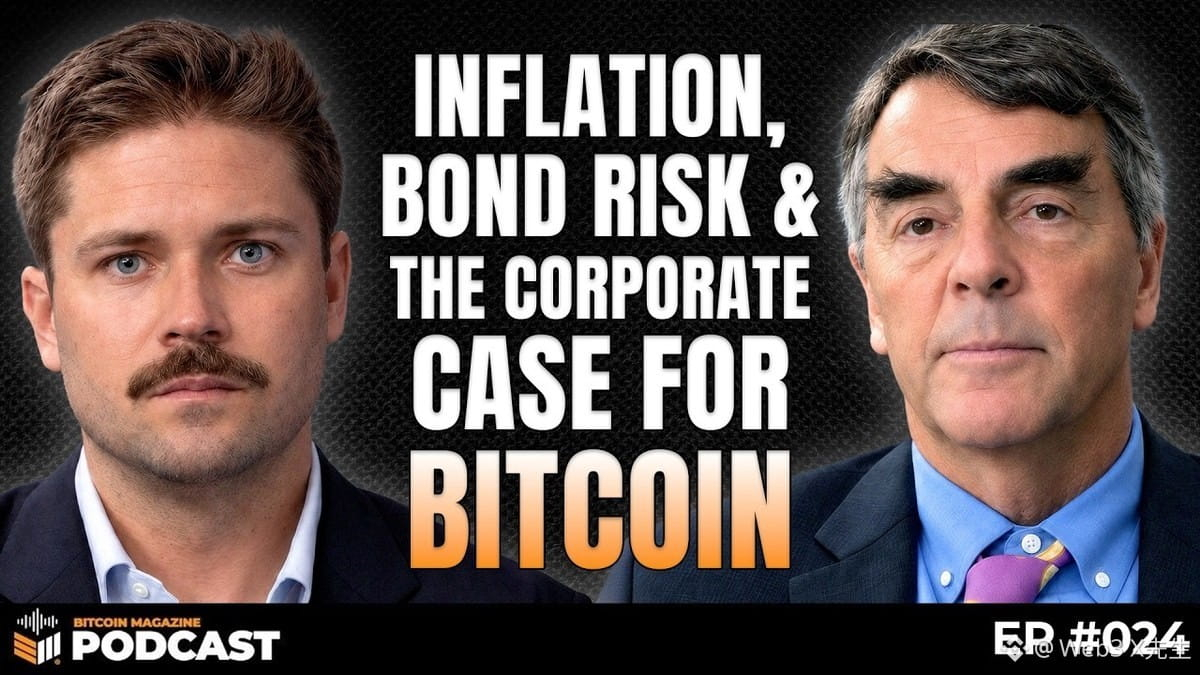
Renowned investor Tim Draper recently went after Apple and Meta for not buying crypto. He called it irresponsible—this isn’t advice, it’s straight-up criticism. These two companies have tens of billions, even hundreds of billions, in cash sitting on their books, yet not a single Bitcoin is listed. In his view, that’s a risk left wide open. 😮
Draper laid out his own algorithm: a company should allocate enough Bitcoin to cover at least four weeks of operating expenses. An individual should set aside about six months’ living expenses. Even governments should hold a portion of Bitcoin as a hedge. His reasoning is simple: banks can fail. Keeping deposits in a bank is never the same as being truly safe. 🏦
He has a harsher line after that. Government spending across countries hasn’t stopped yet. When too much money gets printed, there are really only two paths: either runaway hyperinflation turns the cash in hand into worthless paper, or interest rates go so high they crush a batch of banks outright. Neither path is friendly to people holding cash. 💸
So what he’s really targeting isn’t retail investors—it’s the board of directors. When a company has zero Bitcoin on its balance sheet, the moment the opening bank has trouble, both sides get hit. The company suffers a hidden financial hit and still can’t explain it clearly legally. Big companies aim for a safer balance sheet in the first place. This risk is invisible day to day, but it becomes obvious the day something goes wrong. ⚖️
One more thing: he set his target price at $2.5 million. The anchor is the next Bitcoin halving. He expects room for the price only after supply shocks arrive. He’d previously called for $1 million; later, that target actually came true. This time, he’s betting on two halving cycles. The timeline is long enough to make most people unable to last. 🎯
Hearing big shots call the shots is the easiest way to get people overly excited. Corporate Bitcoin buys and retail Bitcoin buys are two different things. Companies buy to protect against inflation and the risk of bank failures. Retail investors are watching whether it goes up tomorrow. Chasing price with your living money is basically gambling. First figure out which type you are—then act. 🤔
📌 This advice is meant for the board of directors. Don’t copy it blindly as a retail investor.
How much of your cash would you dare to swap for Bitcoin? Let’s discuss in the comments.
【Apple and Meta have trillions in cash—yet don’t buy a single Bitcoin? 😳🔥】
Join Mr. X’s fan group on the homepage 🔥
Renowned investor Tim Draper recently went after Apple and Meta for not buying crypto. He called it irresponsible—this isn’t advice, it’s straight-up criticism. These two companies have tens of billions, even hundreds of billions, in cash sitting on their books, yet not a single Bitcoin is listed. In his view, that’s a risk left wide open. 😮
Draper laid out his own algorithm: a company should allocate enough Bitcoin to cover at least four weeks of operating expenses. An individual should set aside about six months’ living expenses. Even governments should hold a portion of Bitcoin as a hedge. His reasoning is simple: banks can fail. Keeping deposits in a bank is never the same as being truly safe. 🏦
He has a harsher line after that. Government spending across countries hasn’t stopped yet. When too much money gets printed, there are really only two paths: either runaway hyperinflation turns the cash in hand into worthless paper, or interest rates go so high they crush a batch of banks outright. Neither path is friendly to people holding cash. 💸
So what he’s really targeting isn’t retail investors—it’s the board of directors. When a company has zero Bitcoin on its balance sheet, the moment the opening bank has trouble, both sides get hit. The company suffers a hidden financial hit and still can’t explain it clearly legally. Big companies aim for a safer balance sheet in the first place. This risk is invisible day to day, but it becomes obvious the day something goes wrong. ⚖️
One more thing: he set his target price at $2.5 million. The anchor is the next Bitcoin halving. He expects room for the price only after supply shocks arrive. He’d previously called for $1 million; later, that target actually came true. This time, he’s betting on two halving cycles. The timeline is long enough to make most people unable to last. 🎯
Hearing big shots call the shots is the easiest way to get people overly excited. Corporate Bitcoin buys and retail Bitcoin buys are two different things. Companies buy to protect against inflation and the risk of bank failures. Retail investors are watching whether it goes up tomorrow. Chasing price with your living money is basically gambling. First figure out which type you are—then act. 🤔
📌 This advice is meant for the board of directors. Don’t copy it blindly as a retail investor.
How much of your cash would you dare to swap for Bitcoin? Let’s discuss in the comments.
Join Mr. X’s fan group on the homepage 🔥
Renowned investor Tim Draper recently went after Apple and Meta for not buying crypto. He called it irresponsible—this isn’t advice, it’s straight-up criticism. These two companies have tens of billions, even hundreds of billions, in cash sitting on their books, yet not a single Bitcoin is listed. In his view, that’s a risk left wide open. 😮
Draper laid out his own algorithm: a company should allocate enough Bitcoin to cover at least four weeks of operating expenses. An individual should set aside about six months’ living expenses. Even governments should hold a portion of Bitcoin as a hedge. His reasoning is simple: banks can fail. Keeping deposits in a bank is never the same as being truly safe. 🏦
He has a harsher line after that. Government spending across countries hasn’t stopped yet. When too much money gets printed, there are really only two paths: either runaway hyperinflation turns the cash in hand into worthless paper, or interest rates go so high they crush a batch of banks outright. Neither path is friendly to people holding cash. 💸
So what he’s really targeting isn’t retail investors—it’s the board of directors. When a company has zero Bitcoin on its balance sheet, the moment the opening bank has trouble, both sides get hit. The company suffers a hidden financial hit and still can’t explain it clearly legally. Big companies aim for a safer balance sheet in the first place. This risk is invisible day to day, but it becomes obvious the day something goes wrong. ⚖️
One more thing: he set his target price at $2.5 million. The anchor is the next Bitcoin halving. He expects room for the price only after supply shocks arrive. He’d previously called for $1 million; later, that target actually came true. This time, he’s betting on two halving cycles. The timeline is long enough to make most people unable to last. 🎯
Hearing big shots call the shots is the easiest way to get people overly excited. Corporate Bitcoin buys and retail Bitcoin buys are two different things. Companies buy to protect against inflation and the risk of bank failures. Retail investors are watching whether it goes up tomorrow. Chasing price with your living money is basically gambling. First figure out which type you are—then act. 🤔
📌 This advice is meant for the board of directors. Don’t copy it blindly as a retail investor.
How much of your cash would you dare to swap for Bitcoin? Let’s discuss in the comments.
355
·
--
Fact checking...
See translation
【停了两周,最大囤币公司又出手了,这次买得更便宜🔥🐋】
群聊:[📲 加入X先生的粉丝群聊](https://app.binance.com/uni-qr/XP5J3ynH)
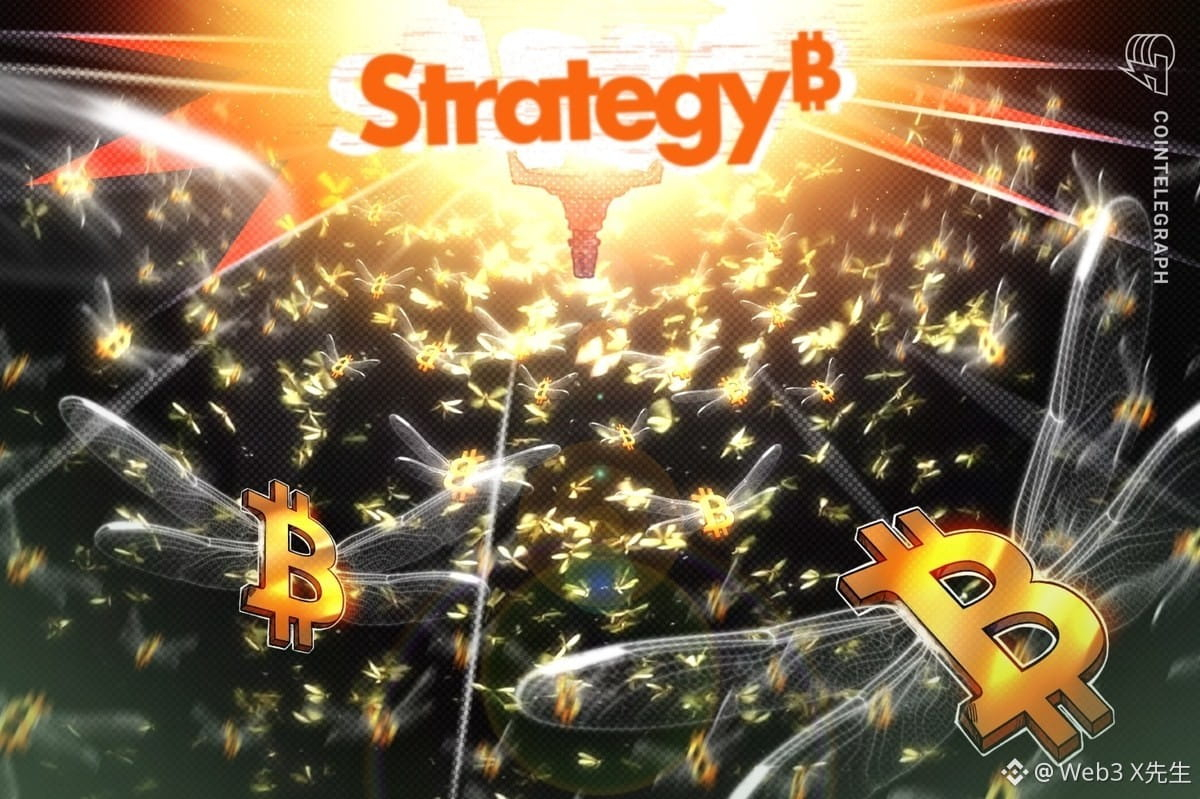
全球最大的比特币囤币公司,又开工了。歇了整整两周,它一枚都没买。9月14日到20日,它又扫了950枚。总花费7570万美元。均价约79670美元。比自己历史均价,还贵了一点点。🐋
这家公司手里已经有84万6千枚币。总成本638亿美元,均价75416美元。按现在的价格算,浮盈大概80.5亿美元。一家公司的浮盈,比很多上市公司市值都高。它一家吃下了全网4%以上的币。💰
它一边买币,一边还在撒钱回购。上周它掏1.74亿美元,回购优先股。买回177万股自家优先股。这笔钱差不多能再买2200枚比特币。回购额度还剩8.75亿,股票还剩10亿。手里能动的现金,一周少了接近两成。📉
钱从哪来?这一周它没靠增发股票拿钱。9月14日到20日,增发额是零。以前它靠卖股票、卖优先股换钱买币。现在先回购,再买币,节奏变了。现金池剩下10.5亿,储备金50.4亿。⚙️
同一天,另一家囤币公司也没闲着。它上周加了1355枚,总量26355枚。消息出来,两家股价盘前一起涨。自己股价涨了7.4%。盘前冲到165美元。另一家跟着涨6.4%,追得很紧。🚀
有人说它是借钱买币,风险不小。可它的浮盈,已经接近历史最高。币价横着不动,它的利息照样在跑。这种玩法,散户要不要跟,真得想清楚。买币的公司越来越多,故事却越来越像。🤔
📌 停买两周后恢复扫货:950枚、均价近8万、浮盈80亿美元。
这种公司替你把币囤着,你敢不敢跟?
【停了两周,最大囤币公司又出手了,这次买得更便宜🔥🐋】
群聊:📲 加入X先生的粉丝群聊
全球最大的比特币囤币公司,又开工了。歇了整整两周,它一枚都没买。9月14日到20日,它又扫了950枚。总花费7570万美元。均价约79670美元。比自己历史均价,还贵了一点点。🐋
这家公司手里已经有84万6千枚币。总成本638亿美元,均价75416美元。按现在的价格算,浮盈大概80.5亿美元。一家公司的浮盈,比很多上市公司市值都高。它一家吃下了全网4%以上的币。💰
它一边买币,一边还在撒钱回购。上周它掏1.74亿美元,回购优先股。买回177万股自家优先股。这笔钱差不多能再买2200枚比特币。回购额度还剩8.75亿,股票还剩10亿。手里能动的现金,一周少了接近两成。📉
钱从哪来?这一周它没靠增发股票拿钱。9月14日到20日,增发额是零。以前它靠卖股票、卖优先股换钱买币。现在先回购,再买币,节奏变了。现金池剩下10.5亿,储备金50.4亿。⚙️
同一天,另一家囤币公司也没闲着。它上周加了1355枚,总量26355枚。消息出来,两家股价盘前一起涨。自己股价涨了7.4%。盘前冲到165美元。另一家跟着涨6.4%,追得很紧。🚀
有人说它是借钱买币,风险不小。可它的浮盈,已经接近历史最高。币价横着不动,它的利息照样在跑。这种玩法,散户要不要跟,真得想清楚。买币的公司越来越多,故事却越来越像。🤔
📌 停买两周后恢复扫货:950枚、均价近8万、浮盈80亿美元。
这种公司替你把币囤着,你敢不敢跟?
群聊:📲 加入X先生的粉丝群聊
全球最大的比特币囤币公司,又开工了。歇了整整两周,它一枚都没买。9月14日到20日,它又扫了950枚。总花费7570万美元。均价约79670美元。比自己历史均价,还贵了一点点。🐋
这家公司手里已经有84万6千枚币。总成本638亿美元,均价75416美元。按现在的价格算,浮盈大概80.5亿美元。一家公司的浮盈,比很多上市公司市值都高。它一家吃下了全网4%以上的币。💰
它一边买币,一边还在撒钱回购。上周它掏1.74亿美元,回购优先股。买回177万股自家优先股。这笔钱差不多能再买2200枚比特币。回购额度还剩8.75亿,股票还剩10亿。手里能动的现金,一周少了接近两成。📉
钱从哪来?这一周它没靠增发股票拿钱。9月14日到20日,增发额是零。以前它靠卖股票、卖优先股换钱买币。现在先回购,再买币,节奏变了。现金池剩下10.5亿,储备金50.4亿。⚙️
同一天,另一家囤币公司也没闲着。它上周加了1355枚,总量26355枚。消息出来,两家股价盘前一起涨。自己股价涨了7.4%。盘前冲到165美元。另一家跟着涨6.4%,追得很紧。🚀
有人说它是借钱买币,风险不小。可它的浮盈,已经接近历史最高。币价横着不动,它的利息照样在跑。这种玩法,散户要不要跟,真得想清楚。买币的公司越来越多,故事却越来越像。🤔
📌 停买两周后恢复扫货:950枚、均价近8万、浮盈80亿美元。
这种公司替你把币囤着,你敢不敢跟?
848
·
--
【The bill didn't pass, and the Fed still hiked—this ETF somehow kept pulling in money for 10 straight weeks 😳🔥】
Join Mr. X’s fan group chat on the homepage 🔥
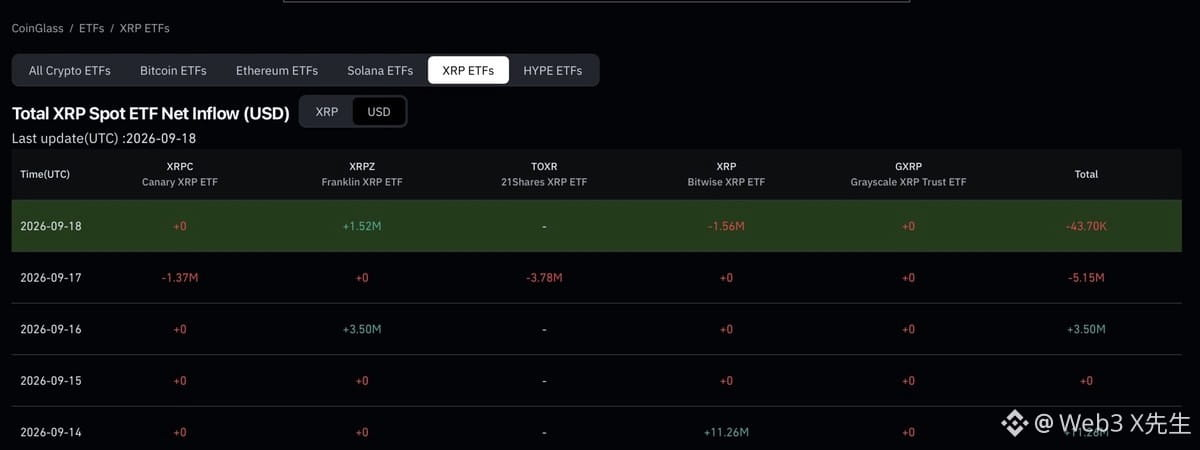
These data points are pretty counterintuitive. In the past week, the U.S. spot XRP ETF saw net inflows of $9.56 million. This is the 10th consecutive week of net inflows. Total net inflows have already reached $1.71 billion. The bill didn’t pass, and the Fed even added another rate hike. But the money didn’t leave. 😳
That week was actually pretty chaotic. The U.S. Senate failed to pass the key vote on the crypto bill. Hours after the news broke, XRP dropped more than 8%. Many people guessed the ETF was about to start running with the money. But the net flow announced that day was zero. Anyone waiting to redeem—didn’t get a single one. 🤔
There was something else on Wednesday. The Fed announced a 25-basis-point rate hike. That day, this ETF actually added $3.5 million. The next day it saw outflows of $5.15 million, and on Friday it was only about $40k out. Over the week, it still ended up with net inflows. When the “hammer” of the rate hike fell, the money didn’t get scared off. 💰
Meanwhile, there’s also SOL. Its spot ETF achieved net inflows for 12 straight weeks. This week it brought in about $13.19 million. XRP is 10 weeks, SOL is 12 weeks—the cadence is the same. Neither coin is the hottest one right now. But the ETF money keeps slowly adding up. 🚀
So what’s the logic behind this? When institutions buy ETFs, they’re looking at allocation—not the news cycle of one week. When the bill fails, some people panic and sell. When the price drops, some people may sell too. But the planned position-building money doesn’t follow the headlines. $1.71 billion stacked there wasn’t built in a single day. 📊
One more thing from a retail perspective. Everyone watches the price every day, but institutions watch shares. Shares have been rising—behind it all is real cash being put in. This kind of money comes in slowly and leaves slowly too. By the time every headline is shouting “good news,” the slow money might have already boarded the train. 🧠
📌 News will expire—continued inflows don’t lie.
Do you hold XRP, or are you more bullish on SOL? Let’s discuss in the comments.
【The bill didn't pass, and the Fed still hiked—this ETF somehow kept pulling in money for 10 straight weeks 😳🔥】
Join Mr. X’s fan group chat on the homepage 🔥
These data points are pretty counterintuitive. In the past week, the U.S. spot XRP ETF saw net inflows of $9.56 million. This is the 10th consecutive week of net inflows. Total net inflows have already reached $1.71 billion. The bill didn’t pass, and the Fed even added another rate hike. But the money didn’t leave. 😳
That week was actually pretty chaotic. The U.S. Senate failed to pass the key vote on the crypto bill. Hours after the news broke, XRP dropped more than 8%. Many people guessed the ETF was about to start running with the money. But the net flow announced that day was zero. Anyone waiting to redeem—didn’t get a single one. 🤔
There was something else on Wednesday. The Fed announced a 25-basis-point rate hike. That day, this ETF actually added $3.5 million. The next day it saw outflows of $5.15 million, and on Friday it was only about $40k out. Over the week, it still ended up with net inflows. When the “hammer” of the rate hike fell, the money didn’t get scared off. 💰
Meanwhile, there’s also SOL. Its spot ETF achieved net inflows for 12 straight weeks. This week it brought in about $13.19 million. XRP is 10 weeks, SOL is 12 weeks—the cadence is the same. Neither coin is the hottest one right now. But the ETF money keeps slowly adding up. 🚀
So what’s the logic behind this? When institutions buy ETFs, they’re looking at allocation—not the news cycle of one week. When the bill fails, some people panic and sell. When the price drops, some people may sell too. But the planned position-building money doesn’t follow the headlines. $1.71 billion stacked there wasn’t built in a single day. 📊
One more thing from a retail perspective. Everyone watches the price every day, but institutions watch shares. Shares have been rising—behind it all is real cash being put in. This kind of money comes in slowly and leaves slowly too. By the time every headline is shouting “good news,” the slow money might have already boarded the train. 🧠
📌 News will expire—continued inflows don’t lie.
Do you hold XRP, or are you more bullish on SOL? Let’s discuss in the comments.
Join Mr. X’s fan group chat on the homepage 🔥
These data points are pretty counterintuitive. In the past week, the U.S. spot XRP ETF saw net inflows of $9.56 million. This is the 10th consecutive week of net inflows. Total net inflows have already reached $1.71 billion. The bill didn’t pass, and the Fed even added another rate hike. But the money didn’t leave. 😳
That week was actually pretty chaotic. The U.S. Senate failed to pass the key vote on the crypto bill. Hours after the news broke, XRP dropped more than 8%. Many people guessed the ETF was about to start running with the money. But the net flow announced that day was zero. Anyone waiting to redeem—didn’t get a single one. 🤔
There was something else on Wednesday. The Fed announced a 25-basis-point rate hike. That day, this ETF actually added $3.5 million. The next day it saw outflows of $5.15 million, and on Friday it was only about $40k out. Over the week, it still ended up with net inflows. When the “hammer” of the rate hike fell, the money didn’t get scared off. 💰
Meanwhile, there’s also SOL. Its spot ETF achieved net inflows for 12 straight weeks. This week it brought in about $13.19 million. XRP is 10 weeks, SOL is 12 weeks—the cadence is the same. Neither coin is the hottest one right now. But the ETF money keeps slowly adding up. 🚀
So what’s the logic behind this? When institutions buy ETFs, they’re looking at allocation—not the news cycle of one week. When the bill fails, some people panic and sell. When the price drops, some people may sell too. But the planned position-building money doesn’t follow the headlines. $1.71 billion stacked there wasn’t built in a single day. 📊
One more thing from a retail perspective. Everyone watches the price every day, but institutions watch shares. Shares have been rising—behind it all is real cash being put in. This kind of money comes in slowly and leaves slowly too. By the time every headline is shouting “good news,” the slow money might have already boarded the train. 🧠
📌 News will expire—continued inflows don’t lie.
Do you hold XRP, or are you more bullish on SOL? Let’s discuss in the comments.
347
·
--
Partly True
【Binance adds 25 US stocks in a single day—what’s really exploding is the “never-sleeps” version 🔥📈】
Group chat: [📲 加入X先生的粉丝群聊](https://app.binance.com/uni-qr/XP5J3ynH)
Today, the Binance app quietly added 25 US stocks. There are freight-forwarding sector names with Federal Express, defense companies, and leveraged ETFs that track Micron. These assets trade with T+1 settlement, using the same rules as US stocks. After you buy them, you can even lend the shares out to earn interest.📈
But what’s really lively isn’t this one. Binance also has an on-chain version called bStocks. It’s a BEP-20 token that moves with the stock price. The difference is that it can be traded 24/7, 7 days a week. You can buy a small piece for as little as $5.📊
The scale of these on-chain US stocks has grown nearly 30% in 30 days. The “plate” expanded from $580 million to $753 million. The number of holders is up 62%, reaching 1.3 million. At the top of the list are SpaceX and Nvidia. Tesla didn’t get left out either—retail investors are buying the most aggressively.💸
The same US assets now have two entry points. One is for people who play by the rules—it only moves during the few hours that US markets are open. Shares are placed in custody, and selling has to wait for settlement. The other one doesn’t sleep—you can tap away even on weekends. You can also tuck it into your own wallet and take it with you.⚡
Sounds tempting, but the two aren’t the same thing. The on-chain version is a token, not actual shares. It has no voting rights and may not be transferable. If the platform changes a rule, your position changes with it. When something goes wrong for real, who provides the safety net?🤔
Look at it another way: this is dollar-denominated assets moving on-chain. The layer of commissions that brokers collect is being dismantled. Traditional exchanges may rest during the day—on-chain doesn’t. If this path really works, the space for RWA opens up. The only catch is that people who move slower may end up buying at the highs.⚠️
📌 Binance adds 25 US stocks in a day—on-chain version up 30% in 30 days, 1.3 million holders hoarding it. Same asset, two ways to play.
Will you buy the on-chain version of US stocks, or will you stick to waiting for the market to open like the old days?
【Binance adds 25 US stocks in a single day—what’s really exploding is the “never-sleeps” version 🔥📈】
Group chat: 📲 加入X先生的粉丝群聊
Today, the Binance app quietly added 25 US stocks. There are freight-forwarding sector names with Federal Express, defense companies, and leveraged ETFs that track Micron. These assets trade with T+1 settlement, using the same rules as US stocks. After you buy them, you can even lend the shares out to earn interest.📈
But what’s really lively isn’t this one. Binance also has an on-chain version called bStocks. It’s a BEP-20 token that moves with the stock price. The difference is that it can be traded 24/7, 7 days a week. You can buy a small piece for as little as $5.📊
The scale of these on-chain US stocks has grown nearly 30% in 30 days. The “plate” expanded from $580 million to $753 million. The number of holders is up 62%, reaching 1.3 million. At the top of the list are SpaceX and Nvidia. Tesla didn’t get left out either—retail investors are buying the most aggressively.💸
The same US assets now have two entry points. One is for people who play by the rules—it only moves during the few hours that US markets are open. Shares are placed in custody, and selling has to wait for settlement. The other one doesn’t sleep—you can tap away even on weekends. You can also tuck it into your own wallet and take it with you.⚡
Sounds tempting, but the two aren’t the same thing. The on-chain version is a token, not actual shares. It has no voting rights and may not be transferable. If the platform changes a rule, your position changes with it. When something goes wrong for real, who provides the safety net?🤔
Look at it another way: this is dollar-denominated assets moving on-chain. The layer of commissions that brokers collect is being dismantled. Traditional exchanges may rest during the day—on-chain doesn’t. If this path really works, the space for RWA opens up. The only catch is that people who move slower may end up buying at the highs.⚠️
📌 Binance adds 25 US stocks in a day—on-chain version up 30% in 30 days, 1.3 million holders hoarding it. Same asset, two ways to play.
Will you buy the on-chain version of US stocks, or will you stick to waiting for the market to open like the old days?
Group chat: 📲 加入X先生的粉丝群聊
Today, the Binance app quietly added 25 US stocks. There are freight-forwarding sector names with Federal Express, defense companies, and leveraged ETFs that track Micron. These assets trade with T+1 settlement, using the same rules as US stocks. After you buy them, you can even lend the shares out to earn interest.📈
But what’s really lively isn’t this one. Binance also has an on-chain version called bStocks. It’s a BEP-20 token that moves with the stock price. The difference is that it can be traded 24/7, 7 days a week. You can buy a small piece for as little as $5.📊
The scale of these on-chain US stocks has grown nearly 30% in 30 days. The “plate” expanded from $580 million to $753 million. The number of holders is up 62%, reaching 1.3 million. At the top of the list are SpaceX and Nvidia. Tesla didn’t get left out either—retail investors are buying the most aggressively.💸
The same US assets now have two entry points. One is for people who play by the rules—it only moves during the few hours that US markets are open. Shares are placed in custody, and selling has to wait for settlement. The other one doesn’t sleep—you can tap away even on weekends. You can also tuck it into your own wallet and take it with you.⚡
Sounds tempting, but the two aren’t the same thing. The on-chain version is a token, not actual shares. It has no voting rights and may not be transferable. If the platform changes a rule, your position changes with it. When something goes wrong for real, who provides the safety net?🤔
Look at it another way: this is dollar-denominated assets moving on-chain. The layer of commissions that brokers collect is being dismantled. Traditional exchanges may rest during the day—on-chain doesn’t. If this path really works, the space for RWA opens up. The only catch is that people who move slower may end up buying at the highs.⚠️
📌 Binance adds 25 US stocks in a day—on-chain version up 30% in 30 days, 1.3 million holders hoarding it. Same asset, two ways to play.
Will you buy the on-chain version of US stocks, or will you stick to waiting for the market to open like the old days?
135
·
--
【They said they’d fight to the end—yet oil prices fell first🛢️🔥】
Group chat: [📲 加入X先生的粉丝群聊](https://app.binance.com/uni-qr/XP5J3ynH)
On Monday at the open, oil prices first dropped. Brent fell 1.54% to $102.27. WTI fell 1.69% to $98.6. But last Saturday, Saudi Arabia was just hit by a missile. The attack was carried out by armed groups supported by Iran. This time, it struck Saudi Arabia’s eastern region again.🛢️
It’s not just airports being hit. Saudi’s east–west oil pipeline was also affected. In theory, if supply is disrupted, oil prices should rise. Instead, the market slapped back—harder and harder. The more they hit, the lower the price goes. Traders don’t buy into that logic at all.😳
JPMorgan just released a report. In the past ten days, the Middle East saw daily net outflows averaging 17.1 million barrels. That’s still 6.1 million barrels lower than the 2025 average. The takeaway is simple: oil flows are unexpectedly strong. So the missiles didn’t create any inflationary premium. The words “tight supply” got discounted first.📉
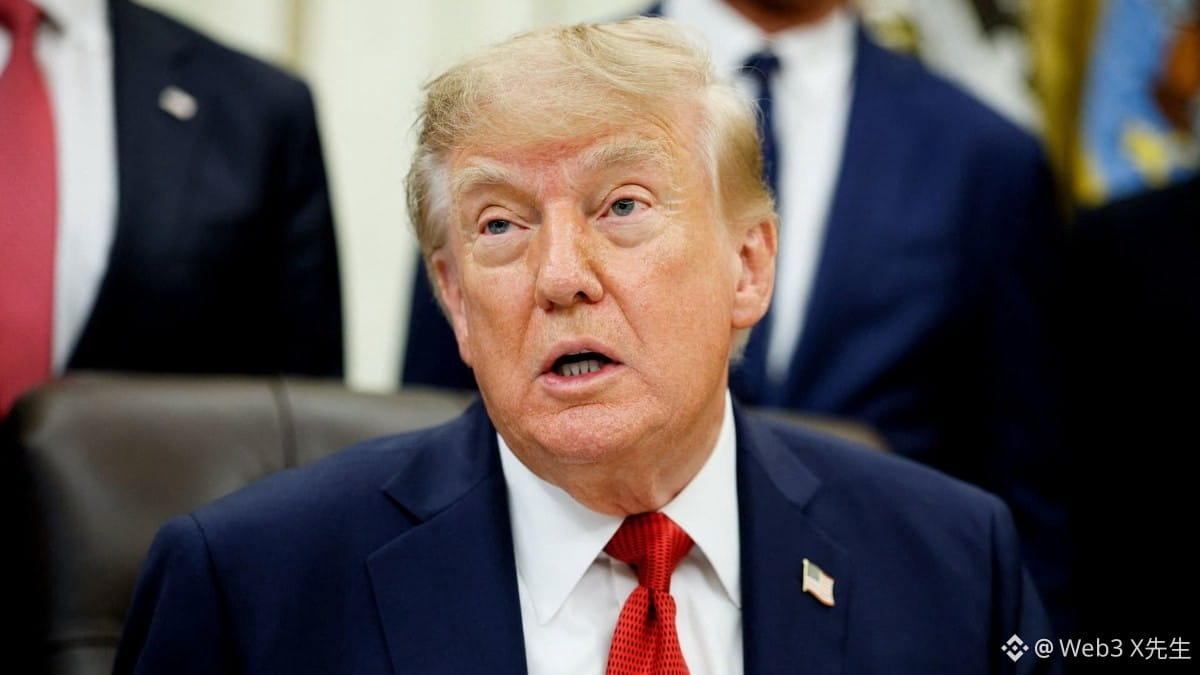
On Trump’s side, his language was even tougher. He said he’s in a “decision mode.” He also mentioned that “something very big” is coming next. In an interview, he said it outright: “When am I going to level the entire country?” “They’d better behave.” But the moment he said that, the market actually got even more confused.🔥
Iran wasn’t backing down either. It directly called for “painful” retaliation. This week, the UN General Assembly is set to convene. Both sides are escalating the bets. Now it’s a game of who blinks first. If you bet on the wrong side, the cost won’t be small.⚖️
If oil doesn’t rise, inflation can breathe a little easier first. But no one dares to inhale too deeply. The Fed just added 25 basis points in September. Bitcoin has just climbed back above $80,000. If things really blow up, risk assets will be the first to get cut. Gold has also been slipping these days.🧨
📌 The missiles didn’t push oil prices up—suggesting the market is more afraid of inflation getting out of control than of a supply cutoff.
Do you think oil prices can surge back above $100? Let’s discuss in the comments.
【They said they’d fight to the end—yet oil prices fell first🛢️🔥】
Group chat: 📲 加入X先生的粉丝群聊
On Monday at the open, oil prices first dropped. Brent fell 1.54% to $102.27. WTI fell 1.69% to $98.6. But last Saturday, Saudi Arabia was just hit by a missile. The attack was carried out by armed groups supported by Iran. This time, it struck Saudi Arabia’s eastern region again.🛢️
It’s not just airports being hit. Saudi’s east–west oil pipeline was also affected. In theory, if supply is disrupted, oil prices should rise. Instead, the market slapped back—harder and harder. The more they hit, the lower the price goes. Traders don’t buy into that logic at all.😳
JPMorgan just released a report. In the past ten days, the Middle East saw daily net outflows averaging 17.1 million barrels. That’s still 6.1 million barrels lower than the 2025 average. The takeaway is simple: oil flows are unexpectedly strong. So the missiles didn’t create any inflationary premium. The words “tight supply” got discounted first.📉
On Trump’s side, his language was even tougher. He said he’s in a “decision mode.” He also mentioned that “something very big” is coming next. In an interview, he said it outright: “When am I going to level the entire country?” “They’d better behave.” But the moment he said that, the market actually got even more confused.🔥
Iran wasn’t backing down either. It directly called for “painful” retaliation. This week, the UN General Assembly is set to convene. Both sides are escalating the bets. Now it’s a game of who blinks first. If you bet on the wrong side, the cost won’t be small.⚖️
If oil doesn’t rise, inflation can breathe a little easier first. But no one dares to inhale too deeply. The Fed just added 25 basis points in September. Bitcoin has just climbed back above $80,000. If things really blow up, risk assets will be the first to get cut. Gold has also been slipping these days.🧨
📌 The missiles didn’t push oil prices up—suggesting the market is more afraid of inflation getting out of control than of a supply cutoff.
Do you think oil prices can surge back above $100? Let’s discuss in the comments.
Group chat: 📲 加入X先生的粉丝群聊
On Monday at the open, oil prices first dropped. Brent fell 1.54% to $102.27. WTI fell 1.69% to $98.6. But last Saturday, Saudi Arabia was just hit by a missile. The attack was carried out by armed groups supported by Iran. This time, it struck Saudi Arabia’s eastern region again.🛢️
It’s not just airports being hit. Saudi’s east–west oil pipeline was also affected. In theory, if supply is disrupted, oil prices should rise. Instead, the market slapped back—harder and harder. The more they hit, the lower the price goes. Traders don’t buy into that logic at all.😳
JPMorgan just released a report. In the past ten days, the Middle East saw daily net outflows averaging 17.1 million barrels. That’s still 6.1 million barrels lower than the 2025 average. The takeaway is simple: oil flows are unexpectedly strong. So the missiles didn’t create any inflationary premium. The words “tight supply” got discounted first.📉
On Trump’s side, his language was even tougher. He said he’s in a “decision mode.” He also mentioned that “something very big” is coming next. In an interview, he said it outright: “When am I going to level the entire country?” “They’d better behave.” But the moment he said that, the market actually got even more confused.🔥
Iran wasn’t backing down either. It directly called for “painful” retaliation. This week, the UN General Assembly is set to convene. Both sides are escalating the bets. Now it’s a game of who blinks first. If you bet on the wrong side, the cost won’t be small.⚖️
If oil doesn’t rise, inflation can breathe a little easier first. But no one dares to inhale too deeply. The Fed just added 25 basis points in September. Bitcoin has just climbed back above $80,000. If things really blow up, risk assets will be the first to get cut. Gold has also been slipping these days.🧨
📌 The missiles didn’t push oil prices up—suggesting the market is more afraid of inflation getting out of control than of a supply cutoff.
Do you think oil prices can surge back above $100? Let’s discuss in the comments.
317
·
--
【Apple, Google, and Samsung competing for talent in the same month—are stablecoins about to become standard equipment?📱🔥】
Group chat: [📲 加入X先生的粉丝群聊](https://app.binance.com/uni-qr/XP5J3ynH)
Three job postings lined up together are more honest than a press conference. On August 26, Apple posted openings. The role is head of financial product strategy. In the requirements, it directly mentions stablecoins. It’s followed by “blockchain technology” as well. This is completely different from the vague phrasing of the past.💼
Google’s approach is actually more infrastructure-oriented. It’s hiring a cloud architect for the Asia-Pacific region in Hong Kong. The preferred qualifications list a stablecoin payment network. Another role is for custody of tokenized assets. One wants to build a consumer payment entry point. The other wants to sell the underlying pipeline to businesses.🏦
Samsung also didn’t miss out on this talent-grab. In mid-September, it posted a position in its U.S. operations. The role manages payment services for Samsung Wallet. The job description also specifically calls out stablecoins. The three tech giants all move in the same month. At this point, calling it a coincidence is a bit of a stretch.💳
In the past, job postings were much more careful with wording. Common terms were vague phrases like “emerging payment technologies.” Now stablecoins are written directly into the hard requirements. This suggests internal exploration has moved into a concrete stage. Regulators in various places are also treating stablecoins as payment tools—no longer as shadowy crypto assets that can’t be managed.📜
If smartphone manufacturers really are entering the game, ordinary people don’t need to understand the chain at all. Scan to pay—no one cares which blockchain runs in the background. Stablecoins will first become an invisible settlement pipeline. That’s clear pressure on traditional payment companies. For stablecoin issuers, it’s a massive market. Whoever gets the factory pre-installation wins more than half the battle.🚀
But there’s one more layer that needs to be clarified first. The three companies are only hiring right now. To date, none has announced plans to issue stablecoins. The distance between recruitment and product rollout is still very far. Hiring is a signal, not a conclusion. Don’t treat the signal as the result too early.🚨
📌 The three giants poach stablecoin talent at the same time—earlier than the news.
Do you think Apple’s next step will be to issue stablecoins itself?
【Apple, Google, and Samsung competing for talent in the same month—are stablecoins about to become standard equipment?📱🔥】
Group chat: 📲 加入X先生的粉丝群聊
Three job postings lined up together are more honest than a press conference. On August 26, Apple posted openings. The role is head of financial product strategy. In the requirements, it directly mentions stablecoins. It’s followed by “blockchain technology” as well. This is completely different from the vague phrasing of the past.💼
Google’s approach is actually more infrastructure-oriented. It’s hiring a cloud architect for the Asia-Pacific region in Hong Kong. The preferred qualifications list a stablecoin payment network. Another role is for custody of tokenized assets. One wants to build a consumer payment entry point. The other wants to sell the underlying pipeline to businesses.🏦
Samsung also didn’t miss out on this talent-grab. In mid-September, it posted a position in its U.S. operations. The role manages payment services for Samsung Wallet. The job description also specifically calls out stablecoins. The three tech giants all move in the same month. At this point, calling it a coincidence is a bit of a stretch.💳
In the past, job postings were much more careful with wording. Common terms were vague phrases like “emerging payment technologies.” Now stablecoins are written directly into the hard requirements. This suggests internal exploration has moved into a concrete stage. Regulators in various places are also treating stablecoins as payment tools—no longer as shadowy crypto assets that can’t be managed.📜
If smartphone manufacturers really are entering the game, ordinary people don’t need to understand the chain at all. Scan to pay—no one cares which blockchain runs in the background. Stablecoins will first become an invisible settlement pipeline. That’s clear pressure on traditional payment companies. For stablecoin issuers, it’s a massive market. Whoever gets the factory pre-installation wins more than half the battle.🚀
But there’s one more layer that needs to be clarified first. The three companies are only hiring right now. To date, none has announced plans to issue stablecoins. The distance between recruitment and product rollout is still very far. Hiring is a signal, not a conclusion. Don’t treat the signal as the result too early.🚨
📌 The three giants poach stablecoin talent at the same time—earlier than the news.
Do you think Apple’s next step will be to issue stablecoins itself?
Group chat: 📲 加入X先生的粉丝群聊
Three job postings lined up together are more honest than a press conference. On August 26, Apple posted openings. The role is head of financial product strategy. In the requirements, it directly mentions stablecoins. It’s followed by “blockchain technology” as well. This is completely different from the vague phrasing of the past.💼
Google’s approach is actually more infrastructure-oriented. It’s hiring a cloud architect for the Asia-Pacific region in Hong Kong. The preferred qualifications list a stablecoin payment network. Another role is for custody of tokenized assets. One wants to build a consumer payment entry point. The other wants to sell the underlying pipeline to businesses.🏦
Samsung also didn’t miss out on this talent-grab. In mid-September, it posted a position in its U.S. operations. The role manages payment services for Samsung Wallet. The job description also specifically calls out stablecoins. The three tech giants all move in the same month. At this point, calling it a coincidence is a bit of a stretch.💳
In the past, job postings were much more careful with wording. Common terms were vague phrases like “emerging payment technologies.” Now stablecoins are written directly into the hard requirements. This suggests internal exploration has moved into a concrete stage. Regulators in various places are also treating stablecoins as payment tools—no longer as shadowy crypto assets that can’t be managed.📜
If smartphone manufacturers really are entering the game, ordinary people don’t need to understand the chain at all. Scan to pay—no one cares which blockchain runs in the background. Stablecoins will first become an invisible settlement pipeline. That’s clear pressure on traditional payment companies. For stablecoin issuers, it’s a massive market. Whoever gets the factory pre-installation wins more than half the battle.🚀
But there’s one more layer that needs to be clarified first. The three companies are only hiring right now. To date, none has announced plans to issue stablecoins. The distance between recruitment and product rollout is still very far. Hiring is a signal, not a conclusion. Don’t treat the signal as the result too early.🚨
📌 The three giants poach stablecoin talent at the same time—earlier than the news.
Do you think Apple’s next step will be to issue stablecoins itself?
926
·
--
Verified
[U.S. Diesel First Breaks 6.5 Dollars, Will Inflation Catch Fire Again?🔥⛽]
Group chat: [📲 加入X先生的粉丝群聊](https://app.binance.com/uni-qr/XP5J3ynH)
For the first time, U.S. diesel has been sold at $6.5 per gallon. The most unremarkable fuel pump—started first.
A year ago it was still just over $3.8. Year over year, it’s up nearly 70%. Not a small move.
Diesel doesn’t feed passenger cars. It feeds trucks, trains, tractors, and fishing boats.
More than 30% of America’s freight relies on trucks on the highways. When diesel gets more expensive, logistics costs rise too.
The Middle East is still fighting. Global oil routes are tight, and inventories can’t catch up.
Refiners’ profits jumped first. The refining margin for diesel surged to multi-year highs.
What’s even more troublesome: winter is coming. Heating oil and diesel compete for the same batch of feedstock.
Freight rates rise first. Supermarket shelf prices lag behind, then catch up later.
Farm owners are also complaining. Harvest season is about to use fuel, and costs suddenly spike.
Last week, the Federal Reserve just raised rates by 25 basis points. They say they’ll follow the data, but the data isn’t cooperating.
Kashkari stepped out to speak. Inflation is still too high—it's not just oil prices.
He added that employment is solid and the economy is resilient. Sounds like they don’t plan to let go.
The market understood. Betting on further rate hikes goes even higher.
For the crypto market, this storyline is too familiar. If rates don’t fall, valuations can’t lift their heads.
Bitcoin is hovering above $80,000. It hasn’t dropped, but it also hasn’t carved out its own trend.
Some people treat Bitcoin as an inflation hedge. But right now, it’s still shaking along with risk assets.
Gold first held steady. The safe-haven money still goes back to its old place—for now.
Next, there are more inflation reports to come. If the numbers beat expectations again, rates will be even harder to ease.
U.S. midterm elections are right around the corner. Voters are most sensitive to oil prices.
The White House wants to push oil prices down, but it only has sanctions and talking. The real valves are over with the oil-producing countries.
Don’t just stare at the K-line. Diesel, shipping rates, inflation, and interest rates are all tied to the same rope.
📌 The day diesel set a record, inflation clearly wasn’t planning to exit the stage.
Do you think the Fed will dare to truly raise rates next?
[U.S. Diesel First Breaks 6.5 Dollars, Will Inflation Catch Fire Again?🔥⛽]
Group chat: 📲 加入X先生的粉丝群聊
For the first time, U.S. diesel has been sold at $6.5 per gallon. The most unremarkable fuel pump—started first.
A year ago it was still just over $3.8. Year over year, it’s up nearly 70%. Not a small move.
Diesel doesn’t feed passenger cars. It feeds trucks, trains, tractors, and fishing boats.
More than 30% of America’s freight relies on trucks on the highways. When diesel gets more expensive, logistics costs rise too.
The Middle East is still fighting. Global oil routes are tight, and inventories can’t catch up.
Refiners’ profits jumped first. The refining margin for diesel surged to multi-year highs.
What’s even more troublesome: winter is coming. Heating oil and diesel compete for the same batch of feedstock.
Freight rates rise first. Supermarket shelf prices lag behind, then catch up later.
Farm owners are also complaining. Harvest season is about to use fuel, and costs suddenly spike.
Last week, the Federal Reserve just raised rates by 25 basis points. They say they’ll follow the data, but the data isn’t cooperating.
Kashkari stepped out to speak. Inflation is still too high—it's not just oil prices.
He added that employment is solid and the economy is resilient. Sounds like they don’t plan to let go.
The market understood. Betting on further rate hikes goes even higher.
For the crypto market, this storyline is too familiar. If rates don’t fall, valuations can’t lift their heads.
Bitcoin is hovering above $80,000. It hasn’t dropped, but it also hasn’t carved out its own trend.
Some people treat Bitcoin as an inflation hedge. But right now, it’s still shaking along with risk assets.
Gold first held steady. The safe-haven money still goes back to its old place—for now.
Next, there are more inflation reports to come. If the numbers beat expectations again, rates will be even harder to ease.
U.S. midterm elections are right around the corner. Voters are most sensitive to oil prices.
The White House wants to push oil prices down, but it only has sanctions and talking. The real valves are over with the oil-producing countries.
Don’t just stare at the K-line. Diesel, shipping rates, inflation, and interest rates are all tied to the same rope.
📌 The day diesel set a record, inflation clearly wasn’t planning to exit the stage.
Do you think the Fed will dare to truly raise rates next?
Group chat: 📲 加入X先生的粉丝群聊
For the first time, U.S. diesel has been sold at $6.5 per gallon. The most unremarkable fuel pump—started first.
A year ago it was still just over $3.8. Year over year, it’s up nearly 70%. Not a small move.
Diesel doesn’t feed passenger cars. It feeds trucks, trains, tractors, and fishing boats.
More than 30% of America’s freight relies on trucks on the highways. When diesel gets more expensive, logistics costs rise too.
The Middle East is still fighting. Global oil routes are tight, and inventories can’t catch up.
Refiners’ profits jumped first. The refining margin for diesel surged to multi-year highs.
What’s even more troublesome: winter is coming. Heating oil and diesel compete for the same batch of feedstock.
Freight rates rise first. Supermarket shelf prices lag behind, then catch up later.
Farm owners are also complaining. Harvest season is about to use fuel, and costs suddenly spike.
Last week, the Federal Reserve just raised rates by 25 basis points. They say they’ll follow the data, but the data isn’t cooperating.
Kashkari stepped out to speak. Inflation is still too high—it's not just oil prices.
He added that employment is solid and the economy is resilient. Sounds like they don’t plan to let go.
The market understood. Betting on further rate hikes goes even higher.
For the crypto market, this storyline is too familiar. If rates don’t fall, valuations can’t lift their heads.
Bitcoin is hovering above $80,000. It hasn’t dropped, but it also hasn’t carved out its own trend.
Some people treat Bitcoin as an inflation hedge. But right now, it’s still shaking along with risk assets.
Gold first held steady. The safe-haven money still goes back to its old place—for now.
Next, there are more inflation reports to come. If the numbers beat expectations again, rates will be even harder to ease.
U.S. midterm elections are right around the corner. Voters are most sensitive to oil prices.
The White House wants to push oil prices down, but it only has sanctions and talking. The real valves are over with the oil-producing countries.
Don’t just stare at the K-line. Diesel, shipping rates, inflation, and interest rates are all tied to the same rope.
📌 The day diesel set a record, inflation clearly wasn’t planning to exit the stage.
Do you think the Fed will dare to truly raise rates next?

176
·
--
【7 million Bitcoins left exposed—are quantum computers targeting them? ⚛️】
Group chat: [📲 加入X先生的粉丝群聊](https://app.binance.com/uni-qr/XP5J3ynH)
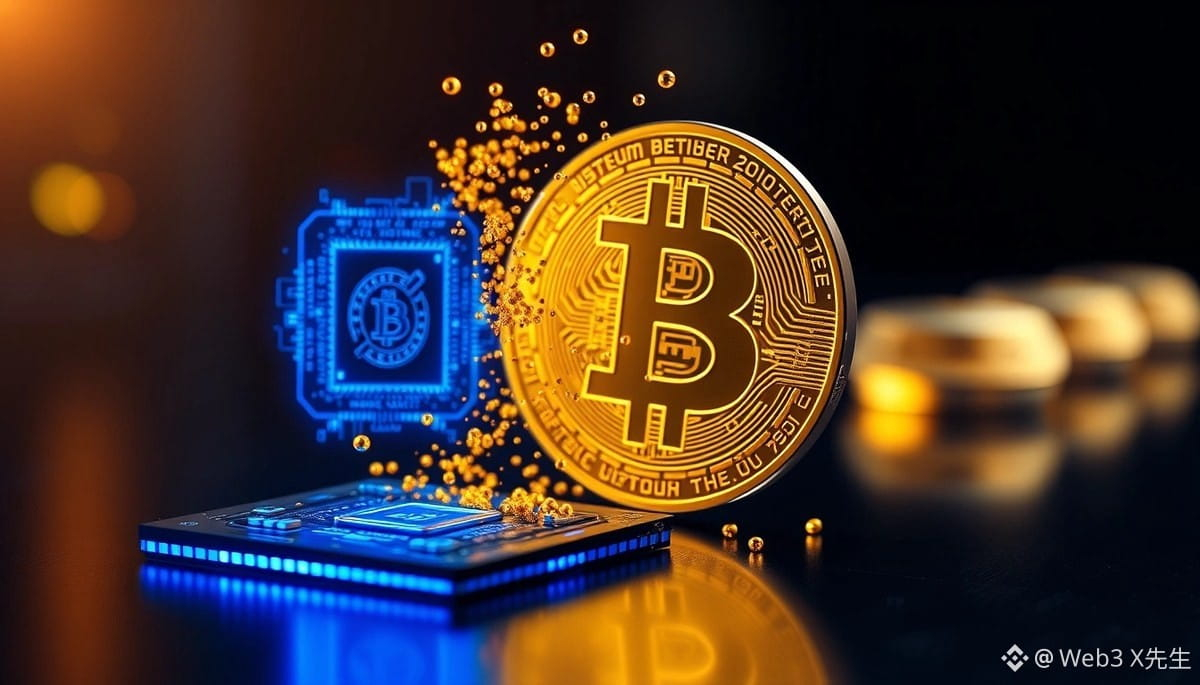
An organization scanned tens of millions of addresses and found that nearly 7 million Bitcoins are exposed. That’s about one-third of the circulating supply.
What does “exposed” mean? These coins’ public keys are already public. If a quantum computer is powerful enough, it could directly take them.
The reason it’s public is painfully simple: if an address is reused just once, its public key remains on the blockchain forever.
By category, about 4.99 million coins come from addresses reused multiple times. About 1.72 million use early address formats. Even the newer formats still have around 198,000 coins.
Some people will say quantum computers are still years away. That judgment is correct—but no one can say exactly how far away.
Researchers have proposed timelines. The fastest estimate is 2030. The middle estimate is 2033, and the slow one drags out to 2042.
That’s a gap of more than eleven years, showing the forecasts are still very rough. Nobody knows when—or even if—that day will arrive.
Developers are proposing a solution: BIP-360. Use a new type of address so the public key isn’t revealed until the “flower” opens.
This is a soft fork, theoretically without needing to break the chain. It sounds quite elegant—but the real trouble comes next.
Coins won’t move themselves. If old addresses stay untouched, they remain exposed. Users must actively transfer the funds themselves.
Some have suggested forced migration, even freezing coins that don’t move. But that runs into Bitcoin’s old rules.
Whose coins, who decides. That baseline line is one nobody wants to cross—so the controversy keeps getting stuck right here.
Cold wallets also have traps. Custody services often reuse deposit addresses. Ironically, consolidating scattered balances can expose even more public keys.
On the other hand, today’s hardware is far from enough. Neither the number of qubits nor the error rate is sufficient to make this urgent. Rushing to change could bring risks.
What ordinary people can do is actually simple: don’t use the same address over and over. If possible, switch to the new address format.
📌 Bitcoins don’t move on their own—your security depends on your own actions.
How many times have you reused the address for the Bitcoins you hold?
【7 million Bitcoins left exposed—are quantum computers targeting them? ⚛️】
Group chat: 📲 加入X先生的粉丝群聊
An organization scanned tens of millions of addresses and found that nearly 7 million Bitcoins are exposed. That’s about one-third of the circulating supply.
What does “exposed” mean? These coins’ public keys are already public. If a quantum computer is powerful enough, it could directly take them.
The reason it’s public is painfully simple: if an address is reused just once, its public key remains on the blockchain forever.
By category, about 4.99 million coins come from addresses reused multiple times. About 1.72 million use early address formats. Even the newer formats still have around 198,000 coins.
Some people will say quantum computers are still years away. That judgment is correct—but no one can say exactly how far away.
Researchers have proposed timelines. The fastest estimate is 2030. The middle estimate is 2033, and the slow one drags out to 2042.
That’s a gap of more than eleven years, showing the forecasts are still very rough. Nobody knows when—or even if—that day will arrive.
Developers are proposing a solution: BIP-360. Use a new type of address so the public key isn’t revealed until the “flower” opens.
This is a soft fork, theoretically without needing to break the chain. It sounds quite elegant—but the real trouble comes next.
Coins won’t move themselves. If old addresses stay untouched, they remain exposed. Users must actively transfer the funds themselves.
Some have suggested forced migration, even freezing coins that don’t move. But that runs into Bitcoin’s old rules.
Whose coins, who decides. That baseline line is one nobody wants to cross—so the controversy keeps getting stuck right here.
Cold wallets also have traps. Custody services often reuse deposit addresses. Ironically, consolidating scattered balances can expose even more public keys.
On the other hand, today’s hardware is far from enough. Neither the number of qubits nor the error rate is sufficient to make this urgent. Rushing to change could bring risks.
What ordinary people can do is actually simple: don’t use the same address over and over. If possible, switch to the new address format.
📌 Bitcoins don’t move on their own—your security depends on your own actions.
How many times have you reused the address for the Bitcoins you hold?
Group chat: 📲 加入X先生的粉丝群聊
An organization scanned tens of millions of addresses and found that nearly 7 million Bitcoins are exposed. That’s about one-third of the circulating supply.
What does “exposed” mean? These coins’ public keys are already public. If a quantum computer is powerful enough, it could directly take them.
The reason it’s public is painfully simple: if an address is reused just once, its public key remains on the blockchain forever.
By category, about 4.99 million coins come from addresses reused multiple times. About 1.72 million use early address formats. Even the newer formats still have around 198,000 coins.
Some people will say quantum computers are still years away. That judgment is correct—but no one can say exactly how far away.
Researchers have proposed timelines. The fastest estimate is 2030. The middle estimate is 2033, and the slow one drags out to 2042.
That’s a gap of more than eleven years, showing the forecasts are still very rough. Nobody knows when—or even if—that day will arrive.
Developers are proposing a solution: BIP-360. Use a new type of address so the public key isn’t revealed until the “flower” opens.
This is a soft fork, theoretically without needing to break the chain. It sounds quite elegant—but the real trouble comes next.
Coins won’t move themselves. If old addresses stay untouched, they remain exposed. Users must actively transfer the funds themselves.
Some have suggested forced migration, even freezing coins that don’t move. But that runs into Bitcoin’s old rules.
Whose coins, who decides. That baseline line is one nobody wants to cross—so the controversy keeps getting stuck right here.
Cold wallets also have traps. Custody services often reuse deposit addresses. Ironically, consolidating scattered balances can expose even more public keys.
On the other hand, today’s hardware is far from enough. Neither the number of qubits nor the error rate is sufficient to make this urgent. Rushing to change could bring risks.
What ordinary people can do is actually simple: don’t use the same address over and over. If possible, switch to the new address format.
📌 Bitcoins don’t move on their own—your security depends on your own actions.
How many times have you reused the address for the Bitcoins you hold?
107
·
--
【A single wallet handled two projects, and the coin fell to an all-time low 😱】
Group chat: [📲 加入X先生的粉丝群聊](https://app.binance.com/uni-qr/XP5J3ynH)
One wallet address moved two projects within hours.
Together, it’s about $2 million.
Security firm Blockaid called it out.
The targets are Fetch.ai and NuNet.
One builds AI agents, and the other builds a computing network.
Both are fairly well-known projects in the crypto world.
First, let’s talk about Fetch.ai.
The attacker used a valid signature.
With one contract call, the attacker emptied the funds in the pool.
This transaction is about $1.56 million.
There was no brute-force hacking, and no complex scripts.
The signature is real, and the permissions are correct.
For NuNet, it’s even more direct.
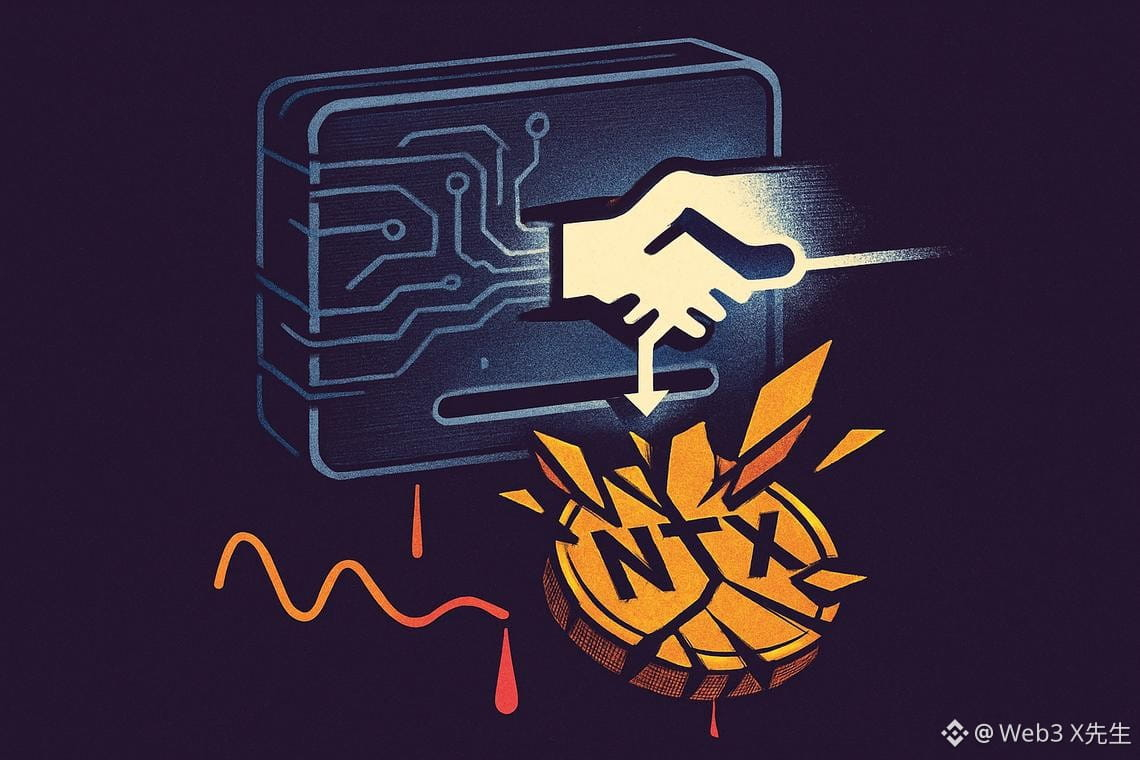
The same wallet minted $450,000 worth of NTX.
This money came in even more smoothly.
After getting the funds, he didn’t hold onto them.
He converted them into 546 ETH, worth roughly $1.44 million.
By converting into more mainstream coins, it’s harder to track and freeze.
The two coins responded completely differently.
NTX dropped more than 70%, crashing to an all-time low.
FET fell only 5%, basically tracking the broader market.
This is also the most painful part.
If you fall along with the overall market, you can still wait for a rebound.
But once the vulnerability wipes out 70% of the value, rebuilding trust is much harder.
This month’s DeFi has been pretty bleak.
Since the 18th, there have been incidents totaling losses of over $333 million.
Liquid alone accounted for $320 million.
Three days ago, a lending protocol was hit by an oracle attack.
It lost $3.5 million.
Now it’s time for token conversion contracts again.
These incidents share a common thread.
The contract code wasn’t written incorrectly.
The problem is in the “identity verification” step.
As of now, neither of the two companies has publicly responded.
Whether the funds can be recovered—no one dares to say.
📌 The signature wasn’t cracked, yet someone used the permissions—this is the most expensive vulnerability.
When signatures get misused like this, who will it happen to next?
【A single wallet handled two projects, and the coin fell to an all-time low 😱】
Group chat: 📲 加入X先生的粉丝群聊
One wallet address moved two projects within hours.
Together, it’s about $2 million.
Security firm Blockaid called it out.
The targets are Fetch.ai and NuNet.
One builds AI agents, and the other builds a computing network.
Both are fairly well-known projects in the crypto world.
First, let’s talk about Fetch.ai.
The attacker used a valid signature.
With one contract call, the attacker emptied the funds in the pool.
This transaction is about $1.56 million.
There was no brute-force hacking, and no complex scripts.
The signature is real, and the permissions are correct.
For NuNet, it’s even more direct.
The same wallet minted $450,000 worth of NTX.
This money came in even more smoothly.
After getting the funds, he didn’t hold onto them.
He converted them into 546 ETH, worth roughly $1.44 million.
By converting into more mainstream coins, it’s harder to track and freeze.
The two coins responded completely differently.
NTX dropped more than 70%, crashing to an all-time low.
FET fell only 5%, basically tracking the broader market.
This is also the most painful part.
If you fall along with the overall market, you can still wait for a rebound.
But once the vulnerability wipes out 70% of the value, rebuilding trust is much harder.
This month’s DeFi has been pretty bleak.
Since the 18th, there have been incidents totaling losses of over $333 million.
Liquid alone accounted for $320 million.
Three days ago, a lending protocol was hit by an oracle attack.
It lost $3.5 million.
Now it’s time for token conversion contracts again.
These incidents share a common thread.
The contract code wasn’t written incorrectly.
The problem is in the “identity verification” step.
As of now, neither of the two companies has publicly responded.
Whether the funds can be recovered—no one dares to say.
📌 The signature wasn’t cracked, yet someone used the permissions—this is the most expensive vulnerability.
When signatures get misused like this, who will it happen to next?
Group chat: 📲 加入X先生的粉丝群聊
One wallet address moved two projects within hours.
Together, it’s about $2 million.
Security firm Blockaid called it out.
The targets are Fetch.ai and NuNet.
One builds AI agents, and the other builds a computing network.
Both are fairly well-known projects in the crypto world.
First, let’s talk about Fetch.ai.
The attacker used a valid signature.
With one contract call, the attacker emptied the funds in the pool.
This transaction is about $1.56 million.
There was no brute-force hacking, and no complex scripts.
The signature is real, and the permissions are correct.
For NuNet, it’s even more direct.
The same wallet minted $450,000 worth of NTX.
This money came in even more smoothly.
After getting the funds, he didn’t hold onto them.
He converted them into 546 ETH, worth roughly $1.44 million.
By converting into more mainstream coins, it’s harder to track and freeze.
The two coins responded completely differently.
NTX dropped more than 70%, crashing to an all-time low.
FET fell only 5%, basically tracking the broader market.
This is also the most painful part.
If you fall along with the overall market, you can still wait for a rebound.
But once the vulnerability wipes out 70% of the value, rebuilding trust is much harder.
This month’s DeFi has been pretty bleak.
Since the 18th, there have been incidents totaling losses of over $333 million.
Liquid alone accounted for $320 million.
Three days ago, a lending protocol was hit by an oracle attack.
It lost $3.5 million.
Now it’s time for token conversion contracts again.
These incidents share a common thread.
The contract code wasn’t written incorrectly.
The problem is in the “identity verification” step.
As of now, neither of the two companies has publicly responded.
Whether the funds can be recovered—no one dares to say.
📌 The signature wasn’t cracked, yet someone used the permissions—this is the most expensive vulnerability.
When signatures get misused like this, who will it happen to next?
2
4.8k
·
--
【Africa’s biggest IPO opens its doors—can stablecoins now join the new-share rush? 💰】
Group chat: [📲 加入X先生的粉丝群聊](https://app.binance.com/uni-qr/XP5J3ynH)
This week, Africa’s largest-ever IPO has opened. The spotlight is on Dangote’s oil refinery in Nigeria. Locals are watching this deal closely.
The plan is to issue 4.1 billion shares at 525 naira per share. The fundraising target is about $1.6 billion. That puts the valuation at around $47 billion.
This refinery processes 650,000 barrels of crude oil per day. The owner is Africa’s richest person, Aliko Dangote. Oil plus refining—this is definitely a big plate.
What’s interesting is that there’s an added subscription channel. The platform NectarFi is built on Solana. If you have stablecoins in your wallet, you can place an order.
The minimum threshold is 10,000 naira, about $7.50. It’s like the price of a cup of coffee to get in on the new-share offering. The low entry barrier is a bit surprising.
But the shares themselves aren’t turned into on-chain tokens. First, stablecoins are exchanged for legally valid subscription entitlements. After that, it still follows the local securities clearing process.
For the first time, on-chain payments have been integrated into the traditional IPO subscription pipeline. This isn’t a replacement—it’s running side by side. And this step is faster than expected.
Previously, African retail investors were basically kept out of the door. Local account-opening requirements are high, and cross-border remittances are slow and expensive. To buy new shares, options were extremely limited.
Now you can place orders with USDT sitting right on your phone. Funds arrive quickly, and fees are also low—like opening a small extra door 🌍
In the same week, Solana also quietly sped up. Its block production target was cut from 300ms to 250ms, meaning the network can produce 4 slots per second.
With lower latency, wallets and software can get data more quickly. The official message emphasizes that this isn’t a doubling of throughput—just lower delay.
On the ecosystem side, more is being added too. New perpetual market-making mechanisms have been launched on platforms, and teams are getting robots integrated on-chain.
Local retail investors have already started making jokes about it. Someone even shouted from afar asking to hold a board meeting. The hype around this deal doesn’t fall behind the “new-share miracle” stories at all.
The subscription period runs until October 13. If demand is hot, there’s also a greenshoe option to add more shares, and fundraising could rise further.
Using stablecoins as a funding channel—this step is moving fast. The boundary between traditional finance and the on-chain world is being worn down.
📌 The first time stablecoins are used as the payment rail for a traditional IPO.
Would you use stablecoins to participate in new-share subscriptions? Let’s discuss in the comments.
【Africa’s biggest IPO opens its doors—can stablecoins now join the new-share rush? 💰】
Group chat: 📲 加入X先生的粉丝群聊
This week, Africa’s largest-ever IPO has opened. The spotlight is on Dangote’s oil refinery in Nigeria. Locals are watching this deal closely.
The plan is to issue 4.1 billion shares at 525 naira per share. The fundraising target is about $1.6 billion. That puts the valuation at around $47 billion.
This refinery processes 650,000 barrels of crude oil per day. The owner is Africa’s richest person, Aliko Dangote. Oil plus refining—this is definitely a big plate.
What’s interesting is that there’s an added subscription channel. The platform NectarFi is built on Solana. If you have stablecoins in your wallet, you can place an order.
The minimum threshold is 10,000 naira, about $7.50. It’s like the price of a cup of coffee to get in on the new-share offering. The low entry barrier is a bit surprising.
But the shares themselves aren’t turned into on-chain tokens. First, stablecoins are exchanged for legally valid subscription entitlements. After that, it still follows the local securities clearing process.
For the first time, on-chain payments have been integrated into the traditional IPO subscription pipeline. This isn’t a replacement—it’s running side by side. And this step is faster than expected.
Previously, African retail investors were basically kept out of the door. Local account-opening requirements are high, and cross-border remittances are slow and expensive. To buy new shares, options were extremely limited.
Now you can place orders with USDT sitting right on your phone. Funds arrive quickly, and fees are also low—like opening a small extra door 🌍
In the same week, Solana also quietly sped up. Its block production target was cut from 300ms to 250ms, meaning the network can produce 4 slots per second.
With lower latency, wallets and software can get data more quickly. The official message emphasizes that this isn’t a doubling of throughput—just lower delay.
On the ecosystem side, more is being added too. New perpetual market-making mechanisms have been launched on platforms, and teams are getting robots integrated on-chain.
Local retail investors have already started making jokes about it. Someone even shouted from afar asking to hold a board meeting. The hype around this deal doesn’t fall behind the “new-share miracle” stories at all.
The subscription period runs until October 13. If demand is hot, there’s also a greenshoe option to add more shares, and fundraising could rise further.
Using stablecoins as a funding channel—this step is moving fast. The boundary between traditional finance and the on-chain world is being worn down.
📌 The first time stablecoins are used as the payment rail for a traditional IPO.
Would you use stablecoins to participate in new-share subscriptions? Let’s discuss in the comments.
Group chat: 📲 加入X先生的粉丝群聊
This week, Africa’s largest-ever IPO has opened. The spotlight is on Dangote’s oil refinery in Nigeria. Locals are watching this deal closely.
The plan is to issue 4.1 billion shares at 525 naira per share. The fundraising target is about $1.6 billion. That puts the valuation at around $47 billion.
This refinery processes 650,000 barrels of crude oil per day. The owner is Africa’s richest person, Aliko Dangote. Oil plus refining—this is definitely a big plate.
What’s interesting is that there’s an added subscription channel. The platform NectarFi is built on Solana. If you have stablecoins in your wallet, you can place an order.
The minimum threshold is 10,000 naira, about $7.50. It’s like the price of a cup of coffee to get in on the new-share offering. The low entry barrier is a bit surprising.
But the shares themselves aren’t turned into on-chain tokens. First, stablecoins are exchanged for legally valid subscription entitlements. After that, it still follows the local securities clearing process.
For the first time, on-chain payments have been integrated into the traditional IPO subscription pipeline. This isn’t a replacement—it’s running side by side. And this step is faster than expected.
Previously, African retail investors were basically kept out of the door. Local account-opening requirements are high, and cross-border remittances are slow and expensive. To buy new shares, options were extremely limited.
Now you can place orders with USDT sitting right on your phone. Funds arrive quickly, and fees are also low—like opening a small extra door 🌍
In the same week, Solana also quietly sped up. Its block production target was cut from 300ms to 250ms, meaning the network can produce 4 slots per second.
With lower latency, wallets and software can get data more quickly. The official message emphasizes that this isn’t a doubling of throughput—just lower delay.
On the ecosystem side, more is being added too. New perpetual market-making mechanisms have been launched on platforms, and teams are getting robots integrated on-chain.
Local retail investors have already started making jokes about it. Someone even shouted from afar asking to hold a board meeting. The hype around this deal doesn’t fall behind the “new-share miracle” stories at all.
The subscription period runs until October 13. If demand is hot, there’s also a greenshoe option to add more shares, and fundraising could rise further.
Using stablecoins as a funding channel—this step is moving fast. The boundary between traditional finance and the on-chain world is being worn down.
📌 The first time stablecoins are used as the payment rail for a traditional IPO.
Would you use stablecoins to participate in new-share subscriptions? Let’s discuss in the comments.

125
·
--
[First half fell to just half, rebound up 60% in the third quarter🔥]
Group chat: [📲 加入X先生的粉丝群聊](https://app.binance.com/uni-qr/XP5J3ynH)
In the first half, Ethereum fell so hard it left people with no patience. It dropped 29% in Q1, and then another 25% in Q2. Back then, anyone who brought it up got scolded.
Then in Q3, it flipped around immediately. By mid-September, the gain was 60.62%. Looking back through the historical ledgers, this is its second-strongest Q3.
Ethereum’s average gain in Q3 was only around 12%. This time, it was five times the average. The earlier pits were largely filled in one go.
Where did the money come from? Spot ETFs pulled in over $10 billion in a quarter. Just in August alone, nearly $4 billion flowed in.
And there are companies sweeping up from their treasuries 💰. In Q3, businesses bought over $15 billion worth of Ethereum. They aren’t short-term traders—they’re stockpiling and not moving.
Price also told the story. In Q3, it climbed above $4,000, and even pushed close to $5,000 before pulling back.
Now it’s back in the range of $2,400 to $2,620. What had risen has already given back part of the move.
On-chain, things also haven’t gone quiet. Ethereum plus Layer 2 locked deposits are back to about $8.8 billion. Borrowing, staking, and trading are all counted in there.
Over the same period, Bitcoin only rose 6% to 10%. One rebounded, one dozed off. That’s how the gap gets opened.
Some say it was the ETF that propped up the floor. Others say DeFi has come back to life again. Both explanations have merit.
But the disagreement isn’t on the technical side. It’s retail watching from the sidelines while institutions move money around. That’s what makes this round the most “enduring” to watch.
Add up the ETF flows and the corporate treasuries—$25 billion moved in over a quarter.
But the price is still lying flat on the floor. That suggests this batch of money isn’t looking at next week. It’s aimed at the coming few quarters.
Ethereum’s bottom this round was propped up with real cash by institutions. It’s not the same as the retail crowd calling trades.
Retail sees the price. Institutions see the entry point.
With custody, ETFs, and corporate treasuries—all three routes are open. The money doesn’t have to be held by anyone’s private keys.
The most heartbreaking part is that ordinary people didn’t keep up. The ones who captured most of the upside were still those who acted early.
📌 One sentence: The cost of hesitation is more expensive than chasing the price.
With this wave of Ethereum—are you willing to chase it?
#以太坊重回2600美元
[First half fell to just half, rebound up 60% in the third quarter🔥]
Group chat: 📲 加入X先生的粉丝群聊
In the first half, Ethereum fell so hard it left people with no patience. It dropped 29% in Q1, and then another 25% in Q2. Back then, anyone who brought it up got scolded.
Then in Q3, it flipped around immediately. By mid-September, the gain was 60.62%. Looking back through the historical ledgers, this is its second-strongest Q3.
Ethereum’s average gain in Q3 was only around 12%. This time, it was five times the average. The earlier pits were largely filled in one go.
Where did the money come from? Spot ETFs pulled in over $10 billion in a quarter. Just in August alone, nearly $4 billion flowed in.
And there are companies sweeping up from their treasuries 💰. In Q3, businesses bought over $15 billion worth of Ethereum. They aren’t short-term traders—they’re stockpiling and not moving.
Price also told the story. In Q3, it climbed above $4,000, and even pushed close to $5,000 before pulling back.
Now it’s back in the range of $2,400 to $2,620. What had risen has already given back part of the move.
On-chain, things also haven’t gone quiet. Ethereum plus Layer 2 locked deposits are back to about $8.8 billion. Borrowing, staking, and trading are all counted in there.
Over the same period, Bitcoin only rose 6% to 10%. One rebounded, one dozed off. That’s how the gap gets opened.
Some say it was the ETF that propped up the floor. Others say DeFi has come back to life again. Both explanations have merit.
But the disagreement isn’t on the technical side. It’s retail watching from the sidelines while institutions move money around. That’s what makes this round the most “enduring” to watch.
Add up the ETF flows and the corporate treasuries—$25 billion moved in over a quarter.
But the price is still lying flat on the floor. That suggests this batch of money isn’t looking at next week. It’s aimed at the coming few quarters.
Ethereum’s bottom this round was propped up with real cash by institutions. It’s not the same as the retail crowd calling trades.
Retail sees the price. Institutions see the entry point.
With custody, ETFs, and corporate treasuries—all three routes are open. The money doesn’t have to be held by anyone’s private keys.
The most heartbreaking part is that ordinary people didn’t keep up. The ones who captured most of the upside were still those who acted early.
📌 One sentence: The cost of hesitation is more expensive than chasing the price.
With this wave of Ethereum—are you willing to chase it?
#以太坊重回2600美元
Group chat: 📲 加入X先生的粉丝群聊
In the first half, Ethereum fell so hard it left people with no patience. It dropped 29% in Q1, and then another 25% in Q2. Back then, anyone who brought it up got scolded.
Then in Q3, it flipped around immediately. By mid-September, the gain was 60.62%. Looking back through the historical ledgers, this is its second-strongest Q3.
Ethereum’s average gain in Q3 was only around 12%. This time, it was five times the average. The earlier pits were largely filled in one go.
Where did the money come from? Spot ETFs pulled in over $10 billion in a quarter. Just in August alone, nearly $4 billion flowed in.
And there are companies sweeping up from their treasuries 💰. In Q3, businesses bought over $15 billion worth of Ethereum. They aren’t short-term traders—they’re stockpiling and not moving.
Price also told the story. In Q3, it climbed above $4,000, and even pushed close to $5,000 before pulling back.
Now it’s back in the range of $2,400 to $2,620. What had risen has already given back part of the move.
On-chain, things also haven’t gone quiet. Ethereum plus Layer 2 locked deposits are back to about $8.8 billion. Borrowing, staking, and trading are all counted in there.
Over the same period, Bitcoin only rose 6% to 10%. One rebounded, one dozed off. That’s how the gap gets opened.
Some say it was the ETF that propped up the floor. Others say DeFi has come back to life again. Both explanations have merit.
But the disagreement isn’t on the technical side. It’s retail watching from the sidelines while institutions move money around. That’s what makes this round the most “enduring” to watch.
Add up the ETF flows and the corporate treasuries—$25 billion moved in over a quarter.
But the price is still lying flat on the floor. That suggests this batch of money isn’t looking at next week. It’s aimed at the coming few quarters.
Ethereum’s bottom this round was propped up with real cash by institutions. It’s not the same as the retail crowd calling trades.
Retail sees the price. Institutions see the entry point.
With custody, ETFs, and corporate treasuries—all three routes are open. The money doesn’t have to be held by anyone’s private keys.
The most heartbreaking part is that ordinary people didn’t keep up. The ones who captured most of the upside were still those who acted early.
📌 One sentence: The cost of hesitation is more expensive than chasing the price.
With this wave of Ethereum—are you willing to chase it?
#以太坊重回2600美元
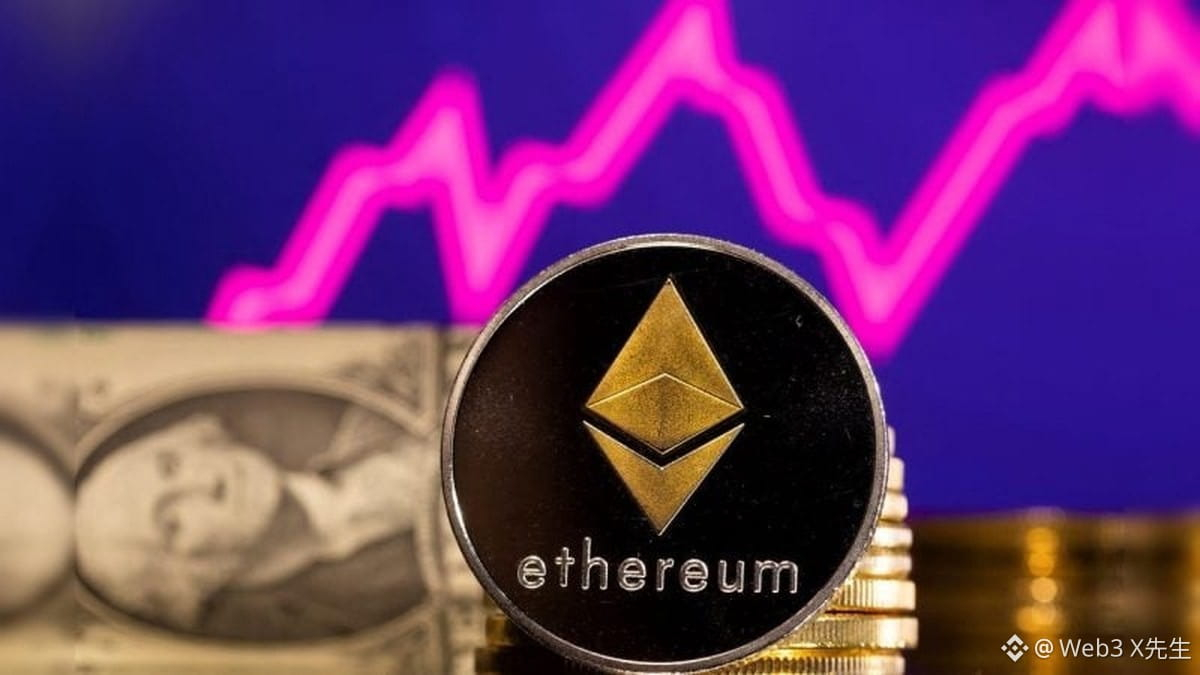
139
·
--
【Everyone is withdrawing money, yet Solana is still taking in 12 straight weeks 🔥】
Group chat: [📲 加入X先生的粉丝群聊](https://app.binance.com/uni-qr/XP5J3ynH)
This week’s crypto ETF inflows are, overall, moving out.
Across five trading days, there was a net outflow of more than $70 million.
The Bitcoin funds were the quietest—only $6.1 million came in for the week.
Ethereum saw $140 million pulled out.
It’s the worst category among the four types of crypto funds.
Solana goes the opposite way—net inflow of $60.7 million.
This is already its 12th consecutive week of attracting capital.
For an entire quarter, the money has kept flowing in.
While others are running, it’s focused on collecting fees.
Nearly all the money went into just one shop.
Bitwise’s BSOL was the most aggressive.
It pulled in nearly $59 million in one week, accounting for 97%.
Bitcoin ETFs were also quite tangled this week.
On Tuesday and Wednesday, $746 million was redeemed.
Then on Friday it surged back with $433 million, barely managing to even things out.
That was the dullest week on record.
Trading was sluggish, and the money didn’t really move.
Compared with Solana, the contrast is huge.
The turnaround on Friday still relied on big institutions.
BlackRock’s IBIT added $120 million in the week.
Fidelity’s FBTC was even tougher—$310 million in a single day.
Hyperliquid’s fund was also positive.
A small inflow of $3.09 million for the week—amount wasn’t big, but it’s rising.
Two altcoin categories at once bringing in money is fairly rare.
The backdrop: the Fed just raised rates by 25 basis points.
Rates were pushed up to 3.75%–4%, the first time in three years.
Money immediately pulled out of risk assets.
BTC was briefly smashed to below $80,000.
By Friday it climbed back above $80,000.
As oil prices eased, crypto stocks bounced too.
Now Bitcoin ETFs hold 6.29% of the total BTC supply.
The more tightly it’s locked up, the tighter liquidity gets—making the price easier to push up.
Solana is still quietly collecting money on the side.
Twelve weeks of consecutive intake—what retail investors see is the excitement.
Institutions might be looking at a different set of numbers.
📌 Net withdrew $70 million across the board, yet Solana still keeps pulling in for 12 weeks
Do you think this is just funds rotating, or is Solana really set to take the lead? Talk in the comments.
#比特币突破8万美元大关 #比特币市值超越特斯拉
【Everyone is withdrawing money, yet Solana is still taking in 12 straight weeks 🔥】
Group chat: 📲 加入X先生的粉丝群聊
This week’s crypto ETF inflows are, overall, moving out.
Across five trading days, there was a net outflow of more than $70 million.
The Bitcoin funds were the quietest—only $6.1 million came in for the week.
Ethereum saw $140 million pulled out.
It’s the worst category among the four types of crypto funds.
Solana goes the opposite way—net inflow of $60.7 million.
This is already its 12th consecutive week of attracting capital.
For an entire quarter, the money has kept flowing in.
While others are running, it’s focused on collecting fees.
Nearly all the money went into just one shop.
Bitwise’s BSOL was the most aggressive.
It pulled in nearly $59 million in one week, accounting for 97%.
Bitcoin ETFs were also quite tangled this week.
On Tuesday and Wednesday, $746 million was redeemed.
Then on Friday it surged back with $433 million, barely managing to even things out.
That was the dullest week on record.
Trading was sluggish, and the money didn’t really move.
Compared with Solana, the contrast is huge.
The turnaround on Friday still relied on big institutions.
BlackRock’s IBIT added $120 million in the week.
Fidelity’s FBTC was even tougher—$310 million in a single day.
Hyperliquid’s fund was also positive.
A small inflow of $3.09 million for the week—amount wasn’t big, but it’s rising.
Two altcoin categories at once bringing in money is fairly rare.
The backdrop: the Fed just raised rates by 25 basis points.
Rates were pushed up to 3.75%–4%, the first time in three years.
Money immediately pulled out of risk assets.
BTC was briefly smashed to below $80,000.
By Friday it climbed back above $80,000.
As oil prices eased, crypto stocks bounced too.
Now Bitcoin ETFs hold 6.29% of the total BTC supply.
The more tightly it’s locked up, the tighter liquidity gets—making the price easier to push up.
Solana is still quietly collecting money on the side.
Twelve weeks of consecutive intake—what retail investors see is the excitement.
Institutions might be looking at a different set of numbers.
📌 Net withdrew $70 million across the board, yet Solana still keeps pulling in for 12 weeks
Do you think this is just funds rotating, or is Solana really set to take the lead? Talk in the comments.
#比特币突破8万美元大关 #比特币市值超越特斯拉
Group chat: 📲 加入X先生的粉丝群聊
This week’s crypto ETF inflows are, overall, moving out.
Across five trading days, there was a net outflow of more than $70 million.
The Bitcoin funds were the quietest—only $6.1 million came in for the week.
Ethereum saw $140 million pulled out.
It’s the worst category among the four types of crypto funds.
Solana goes the opposite way—net inflow of $60.7 million.
This is already its 12th consecutive week of attracting capital.
For an entire quarter, the money has kept flowing in.
While others are running, it’s focused on collecting fees.
Nearly all the money went into just one shop.
Bitwise’s BSOL was the most aggressive.
It pulled in nearly $59 million in one week, accounting for 97%.
Bitcoin ETFs were also quite tangled this week.
On Tuesday and Wednesday, $746 million was redeemed.
Then on Friday it surged back with $433 million, barely managing to even things out.
That was the dullest week on record.
Trading was sluggish, and the money didn’t really move.
Compared with Solana, the contrast is huge.
The turnaround on Friday still relied on big institutions.
BlackRock’s IBIT added $120 million in the week.
Fidelity’s FBTC was even tougher—$310 million in a single day.
Hyperliquid’s fund was also positive.
A small inflow of $3.09 million for the week—amount wasn’t big, but it’s rising.
Two altcoin categories at once bringing in money is fairly rare.
The backdrop: the Fed just raised rates by 25 basis points.
Rates were pushed up to 3.75%–4%, the first time in three years.
Money immediately pulled out of risk assets.
BTC was briefly smashed to below $80,000.
By Friday it climbed back above $80,000.
As oil prices eased, crypto stocks bounced too.
Now Bitcoin ETFs hold 6.29% of the total BTC supply.
The more tightly it’s locked up, the tighter liquidity gets—making the price easier to push up.
Solana is still quietly collecting money on the side.
Twelve weeks of consecutive intake—what retail investors see is the excitement.
Institutions might be looking at a different set of numbers.
📌 Net withdrew $70 million across the board, yet Solana still keeps pulling in for 12 weeks
Do you think this is just funds rotating, or is Solana really set to take the lead? Talk in the comments.
#比特币突破8万美元大关 #比特币市值超越特斯拉
332
·
--
[Bitcoin bought for $324 15 years ago is moving today—worth $8 million now 🔥]
Join Mr. X’s homepage fan group chat 🔥
A wallet that’s been asleep for nearly 15 years suddenly woke up yesterday. It contains a full 100 Bitcoins. At today’s prices, it’s worth over $8 million.
This wallet was created in November 2011. Back then, one Bitcoin was only $3.24. These 100 coins cost a total of $324 at the time.
$324 turning into $8 million means it multiplied by 24,600 times in between. Even harsher: over these 15 years, he never moved it once. With this kind of patience, not many people have it today.
Coincidentally, on the same day, four other old wallets also became active. The coins inside were mined in 2013. Together they add up to another 100 Bitcoins—also worth about $8 million.
These four wallets didn’t scatter; all the funds were swept into the same address. On-chain markers show that the receiving party is Bitgo, a large institution specialized in custody.
So right now, there are two theories. One is that he’s going to sell, pocket the gains, and be done. The other is that he’s just moving storage to a new place, without plans to sell.
Which one it is, the blockchain can’t tell for now. But one thing is certain: the cost basis of these two batches is unbelievably low.
The 2013 batch wasn’t expensive either. Back then, one Bitcoin was about $32. The cost for 100 coins was roughly $3,200.
At today’s prices, this batch has also risen by about 2,500 times. Back then you put in $1; now it’s worth $2,500. And thirteen years just went by like that.
This month, old wallets started waking up one after another. The batch from September is a rare recent cluster of awakenings.
Most of these people are now around their 40s or 50s. Back then, many people bought just on a whim—some out of curiosity, some because a friend recommended it.
They bought and then forgot all about it. Until the coin price climbed to $80,000—they remembered.
Now they’re starting to move. Are they preparing to get off the train, or will they keep holding? We might have to wait a few weeks to know the answer.
📌 One sentence: Making big money isn’t about trading—it’s about holding strong.
Do you think these 100 coins will eventually hit the market and be sold?
[Bitcoin bought for $324 15 years ago is moving today—worth $8 million now 🔥]
Join Mr. X’s homepage fan group chat 🔥
A wallet that’s been asleep for nearly 15 years suddenly woke up yesterday. It contains a full 100 Bitcoins. At today’s prices, it’s worth over $8 million.
This wallet was created in November 2011. Back then, one Bitcoin was only $3.24. These 100 coins cost a total of $324 at the time.
$324 turning into $8 million means it multiplied by 24,600 times in between. Even harsher: over these 15 years, he never moved it once. With this kind of patience, not many people have it today.
Coincidentally, on the same day, four other old wallets also became active. The coins inside were mined in 2013. Together they add up to another 100 Bitcoins—also worth about $8 million.
These four wallets didn’t scatter; all the funds were swept into the same address. On-chain markers show that the receiving party is Bitgo, a large institution specialized in custody.
So right now, there are two theories. One is that he’s going to sell, pocket the gains, and be done. The other is that he’s just moving storage to a new place, without plans to sell.
Which one it is, the blockchain can’t tell for now. But one thing is certain: the cost basis of these two batches is unbelievably low.
The 2013 batch wasn’t expensive either. Back then, one Bitcoin was about $32. The cost for 100 coins was roughly $3,200.
At today’s prices, this batch has also risen by about 2,500 times. Back then you put in $1; now it’s worth $2,500. And thirteen years just went by like that.
This month, old wallets started waking up one after another. The batch from September is a rare recent cluster of awakenings.
Most of these people are now around their 40s or 50s. Back then, many people bought just on a whim—some out of curiosity, some because a friend recommended it.
They bought and then forgot all about it. Until the coin price climbed to $80,000—they remembered.
Now they’re starting to move. Are they preparing to get off the train, or will they keep holding? We might have to wait a few weeks to know the answer.
📌 One sentence: Making big money isn’t about trading—it’s about holding strong.
Do you think these 100 coins will eventually hit the market and be sold?
Join Mr. X’s homepage fan group chat 🔥
A wallet that’s been asleep for nearly 15 years suddenly woke up yesterday. It contains a full 100 Bitcoins. At today’s prices, it’s worth over $8 million.
This wallet was created in November 2011. Back then, one Bitcoin was only $3.24. These 100 coins cost a total of $324 at the time.
$324 turning into $8 million means it multiplied by 24,600 times in between. Even harsher: over these 15 years, he never moved it once. With this kind of patience, not many people have it today.
Coincidentally, on the same day, four other old wallets also became active. The coins inside were mined in 2013. Together they add up to another 100 Bitcoins—also worth about $8 million.
These four wallets didn’t scatter; all the funds were swept into the same address. On-chain markers show that the receiving party is Bitgo, a large institution specialized in custody.
So right now, there are two theories. One is that he’s going to sell, pocket the gains, and be done. The other is that he’s just moving storage to a new place, without plans to sell.
Which one it is, the blockchain can’t tell for now. But one thing is certain: the cost basis of these two batches is unbelievably low.
The 2013 batch wasn’t expensive either. Back then, one Bitcoin was about $32. The cost for 100 coins was roughly $3,200.
At today’s prices, this batch has also risen by about 2,500 times. Back then you put in $1; now it’s worth $2,500. And thirteen years just went by like that.
This month, old wallets started waking up one after another. The batch from September is a rare recent cluster of awakenings.
Most of these people are now around their 40s or 50s. Back then, many people bought just on a whim—some out of curiosity, some because a friend recommended it.
They bought and then forgot all about it. Until the coin price climbed to $80,000—they remembered.
Now they’re starting to move. Are they preparing to get off the train, or will they keep holding? We might have to wait a few weeks to know the answer.
📌 One sentence: Making big money isn’t about trading—it’s about holding strong.
Do you think these 100 coins will eventually hit the market and be sold?

132
·
--
【The US pegs gold at 155,000 per ounce—could that erase $40 trillion in government debt? 😳💰】
Join X先生’s fan group on the homepage 🔥
There are 260 million ounces of gold sitting in the US gold vault. But in the ledger, it’s only recorded at $42.22 per ounce.
That price was set in 1973. Over the past more than fifty years, it has never been changed.
Based on that figure, all of America’s gold is worth just $11 billion. Gold and silver in real life are being recorded as mere change.
Meanwhile, the market price of gold is nearly a hundred times higher. Its actual value has long exceeded $1 trillion.
Recently, someone did the math for the US Treasury. Since the books are wrong, why not just re-peg the price?
If it’s marked at $5,000, the ledger gains $1.3 trillion. If it’s marked at $10,000, that’s $2.6 trillion.
Go even higher—peg it at $155,000. That number happens to equal the total amount of the national debt.
The logistics are also already in place. The Treasury can use the gold as collateral documents to provide to the Federal Reserve. Then the Fed records the money back into the Treasury’s account.
What really holds it back is the legal peg of $42.22. To change it, Congress must first give the go-ahead. The Federal Reserve has actually studied cases in other countries where reserves were revalued.
So, in theory, not a single piece of gold needs to be moved. Just changing a number would add tens of trillions to the balance sheet.
Use that money to repay debt—the government debt is reduced by a portion. But the holders of the debt won’t disappear.
What they get instead is more dollars. The money increases, but factories, power, and land don’t.
The same pile of assets gets a much larger price tag. That’s how the dollar gets lighter. This is also why central banks around the world have been shipping gold back.
Even more ruthless is the signaling. If the US really did this, it would be tantamount to admitting out loud that gold is valuable. Central banks and sovereign wealth funds worldwide would have to recalculate their books.
Do you end up with a little more dollars and government bonds, or a little more gold? Either way, everyone has to redo the exercise.
Compare Bitcoin—same kind of question. The total supply is 21 million coins, and no one can change that number. The gold price tag can be reset, but Bitcoin’s cap can’t be moved.
📌 Revaluing gold isn’t about getting rich—it’s an excuse for printing money.
With this kind of market, should you also keep some hard assets on hand? Will gold reach 150,000 first, or will Bitcoin break 100,000 first?
【The US pegs gold at 155,000 per ounce—could that erase $40 trillion in government debt? 😳💰】
Join X先生’s fan group on the homepage 🔥
There are 260 million ounces of gold sitting in the US gold vault. But in the ledger, it’s only recorded at $42.22 per ounce.
That price was set in 1973. Over the past more than fifty years, it has never been changed.
Based on that figure, all of America’s gold is worth just $11 billion. Gold and silver in real life are being recorded as mere change.
Meanwhile, the market price of gold is nearly a hundred times higher. Its actual value has long exceeded $1 trillion.
Recently, someone did the math for the US Treasury. Since the books are wrong, why not just re-peg the price?
If it’s marked at $5,000, the ledger gains $1.3 trillion. If it’s marked at $10,000, that’s $2.6 trillion.
Go even higher—peg it at $155,000. That number happens to equal the total amount of the national debt.
The logistics are also already in place. The Treasury can use the gold as collateral documents to provide to the Federal Reserve. Then the Fed records the money back into the Treasury’s account.
What really holds it back is the legal peg of $42.22. To change it, Congress must first give the go-ahead. The Federal Reserve has actually studied cases in other countries where reserves were revalued.
So, in theory, not a single piece of gold needs to be moved. Just changing a number would add tens of trillions to the balance sheet.
Use that money to repay debt—the government debt is reduced by a portion. But the holders of the debt won’t disappear.
What they get instead is more dollars. The money increases, but factories, power, and land don’t.
The same pile of assets gets a much larger price tag. That’s how the dollar gets lighter. This is also why central banks around the world have been shipping gold back.
Even more ruthless is the signaling. If the US really did this, it would be tantamount to admitting out loud that gold is valuable. Central banks and sovereign wealth funds worldwide would have to recalculate their books.
Do you end up with a little more dollars and government bonds, or a little more gold? Either way, everyone has to redo the exercise.
Compare Bitcoin—same kind of question. The total supply is 21 million coins, and no one can change that number. The gold price tag can be reset, but Bitcoin’s cap can’t be moved.
📌 Revaluing gold isn’t about getting rich—it’s an excuse for printing money.
With this kind of market, should you also keep some hard assets on hand? Will gold reach 150,000 first, or will Bitcoin break 100,000 first?
Join X先生’s fan group on the homepage 🔥
There are 260 million ounces of gold sitting in the US gold vault. But in the ledger, it’s only recorded at $42.22 per ounce.
That price was set in 1973. Over the past more than fifty years, it has never been changed.
Based on that figure, all of America’s gold is worth just $11 billion. Gold and silver in real life are being recorded as mere change.
Meanwhile, the market price of gold is nearly a hundred times higher. Its actual value has long exceeded $1 trillion.
Recently, someone did the math for the US Treasury. Since the books are wrong, why not just re-peg the price?
If it’s marked at $5,000, the ledger gains $1.3 trillion. If it’s marked at $10,000, that’s $2.6 trillion.
Go even higher—peg it at $155,000. That number happens to equal the total amount of the national debt.
The logistics are also already in place. The Treasury can use the gold as collateral documents to provide to the Federal Reserve. Then the Fed records the money back into the Treasury’s account.
What really holds it back is the legal peg of $42.22. To change it, Congress must first give the go-ahead. The Federal Reserve has actually studied cases in other countries where reserves were revalued.
So, in theory, not a single piece of gold needs to be moved. Just changing a number would add tens of trillions to the balance sheet.
Use that money to repay debt—the government debt is reduced by a portion. But the holders of the debt won’t disappear.
What they get instead is more dollars. The money increases, but factories, power, and land don’t.
The same pile of assets gets a much larger price tag. That’s how the dollar gets lighter. This is also why central banks around the world have been shipping gold back.
Even more ruthless is the signaling. If the US really did this, it would be tantamount to admitting out loud that gold is valuable. Central banks and sovereign wealth funds worldwide would have to recalculate their books.
Do you end up with a little more dollars and government bonds, or a little more gold? Either way, everyone has to redo the exercise.
Compare Bitcoin—same kind of question. The total supply is 21 million coins, and no one can change that number. The gold price tag can be reset, but Bitcoin’s cap can’t be moved.
📌 Revaluing gold isn’t about getting rich—it’s an excuse for printing money.
With this kind of market, should you also keep some hard assets on hand? Will gold reach 150,000 first, or will Bitcoin break 100,000 first?

203
·
--
【A just-filed ETF document, and this coin jumped 14% in a day? Altcoins are stealing the spotlight 😳🔥】
Group chat: [📲 加入X先生的粉丝群聊](https://app.binance.com/uni-qr/XP5J3ynH)
On September 18, a document was submitted to the SEC. The filing party is the asset management firm 21Shares.
It’s targeting the INJ token. The fund wants to list on Nasdaq, with the ticker code TINJ.
The original version of these materials was submitted back in October last year. This time, it’s an addendum with more details.
The strategy is simple: no leverage. No derivatives—just track the spot price of INJ.
Custody is handled by a professional institution. Pricing uses the FTSE weighted average price. There’s also a clause in the document.
That clause is staking. In the future, it may take some of the coins to earn interest.
After the news broke, INJ jumped about 14% in one day. The price was reported at $7.49, with a market cap of around $750 million.
On the same day, ENA rose about 23%. VET also climbed about 8%—gains were definitely not small.
Within 24 hours, the total market capitalization across the board rose by 4%. Total supply increased to $2.78 trillion, as money flows into altcoins.
As for Bitcoin, it only rose 1.2%. The price was $81,806—while the spotlight was taken by the little brother coins.
The reason isn’t complicated: the altcoin ETFs are lining up to enter. Institutions like 21Shares and Grayscale are all filing.
From the beginning of the year to now, applications have been coming one after another. Everyone is trying to catch the first ride.
This Injective chain hasn’t been idle either. One institution even moved $1 billion in mortgage records onto the blockchain.
Once the approval actually comes through, it will be much easier for U.S. retail investors to buy INJ. You just click a button in your brokerage account—no need to touch a wallet.
Sounds exciting, right? But there’s one key point—don’t miss it.
It’s only a draft amendment, not an approval. The SEC hasn’t announced it’s effective, and the listing date hasn’t been set either.
Risks are there too: altcoin liquidity is thin. If funds pull out, the drop can be just as fast.
So the rise is only based on expectations. No one can say when the approvals will come.
📌 One document moved INJ by 14%—and sentiment always runs faster than official approvals.
How far do you think this wave of altcoins can go?
【A just-filed ETF document, and this coin jumped 14% in a day? Altcoins are stealing the spotlight 😳🔥】
Group chat: 📲 加入X先生的粉丝群聊
On September 18, a document was submitted to the SEC. The filing party is the asset management firm 21Shares.
It’s targeting the INJ token. The fund wants to list on Nasdaq, with the ticker code TINJ.
The original version of these materials was submitted back in October last year. This time, it’s an addendum with more details.
The strategy is simple: no leverage. No derivatives—just track the spot price of INJ.
Custody is handled by a professional institution. Pricing uses the FTSE weighted average price. There’s also a clause in the document.
That clause is staking. In the future, it may take some of the coins to earn interest.
After the news broke, INJ jumped about 14% in one day. The price was reported at $7.49, with a market cap of around $750 million.
On the same day, ENA rose about 23%. VET also climbed about 8%—gains were definitely not small.
Within 24 hours, the total market capitalization across the board rose by 4%. Total supply increased to $2.78 trillion, as money flows into altcoins.
As for Bitcoin, it only rose 1.2%. The price was $81,806—while the spotlight was taken by the little brother coins.
The reason isn’t complicated: the altcoin ETFs are lining up to enter. Institutions like 21Shares and Grayscale are all filing.
From the beginning of the year to now, applications have been coming one after another. Everyone is trying to catch the first ride.
This Injective chain hasn’t been idle either. One institution even moved $1 billion in mortgage records onto the blockchain.
Once the approval actually comes through, it will be much easier for U.S. retail investors to buy INJ. You just click a button in your brokerage account—no need to touch a wallet.
Sounds exciting, right? But there’s one key point—don’t miss it.
It’s only a draft amendment, not an approval. The SEC hasn’t announced it’s effective, and the listing date hasn’t been set either.
Risks are there too: altcoin liquidity is thin. If funds pull out, the drop can be just as fast.
So the rise is only based on expectations. No one can say when the approvals will come.
📌 One document moved INJ by 14%—and sentiment always runs faster than official approvals.
How far do you think this wave of altcoins can go?
Group chat: 📲 加入X先生的粉丝群聊
On September 18, a document was submitted to the SEC. The filing party is the asset management firm 21Shares.
It’s targeting the INJ token. The fund wants to list on Nasdaq, with the ticker code TINJ.
The original version of these materials was submitted back in October last year. This time, it’s an addendum with more details.
The strategy is simple: no leverage. No derivatives—just track the spot price of INJ.
Custody is handled by a professional institution. Pricing uses the FTSE weighted average price. There’s also a clause in the document.
That clause is staking. In the future, it may take some of the coins to earn interest.
After the news broke, INJ jumped about 14% in one day. The price was reported at $7.49, with a market cap of around $750 million.
On the same day, ENA rose about 23%. VET also climbed about 8%—gains were definitely not small.
Within 24 hours, the total market capitalization across the board rose by 4%. Total supply increased to $2.78 trillion, as money flows into altcoins.
As for Bitcoin, it only rose 1.2%. The price was $81,806—while the spotlight was taken by the little brother coins.
The reason isn’t complicated: the altcoin ETFs are lining up to enter. Institutions like 21Shares and Grayscale are all filing.
From the beginning of the year to now, applications have been coming one after another. Everyone is trying to catch the first ride.
This Injective chain hasn’t been idle either. One institution even moved $1 billion in mortgage records onto the blockchain.
Once the approval actually comes through, it will be much easier for U.S. retail investors to buy INJ. You just click a button in your brokerage account—no need to touch a wallet.
Sounds exciting, right? But there’s one key point—don’t miss it.
It’s only a draft amendment, not an approval. The SEC hasn’t announced it’s effective, and the listing date hasn’t been set either.
Risks are there too: altcoin liquidity is thin. If funds pull out, the drop can be just as fast.
So the rise is only based on expectations. No one can say when the approvals will come.
📌 One document moved INJ by 14%—and sentiment always runs faster than official approvals.
How far do you think this wave of altcoins can go?

3
1.2k
Log in to explore more content
Join global crypto users on Binance Square
⚡️ Get latest and useful information about crypto.
💬 Trusted by the world’s largest crypto exchange.
👍 Discover real insights from verified creators.
Email / Phone number
Trending Topics
NEARRisesNearly80%InAWeek
40,669 views
911 Discussing
#nearrisesnearly80%inaweek $NEAR just did +80% in 7 days and nobody is talking about WHY 🚀
$2.20 → $4.29 while the whole market was up only 6%.
The real drivers:
→ Intents Volume near $30B
→ Confidential Perps launch with Hyperliquid
→ TVL back to $190M + 52K active wallets
I watched it at $2.30 and did nothing. Lesson learned.
Are you holding or still watching from sidelines? 👀
$NEAR #NEARProtocol #CryptoNews
True News
·2 Likes
·779 views
MultiversXPlansHardForkRecovery
34,409 views
694 Discussing
CircleLaunchesInstitutionalBTCBackedBorrowing
32,835 views
780 Discussing