$11 worth of AVAX—are you going to chase it?
First, the surface picture: up 50% over the week, up 47% over the month. BTC is moving sideways around 81,000, while AVAX is running its own independent trend.
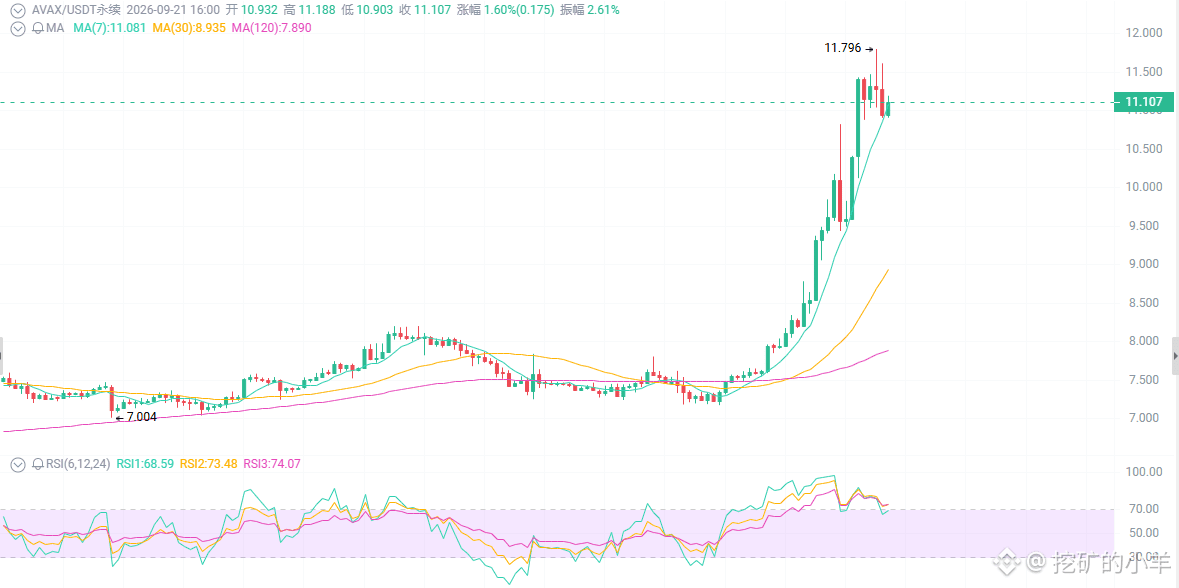
From the mid-September low of 7.2–7.6, AVAX pushed all the way to 11.8. Trading volume expanded and a descending wedge broke out. The candlesticks tell you: short-term is overbought, but the medium-term structure is improving.
First thing: Helicon upgrade, goes live tomorrow.
At 15:00 UTC on September 22, the mainnet will be activated. There are three core changes:
- The minimum staked lockup goes from 14 days down to 48 hours
- Support for automatic renewal
- Validator uptime requirement raised from 80% to 90%
Institutional staking AVAX used to require a two-week lock; now it’s only two days—capital efficiency is maximized, and validators can position themselves early.
Second thing: the institutional RWA narrative—this isn’t wishful thinking; it’s real money.
ICE (the parent company of the NYSE) has been testing Avalanche for about a year, exploring 24/7 tokenized trading of US stocks/ETFs.
New York Life Investments (with $800B AUM) launched the first tokenized fund on Avalanche via Centrifuge.
Paxos integrates AVAX and USDC; Aave is pushing institutional RWA lending; Janus Henderson becomes a validator.
Third thing: RSI is off the charts—after a parabolic move, a pullback is inevitable.
With a 50% weekly increase, daily/4H RSI has entered the overbought zone. After a surge in volume and open positions, some profit-taking has already started.
10.5 is the lifeline for this leg. Hold it, and there will be a second wave; if it breaks down, the structure of this rebound will be damaged and we’ll reassess.
Resistance levels: 11.8–12 (recent high) → 13 → 15+
Support levels: 10.5–10.8 (lifeline) → 9.5–10 → 8.2 → 7.5
Trading strategy
Conservative approach:
Wait for a pullback to 10.5–10.8. Look for a volume-backed selloff-ending move or a small double bottom forming, then try a long with a light position. Stop-loss: 10.2 or below 9.8. Leverage no more than 5–10x. Target the first leg at 11.8–12; if it breaks out, look for 13.
Aggressive short-term:
If after tomorrow’s upgrade it breaks out with increased volume and holds above 11.8–12, you can chase the breakout with a target of 13.
Bearish idea:
Only for super-short-term trades or hedging. If it breaks 10.5 and BTC turns weaker, try a short with a light position. Target 9.5–10. Stop-loss above 11.3.
Medium-term view:
If it can complete turnover in the 10–11 range and hold, you can keep it and look for 13–15. If it breaks below 9.5, the rebound structure will be damaged—reassess then.
First, the surface picture: up 50% over the week, up 47% over the month. BTC is moving sideways around 81,000, while AVAX is running its own independent trend.
From the mid-September low of 7.2–7.6, AVAX pushed all the way to 11.8. Trading volume expanded and a descending wedge broke out. The candlesticks tell you: short-term is overbought, but the medium-term structure is improving.
First thing: Helicon upgrade, goes live tomorrow.
At 15:00 UTC on September 22, the mainnet will be activated. There are three core changes:
- The minimum staked lockup goes from 14 days down to 48 hours
- Support for automatic renewal
- Validator uptime requirement raised from 80% to 90%
Institutional staking AVAX used to require a two-week lock; now it’s only two days—capital efficiency is maximized, and validators can position themselves early.
Second thing: the institutional RWA narrative—this isn’t wishful thinking; it’s real money.
ICE (the parent company of the NYSE) has been testing Avalanche for about a year, exploring 24/7 tokenized trading of US stocks/ETFs.
New York Life Investments (with $800B AUM) launched the first tokenized fund on Avalanche via Centrifuge.
Paxos integrates AVAX and USDC; Aave is pushing institutional RWA lending; Janus Henderson becomes a validator.
Third thing: RSI is off the charts—after a parabolic move, a pullback is inevitable.
With a 50% weekly increase, daily/4H RSI has entered the overbought zone. After a surge in volume and open positions, some profit-taking has already started.
10.5 is the lifeline for this leg. Hold it, and there will be a second wave; if it breaks down, the structure of this rebound will be damaged and we’ll reassess.
Resistance levels: 11.8–12 (recent high) → 13 → 15+
Support levels: 10.5–10.8 (lifeline) → 9.5–10 → 8.2 → 7.5
Trading strategy
Conservative approach:
Wait for a pullback to 10.5–10.8. Look for a volume-backed selloff-ending move or a small double bottom forming, then try a long with a light position. Stop-loss: 10.2 or below 9.8. Leverage no more than 5–10x. Target the first leg at 11.8–12; if it breaks out, look for 13.
Aggressive short-term:
If after tomorrow’s upgrade it breaks out with increased volume and holds above 11.8–12, you can chase the breakout with a target of 13.
Bearish idea:
Only for super-short-term trades or hedging. If it breaks 10.5 and BTC turns weaker, try a short with a light position. Target 9.5–10. Stop-loss above 11.3.
Medium-term view:
If it can complete turnover in the 10–11 range and hold, you can keep it and look for 13–15. If it breaks below 9.5, the rebound structure will be damaged—reassess then.