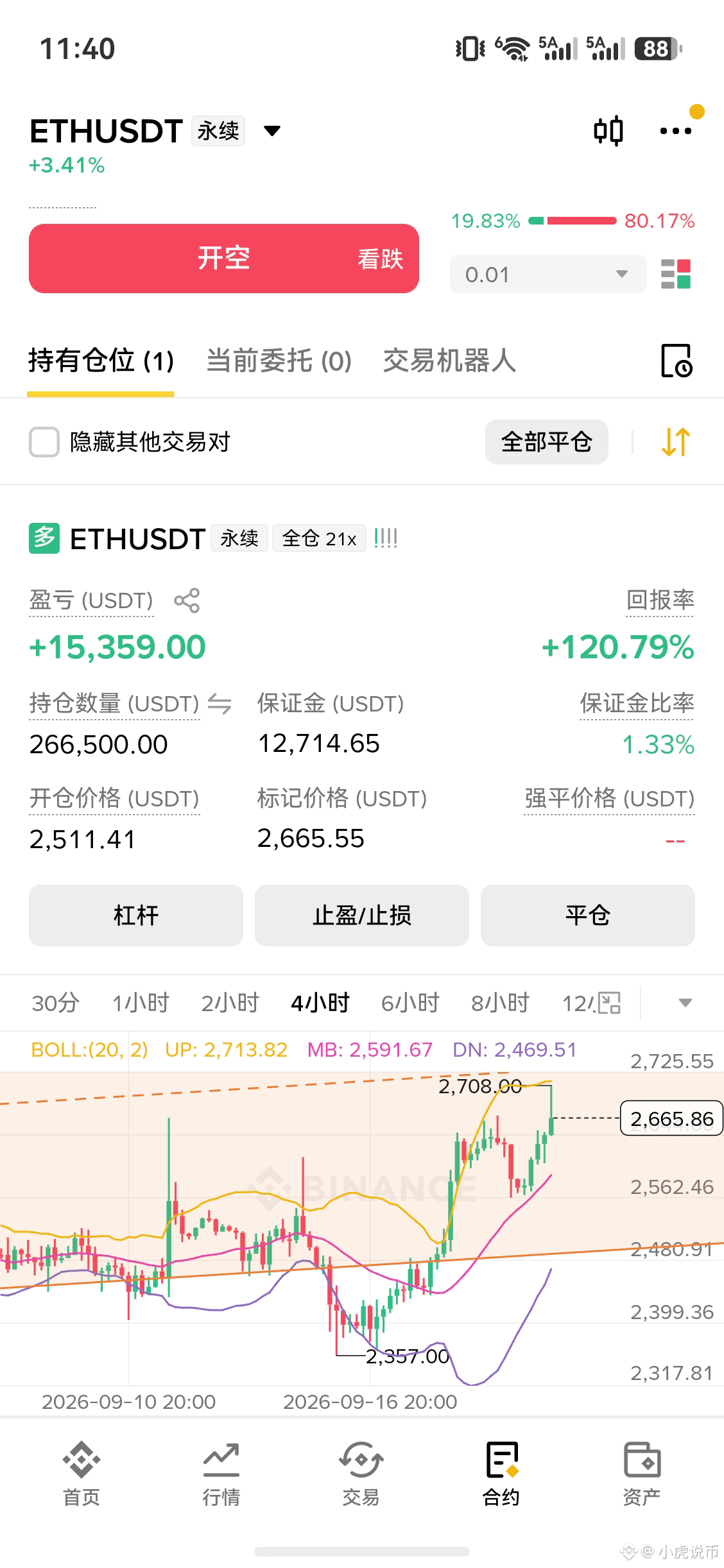
The 3 most common cognitive traps in the crypto world—90% of people have fallen for them $BTC
The reason you’ve been unable to make consistent money for the long term is usually not that your skills are lacking—but that your fundamental thinking is wrong. These are three mistakes that retail traders are most likely to fall into, quietly eating away at your principal. Follow Hu Ge and avoid them.
First mistake: Making big money by “insider” information. You always want to follow the big shots and follow the news to do the assignment—but you forget that truly valuable information won’t reach retail investors. By the time you hear the news, the market is often already at the end of the move. Entering then means you’re the one left holding the bag $ETH
Second mistake: The higher the leverage, the faster you can profit. Many beginners jump in with dozens or even hundreds of times leverage, thinking higher leverage means more profit. The truth is: high leverage amplifies not only gains, but also risk. A single normal market fluctuation can force you out via stop-loss, leaving you with no chance to wait for the trend.
Third mistake: Buying the dip is safer than chasing. You keep thinking that if it drops far enough, it must be the bottom—so you buy more as it keeps falling. But you end up catching the dip halfway down a mountain, and the longer you hold, the deeper you get trapped. In fact, in a downtrend, “buying the dip” is essentially betting against the trend; in an uptrend, “chasing” is actually following the momentum $AKE
In the end, trading is a contest of cognition. Break the wrong thinking and build the right trading logic, and only then can you truly escape the vicious cycle of losses.
If you’re still chasing and killing or you don’t know how to judge entry and exit points, come to the chat room and talk with me.
The reason you’ve been unable to make consistent money for the long term is usually not that your skills are lacking—but that your fundamental thinking is wrong. These are three mistakes that retail traders are most likely to fall into, quietly eating away at your principal. Follow Hu Ge and avoid them.
First mistake: Making big money by “insider” information. You always want to follow the big shots and follow the news to do the assignment—but you forget that truly valuable information won’t reach retail investors. By the time you hear the news, the market is often already at the end of the move. Entering then means you’re the one left holding the bag $ETH
Second mistake: The higher the leverage, the faster you can profit. Many beginners jump in with dozens or even hundreds of times leverage, thinking higher leverage means more profit. The truth is: high leverage amplifies not only gains, but also risk. A single normal market fluctuation can force you out via stop-loss, leaving you with no chance to wait for the trend.
Third mistake: Buying the dip is safer than chasing. You keep thinking that if it drops far enough, it must be the bottom—so you buy more as it keeps falling. But you end up catching the dip halfway down a mountain, and the longer you hold, the deeper you get trapped. In fact, in a downtrend, “buying the dip” is essentially betting against the trend; in an uptrend, “chasing” is actually following the momentum $AKE
In the end, trading is a contest of cognition. Break the wrong thinking and build the right trading logic, and only then can you truly escape the vicious cycle of losses.
If you’re still chasing and killing or you don’t know how to judge entry and exit points, come to the chat room and talk with me.