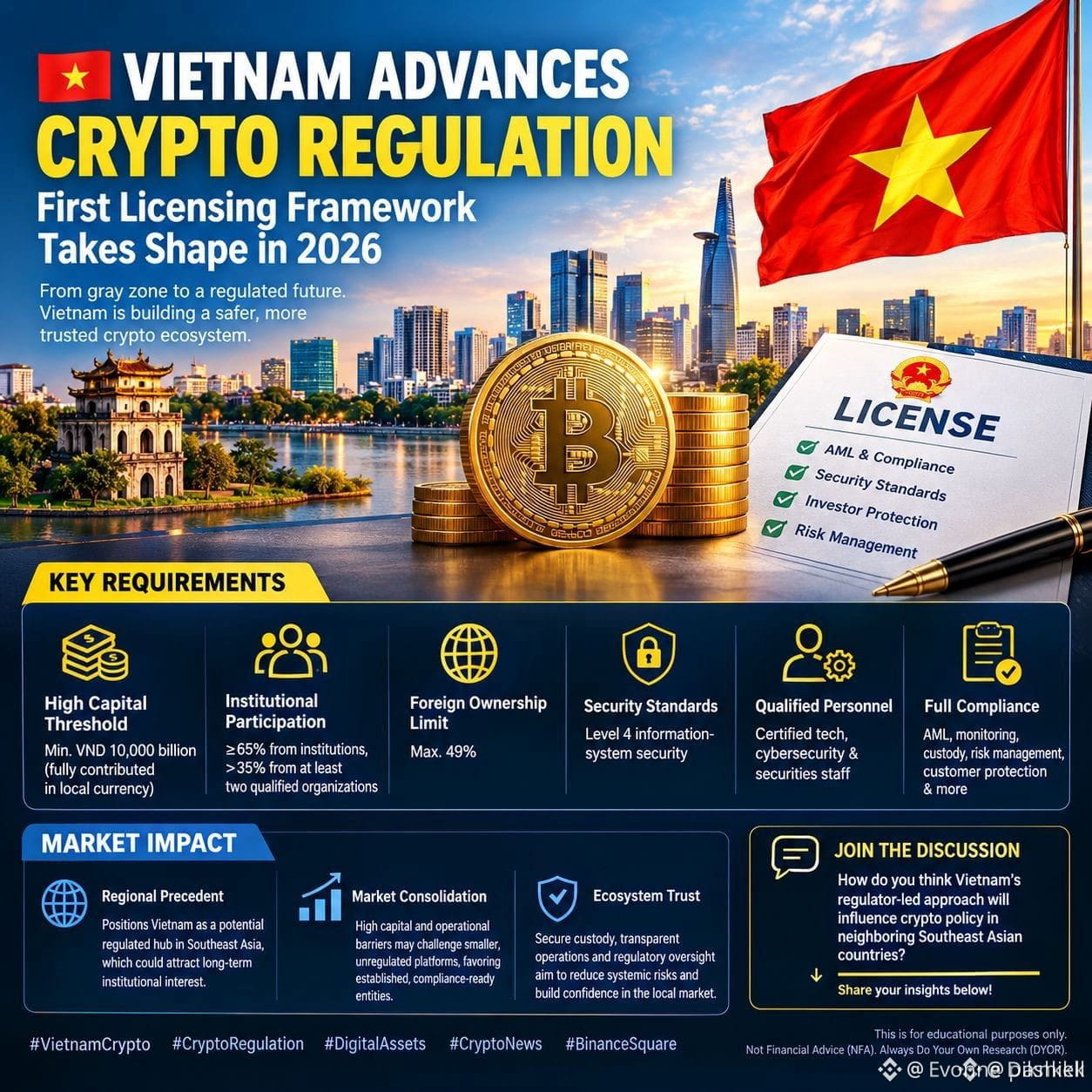
Official licensing rarely means open season for retail gains, and history shows it usually brings strict compliance walls before any fresh liquidity actually lands.
Most traders rush to front-run regulatory headlines by chasing local narrative plays, only to get trapped when localized KYC mandates and stricter tax reporting choke off speculative volume.
Vietnam moving toward its first legal framework by 2026 sounds like a pure bullish catalyst on paper, but the rollout of state licensing is almost always restrictive at first. When regional markets formalize crypto oversight, peer-to-peer rails and daily $USDT settlement channels typically face immediate banking friction. We have seen similar playbooks across Asia where compliant sandbox environments initially drained retail flexibility rather than expanding it.
If you are actively rotating capital through ecosystems like $SOL or managing on-chain reserves, keep in mind that licensed venues will operate under strict Travel Rule obligations and ring-fenced fiat gateways. That transition phase almost always favors institutional custody desks over active retail participants, meaning the friction for everyday on-chain transactions could spike well before broader adoption kicks in.
Do you think formal licensing will protect everyday market participants or simply push liquidity further into decentralized venues?
#VietnamPlansFirstCryptoLicensesIn2026 #HKCompletesFirstHKDStablecoinUseCase
Most traders rush to front-run regulatory headlines by chasing local narrative plays, only to get trapped when localized KYC mandates and stricter tax reporting choke off speculative volume.
Vietnam moving toward its first legal framework by 2026 sounds like a pure bullish catalyst on paper, but the rollout of state licensing is almost always restrictive at first. When regional markets formalize crypto oversight, peer-to-peer rails and daily $USDT settlement channels typically face immediate banking friction. We have seen similar playbooks across Asia where compliant sandbox environments initially drained retail flexibility rather than expanding it.
If you are actively rotating capital through ecosystems like $SOL or managing on-chain reserves, keep in mind that licensed venues will operate under strict Travel Rule obligations and ring-fenced fiat gateways. That transition phase almost always favors institutional custody desks over active retail participants, meaning the friction for everyday on-chain transactions could spike well before broader adoption kicks in.
Do you think formal licensing will protect everyday market participants or simply push liquidity further into decentralized venues?
#VietnamPlansFirstCryptoLicensesIn2026 #HKCompletesFirstHKDStablecoinUseCase