
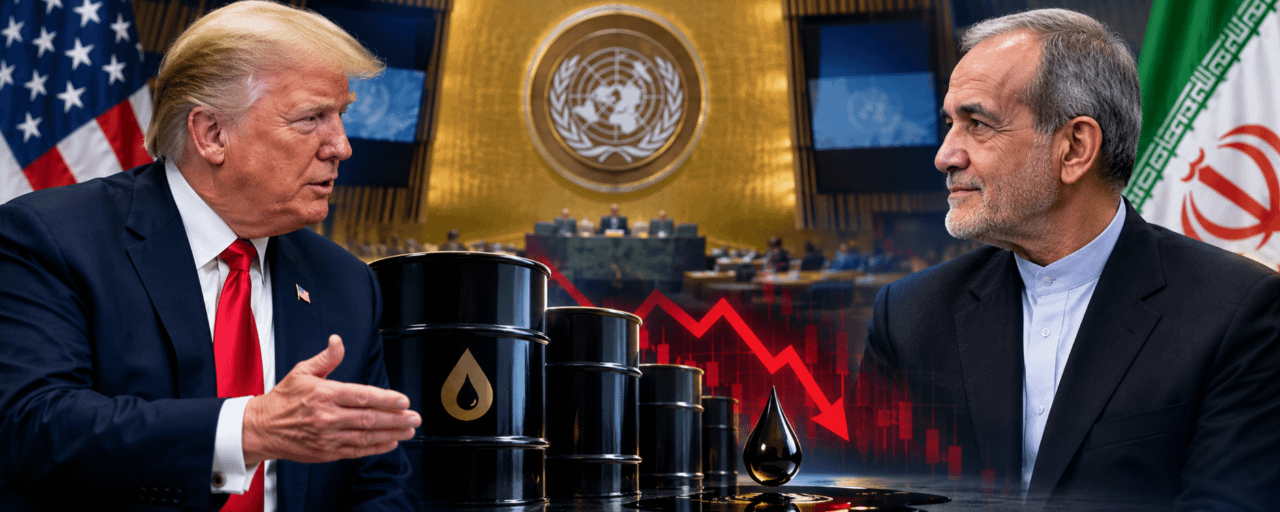

Oil fell for a fourth straight session Monday. Not because of a strike this time, or a blockade. Because of hope: that Washington and Tehran might actually talk this week.
President Donald Trump said he'd "probably be open" to meeting Iranian President Masoud Pezeshkian in New York. That's the headline, anyway. Underneath it sits an administration still debating whether to hit Iran again, and Tehran quietly handing Washington a list of terms for ending a war that has now ground on for nearly seven months.
Fox News correspondent Trey Yingst asked Trump directly whether he'd sit down with Pezeshkian during the United Nations General Assembly's high-level week. Trump didn't rule it out. Iranian military leaders, for their part, warned that any fresh U.S. attack would draw retaliation against American bases and interests across the region.
A Meeting That Would Have Sounded Absurd in March
The occasion is the U.N. General Assembly's high-level week, Sept. 22-28 in New York. Pezeshkian is expected to attend. So, notably, is his foreign minister, Abbas Araghchi, whose delegation only got a visa because the Trump administration decided to let them in.
Behind the scenes, the diplomacy has already started moving. Mohsen Rezaei, secretary of Iran's Supreme National Security Council, said Tehran had passed seven conditions to Washington through mediators: an end to fighting on every front, the release of Iran's frozen assets, and a stop to the U.S. naval blockade. Qatar carried the message. Turkey worked the same channel, along with a handful of other countries.
None of it has settled anything. Trump called himself still in "deciding mode": economic pressure, more strikes, or an actual deal, take your pick, and said something significant was coming soon. He's said that before. He's also said, more than once, that the war itself would end soon. What's actually changed is smaller and stranger: two wartime leaders, same city, same week.
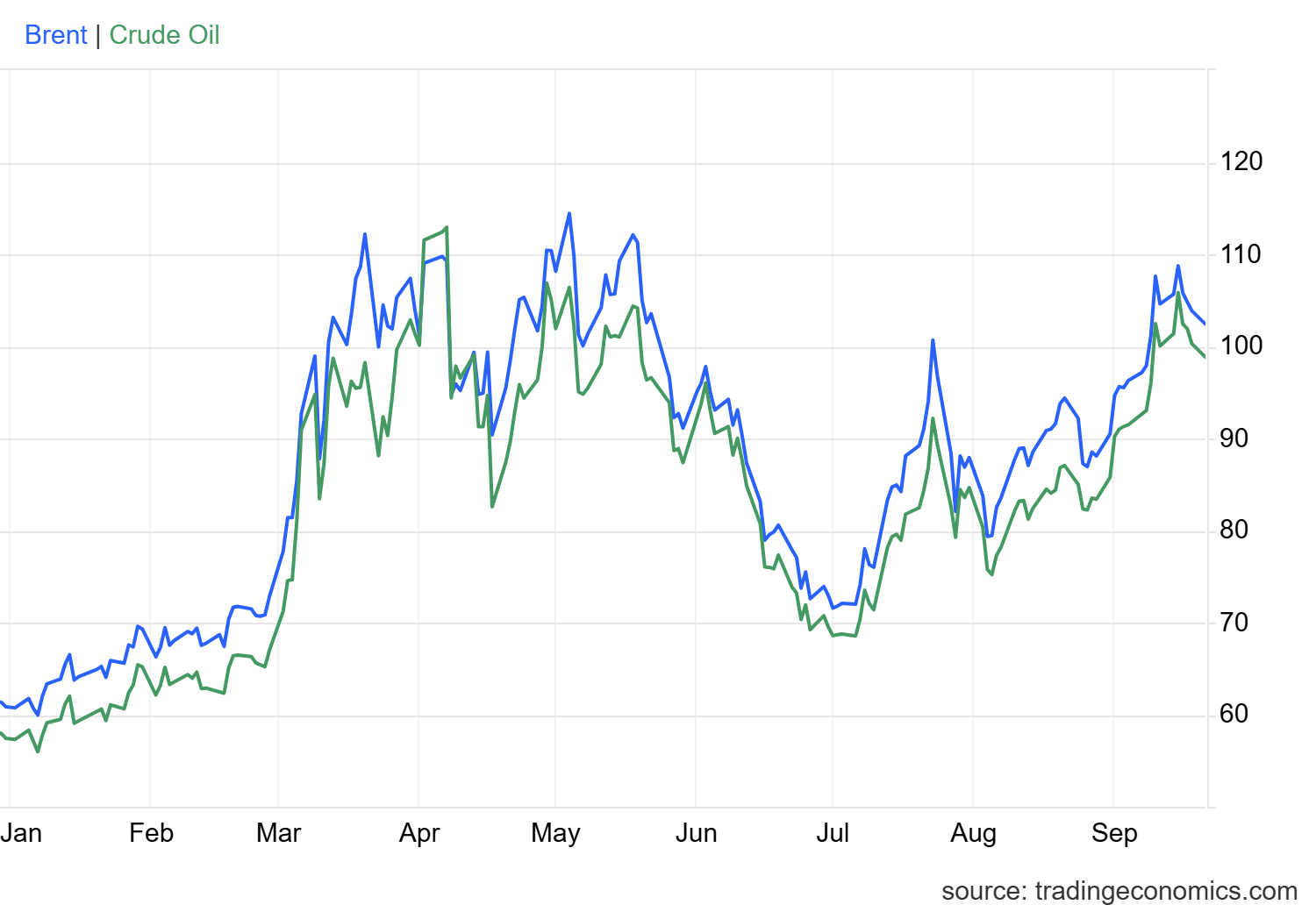
U.S. crude closed last week little changed, but it held the line above $100. Friday's settlement: West Texas Intermediate at $100.30 a barrel, down 1.58%. Brent, the global benchmark, slipped a smaller 0.91%, to $103.87.
Then Monday extended it. Brent actually opened higher, on the Houthi strike over the weekend on Saudi Arabia's capital, before giving that back entirely on hopes Riyadh could quickly get its East-West pipeline flowing again. By early European Session, WTI is down 2.03%, to $98.26, while Brent is down almost as much, 1.98%, to $101.81.
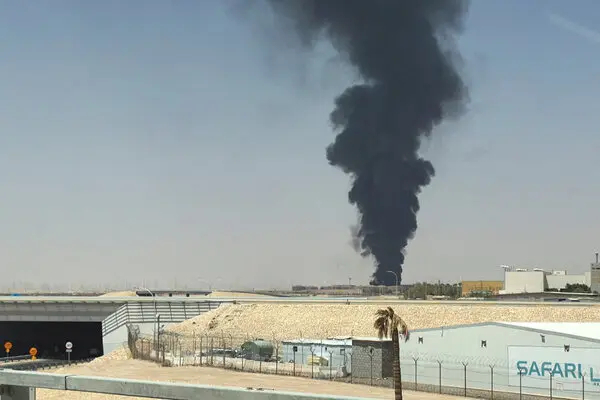
Saudi Arabia confirmed Saturday that Yemen's Houthi rebels had tried to hit Riyadh with a ballistic missile, the first time the capital had been targeted since fighting with the Iran-backed group escalated.
Air defenses intercepted it near dawn, hours before the Saudi-led coalition put out a statement. Residents heard the blast. Some later spotted smoke near the airport. Nobody was hurt, and nothing was damaged, the coalition said.
They went after other targets too: Yanbu, the Red Sea port where a major Saudi pipeline ends, plus Taif, Baysh and Farasan. All thwarted, coalition officials said, without elaborating.
The Houthis' own account was more dramatic, claiming, without evidence, that they'd hit "sensitive sites" in Riyadh and set "massive fires" at Aramco facilities in Yanbu. Aramco itself, the world's largest oil company, had nothing to say.
On the Houthis specifically, Trump has been going back and forth for weeks. Saudi Arabia wants U.S. strikes; Trump ordered the Pentagon to prepare them after a call with Crown Prince Mohammed bin Salman, then delayed anyway. He's wary of opening a second front while U.S. forces are already committed against Iran, and unconvinced that hitting the Houthis would actually accomplish much.
There's also the retaliation math: new strikes could draw fire toward American and commercial shipping, at a moment when Houthi control near the Bab al-Mandeb Strait already threatens Red Sea trade and could rattle energy markets further.
Ships Running Dark Through the World's Tightest Chokepoint
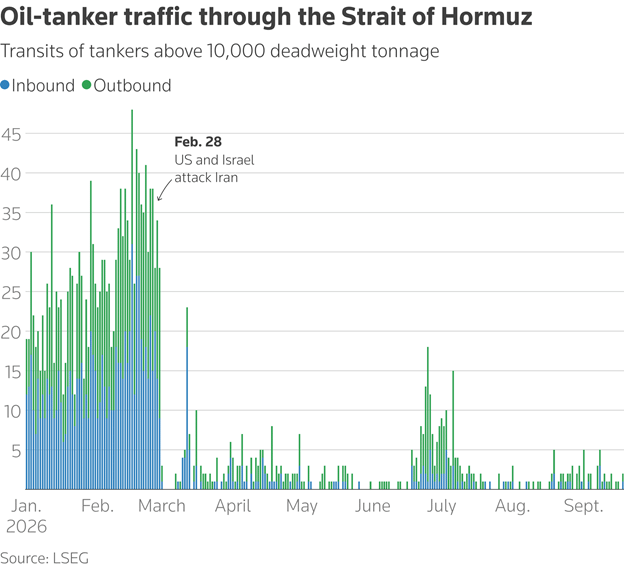
Hormuz itself was quiet over the weekend. Quiet, and apparently busier than it looks: Adm. Brad Cooper, head of U.S. Central Command, said crude, cargo and liquefied natural gas volumes over the past two weeks were "higher than at any point in the past six months." Take that with a grain of salt, though. Ships are getting a military escort, sure, but plenty are running with their transponders switched off, which makes Cooper's numbers awfully hard to check. What tracking data does exist tells a blunter story: 12 commodity vessels crossed the strait over the weekend. The weekend before, it was 35.
The analytics firm Kpler backs up the general direction, if not the exact math. Saudi exports have climbed back to just over 4 million barrels a day this month, after collapsing to 2.4 million bpd in August, the lowest level since at least 2013. JPMorgan's satellite data tells much the same story from a different angle. Saudi oil moving through Hormuz averaged 2.9 million bpd over the past six days. In August, it was 700,000.
Treasury Secretary Scott Bessent, speaking to G20 counterparts on Sept. 1, predicted the waterway would be bypassed within two years, reduced to what he called "a worthless piece of water." Qatar's energy minister, Saad al-Kaabi, rejected the idea outright.
"I think this is completely wrong," he said in New York on Sunday, arguing that the trade flowing through Hormuz, serving Iraq, Iran and Kuwait among others, is too vital to the global oil and gas industry to just vanish, however many pipelines get built.
Drones Over Moscow, a Market That Didn't Blink
Then there was the weekend's other major escalation, which oil traders shrugged off almost entirely: Ukraine's largest drone attack of the war on Moscow, launched on the final day of Russia's parliamentary elections, directly contradicting earlier signals that both sides had agreed to leave energy infrastructure alone.
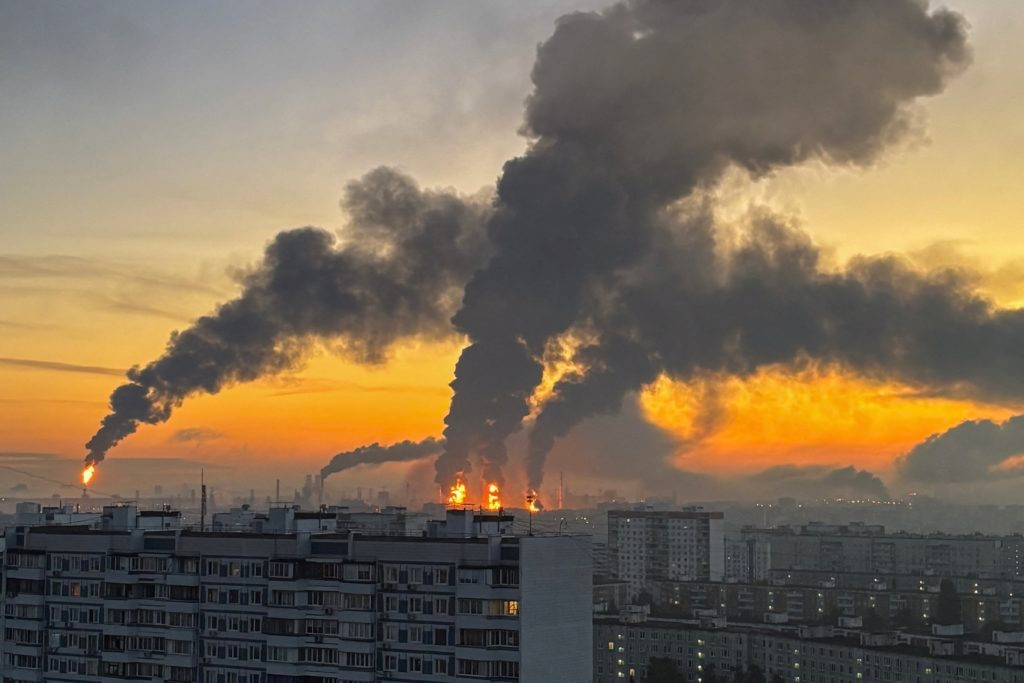
That muted reaction is its own kind of data point. Traders are treating this as a local problem, not a global one: they're watching diesel curves and refining margins, not the flat price of crude. It's a defensible read. The targeted Kapotnya refinery supplies roughly 40% of Moscow's fuel market, and a prolonged outage would deepen local Russian shortages without touching how much crude the rest of the world actually has to work with. Global supply expectations, for now, hold steady.
That local-versus-global distinction is getting harder to hold onto, week by week. Wars in Ukraine and the Middle East have hammered diesel exports out of Russia and the Persian Gulf at the same time, squeezing the fuel that keeps industry, transportation and agriculture running worldwide. Governments are starting to feel it. So are voters.
Both wars together have left the United States as the last major supplier of diesel and other refined products still able to fill the gap. Which is exactly why pressure is building in Washington to ban exports outright and force prices down before the midterms. Do that, and the math simply flips: a U.S. ban would likely send diesel prices for the rest of the world climbing, sharply and fast.