
乘风Sunshine
418 Posts

乘风Sunshine
Report
Block User
币安返佣码:CFCF888 |X推特@KeShiqing57753|周一到周五,每天早上七八点(睡醒就播)和下午三点开播事件合约,晚上十点(看行情)播永续合约&事件合约。周六周日(看行情决定播不播,没流动性就休息)|神魔皆以血祠,想做成事的三个秘诀:一门深入,一本正经;做成一件事,然后做成另一件事;克勤克俭,绝情绝欲。
Frequent Trader
1.7 Years
381 Following
26.8K+ Followers
10.8K+ Liked
Posts
All
Quotes
Videos
PINNED
·
--
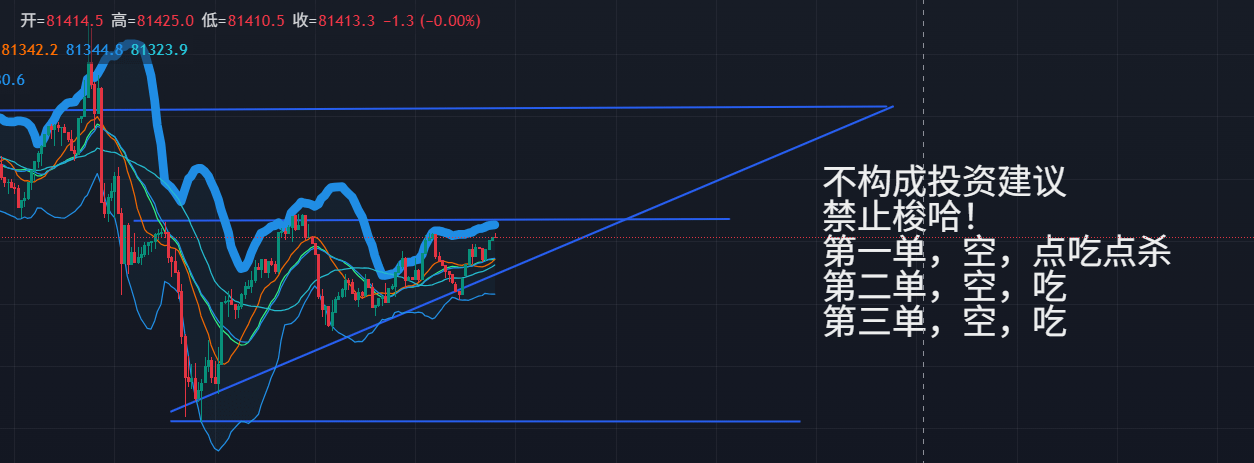
Today marks the first day of returning to live streaming. The brothers in the morning session—every one of you took three purchases; my first order got picked up too. I guess it’s a good start. This afternoon at 3:00, we’ll continue the event contract. I’ll be waiting for you in the live room, through wind and rain. @sqyyyy1234
Today marks the first day of returning to live streaming. The brothers in the morning session—every one of you took three purchases; my first order got picked up too. I guess it’s a good start. This afternoon at 3:00, we’ll continue the event contract. I’ll be waiting for you in the live room, through wind and rain. @乘风Sunshine
934
33
77
1.3k
·
--
666
666

幸运雨Rain
·
--
🧧🧧🧧
Patience beats impulse in every single trade.
Patience always wins over impulse in every trade.
#日本央行加息至31年高位
#交易所关闭
#1688家族family
Patience beats impulse in every single trade.
Patience always wins over impulse in every trade.
#日本央行加息至31年高位
#交易所关闭
#1688家族family

22
·
--
666
666

远方1688BNB
·
--
On life’s long journey, it’s inevitable to get bruised; those surging waves that can’t be calmed will eventually be left only as a passing mention between lips and teeth.
When the tide falls, boats set forth; when clouds disperse, the moon comes out—there is always a stretch of mountains and waters that can bear the hardships of this road.
The faraway place you want to go is also waiting for you, with all your dust and travel-worn spirit.
And be at ease in the present moment—don’t anticipate worries for tomorrow.
Tomorrow morning, pull on your clothes and rise again—be a traveler on far-off mountains and rivers!
#定投BTC #定投BNB
When the tide falls, boats set forth; when clouds disperse, the moon comes out—there is always a stretch of mountains and waters that can bear the hardships of this road.
The faraway place you want to go is also waiting for you, with all your dust and travel-worn spirit.
And be at ease in the present moment—don’t anticipate worries for tomorrow.
Tomorrow morning, pull on your clothes and rise again—be a traveler on far-off mountains and rivers!
#定投BTC #定投BNB

13
·
--
666
666


橙子Joyce
·
--
BullishThe U.S. regulatory authorities have repeatedly released positive signals for the crypto market. Bitcoin (BTC.CC) ETF funds have resumed flowing back in. As the market gradually digests earlier negative factors—such as setbacks in crypto-related legislation and the Fed’s interest-rate hikes—crypto assets in the U.S. East Time zone surged collectively on Friday. Bitcoin reclaimed the $80,000 level, and crypto-related stocks also rose across the board.
Besides BTC and ETH, other major assets in the crypto market also moved higher in tandem, indicating that capital is not only concentrated in Bitcoin, but that a broader risk-on preference is being restored.
Allowing qualified platforms to trade tokenized stocks, the SEC’s stance; the CFTC, another major U.S. financial regulator, advancing a new crypto regulatory framework; and the return of Bitcoin ETF inflows—all became key factors behind the improvement in market sentiment. The market had previously feared that the CLARITY Act advancing in the Senate this Tuesday would become another wave of negative news for crypto assets. But judging by Friday’s market performance, this risk appears to have already been partially absorbed in earlier adjustments.
Bitcoin ETF inflows revive, risk appetite heats up in sync
Apart from regulatory updates, there are also signs of improvement in liquidity.
On Thursday U.S. East Time, a group of Bitcoin ETFs managed by firms such as BlackRock together recorded approximately $160 million in net inflows, ending the prior two consecutive days of outflows.
After the crypto market experienced a pullback, with Bitcoin briefly falling to multi-week lows, the return of ETF inflows combined with positive signals from regulators provided both liquidity support and sentiment support for Friday’s rebound.
Meanwhile, the macro environment also saw a temporary easing.
Earlier in the week, Brent crude oil prices had approached $110 per barrel, but on Friday they fell back to below $104. This eased the inflation and interest-rate pressures caused by the earlier rise in energy prices. The decline in oil prices reduced market worries about further rate increases, which also helped risk assets such as Bitcoin rebound.
This suggests that Friday’s rally was not driven solely by positive developments within crypto itself, but rather by the simultaneous rebound in regulatory policy, fund flows, and broader macro risk appetite.
———————————————————————————
We invest regularly in BTC, BNB, ETH, SOL
$BTC
$BNB
$SOL
Besides BTC and ETH, other major assets in the crypto market also moved higher in tandem, indicating that capital is not only concentrated in Bitcoin, but that a broader risk-on preference is being restored.
Allowing qualified platforms to trade tokenized stocks, the SEC’s stance; the CFTC, another major U.S. financial regulator, advancing a new crypto regulatory framework; and the return of Bitcoin ETF inflows—all became key factors behind the improvement in market sentiment. The market had previously feared that the CLARITY Act advancing in the Senate this Tuesday would become another wave of negative news for crypto assets. But judging by Friday’s market performance, this risk appears to have already been partially absorbed in earlier adjustments.
Bitcoin ETF inflows revive, risk appetite heats up in sync
Apart from regulatory updates, there are also signs of improvement in liquidity.
On Thursday U.S. East Time, a group of Bitcoin ETFs managed by firms such as BlackRock together recorded approximately $160 million in net inflows, ending the prior two consecutive days of outflows.
After the crypto market experienced a pullback, with Bitcoin briefly falling to multi-week lows, the return of ETF inflows combined with positive signals from regulators provided both liquidity support and sentiment support for Friday’s rebound.
Meanwhile, the macro environment also saw a temporary easing.
Earlier in the week, Brent crude oil prices had approached $110 per barrel, but on Friday they fell back to below $104. This eased the inflation and interest-rate pressures caused by the earlier rise in energy prices. The decline in oil prices reduced market worries about further rate increases, which also helped risk assets such as Bitcoin rebound.
This suggests that Friday’s rally was not driven solely by positive developments within crypto itself, but rather by the simultaneous rebound in regulatory policy, fund flows, and broader macro risk appetite.
———————————————————————————
We invest regularly in BTC, BNB, ETH, SOL
$BTC
$BNB
$SOL
40
·
--
666
666

加倉妹
·
--
BullishNew week, full throttle—starting point for breakthroughs!
Focus on the goal, quicken your steps, be brave and go all out! Believe in your own strength, and let every effort become the power that propels your career upward!😊
Focus on the goal, quicken your steps, be brave and go all out! Believe in your own strength, and let every effort become the power that propels your career upward!😊

31


·
--
📰 Key Points from the Crypto Market Last Week
1️⃣ The Fed Hikes Rates for the First Time in Three Years, BTC Drops Then Rebounds
The U.S. Federal Reserve raised rates by 25 basis points to 3.75%–4% on September 16, marking the first rate hike in three years; it also signaled that further hikes may still happen this year. BTC briefly fell to around $75,000, then rebounded.
2️⃣ The CLARITY Act Stalls in the Senate
The U.S. Senate failed to advance the “CLARITY Act” through a procedural vote of 49–50, temporarily stalling crypto market-structure legislation in the United States. After the news broke, BTC and crypto-related stocks such as Coinbase and Circle dropped noticeably.
3️⃣ CoinEx Announces Closure of Exchange Operations
After nearly nine years of operation, CoinEx initiated a phased shutdown. The official statement cited a sluggish market, declining trading volume and liquidity, and rising regulatory and compliance costs. Spot trading will stop on September 29, and withdrawals will stop on December 22.
4️⃣ BTC Reclaims $80,000
After the CLARITY Act hit a roadblock and the Fed rate-hike shock, BTC later showed a clear recovery. Around September 18, it broke back above $80,000, and overall market risk appetite began to improve.
5️⃣ Rotation Into Altcoins and Layer-2s
As the market gradually absorbed the impact of the rate hike, ETH, XRP, Solana, and some Layer-2 and DeFi tokens became more active. Market funds rotated from BTC toward some mainstream altcoins.
6️⃣ Stablecoins and Institutional Infrastructure Continue to Attract Funding
Velocity, a stablecoin payments company, expanded its Series A funding to $48 million, with participation from Visa Ventures, Circle Ventures, Ripple, and others. Separately, SBI Group invested $25 million in the payment company dtcpay. Institutional plans for stablecoin payment infrastructure are still ongoing.
📰 Key Points from the Crypto Market Last Week
1️⃣ The Fed Hikes Rates for the First Time in Three Years, BTC Drops Then Rebounds
The U.S. Federal Reserve raised rates by 25 basis points to 3.75%–4% on September 16, marking the first rate hike in three years; it also signaled that further hikes may still happen this year. BTC briefly fell to around $75,000, then rebounded.
2️⃣ The CLARITY Act Stalls in the Senate
The U.S. Senate failed to advance the “CLARITY Act” through a procedural vote of 49–50, temporarily stalling crypto market-structure legislation in the United States. After the news broke, BTC and crypto-related stocks such as Coinbase and Circle dropped noticeably.
3️⃣ CoinEx Announces Closure of Exchange Operations
After nearly nine years of operation, CoinEx initiated a phased shutdown. The official statement cited a sluggish market, declining trading volume and liquidity, and rising regulatory and compliance costs. Spot trading will stop on September 29, and withdrawals will stop on December 22.
4️⃣ BTC Reclaims $80,000
After the CLARITY Act hit a roadblock and the Fed rate-hike shock, BTC later showed a clear recovery. Around September 18, it broke back above $80,000, and overall market risk appetite began to improve.
5️⃣ Rotation Into Altcoins and Layer-2s
As the market gradually absorbed the impact of the rate hike, ETH, XRP, Solana, and some Layer-2 and DeFi tokens became more active. Market funds rotated from BTC toward some mainstream altcoins.
6️⃣ Stablecoins and Institutional Infrastructure Continue to Attract Funding
Velocity, a stablecoin payments company, expanded its Series A funding to $48 million, with participation from Visa Ventures, Circle Ventures, Ripple, and others. Separately, SBI Group invested $25 million in the payment company dtcpay. Institutional plans for stablecoin payment infrastructure are still ongoing.
1️⃣ The Fed Hikes Rates for the First Time in Three Years, BTC Drops Then Rebounds
The U.S. Federal Reserve raised rates by 25 basis points to 3.75%–4% on September 16, marking the first rate hike in three years; it also signaled that further hikes may still happen this year. BTC briefly fell to around $75,000, then rebounded.
2️⃣ The CLARITY Act Stalls in the Senate
The U.S. Senate failed to advance the “CLARITY Act” through a procedural vote of 49–50, temporarily stalling crypto market-structure legislation in the United States. After the news broke, BTC and crypto-related stocks such as Coinbase and Circle dropped noticeably.
3️⃣ CoinEx Announces Closure of Exchange Operations
After nearly nine years of operation, CoinEx initiated a phased shutdown. The official statement cited a sluggish market, declining trading volume and liquidity, and rising regulatory and compliance costs. Spot trading will stop on September 29, and withdrawals will stop on December 22.
4️⃣ BTC Reclaims $80,000
After the CLARITY Act hit a roadblock and the Fed rate-hike shock, BTC later showed a clear recovery. Around September 18, it broke back above $80,000, and overall market risk appetite began to improve.
5️⃣ Rotation Into Altcoins and Layer-2s
As the market gradually absorbed the impact of the rate hike, ETH, XRP, Solana, and some Layer-2 and DeFi tokens became more active. Market funds rotated from BTC toward some mainstream altcoins.
6️⃣ Stablecoins and Institutional Infrastructure Continue to Attract Funding
Velocity, a stablecoin payments company, expanded its Series A funding to $48 million, with participation from Visa Ventures, Circle Ventures, Ripple, and others. Separately, SBI Group invested $25 million in the payment company dtcpay. Institutional plans for stablecoin payment infrastructure are still ongoing.
1
1
1.3k
·
--
《A Pure Technical Sharing Post by Riding the Wind Sunshine: How to Judge Support/Resistance Levels That Act as Pressure Support》
(1) Big Waffle: For every 1,000 points, there are three pressure support/resistance levels (reference levels)
200, 500, 900
(2) Volatility level (Monday to Friday)
Small volatility: USD 3 million, not exceeding USD 5 million
Medium volatility: USD 5 million or more, not exceeding USD 8 million (not excluding the possibility that a single candlestick may reach 10 million or more)
Large volatility: each move no less than USD 10 million (the first candle in the market may not reach 10 million; it may be around 5–8 million)
(3) Real or confirmed support/resistance levels on the chart (80200 as an example)
80200, small volatility: oscillate 20–50 points up and down (support: oscillating upward, 80220–80250; resistance: oscillating downward, 80150–80180)
200 points, medium volatility: oscillate 50–100 points up and down (support: oscillating upward, 80250–80300; resistance: oscillating downward, 80100–80150)
200 points, large volatility: oscillate 100–200 points up and down (support: oscillating upward, 80300–80400; resistance: oscillating downward, 80000–80100)
80500, small volatility: oscillate 20–50 points up and down (support: oscillating upward, 80520–80550; resistance: oscillating downward, 80450–80480)
500 points, medium volatility: oscillate 50–100 points up and down (support: oscillating upward, 80550–80600; resistance: oscillating downward, 80400–80450)
500 points, large volatility: oscillate 100–200 points up and down (support: oscillating upward, 80600–80700; resistance: oscillating downward, 80300–80400)
80900, small volatility: oscillate 20–50 points up and down (support: oscillating upward, 80920–80950; resistance: oscillating downward, 80850–80880)
900 points, medium volatility: oscillate 50–100 points up and down (support: oscillating upward, 80950–81000; resistance: oscillating downward, 80800–80850)
900 points, large volatility: oscillate 100–200 points up and down (support: oscillating upward, 81000–81100; resistance: oscillating downward, 80700–80800)
《A Pure Technical Sharing Post by Riding the Wind Sunshine: How to Judge Support/Resistance Levels That Act as Pressure Support》
(1) Big Waffle: For every 1,000 points, there are three pressure support/resistance levels (reference levels)
200, 500, 900
(2) Volatility level (Monday to Friday)
Small volatility: USD 3 million, not exceeding USD 5 million
Medium volatility: USD 5 million or more, not exceeding USD 8 million (not excluding the possibility that a single candlestick may reach 10 million or more)
Large volatility: each move no less than USD 10 million (the first candle in the market may not reach 10 million; it may be around 5–8 million)
(3) Real or confirmed support/resistance levels on the chart (80200 as an example)
80200, small volatility: oscillate 20–50 points up and down (support: oscillating upward, 80220–80250; resistance: oscillating downward, 80150–80180)
200 points, medium volatility: oscillate 50–100 points up and down (support: oscillating upward, 80250–80300; resistance: oscillating downward, 80100–80150)
200 points, large volatility: oscillate 100–200 points up and down (support: oscillating upward, 80300–80400; resistance: oscillating downward, 80000–80100)
80500, small volatility: oscillate 20–50 points up and down (support: oscillating upward, 80520–80550; resistance: oscillating downward, 80450–80480)
500 points, medium volatility: oscillate 50–100 points up and down (support: oscillating upward, 80550–80600; resistance: oscillating downward, 80400–80450)
500 points, large volatility: oscillate 100–200 points up and down (support: oscillating upward, 80600–80700; resistance: oscillating downward, 80300–80400)
80900, small volatility: oscillate 20–50 points up and down (support: oscillating upward, 80920–80950; resistance: oscillating downward, 80850–80880)
900 points, medium volatility: oscillate 50–100 points up and down (support: oscillating upward, 80950–81000; resistance: oscillating downward, 80800–80850)
900 points, large volatility: oscillate 100–200 points up and down (support: oscillating upward, 81000–81100; resistance: oscillating downward, 80700–80800)
(1) Big Waffle: For every 1,000 points, there are three pressure support/resistance levels (reference levels)
200, 500, 900
(2) Volatility level (Monday to Friday)
Small volatility: USD 3 million, not exceeding USD 5 million
Medium volatility: USD 5 million or more, not exceeding USD 8 million (not excluding the possibility that a single candlestick may reach 10 million or more)
Large volatility: each move no less than USD 10 million (the first candle in the market may not reach 10 million; it may be around 5–8 million)
(3) Real or confirmed support/resistance levels on the chart (80200 as an example)
80200, small volatility: oscillate 20–50 points up and down (support: oscillating upward, 80220–80250; resistance: oscillating downward, 80150–80180)
200 points, medium volatility: oscillate 50–100 points up and down (support: oscillating upward, 80250–80300; resistance: oscillating downward, 80100–80150)
200 points, large volatility: oscillate 100–200 points up and down (support: oscillating upward, 80300–80400; resistance: oscillating downward, 80000–80100)
80500, small volatility: oscillate 20–50 points up and down (support: oscillating upward, 80520–80550; resistance: oscillating downward, 80450–80480)
500 points, medium volatility: oscillate 50–100 points up and down (support: oscillating upward, 80550–80600; resistance: oscillating downward, 80400–80450)
500 points, large volatility: oscillate 100–200 points up and down (support: oscillating upward, 80600–80700; resistance: oscillating downward, 80300–80400)
80900, small volatility: oscillate 20–50 points up and down (support: oscillating upward, 80920–80950; resistance: oscillating downward, 80850–80880)
900 points, medium volatility: oscillate 50–100 points up and down (support: oscillating upward, 80950–81000; resistance: oscillating downward, 80800–80850)
900 points, large volatility: oscillate 100–200 points up and down (support: oscillating upward, 81000–81100; resistance: oscillating downward, 80700–80800)
1
4
366
·
--
《What Is a Real Trading Review》
A real trading review should answer:
Why did I enter then?
Were the conditions met at the time?
If they were met, was my execution correct?
If they weren’t, why did I still enter?
Where was the risk?
Why did the exit happen?
If I could do it again, what would I change?
Finally, classify the mistakes.
For example:
Mistake A: Chasing the breakout.
Mistake B: Delaying the stop-loss.
Mistake C: Position size too large.
Mistake D: Not following the system trading rules.
Mistake E: Overconfidence after a streak of consecutive wins.
One month later, you will gain something extremely valuable:
your own database of mistakes.
And that matters far more than buying another book.
Because the mistakes other people tell you are always their mistakes.
Only the mistakes you’ve repeatedly made, recorded, and corrected yourself will truly become part of your behavioral system.
《What Is a Real Trading Review》
A real trading review should answer:
Why did I enter then?
Were the conditions met at the time?
If they were met, was my execution correct?
If they weren’t, why did I still enter?
Where was the risk?
Why did the exit happen?
If I could do it again, what would I change?
Finally, classify the mistakes.
For example:
Mistake A: Chasing the breakout.
Mistake B: Delaying the stop-loss.
Mistake C: Position size too large.
Mistake D: Not following the system trading rules.
Mistake E: Overconfidence after a streak of consecutive wins.
One month later, you will gain something extremely valuable:
your own database of mistakes.
And that matters far more than buying another book.
Because the mistakes other people tell you are always their mistakes.
Only the mistakes you’ve repeatedly made, recorded, and corrected yourself will truly become part of your behavioral system.
A real trading review should answer:
Why did I enter then?
Were the conditions met at the time?
If they were met, was my execution correct?
If they weren’t, why did I still enter?
Where was the risk?
Why did the exit happen?
If I could do it again, what would I change?
Finally, classify the mistakes.
For example:
Mistake A: Chasing the breakout.
Mistake B: Delaying the stop-loss.
Mistake C: Position size too large.
Mistake D: Not following the system trading rules.
Mistake E: Overconfidence after a streak of consecutive wins.
One month later, you will gain something extremely valuable:
your own database of mistakes.
And that matters far more than buying another book.
Because the mistakes other people tell you are always their mistakes.
Only the mistakes you’ve repeatedly made, recorded, and corrected yourself will truly become part of your behavioral system.
1
680
·
--

Article
Trading isn’t talent—it’s a craft you must practice over and overWhen many people first come into contact with trading, they have a very romantic fantasy.
They think that the truly great people in the market are born with something others don’t have.
Some people think they’re born with boldness.
Some people think they’re smart from birth.
Some people think they’re especially sensitive to numbers.
Others think they have some kind of “market sense” that ordinary people can’t understand.
And then, when ordinary people see experts spot the market at a glance and make a lot of money with a single trade, they develop a misconception:
So trading is a game for geniuses.
The reason I can’t make money is because I don’t have talent.
Trading isn’t talent—it’s a craft you must practice over and over
When many people first come into contact with trading, they have a very romantic fantasy.
They think that the truly great people in the market are born with something others don’t have.
Some people think they’re born with boldness.
Some people think they’re smart from birth.
Some people think they’re especially sensitive to numbers.
Others think they have some kind of “market sense” that ordinary people can’t understand.
And then, when ordinary people see experts spot the market at a glance and make a lot of money with a single trade, they develop a misconception:
So trading is a game for geniuses.
The reason I can’t make money is because I don’t have talent.
They think that the truly great people in the market are born with something others don’t have.
Some people think they’re born with boldness.
Some people think they’re smart from birth.
Some people think they’re especially sensitive to numbers.
Others think they have some kind of “market sense” that ordinary people can’t understand.
And then, when ordinary people see experts spot the market at a glance and make a lot of money with a single trade, they develop a misconception:
So trading is a game for geniuses.
The reason I can’t make money is because I don’t have talent.
3
3
13
925
·
--
Starting tomorrow (September 21), we will officially resume live streaming.
From Monday to Friday, there will be live streams every day at 7–8 AM (as soon as we wake up) and at 3 PM for the event contract. At 10 PM, we will stream perpetual contracts & event contracts (watch the market).
On Saturdays and Sundays (whether we stream or not depends on the market—if there’s no liquidity, we’ll take a break). Please be informed.
Starting tomorrow (September 21), we will officially resume live streaming.
From Monday to Friday, there will be live streams every day at 7–8 AM (as soon as we wake up) and at 3 PM for the event contract. At 10 PM, we will stream perpetual contracts & event contracts (watch the market).
On Saturdays and Sundays (whether we stream or not depends on the market—if there’s no liquidity, we’ll take a break). Please be informed.
From Monday to Friday, there will be live streams every day at 7–8 AM (as soon as we wake up) and at 3 PM for the event contract. At 10 PM, we will stream perpetual contracts & event contracts (watch the market).
On Saturdays and Sundays (whether we stream or not depends on the market—if there’s no liquidity, we’ll take a break). Please be informed.


2.5k
39
161
2.5k
·
--
Starting next Monday (September 21), we will officially resume live streaming.
From Monday to Friday, daily at 7:00 AM (stream as soon as you wake up) and 3:00 PM we will open event contracts. At 10:00 PM (watch the market), we will stream perpetual contracts & event contracts.
As for Saturdays and Sundays (whether we stream depends on the market—if there is no liquidity, we’ll take a break), please be informed.
Starting next Monday (September 21), we will officially resume live streaming.
From Monday to Friday, daily at 7:00 AM (stream as soon as you wake up) and 3:00 PM we will open event contracts. At 10:00 PM (watch the market), we will stream perpetual contracts & event contracts.
As for Saturdays and Sundays (whether we stream depends on the market—if there is no liquidity, we’ll take a break), please be informed.
From Monday to Friday, daily at 7:00 AM (stream as soon as you wake up) and 3:00 PM we will open event contracts. At 10:00 PM (watch the market), we will stream perpetual contracts & event contracts.
As for Saturdays and Sundays (whether we stream depends on the market—if there is no liquidity, we’ll take a break), please be informed.


2.6k
26
171
2.6k
·
--
Starting next Monday, we will officially resume live streaming. From Monday to Friday, we will broadcast the spot contract & event contract at 7:00 AM and 3:00 PM each day, and broadcast the perpetual contract & event contract at 10:00 PM. Please be informed.
Starting next Monday, we will officially resume live streaming. From Monday to Friday, we will broadcast the spot contract & event contract at 7:00 AM and 3:00 PM each day, and broadcast the perpetual contract & event contract at 10:00 PM. Please be informed.


2.4k
23
150
2.4k
·
--
Yesterday’s Crypto Market News Overview
1. SEC clears the way for tokenized US stock trading: The U.S. SEC has introduced an “innovative exemption,” allowing qualifying tokenized securities trading platforms to be exempt from registration as traditional exchanges for a period of up to five years, and to trade tokenized stocks using licensed AMMs and liquidity pools.
2. BTC stabilizes and rebounds after the rate hike: The Federal Reserve raised rates by 25 basis points to 3.75%–4% on the 16th, but on the 17th BTC traded in a range around about $76.5K. The rebound in U.S. stocks also eased short-term market pressure.
3. The U.S. sanctions the Iranian crypto exchange BitBank: The U.S. Treasury Department has added the Iranian trading platform BitBank and related individuals to the sanctions list, citing its involvement in transferring hundreds of millions of dollars’ worth of bitcoin to Iran’s Islamic Revolutionary Guard Corps. Digital assets have once again become a focus of sanctions enforcement.
4. The UK intensifies crackdowns on illegal P2P crypto trading: The UK FCA, together with tax authorities and police, conducted actions at three locations in London suspected of operating unregistered P2P crypto businesses and issued stop orders. The FCA said the UK currently has no registered P2P crypto trading firms.
5. S&P Global acquires OpenZeppelin: S&P Global announced it will acquire blockchain security company OpenZeppelin. Its smart contract infrastructure has supported more than $370 billion in large-scale on-chain transfers, as traditional financial institutions continue to invest in on-chain infrastructure.
Yesterday’s Crypto Market News Overview
1. SEC clears the way for tokenized US stock trading: The U.S. SEC has introduced an “innovative exemption,” allowing qualifying tokenized securities trading platforms to be exempt from registration as traditional exchanges for a period of up to five years, and to trade tokenized stocks using licensed AMMs and liquidity pools.
2. BTC stabilizes and rebounds after the rate hike: The Federal Reserve raised rates by 25 basis points to 3.75%–4% on the 16th, but on the 17th BTC traded in a range around about $76.5K. The rebound in U.S. stocks also eased short-term market pressure.
3. The U.S. sanctions the Iranian crypto exchange BitBank: The U.S. Treasury Department has added the Iranian trading platform BitBank and related individuals to the sanctions list, citing its involvement in transferring hundreds of millions of dollars’ worth of bitcoin to Iran’s Islamic Revolutionary Guard Corps. Digital assets have once again become a focus of sanctions enforcement.
4. The UK intensifies crackdowns on illegal P2P crypto trading: The UK FCA, together with tax authorities and police, conducted actions at three locations in London suspected of operating unregistered P2P crypto businesses and issued stop orders. The FCA said the UK currently has no registered P2P crypto trading firms.
5. S&P Global acquires OpenZeppelin: S&P Global announced it will acquire blockchain security company OpenZeppelin. Its smart contract infrastructure has supported more than $370 billion in large-scale on-chain transfers, as traditional financial institutions continue to invest in on-chain infrastructure.
1. SEC clears the way for tokenized US stock trading: The U.S. SEC has introduced an “innovative exemption,” allowing qualifying tokenized securities trading platforms to be exempt from registration as traditional exchanges for a period of up to five years, and to trade tokenized stocks using licensed AMMs and liquidity pools.
2. BTC stabilizes and rebounds after the rate hike: The Federal Reserve raised rates by 25 basis points to 3.75%–4% on the 16th, but on the 17th BTC traded in a range around about $76.5K. The rebound in U.S. stocks also eased short-term market pressure.
3. The U.S. sanctions the Iranian crypto exchange BitBank: The U.S. Treasury Department has added the Iranian trading platform BitBank and related individuals to the sanctions list, citing its involvement in transferring hundreds of millions of dollars’ worth of bitcoin to Iran’s Islamic Revolutionary Guard Corps. Digital assets have once again become a focus of sanctions enforcement.
4. The UK intensifies crackdowns on illegal P2P crypto trading: The UK FCA, together with tax authorities and police, conducted actions at three locations in London suspected of operating unregistered P2P crypto businesses and issued stop orders. The FCA said the UK currently has no registered P2P crypto trading firms.
5. S&P Global acquires OpenZeppelin: S&P Global announced it will acquire blockchain security company OpenZeppelin. Its smart contract infrastructure has supported more than $370 billion in large-scale on-chain transfers, as traditional financial institutions continue to invest in on-chain infrastructure.
1
467
·
--

Article
Kovner’s Paradox: When “Risk Control” Meets “Annualized 87%”—What Are We Missing? I. The paradox is laid out on the table
Bruce Kovner left the trading world its most famous piece of advice: the risk on any single trade should not exceed 1% to 2% of the principal. This discipline has been written into nearly every trading beginner book, and it is repeatedly quoted like scripture in countless training courses. Circulating alongside this rule is another set of numbers: during Kovner’s tenure at Caxton Associates, he produced consecutive years of performance with an average annualized return as high as 87%. He himself started with a borrowed $3,000 and ultimately accumulated a personal fortune of nearly ten billion dollars.
These two sets of numbers placed together form a contradiction that is almost impossible to reconcile with common sense. If, every time you place a bet, you only risk 1% to 2% of the principal, then what kind of compounding structure could possibly support a figure like an annualized 87%? Most articles that paraphrase Kovner’s “golden quote” have never seriously addressed this contradiction—they treat risk discipline as the whole truth to teach, yet they dodge a more fundamental question: risk control explains why Kovner didn’t go bankrupt, but it completely fails to explain why he became so extraordinarily wealthy.
Kovner’s Paradox: When “Risk Control” Meets “Annualized 87%”—What Are We Missing?
I. The paradox is laid out on the table
Bruce Kovner left the trading world its most famous piece of advice: the risk on any single trade should not exceed 1% to 2% of the principal. This discipline has been written into nearly every trading beginner book, and it is repeatedly quoted like scripture in countless training courses. Circulating alongside this rule is another set of numbers: during Kovner’s tenure at Caxton Associates, he produced consecutive years of performance with an average annualized return as high as 87%. He himself started with a borrowed $3,000 and ultimately accumulated a personal fortune of nearly ten billion dollars.
These two sets of numbers placed together form a contradiction that is almost impossible to reconcile with common sense. If, every time you place a bet, you only risk 1% to 2% of the principal, then what kind of compounding structure could possibly support a figure like an annualized 87%? Most articles that paraphrase Kovner’s “golden quote” have never seriously addressed this contradiction—they treat risk discipline as the whole truth to teach, yet they dodge a more fundamental question: risk control explains why Kovner didn’t go bankrupt, but it completely fails to explain why he became so extraordinarily wealthy.
Bruce Kovner left the trading world its most famous piece of advice: the risk on any single trade should not exceed 1% to 2% of the principal. This discipline has been written into nearly every trading beginner book, and it is repeatedly quoted like scripture in countless training courses. Circulating alongside this rule is another set of numbers: during Kovner’s tenure at Caxton Associates, he produced consecutive years of performance with an average annualized return as high as 87%. He himself started with a borrowed $3,000 and ultimately accumulated a personal fortune of nearly ten billion dollars.
These two sets of numbers placed together form a contradiction that is almost impossible to reconcile with common sense. If, every time you place a bet, you only risk 1% to 2% of the principal, then what kind of compounding structure could possibly support a figure like an annualized 87%? Most articles that paraphrase Kovner’s “golden quote” have never seriously addressed this contradiction—they treat risk discipline as the whole truth to teach, yet they dodge a more fundamental question: risk control explains why Kovner didn’t go bankrupt, but it completely fails to explain why he became so extraordinarily wealthy.
1
845
·
--

Article
The real secret of Kovner isn’t “only losing 1% per trade”: what he taught the masses may just be a half-set systemMany traders will remember a very beautiful quote when they first come across Bruce Kovner:
“Don’t take on more than 1%—2% risk per trade.”
And then a question arises that seems very reasonable at first glance, but doesn’t hold up under deeper scrutiny:
If you only allow yourself to lose 1%—2% each time, how could a trader possibly achieve exceptionally high long-term compounded returns?
Going further, if Kovner himself was described in (Market Wizards) as having achieved a streak of ten consecutive years with an average annual compounded return of about 87%, then how exactly does 1%—2% risk control coexist with such an outrageous level of returns?
The real secret of Kovner isn’t “only losing 1% per trade”: what he taught the masses may just be a half-set system
Many traders will remember a very beautiful quote when they first come across Bruce Kovner:
“Don’t take on more than 1%—2% risk per trade.”
And then a question arises that seems very reasonable at first glance, but doesn’t hold up under deeper scrutiny:
If you only allow yourself to lose 1%—2% each time, how could a trader possibly achieve exceptionally high long-term compounded returns?
Going further, if Kovner himself was described in (Market Wizards) as having achieved a streak of ten consecutive years with an average annual compounded return of about 87%, then how exactly does 1%—2% risk control coexist with such an outrageous level of returns?
“Don’t take on more than 1%—2% risk per trade.”
And then a question arises that seems very reasonable at first glance, but doesn’t hold up under deeper scrutiny:
If you only allow yourself to lose 1%—2% each time, how could a trader possibly achieve exceptionally high long-term compounded returns?
Going further, if Kovner himself was described in (Market Wizards) as having achieved a streak of ten consecutive years with an average annual compounded return of about 87%, then how exactly does 1%—2% risk control coexist with such an outrageous level of returns?
1
901
·
--
Verified
Crypto Market News Roundup Yesterday / Catch the Sunshine
1. Fed Hikes Rates by 25 bps, Bitcoin Slips Sideways: The Federal Reserve raised the target range for the federal funds rate to 3.75%—4%, its first hike since July 2023; BTC saw sharp swings at one point within the $75,000—$76,500 range, while ETH briefly dipped to around $2,370.
2. Bitcoin ETFs See $450 Million Net Outflow in a Single Day: US spot Bitcoin ETFs recorded their largest single-day capital outflow since June. Combined with the stalling of the CLARITY Act, regulatory-sensitive crypto assets faced increased pressure, and risk-off sentiment in the market clearly intensified.
3. Circle Officially Launches the Arc Blockchain: Circle introduced the Arc network for payments, tokenized assets, and institutional finance. More than 100 institutions and ecosystem companies are already participating in or exploring it, including BlackRock, Mastercard, Visa, BNY, and HSBC.
4. Deutsche Bank Moves Into Institutional Crypto Custody: Germany’s largest bank plans to launch a regulated digital-asset custody service by 2026. The first batch will support BTC, ETH, and stablecoins such as USDC and EURC, mainly targeting European institutional and corporate clients.
5. SEC and CFTC Prepare to Push Crypto Rules Without New Legislation: After the CLARITY Act stalled in the Senate, the two regulators signaled that they will use existing statutory authorities to continue advancing digital-asset regulatory rules. JPMorgan, meanwhile, believes the bill isn’t completely “dead,” but the window to reintroduce it this year is extremely narrow.
Crypto Market News Roundup Yesterday / Catch the Sunshine
1. Fed Hikes Rates by 25 bps, Bitcoin Slips Sideways: The Federal Reserve raised the target range for the federal funds rate to 3.75%—4%, its first hike since July 2023; BTC saw sharp swings at one point within the $75,000—$76,500 range, while ETH briefly dipped to around $2,370.
2. Bitcoin ETFs See $450 Million Net Outflow in a Single Day: US spot Bitcoin ETFs recorded their largest single-day capital outflow since June. Combined with the stalling of the CLARITY Act, regulatory-sensitive crypto assets faced increased pressure, and risk-off sentiment in the market clearly intensified.
3. Circle Officially Launches the Arc Blockchain: Circle introduced the Arc network for payments, tokenized assets, and institutional finance. More than 100 institutions and ecosystem companies are already participating in or exploring it, including BlackRock, Mastercard, Visa, BNY, and HSBC.
4. Deutsche Bank Moves Into Institutional Crypto Custody: Germany’s largest bank plans to launch a regulated digital-asset custody service by 2026. The first batch will support BTC, ETH, and stablecoins such as USDC and EURC, mainly targeting European institutional and corporate clients.
5. SEC and CFTC Prepare to Push Crypto Rules Without New Legislation: After the CLARITY Act stalled in the Senate, the two regulators signaled that they will use existing statutory authorities to continue advancing digital-asset regulatory rules. JPMorgan, meanwhile, believes the bill isn’t completely “dead,” but the window to reintroduce it this year is extremely narrow.
1. Fed Hikes Rates by 25 bps, Bitcoin Slips Sideways: The Federal Reserve raised the target range for the federal funds rate to 3.75%—4%, its first hike since July 2023; BTC saw sharp swings at one point within the $75,000—$76,500 range, while ETH briefly dipped to around $2,370.
2. Bitcoin ETFs See $450 Million Net Outflow in a Single Day: US spot Bitcoin ETFs recorded their largest single-day capital outflow since June. Combined with the stalling of the CLARITY Act, regulatory-sensitive crypto assets faced increased pressure, and risk-off sentiment in the market clearly intensified.
3. Circle Officially Launches the Arc Blockchain: Circle introduced the Arc network for payments, tokenized assets, and institutional finance. More than 100 institutions and ecosystem companies are already participating in or exploring it, including BlackRock, Mastercard, Visa, BNY, and HSBC.
4. Deutsche Bank Moves Into Institutional Crypto Custody: Germany’s largest bank plans to launch a regulated digital-asset custody service by 2026. The first batch will support BTC, ETH, and stablecoins such as USDC and EURC, mainly targeting European institutional and corporate clients.
5. SEC and CFTC Prepare to Push Crypto Rules Without New Legislation: After the CLARITY Act stalled in the Senate, the two regulators signaled that they will use existing statutory authorities to continue advancing digital-asset regulatory rules. JPMorgan, meanwhile, believes the bill isn’t completely “dead,” but the window to reintroduce it this year is extremely narrow.
1
876
·
--
Yesterday’s News Roundup / Riding the Sunshine
1. U.S. Senate blocks motion to advance the CLARITY Act: The Senate fell short of the 60 votes needed to move forward, with a 50–49 vote, temporarily stalling the crypto market structure bill. After the news was released, Bitcoin briefly dropped by more than 5%, and crypto-related stocks such as Coinbase and Circle weakened in tandem.
2. Bitcoin slips below the $77,000 area: Ahead of the CLARITY Act vote, Bitcoin retreated from near $79,500 to around $77,000. After the bill’s vote failed, risk-off sentiment in the market intensified further.
3. CoinEx announces it will stop exchange operations: CoinEx, which has been operating for nearly 9 years, announced it will gradually shut down the exchange. Cited reasons include a prolonged downturn in the market, shrinking trading volume and liquidity, and rising global regulatory and compliance costs. Spot trading is expected to stop on September 29, and withdrawals will close on December 22.
4. U.S. Department of Justice sues two former Robinhood engineers: The DOJ alleges that the two used Robinhood’s internal non-public information to trade related perpetual contracts for Hyperliquid’s tokens in advance. Each is reportedly profited more than $50,000. The case involves commodities fraud and wire fraud charges.
5. Institutional funding boosts stablecoin payment infrastructure: Stablecoin payment company Velocity secured an additional $10 million in Series A funding, bringing the total round amount to $48 million. Participants include Visa Ventures, Circle Ventures, Ripple, and others, showing that traditional financial institutions are still actively building stablecoin payment infrastructure.
Yesterday’s News Roundup / Riding the Sunshine
1. U.S. Senate blocks motion to advance the CLARITY Act: The Senate fell short of the 60 votes needed to move forward, with a 50–49 vote, temporarily stalling the crypto market structure bill. After the news was released, Bitcoin briefly dropped by more than 5%, and crypto-related stocks such as Coinbase and Circle weakened in tandem.
2. Bitcoin slips below the $77,000 area: Ahead of the CLARITY Act vote, Bitcoin retreated from near $79,500 to around $77,000. After the bill’s vote failed, risk-off sentiment in the market intensified further.
3. CoinEx announces it will stop exchange operations: CoinEx, which has been operating for nearly 9 years, announced it will gradually shut down the exchange. Cited reasons include a prolonged downturn in the market, shrinking trading volume and liquidity, and rising global regulatory and compliance costs. Spot trading is expected to stop on September 29, and withdrawals will close on December 22.
4. U.S. Department of Justice sues two former Robinhood engineers: The DOJ alleges that the two used Robinhood’s internal non-public information to trade related perpetual contracts for Hyperliquid’s tokens in advance. Each is reportedly profited more than $50,000. The case involves commodities fraud and wire fraud charges.
5. Institutional funding boosts stablecoin payment infrastructure: Stablecoin payment company Velocity secured an additional $10 million in Series A funding, bringing the total round amount to $48 million. Participants include Visa Ventures, Circle Ventures, Ripple, and others, showing that traditional financial institutions are still actively building stablecoin payment infrastructure.
1. U.S. Senate blocks motion to advance the CLARITY Act: The Senate fell short of the 60 votes needed to move forward, with a 50–49 vote, temporarily stalling the crypto market structure bill. After the news was released, Bitcoin briefly dropped by more than 5%, and crypto-related stocks such as Coinbase and Circle weakened in tandem.
2. Bitcoin slips below the $77,000 area: Ahead of the CLARITY Act vote, Bitcoin retreated from near $79,500 to around $77,000. After the bill’s vote failed, risk-off sentiment in the market intensified further.
3. CoinEx announces it will stop exchange operations: CoinEx, which has been operating for nearly 9 years, announced it will gradually shut down the exchange. Cited reasons include a prolonged downturn in the market, shrinking trading volume and liquidity, and rising global regulatory and compliance costs. Spot trading is expected to stop on September 29, and withdrawals will close on December 22.
4. U.S. Department of Justice sues two former Robinhood engineers: The DOJ alleges that the two used Robinhood’s internal non-public information to trade related perpetual contracts for Hyperliquid’s tokens in advance. Each is reportedly profited more than $50,000. The case involves commodities fraud and wire fraud charges.
5. Institutional funding boosts stablecoin payment infrastructure: Stablecoin payment company Velocity secured an additional $10 million in Series A funding, bringing the total round amount to $48 million. Participants include Visa Ventures, Circle Ventures, Ripple, and others, showing that traditional financial institutions are still actively building stablecoin payment infrastructure.
1
1.1k
·
--

Article
U.S. crypto bill failed to pass on September 15: the real negative is more than just a 4% drop in BitcoinIf I had to pick a keyword for the crypto market on September 15, 2026, I would choose:
“Expectation fell short.”
On September 15, local time, the U.S. Senate held a crucial procedural vote on the (CLARITY Act) (Digital Asset Market Structure Act). It ultimately failed to reach the 60-vote threshold needed to advance.
This is not an ordinary bill.
The reason the market has high hopes for it is that it is trying to solve one of the most core problems in the U.S. crypto industry: who should regulate crypto assets, and what kinds of tokens are securities versus what kinds of assets are commodities.
U.S. crypto bill failed to pass on September 15: the real negative is more than just a 4% drop in Bitcoin
If I had to pick a keyword for the crypto market on September 15, 2026, I would choose:
“Expectation fell short.”
On September 15, local time, the U.S. Senate held a crucial procedural vote on the (CLARITY Act) (Digital Asset Market Structure Act). It ultimately failed to reach the 60-vote threshold needed to advance.
This is not an ordinary bill.
The reason the market has high hopes for it is that it is trying to solve one of the most core problems in the U.S. crypto industry: who should regulate crypto assets, and what kinds of tokens are securities versus what kinds of assets are commodities.
“Expectation fell short.”
On September 15, local time, the U.S. Senate held a crucial procedural vote on the (CLARITY Act) (Digital Asset Market Structure Act). It ultimately failed to reach the 60-vote threshold needed to advance.
This is not an ordinary bill.
The reason the market has high hopes for it is that it is trying to solve one of the most core problems in the U.S. crypto industry: who should regulate crypto assets, and what kinds of tokens are securities versus what kinds of assets are commodities.
1
1
4
1.1k
·
--

Article
A “U.S.-style crypto constitution” fiasco: how the CLARITY Act failed—who exactly felt the earthquake?On September 15 in Washington, a vote originally dubbed “the most important legislation for the crypto industry in a decade” ended in a rushed failure, with 49 votes in favor and 50 against (not reaching the 60-vote threshold). This was the (Digital Asset Market Clarity Act), or CLARITY Act.
With the bill gone, Bitcoin fell first. This article intends to lay out, all at once, the background and details of this “failed coup attempt,” the market’s real reaction, and the attitudes of the big players inside the room.
1. What happened: a rout that missed by one vote
The CLARITY Act is not a sudden new proposal. It was passed by the U.S. House of Representatives back in July 2025 by an overwhelming margin of 294 to 134, at the time hailed as a historic breakthrough in the regulatory framework for the crypto industry. The bill aims to clearly delineate regulatory authority over crypto assets between the SEC (Securities and Exchange Commission) and the CFTC (Commodity Futures Trading Commission), and requires trading platforms to segregate customers’ assets from their own—directly addressing the fatal flaw seen in the FTX collapse: “customers’ coins being misappropriated.”
A “U.S.-style crypto constitution” fiasco: how the CLARITY Act failed—who exactly felt the earthquake?
On September 15 in Washington, a vote originally dubbed “the most important legislation for the crypto industry in a decade” ended in a rushed failure, with 49 votes in favor and 50 against (not reaching the 60-vote threshold). This was the (Digital Asset Market Clarity Act), or CLARITY Act.
With the bill gone, Bitcoin fell first. This article intends to lay out, all at once, the background and details of this “failed coup attempt,” the market’s real reaction, and the attitudes of the big players inside the room.
1. What happened: a rout that missed by one vote
The CLARITY Act is not a sudden new proposal. It was passed by the U.S. House of Representatives back in July 2025 by an overwhelming margin of 294 to 134, at the time hailed as a historic breakthrough in the regulatory framework for the crypto industry. The bill aims to clearly delineate regulatory authority over crypto assets between the SEC (Securities and Exchange Commission) and the CFTC (Commodity Futures Trading Commission), and requires trading platforms to segregate customers’ assets from their own—directly addressing the fatal flaw seen in the FTX collapse: “customers’ coins being misappropriated.”
With the bill gone, Bitcoin fell first. This article intends to lay out, all at once, the background and details of this “failed coup attempt,” the market’s real reaction, and the attitudes of the big players inside the room.
1. What happened: a rout that missed by one vote
The CLARITY Act is not a sudden new proposal. It was passed by the U.S. House of Representatives back in July 2025 by an overwhelming margin of 294 to 134, at the time hailed as a historic breakthrough in the regulatory framework for the crypto industry. The bill aims to clearly delineate regulatory authority over crypto assets between the SEC (Securities and Exchange Commission) and the CFTC (Commodity Futures Trading Commission), and requires trading platforms to segregate customers’ assets from their own—directly addressing the fatal flaw seen in the FTX collapse: “customers’ coins being misappropriated.”
1
813
Log in to explore more content
Join global crypto users on Binance Square
⚡️ Get latest and useful information about crypto.
💬 Trusted by the world’s largest crypto exchange.
👍 Discover real insights from verified creators.
Email / Phone number
Trending Topics
SouthAfricaProposesCryptoExchangeControls
26 views
52 Discussing
#southafricaproposescryptoexchangecontrols 🇿🇦 South Africa Proposes New Capital Flow Regulations for Crypto Assets
South Africa is taking a major step in digital asset regulation. The National Treasury has introduced draft rules that formally bring crypto assets under the country’s exchange control framework.
📜 The Core Update
• The National Treasury has published the draft Capital Flow Management Regulations, 2026, which will replace the decades-old Exchange Control Regulations of 1961 [[35]].
• For the first time, these draft regulations explicitly include crypto assets within the national exchange control regime [[31]].
• The proposal introduces new authorization and reporting requirements for cross-border crypto transactions, aiming to enhance financial surveillance through a risk-based framework [[2]].
📊 Potential Market Impact
• Regulatory Clarity Formally including crypto in exchange controls provides a clearer legal framework, which can support long-term institutional adoption and legitimacy.
• Exchange Compliance Local crypto exchanges and custodians may need to upgrade their systems to handle stricter cross-border reporting and authorization protocols to remain compliant.
• Capital Flows While the rules aim to monitor capital movement and prevent unmonitored outflows, a well-defined regulatory framework could ultimately attract institutional investment by reducing long-term regulatory ambiguity [[15]].
💬 Join the Discussion
How do you think clearer cross-border reporting rules will impact crypto adoption in emerging markets? Share your perspective in the comments below!
#SouthAfrica #CryptoRegulation #BlockchainNews #CryptoCompliance #BinanceSquare
This is for educational purposes only. Not Financial Advice (NFA). Always Do Your Own Research (DYOR).
$SAGA $FTT $NIL
piknkkk
·0 Likes
·69 views
SolanaCutsTargetSlotTimeTo250ms
1,169 views
96 Discussing
EthereumSurpasses$2700
5,615 views
147 Discussing