

"forward
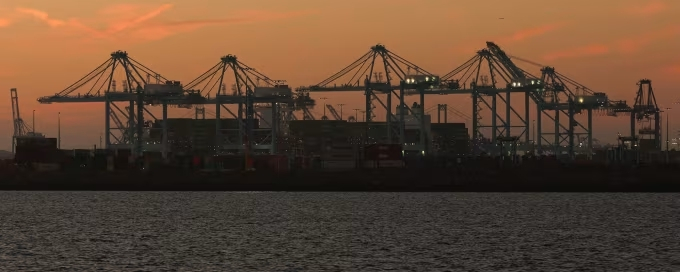
Cranes unload container ships at dusk at the Port of Los Angeles, on the shores of the Pacific Ocean, in Los Angeles, on August 19, 2026.
Jeff Vojta doesn’t get a break.
The general manager of Dilworth Coffee, in Raleigh, North Carolina, had to deal in 2024 with a disastrous Brazilian coffee harvest that sent coffee futures prices to record levels. The following year, global tariffs imposed by U.S. President Donald Trump pushed coffee prices even higher.
Then, this year, the war with Iran began. And a super El Niño.
“Among the disruptions in shipping, the lack of containers, the high costs due to what’s happening in the Red Sea, and the increase in fertilizer prices, we’re living through a period of disruptions we’ve never faced before,” said Vojta, who founded the national coffee distributor more than three decades ago. “There’s simply too much uncertainty.”
Jeff Vojta, CEO of Dilworth Coffee. Courtesy of Dilworth Coffee
Across the country, U.S. business owners in a wide range of sectors say they’re in a similar situation. A widely watched monthly survey by the Institute for Supply Management caught attention earlier this month after several business leaders compared today’s business climate to the pandemic.
They said the pandemic was better.
Massive disruptions and price instability are forcing companies to make impossible decisions. They have no idea how to plan, and their customers, worried about inflation, are not willing to accept more price increases.
“This is a more serious problem than covid, without a doubt,” said Jack Buffington, director of the Supply Chain Program at the University of Denver. “This is completely different. It’s an energy problem.”
The Trump administration has tried to present the war with Iran as a temporary economic bump —and once it’s resolved, the surge in inflation will quickly reverse on its own. But the historic supply-chain challenges facing American businesses show why the return of inflation won’t be easily solved, even if the war miraculously ends tomorrow.
A shopper checks products in a grocery store in Wilmington, North Carolina, on August 8, 2026. Allison Joyce/Bloomberg/Getty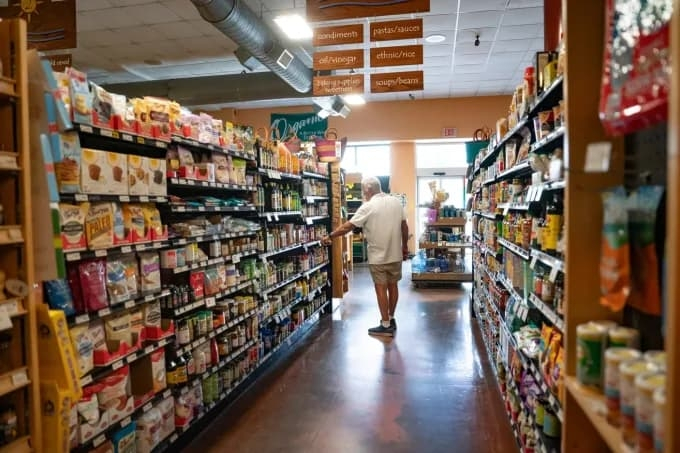
When will it stop?
“Oil prices will plunge” once the war with Iran is won, Trump said in a Truth Social post on Labor Day. “Everything will happen quickly.”
There’s a precedent for that. In mid-June, when the Strait of Hormuz briefly reopened after the U.S. and Iran signed a memorandum of understanding, gasoline prices fell below US$4 a gallon, and oil dropped below pre-war levels.
“Of course gas prices are too high,” said House Speaker Mike Johnson at a press conference on Wednesday. “Once we resolve that issue in the Strait of Hormuz, that will have a direct effect on this and help bring down food costs.”
But a lot has changed since June. High fuel and shipping prices have started to ripple through other parts of the economy. Core inflation, which excludes volatile energy and food prices, rose last month by the largest amount since April. And that’s showing up in higher prices for services—costs that generally don’t fall once they rise.
Diesel prices have doubled since March due to the intensification of the war in the Middle East and the continued bombing of Russian refineries by Ukraine.
But transportation costs have also risen due to a growing number of weather-related disruptions —including back-to-back typhoons that effectively shut down the Port of Shanghai, the world’s largest container port, for two weeks and are still causing significant delays.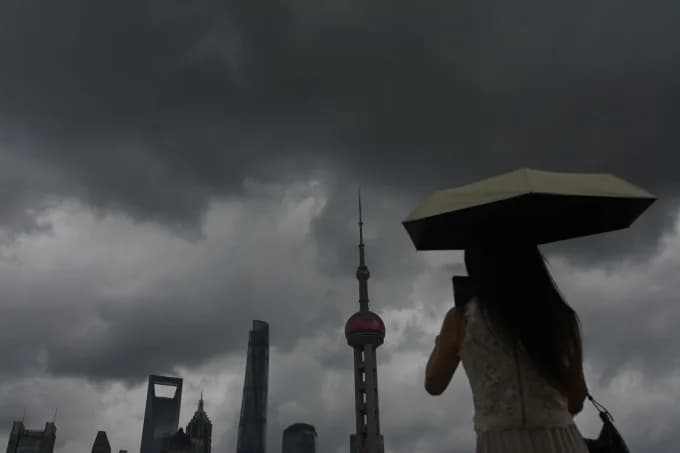
Wide view of tourists taking selfies in North Bund, in Shanghai, China, as Typhoon Dolphin approaches the country on August 8, 2026
Ending the war with Iran —which in itself is an enormously difficult task—won’t do anything to end Russia’s diesel export ban, which blocked 12% of the world’s seaborne diesel supply. It also can’t improve weather conditions.
And it won’t reverse the resurgence of the Iran-allied Houthi rebels at sea, nor Somali pirates in the Gulf of Aden. Both obstacles have forced shipping companies to divert their vessels around the entire continent of Africa to avoid attacks, cutting global ocean shipping capacity by 15% this year, according to Ryan Petersen, CEO of Flexport, a logistics and supply-chain software platform.
“I’ve spent 25 years in logistics, and I’ve never seen anything as severe as this,” said 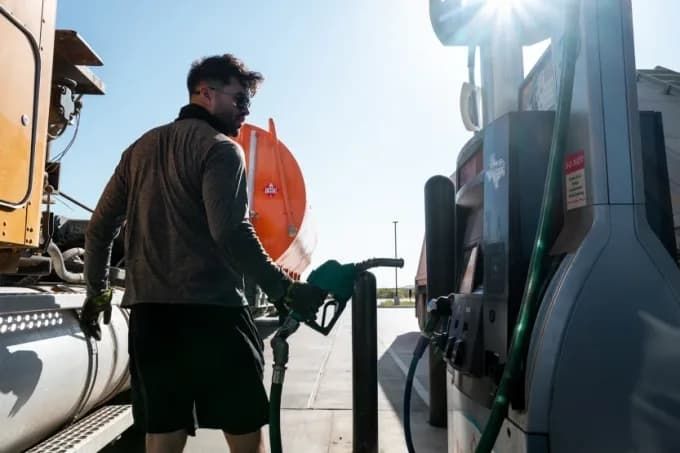
Vessels near the Strait of Hormuz, viewed from Musandam, Oman, on August 31, 2026.
A person prepares to refuel their truck on August 13, 2026, in Nortrees, Texas.
Brandon Bell/Getty
Meanwhile, companies are stretched to the limit, Sean Brownlee, CEO of Ravenox, a manufacturer of ropes, cords, and straps, said.
“Small businesses will eat every cost they can, right up until the last minute,” Brownlee said. “Now we’re feeling sharp pressure.”
Brownlee joined the business after a 25-year career in the U.S. Marine Corps with the goal of building an American manufacturing company that would support jobs in the country. Now, an unpredictable environment is threatening his dream.
“This problem affects us closely,” Brownlee said, referring to the costly disruptions in the supply chain. “We just want predictability.”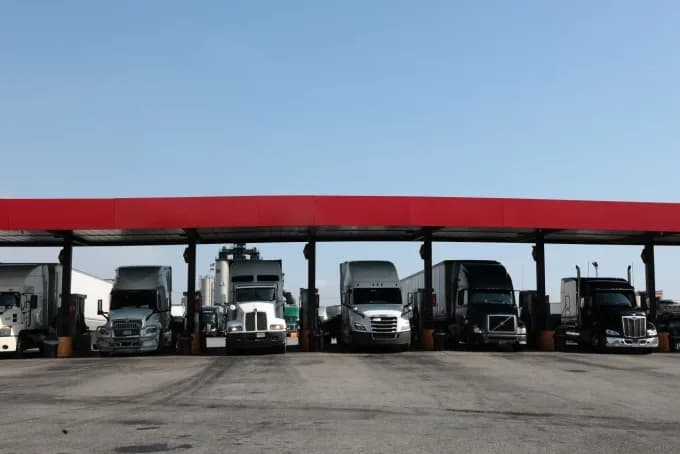
Comparisons to covid-19
It was alarming when an ISM survey participant argued that the current supply-chain situation is a “much greater and more complicated crisis than during and after covid-19.”
In 2020, container ships sat idle for weeks trying to enter ports. Stores couldn’t keep toilet paper, face masks, or hand sanitizer on their shelves. The supply chain essentially ground to a halt before gradually restarting.
Today’s supply-chain problems are completely different: shipping kicks off, stops, worsens, improves a lot, and then gets much worse again. Prices go up, down, and then surge again.
Trucks parked at a Pilot gas station on September 17, 2026, in Newark, New Jersey.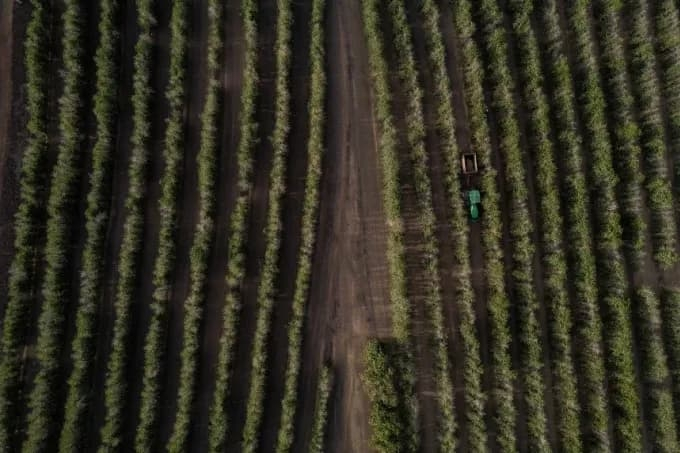
“The supply chain is working, but with much more cost, friction, and uncertainty than during the ccovid-19 pandemic,” Brownlee said.
That extreme volatility means chaos for business leaders.
“The pandemic was really scary,” Vojta said. “This is more stressful. We’re going through a period of disruptions we’ve never faced before.”
Vojta pointed out that his small team in Dilworth has to do significantly more research and pricing modeling than in the past. The company is used to setting its coffee sources 12 to 24 months in advance. Now, it’s stocking just three to six months ahead.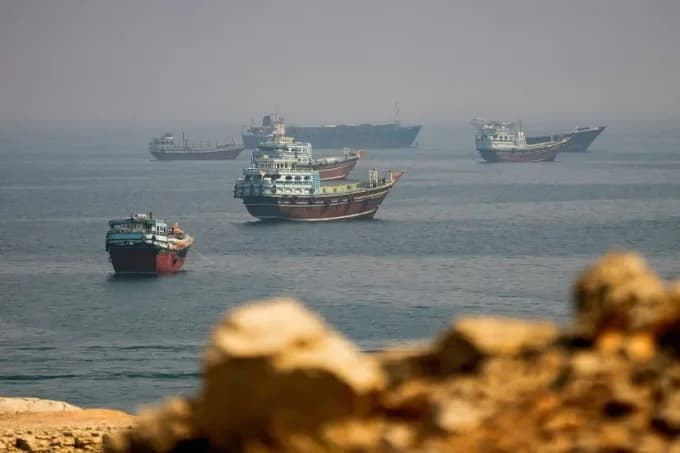
Coffee plants on a farm in Franca, São Paulo, Brazil, on August 25, 2026.
Weather has been a major factor. This year’s super El Niño has raised doubts about coffee harvests in Vietnam and Brazil.
But so has the company’s limited liquidity. It can’t store as much coffee as it used to because shipping costs have skyrocketed. Margins are thinner. And customers don’t have the available income they had during the years after the pandemic.
Typically, Vojta’s sales volumes fluctuate by 5% per month. Now they rise or fall by as much as 20%.
“This dynamic situation is new for us: How long will diesel stay above US$6? How are we going to pass this on to customers?” Vojta said. “It’s a challenge: our customers are facing the same problems we are.”