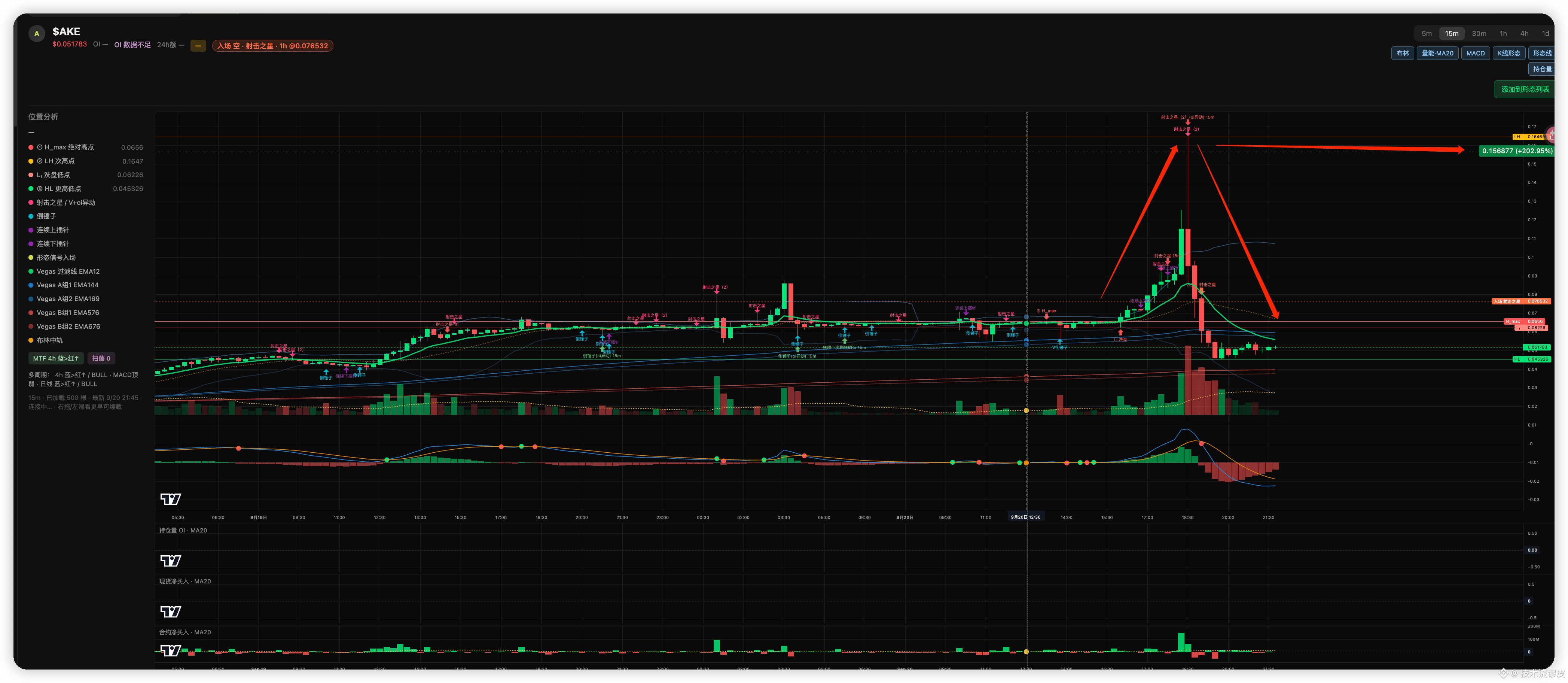
$AKE Three hours to double first and then unload everything. It’s not because of good news—it’s because the order book is too thin (a thin book), and it can’t withstand a single market buy/sell order. The only focus is this:
What you see as “buyers scrambling to buy” is, in large part, shorts being force-liquidated, with the exchange buying back for them using market orders. That’s why the wick becomes long and fast.
At the highs there’s no spot liquidity to hold the price up. The chasing longs also get force-liquidated, and the system switches to market selling. The path the price went up is the path it gets smashed back down. So this wick isn’t answering whether to go long.
It’s answering: in this burst of trades, how much was people proactively adding positions, and how much was positions being forcibly liquidated. If it’s mostly the latter—spot doesn’t follow, and only the contracts blow out—then it’s mainly about retracing (giving back), not a trend. Don’t chase the first candle.
In that first candle, what gets bought is often orders from other people’s liquidations.
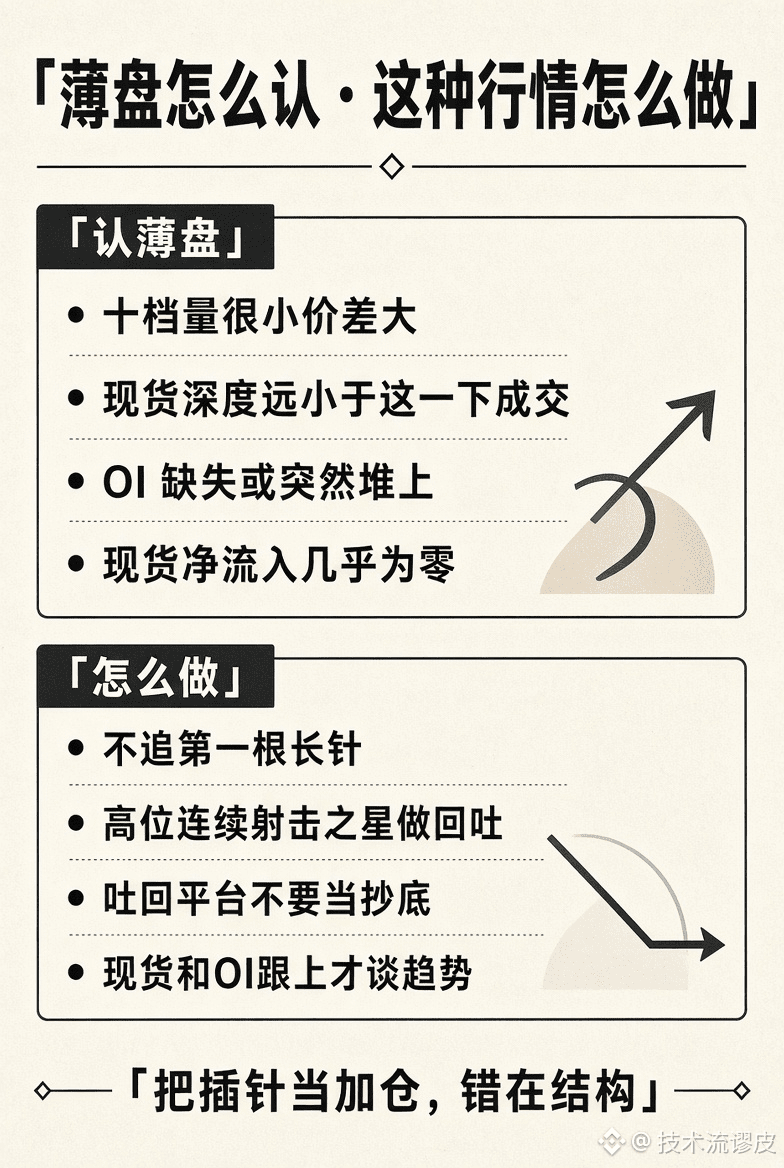
How to recognize a thin order book:
Don’t judge by percentage change. Judge by “how far this single order can push the price.”
The order book at levels 10 is very thin—sweep one layer and the price jumps. Even the spot depth is smaller than the single contract trade that just happened. That’s a thin book.
The meaning of a thin book isn’t “it can still rise.” It’s that price can be misaligned by forced matching of trades.
How to play this kind of market:
If the wick is still accelerating, don’t do anything. You’re competing with liquidation orders for execution.
If the wick has appeared but spot still doesn’t follow, the trades are about retracing.
Before this round ends, you’ll see the platform it pulls back to and then rises from—but it’s not a brand-new cheap entry point.
Unless spot and your positions both start following together, don’t upgrade the thin-book wick into a trend.
What you see as “buyers scrambling to buy” is, in large part, shorts being force-liquidated, with the exchange buying back for them using market orders. That’s why the wick becomes long and fast.
At the highs there’s no spot liquidity to hold the price up. The chasing longs also get force-liquidated, and the system switches to market selling. The path the price went up is the path it gets smashed back down. So this wick isn’t answering whether to go long.
It’s answering: in this burst of trades, how much was people proactively adding positions, and how much was positions being forcibly liquidated. If it’s mostly the latter—spot doesn’t follow, and only the contracts blow out—then it’s mainly about retracing (giving back), not a trend. Don’t chase the first candle.
In that first candle, what gets bought is often orders from other people’s liquidations.
How to recognize a thin order book:
Don’t judge by percentage change. Judge by “how far this single order can push the price.”
The order book at levels 10 is very thin—sweep one layer and the price jumps. Even the spot depth is smaller than the single contract trade that just happened. That’s a thin book.
The meaning of a thin book isn’t “it can still rise.” It’s that price can be misaligned by forced matching of trades.
How to play this kind of market:
If the wick is still accelerating, don’t do anything. You’re competing with liquidation orders for execution.
If the wick has appeared but spot still doesn’t follow, the trades are about retracing.
Before this round ends, you’ll see the platform it pulls back to and then rises from—but it’s not a brand-new cheap entry point.
Unless spot and your positions both start following together, don’t upgrade the thin-book wick into a trend.