🚨 Houthi missiles hit Riyadh, and it’s still the oil route that the market hasn’t priced in yet
Group: 点击进入玖玖的粉丝群
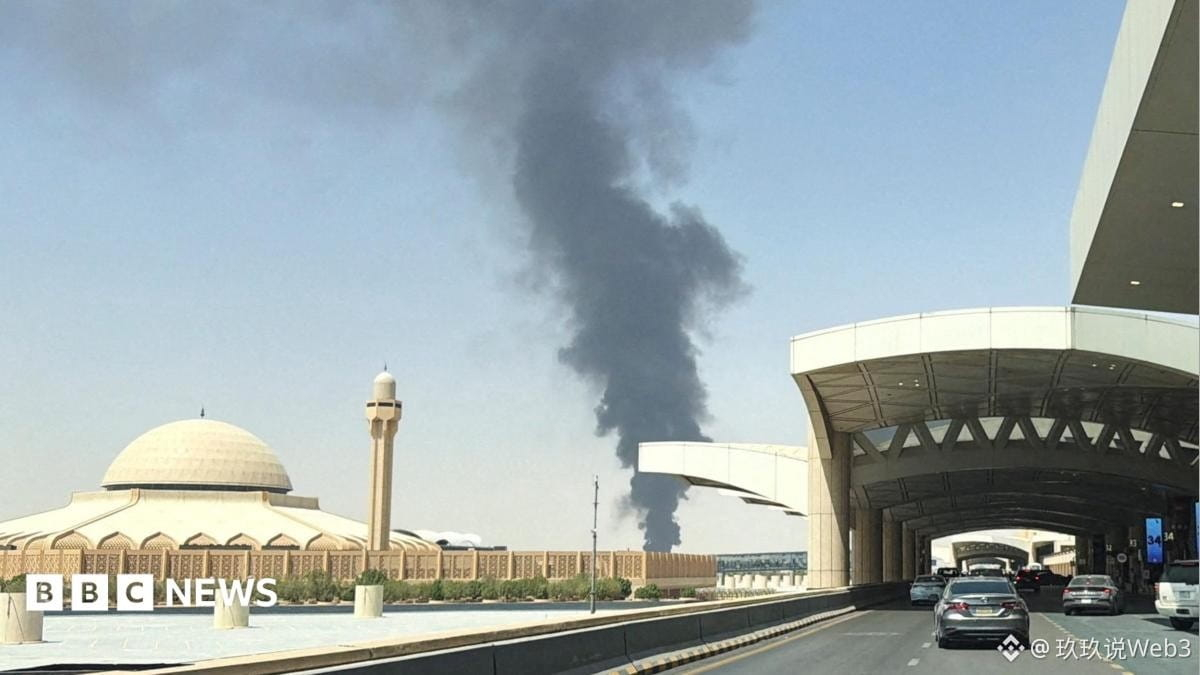
On Saturday, Yemen’s Houthi forces struck targets in both Riyadh and the energy facilities along Saudi Arabia’s Red Sea coastline. Saudi Arabia said it intercepted a ballistic missile aimed at the capital. Black smoke rose from oil tanks near Riyadh International Airport, and flights were temporarily halted. This is the first time Riyadh has sounded air-raid alarms since the escalation of attacks in July.🛢️
First, the strike targets—there’s a lot of precision here. A Houthi spokesperson said this round used a large number of ballistic missiles, cruise missiles, and drones. The targets included sensitive facilities in Riyadh and Aramco’s oil and gas assets in Yanbu. The air defense system also carried out multiple interceptions in Bisha, Taif, Farasan, and Yanbu. The Houthis also provided a number: in the past week, Saudi Arabia carried out about 300 airstrikes against Yemen. The U.S. State Department immediately warned that this round of conflict could escalate quickly and urged its citizens to seriously consider avoiding the area.👀
Now, the costs. UN agencies said the recent fighting in Yemen has already caused more than 104,700 people to be displaced. Ports and airports along the Red Sea coast have repeatedly been pulled into the conflict, pushing up humanitarian and shipping costs. Yanbu is a key node for Saudi Arabia’s Red Sea exports. With Aramco facilities hit, what the market worries about isn’t just a few oil tanks—it’s whether this export corridor will be forced to slow down.
What’s truly dangerous is the shipping lanes. After the Hormuz route was basically shut down by the U.S.–Iran conflict, Saudi Arabia can only rely on Red Sea exports for its oil. And now that the Houthis have just taken control of the port of Mokha and Perim Island, it’s like putting a knife to this alternative route.🚢
Of course, some people argue that after all these years of fighting in the Middle East, oil prices have stayed about the same—so tightening things up won’t cause an immediate reaction. That’s half true. What the market is pricing is the supply path itself. If the route is repeatedly squeezed, oil and inflation won’t come down, and the valuation “anchor” for risk assets will also wobble.
What’s really worth watching isn’t the few points in tonight’s coin price—it’s whether the Red Sea oil route will be completely cut off. One side says geopolitics is just noise; the other says this is the fuse for a second round of upside inflation. Which side are you on?
Click the avatar to watch the live stream + join the Jiujiu chat group for daily strategy 🚀
#原油 #全球市场 #比特币 #BTC
Group: 点击进入玖玖的粉丝群
On Saturday, Yemen’s Houthi forces struck targets in both Riyadh and the energy facilities along Saudi Arabia’s Red Sea coastline. Saudi Arabia said it intercepted a ballistic missile aimed at the capital. Black smoke rose from oil tanks near Riyadh International Airport, and flights were temporarily halted. This is the first time Riyadh has sounded air-raid alarms since the escalation of attacks in July.🛢️
First, the strike targets—there’s a lot of precision here. A Houthi spokesperson said this round used a large number of ballistic missiles, cruise missiles, and drones. The targets included sensitive facilities in Riyadh and Aramco’s oil and gas assets in Yanbu. The air defense system also carried out multiple interceptions in Bisha, Taif, Farasan, and Yanbu. The Houthis also provided a number: in the past week, Saudi Arabia carried out about 300 airstrikes against Yemen. The U.S. State Department immediately warned that this round of conflict could escalate quickly and urged its citizens to seriously consider avoiding the area.👀
Now, the costs. UN agencies said the recent fighting in Yemen has already caused more than 104,700 people to be displaced. Ports and airports along the Red Sea coast have repeatedly been pulled into the conflict, pushing up humanitarian and shipping costs. Yanbu is a key node for Saudi Arabia’s Red Sea exports. With Aramco facilities hit, what the market worries about isn’t just a few oil tanks—it’s whether this export corridor will be forced to slow down.
What’s truly dangerous is the shipping lanes. After the Hormuz route was basically shut down by the U.S.–Iran conflict, Saudi Arabia can only rely on Red Sea exports for its oil. And now that the Houthis have just taken control of the port of Mokha and Perim Island, it’s like putting a knife to this alternative route.🚢
Of course, some people argue that after all these years of fighting in the Middle East, oil prices have stayed about the same—so tightening things up won’t cause an immediate reaction. That’s half true. What the market is pricing is the supply path itself. If the route is repeatedly squeezed, oil and inflation won’t come down, and the valuation “anchor” for risk assets will also wobble.
What’s really worth watching isn’t the few points in tonight’s coin price—it’s whether the Red Sea oil route will be completely cut off. One side says geopolitics is just noise; the other says this is the fuse for a second round of upside inflation. Which side are you on?
Click the avatar to watch the live stream + join the Jiujiu chat group for daily strategy 🚀
#原油 #全球市场 #比特币 #BTC