

Author: Thejaswini M A
Compiled: Deep Tide TechFlow
Deep Tide Guide: The Clarity Act failed to pass, but the SEC used an innovation exemption to grant tokenized U.S. stocks a five-year temporary runway: a permissioned AMM and liquidity pools can match real stock tokens. But opening is only the beginning—who verifies wallets, who provides the stocks and cash, and who can still keep prices pinned under weekend news shocks is the real gap liquidity must fill. This article breaks down, step by step, how the “pool gets filled”: from Uniswap permissioned pools, to the Superstate/Securitize registration layer, to oracles and PropAMM, and then to financing.
The SEC was created because the United States realized this: a market can be extremely active yet not necessarily trustworthy.
Before the 1929 crash, companies could sell stocks with limited disclosure, traders could organize pools to manipulate prices, and stock exchanges were generally expected to self-regulate. The crash made the costs of such arrangements impossible to ignore. Congress first passed the Securities Act of 1933, requiring companies selling securities to provide investors with meaningful information.
Then came 1934 (the Securities Exchange Act), and the SEC was created to oversee exchanges, broker-dealers, and secondary markets. The government established a single principle for a trade: the claim to rights must be real, and the market that moves that claim among people must follow rules.
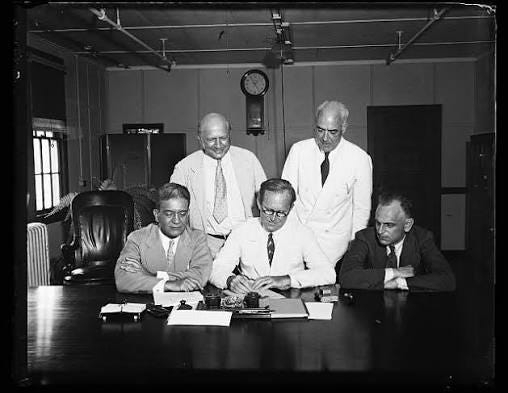
When equity certificates become electronic ledger entries and trading floors become server rooms, the basic structure hasn’t changed. The issuer still creates the shares, the transfer agent still records who holds them, the exchange matches buyers and sellers, and market makers still provide counterparty risk so prices keep moving.
Blockchains can pull these jobs closer together. Shares, ownership records, payments, and trading pools can all run through interconnected smart contracts.
Over the past decade, the SEC’s obsession has largely been this question: when should a crypto token be treated as a security? The Clarity Act didn’t finish its way through Congress—let’s call it a rest—but the SEC now offers a smaller, temporary path through innovative exemptions. It gives companies five years to try. Qualified tokenized securities trading venues (TSVs) can use a permissioned system of automated market makers and liquidity pools to enable on-chain trading of tokenized U.S. stocks.
So if a token is already a real stock, can it be traded using a crypto-style pool that only allows approved investors?
The SEC’s answer is yes—but old protections have to remain in place.
The token must carry the usual shareholder rights.
The company behind the stock must be informed—and can object.
Only approved wallets can trade.
If the stock stops trading on Nasdaq or the NYSE, its tokenized version must stop as well.
Smart contracts have to be public so regulators and investors can inspect what’s happening.

Creating real stocks and getting pools approved is just the start. Someone still has to provide shares and cash, keep prices accurate, and bear the risk. That’s where we’re headed today.
Traditional stock exchanges try to match people who want to sell with people who want to buy. An automated market maker (AMM) gives both sides a pool to trade against.
Sellers need enough cash in the pool. Buyers need enough shares. Whoever provides those assets pockets part of the trading fees.
That doesn’t sound hard—until you assume Apple is quoted at $200 on Nasdaq, while its tokenized shares in the pool are priced as if they’re worth $198. Traders can buy cheaper tokens, hedge on the traditional market, and pocket the spread. That would move prices closer together, but the pool of liquidity providers would be selling the stock too cheaply.
In crypto circles, some of it is called impermanent loss. When a stock crashes, the pool may end up holding more of the stock that’s falling and less cash. When it rallies quickly, the pool may sell the stock too early.
Traditional market makers rely on widening bid-ask spreads, doing fewer trades, hedging elsewhere, or simply withdrawing. A simple AMM follows the hard-coded rules. That’s uncomfortable for listed stocks—they might gap up after a quarterly report, a lawsuit, or a CEO posting from bed after they were supposed to be asleep. A 24/7 pool doesn’t sleep.
Innovative exemptions make room for these pools to operate and provide conditional relief to some companies funded with their own capital. They can’t guarantee trading fees will be higher than stale prices, nor prevent losses from adverse trades and inventory imbalances.
Once you look at the market this way, liquidity for tokenized stocks breaks into three questions.
The exchange must verify who is allowed to trade. A wallet address alone can’t tell you who the owner is, whether they passed identity checks, or whether they’re legally allowed to hold that stock.
The pool needs enough shares and cash. If it only holds a few shares, even a small trade can drain it, pushing the price away from Nasdaq.
Liquidity providers need enough capital to keep the pool operating. They must put in shares and cash, protect themselves when prices swing, and earn enough return from fees or spread so that the risk is worthwhile.
I tracked down who gets a chance to patch these layers.
Uniswap can decide who gets into the pool.
Uniswap v4’s permissioned pools address the first problem directly.
Uniswap v4 is usually permissionless. Anyone can create pools, swap, or provide liquidity. Regulated securities can’t work that way, because their token contracts might be required to reject transfers to wallets not verified by the issuer.
Uniswap v4 puts balances in the same PoolManager contract and updates virtual balances when people trade. If a restricted stock is only checked when an actual token transfer occurs, it can’t see everything that happens inside the pool. Unapproved parties may gain exposure without triggering the stock token’s normal transfer checks.
The solution to a permissioned pool is to check wallets before allowing trading.
Real shares are placed in a separate smart contract approved by the issuer—an Permissions Adapter. Uniswap then tracks trades inside the pool using a virtual version of that stock. Before anyone can buy in, sell, or add shares and cash, the adapter asks the issuer’s compliance system whether that wallet is approved.
It doesn’t matter whether the issuer uses Securitize’s DS protocol, Tokeny’s ERC-3643, or its own investor registry. Uniswap just needs that system to answer yes or no.
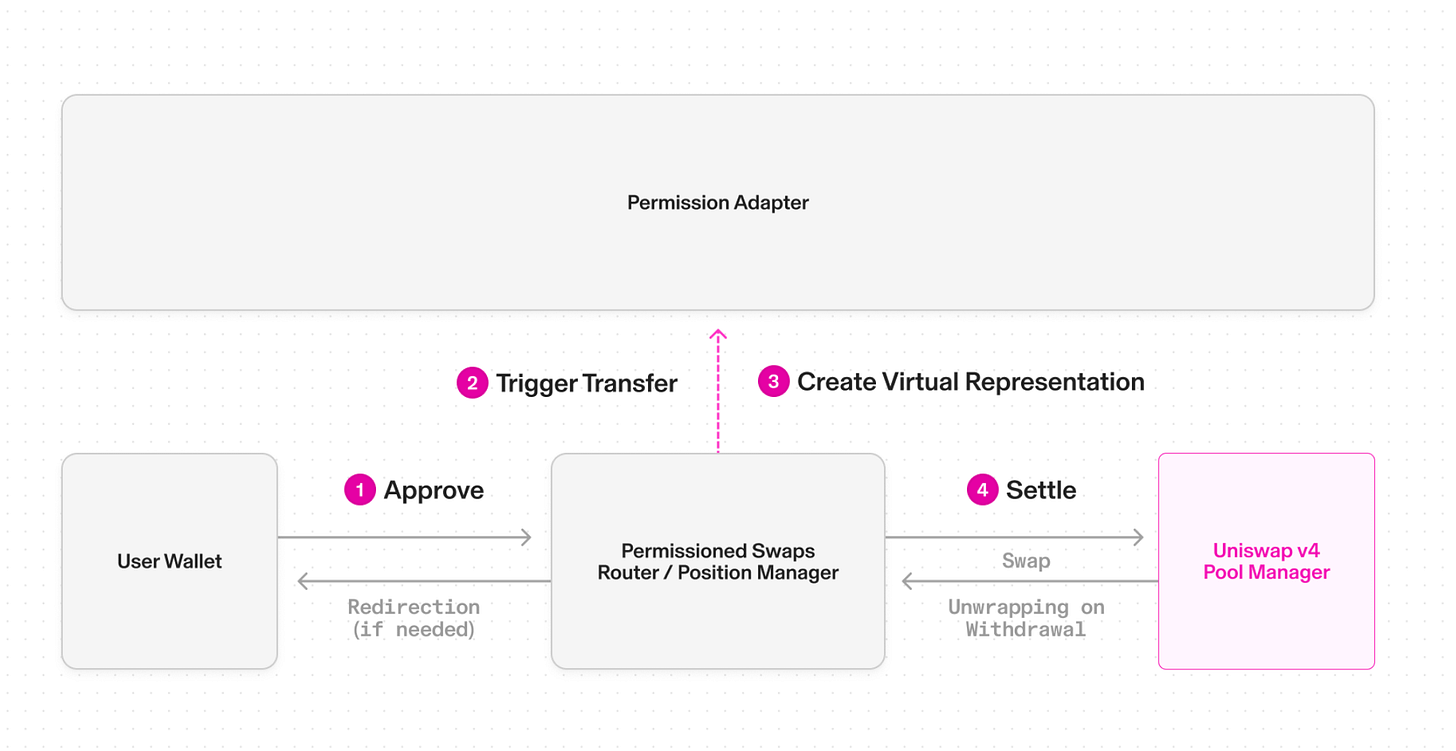
Trading permission is different from providing-liquidity permission. Someone might be allowed to buy tokenized stock but not allowed to act as a market maker by providing shares and cash. Uniswap checks traders before each exchange and checks liquidity providers before accepting assets. Permission can also be revoked after the fact. If a liquidity provider no longer qualifies, the issuer can close the position. The LP receives unrestricted assets (for example, USDC), and the tokenized stock is moved to an issuer-selected address. Stocks won’t forget they’re regulated just because they’ve entered DeFi.
The system is already live, and Uniswap says Superstate, Securitize, and Dowgo are building on it. But that doesn’t mean they’re approved as TSVs. The SEC hasn’t published a list of winners. The technology Uniswap built is structurally close to the permissioned AMM that this order makes possible.
Stocks still have to come from somewhere.
A token can wear Apple’s name and track Apple’s price, yet still not make the holder an Apple shareholder.
For example, Robinhood’s Stock Tokens are debt securities issued on Jersey Island. They provide economic exposure to the underlying stock, but Robinhood states that holders don’t receive legal or beneficial ownership of those shares. The SEC’s new exemption requires that tokens carry the same rights as traditional shares. For now, let’s sidestep Robinhood’s awkwardness and see who currently owns this layer.
Superstate’s Opening Bell helps public companies place real shares on Ethereum and Solana. In September 2025, Galaxy Digital became its first major case, allowing shareholders to migrate their Class A common stock to Solana. These tokens are Galaxy’s SEC-registered shares and carry the same rights as traditional stock. When tokens transfer among verified investors, Superstate updates Galaxy’s official shareholder registry in real time.

As an SEC-registered transfer agent, Superstate maintains shareholder records across traditional ledger shares, tokenized holdings, and supported DeFi applications. When a company already has a transfer agent, Superstate works in parallel and bridges between existing records and the blockchain. Superstate also offers a direct issuance program: it allows public companies to sell newly issued shares directly to eligible investors at the real-time market price. Investors pay with stablecoins and receive real shares in token form in approved wallets.
Securitize covers similar territory. It issues and manages regulated digital securities, maintains investor records, and enforces rules about who can hold or transfer them. Uniswap’s pools can query Securitize’s DS protocol when deciding whether a wallet can trade or provide liquidity.
It’s also the tokenization and transfer-agent platform behind the BlackRock BUIDL fund. BUIDL went live on UniswapX for on-chain trading in February 2026, but that wasn’t an AMM pool—it was a request-for-quote system. Approved investors can obtain quotes from a whitelist of companies, including Flowdesk, Tokka Labs, and Wintermute. Securitize Markets facilitates the trades, and each participant must be approved by Securitize. But you can see how these layers work together.
Securitize controls who can legally hold and trade the security. UniswapX provides the technology to find quotes and settle on-chain. These companies aren’t necessarily competitors to Uniswap. Transfer agents record who owns shares and whether transfers are valid. Uniswap handles exchanges among approved participants.
The SEC requires tokenized securities trading venues to verify that each token carries the same rights as equivalent traditional shares. If a third party tokenizes a company’s stock that isn’t relevant, the venue must notify the original issuer and give it an opportunity to object. If the underlying stock stops trading on its main exchange, the tokenized version must stop trading as well.
SEC orders also limit how many of the underlying assets and how much trading volume each venue can use during the exemption period. Someone still has to provide enough shares and cash for those allowed markets to actually be useful.
How do you keep prices from becoming absurd?
Passive AMMs (like standard Uniswap pools) are always open for trading. Their price depends on how many shares and how much cash sit inside the pool.
Concentrated liquidity lets liquidity providers put most of their capital near the current stock price. This helps pools deliver better prices without requiring as much capital.
The bigger problem is the clock. Simple AMMs set prices from their own pool, while arbitrageurs bring it closer to external markets by buying where it’s cheap and selling where it’s expensive. Assume Nvidia closes Friday at $200. On Saturday, the company announces bad news. People now expect the stock price to fall, but there’s no fresh Nasdaq price to tell the pool how far down. If the pool keeps buying at something close to Friday’s price, those who see the news can sell to it before it updates. Anyone who puts money into the pool ends up holding shares that may be worth less.
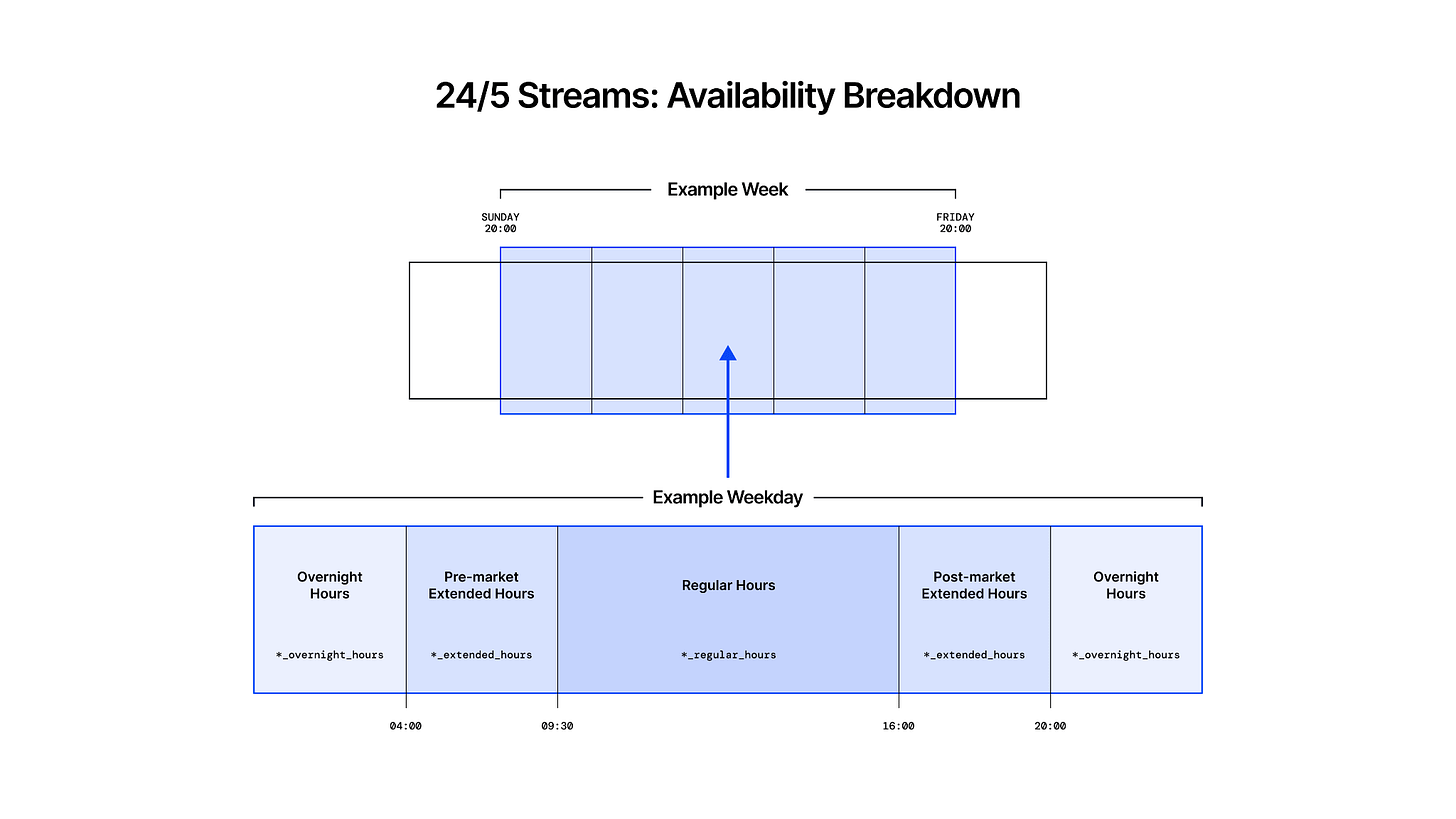
Marcin Kaźmierczak, COO of RedStone, points out that regular NYSE and Nasdaq trading accounts for only 32.5 hours out of the standard 168-hour week. Pre-market and after-hours can offer more prices, but weekends still leave a gap.
Oracles that bring external data into blockchain applications help narrow the problem. Chainlink’s 24/5 U.S. stock data feeds cover regular trading hours, pre-market, after-hours, and overnight sessions. They report bid and ask prices, market status, and how old the price is. But when traditional markets close for weekends or holidays, these feeds carry stale values. Applications could use tokenized market prices instead, but that’s no longer a real-time reference to the underlying stock market.
This leaves another decision for the trading system. Knowing the latest available price is useful, but how much inventory should be offered at that price—and how careful should it be as the information gets old?
The Solana exchange Byreal, incubated by Bybit, offers multiple possible paths for each trade. It compares concentrated liquidity pools with quotes provided by professional market makers through request-for-quote (RFQ). Or, said differently, it asks trading firms: for the quantity you’re requesting, what price will you pay?
After professional firms consider their own inventory and prices elsewhere, they may come back with better quotes. Byreal can query its own pools, external AMMs including Raydium, Orca, and Meteora, and market-maker quotes. The useful innovation is the ability to compare these sources rather than relying on one pool to handle every order equally well.
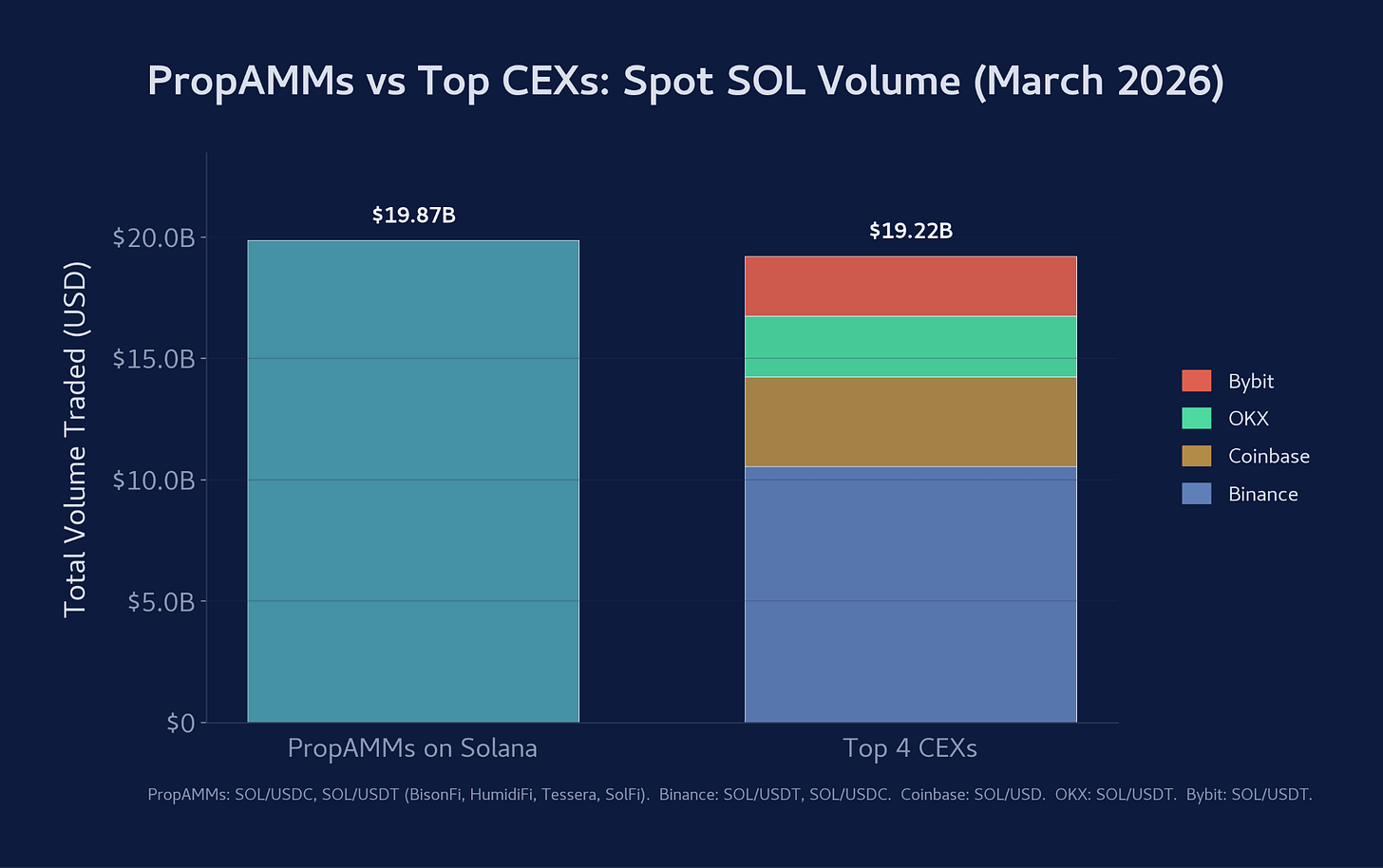
BisonFi from Jump Crypto is a proprietary AMM (PropAMM). Its off-chain pricing engine watches other markets and sends updated prices to the on-chain trading program. Assets and settlement remain on-chain, but prices can change before someone trades against an on-chain quote.
Its process would also respond to inventory and how fresh the information is. If it holds too much of one asset, it can adjust prices to encourage trades that restore balance. If price updates are too stale, it can widen bid-ask spreads or provide less inventory. These are ways to continue making markets while limiting how much risk a company accepts.
UniswapX tackles the broader pricing problem through competition. Companies compete to execute traders’ orders using different sources of liquidity. Looking separately from Uniswap’s permissioned pools, you can see how execution can improve when traders aren’t locked into quotes from a single pool.
What these schemes offer is a way to trade better under uncertainty. For builders of truly tokenized stocks, the opportunity is to combine reliable market data, competitive quotes, and a control stack that responds when information is scarce. The existing crypto-market capabilities provide a useful foundation, but fitting them into SEC exemptions is another task entirely.
Assuming everything else is ready: the token represents real shares, the pool verifies who can trade, and the market maker knows how to keep prices competitive. The company still needs enough shares to sell and enough cash to buy other people’s sell orders.
A company that makes markets in tokenized shares of ten stocks may need to allocate shares and stablecoins across ten pools. Without outside financing, every dollar supporting those quotes comes from its own balance sheet. Traditional finance has something called a prime broker, which lends money to trading firms. When deciding how much collateral to demand for those loans, they can consider multiple investments together. For example, a company might hold shares and also hold a separate trade that would increase in value if those shares fall. Looking at both together gives the lender a better picture of risk than either one alone.
Arkis brings this portfolio-margin idea into the digital market. Lenders provide the money, and Arkis bundles and evaluates the investments backing the borrowing company’s loans, monitoring the assets that support its debt. If those assets lose too much value, the system can sell positions to help repay the loan.
Arkis sits near the liquidity for tokenized stocks, but it’s not itself a stock AMM. Instead, it can help finance the companies that put shares and cash into trading pools. A market maker that can aggregate investments and borrowing might be able to support more trading with existing capital.
Between that possibility and the exemptions, there’s still a big leap. Arkis hasn’t shown that these U.S. stocks will be accepted as collateral, that TSV positions can enter its margin system, or that its lending structure satisfies the relevant securities requirements.
The SEC also provides a temporary, conditional broker-dealer exemption for liquidity providers who use their own capital, quotes, or committed capital in TSV pools. This removes a regulatory hurdle.
A single stock trade can support several businesses. One firm maintains ownership records, another runs the trading pool, while others provide shares, set prices, or lend capital.
They can earn management fees, trading revenue, or interest—so they aren’t all fighting over the same payment. Who makes the most depends partly on where people choose to trade. Both sides want good prices and enough shares and cash to complete the order. But the companies providing those assets also need enough customers so their effort is worth it. Each side is waiting for the other.
When prices swing wildly and someone wants to sell a large position, can the pool complete the sell at a reasonable price while the company providing shares and cash is still willing to continue doing so? That’s when we’ll know whether tokenization created a market people can actually rely on.
We’ll never know. Robinhood is probably naming some feature.