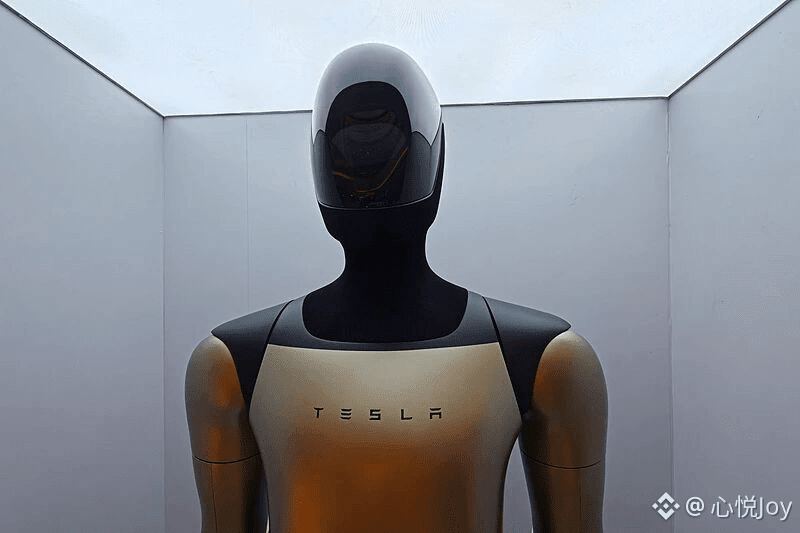
Tesla is preparing for mass production of its humanoid robot, Optimus. Construction of the main structure for the Optimus-dedicated production line in Tesla’s Texas facility near Austin—located in the U.S. state of Texas—is nearing completion, which could be a key breakthrough for this business.
For now, steel-structure assembly for the Optimus production line is still about five column bays short of reaching the perimeter beams along the north side of the building. This suggests that roughly six months after Tesla broke ground in the North Park area at the end of March, the main frame has entered its final phase.
Meanwhile, concrete pouring for the factory’s third floor has already begun. Construction crews are also laying rebar on the ground and pouring foundations for the grade beams. This kind of parallel construction—erecting the steel frame on one end of the site while the concrete sets on the other—is a scheduling method Tesla used in its initial Texas super factory. It appears the company is using the same approach here as well, likely to save time ahead of the factory’s planned production launch in 2027.
Optimus project status. Tesla officially announced the launch of the Optimus production project in May this year. It is also part of the expansion project for the Texas super factory. Reportedly, the expanded total length will be close to the length of Tesla’s existing vehicle factory, expected to exceed 4,000 feet, though it will be slightly narrower.
Elon Musk’s long-term output goal is that once the production line operates at full capacity, Optimus’ annual output will reach 10 million units. This far exceeds Tesla’s pilot production line built in Fremont, California, which targets an annual output of 1 million units.
Tesla’s Optimus Fremont plant has already begun mass production of the third-generation robots in January this year. It is expected to produce tens of thousands of units this year, primarily to gather real-world data needed to further develop the robot software before the Texas super factory ramps up to full production.
Another major construction project at the Texas plant is Terafab, a chip venture co-developed by Tesla and SpaceX. Terafab will ultimately provide silicon chips for Optimus robots, while concentrating robot assembly and chip production in the same campus is intended to reduce the transport and delivery lead times that would otherwise be required to move between two separate locations.
$SPCX.US
$TSLA.US
For now, steel-structure assembly for the Optimus production line is still about five column bays short of reaching the perimeter beams along the north side of the building. This suggests that roughly six months after Tesla broke ground in the North Park area at the end of March, the main frame has entered its final phase.
Meanwhile, concrete pouring for the factory’s third floor has already begun. Construction crews are also laying rebar on the ground and pouring foundations for the grade beams. This kind of parallel construction—erecting the steel frame on one end of the site while the concrete sets on the other—is a scheduling method Tesla used in its initial Texas super factory. It appears the company is using the same approach here as well, likely to save time ahead of the factory’s planned production launch in 2027.
Optimus project status. Tesla officially announced the launch of the Optimus production project in May this year. It is also part of the expansion project for the Texas super factory. Reportedly, the expanded total length will be close to the length of Tesla’s existing vehicle factory, expected to exceed 4,000 feet, though it will be slightly narrower.
Elon Musk’s long-term output goal is that once the production line operates at full capacity, Optimus’ annual output will reach 10 million units. This far exceeds Tesla’s pilot production line built in Fremont, California, which targets an annual output of 1 million units.
Tesla’s Optimus Fremont plant has already begun mass production of the third-generation robots in January this year. It is expected to produce tens of thousands of units this year, primarily to gather real-world data needed to further develop the robot software before the Texas super factory ramps up to full production.
Another major construction project at the Texas plant is Terafab, a chip venture co-developed by Tesla and SpaceX. Terafab will ultimately provide silicon chips for Optimus robots, while concentrating robot assembly and chip production in the same campus is intended to reduce the transport and delivery lead times that would otherwise be required to move between two separate locations.
$SPCX.US
$TSLA.US