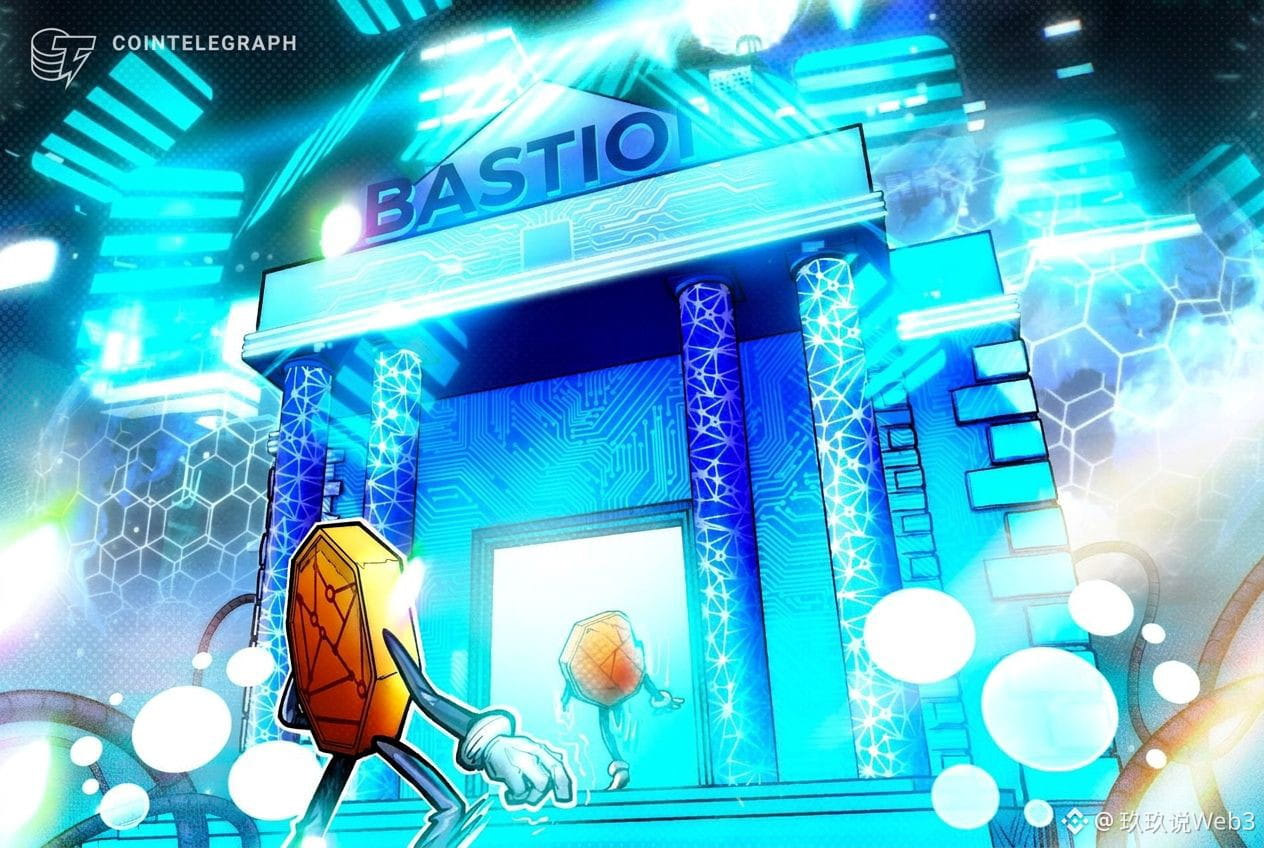
🚨 Another stablecoin company has obtained a U.S. bank charter, yet it somehow can’t take deposits or make loans
Group: 点击进入玖玖的粉丝群
First, a judgment: the matter of stablecoin companies lining up to obtain bank charters is worth watching more than the outcome of the CLARITY bill vote.
Bastion, a stablecoin infrastructure company, has received the U.S. Office of the Comptroller of the Currency (OCC) initial conditional approval 🏦. With this charter, it can set up a national trust bank, and the state-level licenses it already held are now layered with federal oversight ⚖️. It’s called Bastion Platforms National Trust Company. One license packages stablecoin custody, wallets, payment infrastructure, and white-label issuance. One detail you shouldn’t overlook: it can’t take deposits or make loans—this is fundamentally different from traditional commercial banks.
The timeline is also worth noting. Since Bastion received its New York trust license in February 2025, it has been moving along the path toward federal regulation. In September 2025, it completed a $14.6 million funding round, with a top exchange’s venture arm leading the investment. Sony, Samsung’s investment subsidiary, a16z crypto, and Hashed also participated.
Its CEO, Nassim Eddequiouaq, said something quite straightforward: stablecoins have moved from being an emerging technology to becoming core financial infrastructure, which means it needs higher standards of trust, governance, and regulation.
Of course, some argue: what kind of bank is a bank that can’t take deposits? It’s nothing more than a public-relations stunt. That said, I’d argue the opposite. A charter isn’t about deposit-lending business—it’s about having the legal identity to offer custody and settlement. At the same time, Ripple has received similar conditional approval, Circle and BitGo have received final approval, and a top exchange’s parent company, Zerohash, and Block have also filed applications.
So what really needs to be watched isn’t whether CLARITY can be overturned, but rather what identity on-chain dollars will enter the federal regulatory system with once these charters become operational 💡. One camp says this is crypto being “taken over” by the establishment; the other says this is infrastructure finally getting its official status—where do you stand?
Click the avatar to watch the live stream + join the Jiujiu chat group to get daily strategies 🚀
#稳定币 #比特币 #Regulation
Group: 点击进入玖玖的粉丝群
First, a judgment: the matter of stablecoin companies lining up to obtain bank charters is worth watching more than the outcome of the CLARITY bill vote.
Bastion, a stablecoin infrastructure company, has received the U.S. Office of the Comptroller of the Currency (OCC) initial conditional approval 🏦. With this charter, it can set up a national trust bank, and the state-level licenses it already held are now layered with federal oversight ⚖️. It’s called Bastion Platforms National Trust Company. One license packages stablecoin custody, wallets, payment infrastructure, and white-label issuance. One detail you shouldn’t overlook: it can’t take deposits or make loans—this is fundamentally different from traditional commercial banks.
The timeline is also worth noting. Since Bastion received its New York trust license in February 2025, it has been moving along the path toward federal regulation. In September 2025, it completed a $14.6 million funding round, with a top exchange’s venture arm leading the investment. Sony, Samsung’s investment subsidiary, a16z crypto, and Hashed also participated.
Its CEO, Nassim Eddequiouaq, said something quite straightforward: stablecoins have moved from being an emerging technology to becoming core financial infrastructure, which means it needs higher standards of trust, governance, and regulation.
Of course, some argue: what kind of bank is a bank that can’t take deposits? It’s nothing more than a public-relations stunt. That said, I’d argue the opposite. A charter isn’t about deposit-lending business—it’s about having the legal identity to offer custody and settlement. At the same time, Ripple has received similar conditional approval, Circle and BitGo have received final approval, and a top exchange’s parent company, Zerohash, and Block have also filed applications.
So what really needs to be watched isn’t whether CLARITY can be overturned, but rather what identity on-chain dollars will enter the federal regulatory system with once these charters become operational 💡. One camp says this is crypto being “taken over” by the establishment; the other says this is infrastructure finally getting its official status—where do you stand?
Click the avatar to watch the live stream + join the Jiujiu chat group to get daily strategies 🚀
#稳定币 #比特币 #Regulation