$AKE total supply is 100 billion AKE. Circulating supply is only about 22.8 billion; the remaining 77% is locked in multi-year vesting/unlocking plans and released gradually. The top ten addresses control more than 70% of the holdings. These addresses are transferring assets to exchanges through “shadow wallets” at high frequency and in small amounts. Meanwhile, retail investor holding addresses have surged by more than 300% within 48 hours.
This is a typical “top distribution” playbook: the market maker breaks up the coins, feeding them to the retail investors who rush in, little by little.
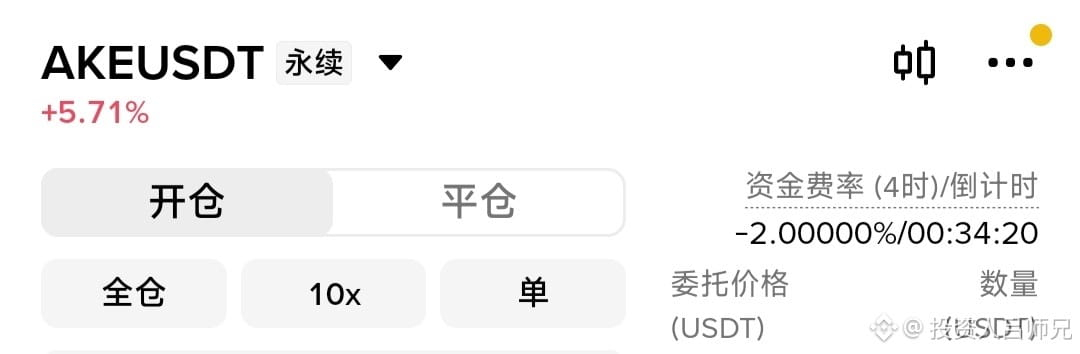
The funding rates across multiple exchanges have been negative for a long time, meaning shorts have to pay longs 2% of the position value every four hours.
The market maker controls the spot market, pushing the price higher to lure retail investors into “topping and shorting.” The more squeezed the shorts get, the more extreme the negative funding rate becomes. So what happens next? The market maker uses the money paid by the shorts to keep pumping the order book.
Shorts end up becoming his ATM. You’re lining up to deposit your money into it.
Back then, without derivatives, gou-mafia “pumped and dumped.” Now with contracts, everything they do is a two-sided trap against both longs and shorts.
This is a typical “top distribution” playbook: the market maker breaks up the coins, feeding them to the retail investors who rush in, little by little.
The funding rates across multiple exchanges have been negative for a long time, meaning shorts have to pay longs 2% of the position value every four hours.
The market maker controls the spot market, pushing the price higher to lure retail investors into “topping and shorting.” The more squeezed the shorts get, the more extreme the negative funding rate becomes. So what happens next? The market maker uses the money paid by the shorts to keep pumping the order book.
Shorts end up becoming his ATM. You’re lining up to deposit your money into it.
Back then, without derivatives, gou-mafia “pumped and dumped.” Now with contracts, everything they do is a two-sided trap against both longs and shorts.