
易琳Ten
96 Posts

易琳Ten
交易是修行,盈利是结果,纪律是信仰。🐺📈
102 Following
18.7K+ Followers
6.1K+ Liked
Posts
All
Quotes
PINNED
PINNED



听澜321
·
--
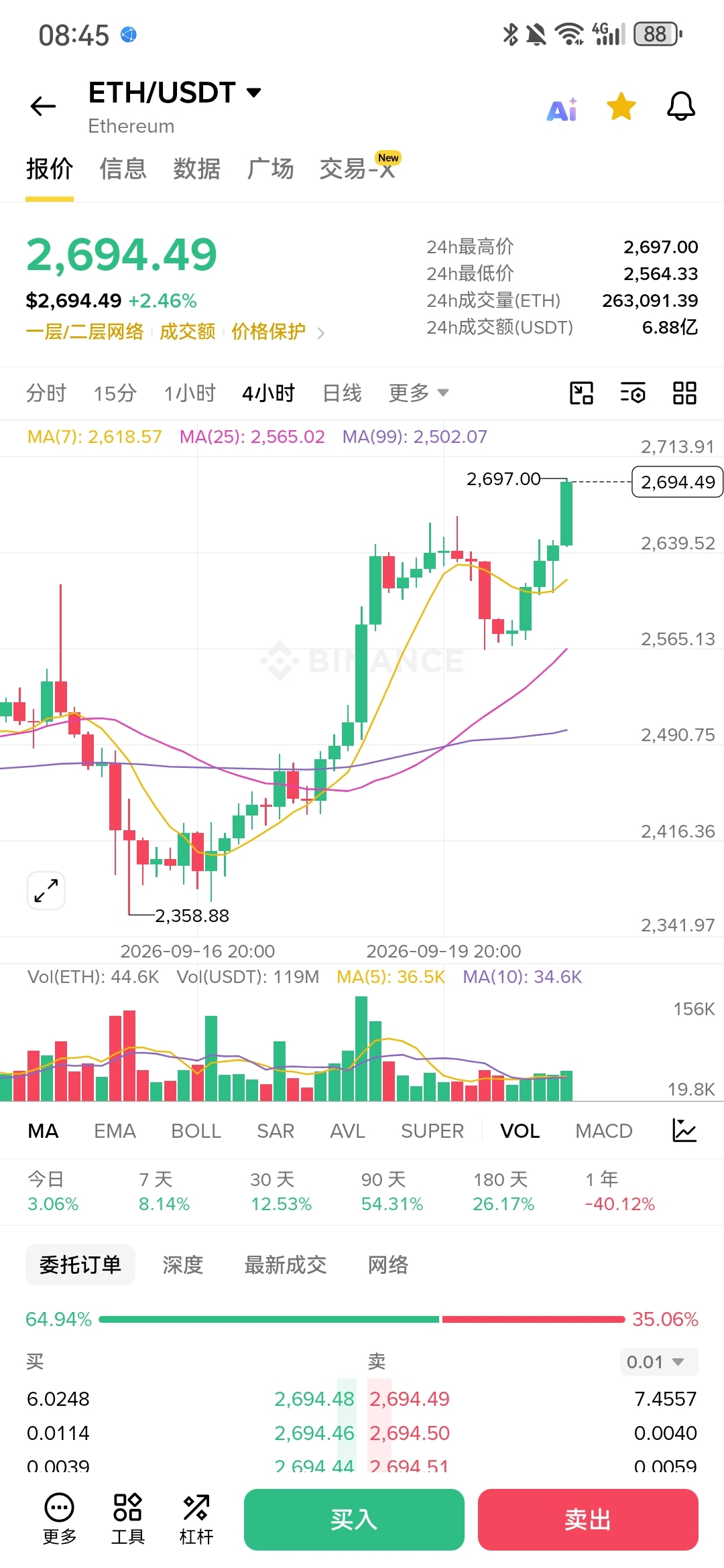
$ETH has returned to 2600— but this time it’s actually a bit different from before, huh~
Before, the rise was driven by retail FOMO.
But this time, the main force behind the rally is institutions stepping in.
Last Friday, the ETF net inflow for a single day was $144 million.
Just BlackRock alone took $114 million.
Even more intense: BlackRock’s Ethereum ETF has had net inflows for 20 straight trading days—no break at all.
What does that mean?
It means they’re quietly accumulating, not just playing a short-term trade~
So the question is: can you chase it?
Let me be honest: institutions may be buying, but it doesn’t mean the price won’t pull back.
ETH has already surged 75% from the August lows. Now it’s charging up to around 2600.
Above that, in the 2700–2800 zone, there are historical trapped positions—over 10 million ETH—sitting there as a hard obstacle. This isn’t something that’s just going to break through overnight.
So my personal view is very straightforward: chasing at the 2600 level isn’t great on value-for-money.
Institutional cost is much lower than this price. When you enter now, you’re basically lifting the sedan for them—ha~
If you genuinely believe in ETH, my personal suggestion is:
wait for a pullback to the 2400–2500 range and then buy in batches—more suitable.
Everyone, don’t get carried away just because you see one big bullish candle. This market is specially good at teaching people who aren’t convinced how it feels 😂😂
If you have other different opinions, feel free to leave them in the comments and let’s discuss 🥳
#以太坊重回2600美元
Before, the rise was driven by retail FOMO.
But this time, the main force behind the rally is institutions stepping in.
Last Friday, the ETF net inflow for a single day was $144 million.
Just BlackRock alone took $114 million.
Even more intense: BlackRock’s Ethereum ETF has had net inflows for 20 straight trading days—no break at all.
What does that mean?
It means they’re quietly accumulating, not just playing a short-term trade~
So the question is: can you chase it?
Let me be honest: institutions may be buying, but it doesn’t mean the price won’t pull back.
ETH has already surged 75% from the August lows. Now it’s charging up to around 2600.
Above that, in the 2700–2800 zone, there are historical trapped positions—over 10 million ETH—sitting there as a hard obstacle. This isn’t something that’s just going to break through overnight.
So my personal view is very straightforward: chasing at the 2600 level isn’t great on value-for-money.
Institutional cost is much lower than this price. When you enter now, you’re basically lifting the sedan for them—ha~
If you genuinely believe in ETH, my personal suggestion is:
wait for a pullback to the 2400–2500 range and then buy in batches—more suitable.
Everyone, don’t get carried away just because you see one big bullish candle. This market is specially good at teaching people who aren’t convinced how it feels 😂😂
If you have other different opinions, feel free to leave them in the comments and let’s discuss 🥳
#以太坊重回2600美元

白鲨观点马来西亚
·
--
Recently I discovered a pretty interesting pattern:
In the crypto world, the more high-profile someone is, the faster they tend to disappear.
Those who shout trade signals in groups every day, who post their luxury cars and mansions on their朋友圈 (friend circle), and who constantly say how many times they’ve profited—when you look back half a year later, chances are you won’t be able to find them anymore. Either they’ve lost everything and left the scene, or they’ve cashed out after cutting the “leeks” and run, or they just go silent and pretend to be dead the moment the market turns sour.
On the other hand, the people who usually don’t talk much and quietly place trades—if you check on them after three to five years, they’re still there. The money in their accounts may not be the most, but it keeps growing steadily year by year. When the market is good, they make more; when the market is bad, they lose less. That’s how they’ve managed to stay alive.
Why? Because high-profile people tend to get carried away mentally. After making a bit of money, they start to feel invincible—then they add leverage, try all kinds of tricks, and finally end up playing themselves to death. Low-key people, meanwhile, know the limits of their own ability. They know exactly what money they should earn and what they shouldn’t touch. They’re crystal clear in their head.
In trading, it’s different from other industries. In other fields, the more you show off, the better—you can attract customers and resources. But trading is different. The more you brag, the closer you get to dying. Because the market settles every kind of “you think you’re so great.” The more you feel you’re impressive, the more it wants to give you a lesson.
So yeah—“make money in silence” is the truth in the crypto world.
If you make money, don’t tell everyone. Just enjoy it quietly yourself.
The more low-key you are, the easier it is for the market to let you live longer.
#BinanceSquare #BTC #交易心得分享 #币圈观察
In the crypto world, the more high-profile someone is, the faster they tend to disappear.
Those who shout trade signals in groups every day, who post their luxury cars and mansions on their朋友圈 (friend circle), and who constantly say how many times they’ve profited—when you look back half a year later, chances are you won’t be able to find them anymore. Either they’ve lost everything and left the scene, or they’ve cashed out after cutting the “leeks” and run, or they just go silent and pretend to be dead the moment the market turns sour.
On the other hand, the people who usually don’t talk much and quietly place trades—if you check on them after three to five years, they’re still there. The money in their accounts may not be the most, but it keeps growing steadily year by year. When the market is good, they make more; when the market is bad, they lose less. That’s how they’ve managed to stay alive.
Why? Because high-profile people tend to get carried away mentally. After making a bit of money, they start to feel invincible—then they add leverage, try all kinds of tricks, and finally end up playing themselves to death. Low-key people, meanwhile, know the limits of their own ability. They know exactly what money they should earn and what they shouldn’t touch. They’re crystal clear in their head.
In trading, it’s different from other industries. In other fields, the more you show off, the better—you can attract customers and resources. But trading is different. The more you brag, the closer you get to dying. Because the market settles every kind of “you think you’re so great.” The more you feel you’re impressive, the more it wants to give you a lesson.
So yeah—“make money in silence” is the truth in the crypto world.
If you make money, don’t tell everyone. Just enjoy it quietly yourself.
The more low-key you are, the easier it is for the market to let you live longer.
#BinanceSquare #BTC #交易心得分享 #币圈观察


Elena神话MUA
·
--
Four months of refinement, one moment of blooming.
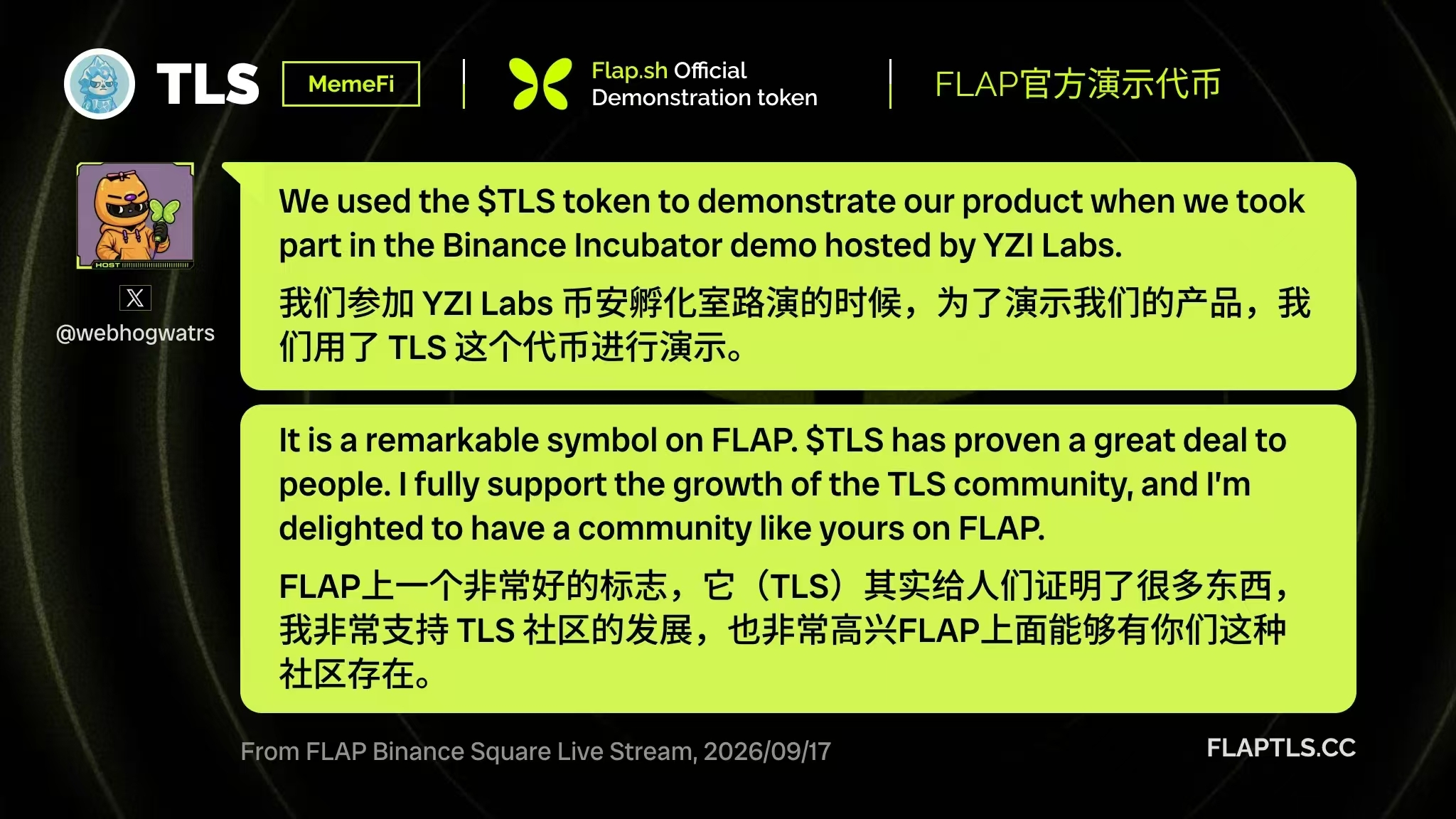
$TLS is officially announced as the FLAP official testing token—both the best reward for all who have stayed steadfast, and the brand-new beginning for building on the BNBChain ecosystem and taking aim at the #MemeFi arena.
As the ecosystem’s newly established official testing token, TLS aligns with the proven market-cap frameworks of TST and TUT. Leveraging FLAP’s current hottest Meme-launch ecosystem advantages, it benefits from exceptional growth potential. Unlike many speculative tokens in the market, TLS stands firm through genuine community building. With official endorsement, it solidifies the value foundation.
No short-term hype games—only long-term, deterministic value. In the future, $TLS will undoubtedly continue the market-cap legend of BNBChain’s official testing tokens, delivering a satisfying answer for every builder who has stayed committed.
$TLS is officially announced as the FLAP official testing token—both the best reward for all who have stayed steadfast, and the brand-new beginning for building on the BNBChain ecosystem and taking aim at the #MemeFi arena.
As the ecosystem’s newly established official testing token, TLS aligns with the proven market-cap frameworks of TST and TUT. Leveraging FLAP’s current hottest Meme-launch ecosystem advantages, it benefits from exceptional growth potential. Unlike many speculative tokens in the market, TLS stands firm through genuine community building. With official endorsement, it solidifies the value foundation.
No short-term hype games—only long-term, deterministic value. In the future, $TLS will undoubtedly continue the market-cap legend of BNBChain’s official testing tokens, delivering a satisfying answer for every builder who has stayed committed.
超人不会飞2020
·
--
Nietzsche was right: this world has no truth—only perspectives.


圣克斯Lucky1688
·
--
🧧🎁🌹🧧🎁🌹
Xiaomo is bullish on a Bitcoin short-squeeze scenario: In its latest report, JPMorgan Chase noted that BlackRock’s Bitcoin spot ETF (IBIT) has short positions nearing this year’s high point. This imbalance in open-contract ratios may create more upside for Bitcoin, because once the price rises, the short squeeze will further accelerate its rebound.
ZetaChain proposal approved—transitioning to Solana: With an overwhelming 99.4% support rate, the ZetaChain community passed Proposal No. 68. The vote will close its original Layer 1 blockchain and migrate and convert the ZETA token on a 1:1 basis into Solana-native SPL tokens. In the future, the team will focus on AI applications.
Follow me and answer to take away the $SOL red envelope!
🧧🎁🌹🧧🎁🌹
Xiaomo is bullish on a Bitcoin short-squeeze scenario: In its latest report, JPMorgan Chase noted that BlackRock’s Bitcoin spot ETF (IBIT) has short positions nearing this year’s high point. This imbalance in open-contract ratios may create more upside for Bitcoin, because once the price rises, the short squeeze will further accelerate its rebound.
ZetaChain proposal approved—transitioning to Solana: With an overwhelming 99.4% support rate, the ZetaChain community passed Proposal No. 68. The vote will close its original Layer 1 blockchain and migrate and convert the ZETA token on a 1:1 basis into Solana-native SPL tokens. In the future, the team will focus on AI applications.
Follow me and answer to take away the $SOL red envelope!
🧧🎁🌹🧧🎁🌹



分析师尤斯1688
·
--
🧧🎁

@钞机八蛋
is speaking[LIVE] 🎙️ Has this bull market already started?
6.4k listens


紫气东来M天官赐福
·
--
New mark, quick look! Fire alarm cat, claim your red envelope!


仙子131419
·
--
🔥🔥🔥🔥🔥🔥 The fire-alarm cat’s train has departed 👉👉👉 for you and me who are on the road to financial freedom 👌👌👌 Let’s welcome everyone who can board this train to financial freedom and keep it up 💪💪💪💪💪💪




猫咪神9527
·
--
🔥🔥Fire alarm cat🔥🔥🔥
Make those who believe earn 100 times,
🔥🔥🔥🔥🔥🔥🔥
Make those who work hard earn 1,000 times,
🔥🔥🔥🔥🔥🔥🔥
Make those who keep going earn 10,000 times,
🔥🔥🔥🔥🔥🔥🔥
Make those who doubt regret it.
Make those who believe earn 100 times,
🔥🔥🔥🔥🔥🔥🔥
Make those who work hard earn 1,000 times,
🔥🔥🔥🔥🔥🔥🔥
Make those who keep going earn 10,000 times,
🔥🔥🔥🔥🔥🔥🔥
Make those who doubt regret it.




奋斗Hustle1688
·
--
[Replay] 🎙️ Wishing everyone a Happy Mid-Autumn Festival in advance! What’s the most creative Mid-Autumn meme this year?
02 h 29 m 50 s · 3.3k listens

火警猫1688
·
--
🔥Fire alarm cat🐱
Steady upward trend✈️Breaking through continuously🚀
🔥🔥🔥🔥🔥🔥
🧧🧧🧧🧧🧧🧧🧧🧧🧧🧧🧧
Steady upward trend✈️Breaking through continuously🚀
🔥🔥🔥🔥🔥🔥
🧧🧧🧧🧧🧧🧧🧧🧧🧧🧧🧧


Muzamil Abbas⁷⁵ 穆扎米尔_阿巴斯
·
--
Bullish$DOGE
🐕 $50 DOGE GIVEAWAY! 🎁
Let’s make today a little more fun
I’m giving away $50 worth of DOGE to 2500 lucky winner 🐶💰
To participate:
✅ Follow me
❤️ Like this post
🔁 Repost this post
💬 Comment “1” below
That’s it! 😎
2500 lucky winners will receive $50 in DOGE 🎁🔥
Good luck everyone! 🍀
Let’s see who gets the DOGE bag today🐕
#MuzammilAbbas⁷⁵穆扎米拉巴斯
$ONE
$G
🐕 $50 DOGE GIVEAWAY! 🎁
Let’s make today a little more fun
I’m giving away $50 worth of DOGE to 2500 lucky winner 🐶💰
To participate:
✅ Follow me
❤️ Like this post
🔁 Repost this post
💬 Comment “1” below
That’s it! 😎
2500 lucky winners will receive $50 in DOGE 🎁🔥
Good luck everyone! 🍀
Let’s see who gets the DOGE bag today🐕
#MuzammilAbbas⁷⁵穆扎米拉巴斯
$ONE
$G


阿婧1688
·
--
[Ended] 🎙️ The good one is continuously being built.
1.5k listens
易琳Ten
·
--
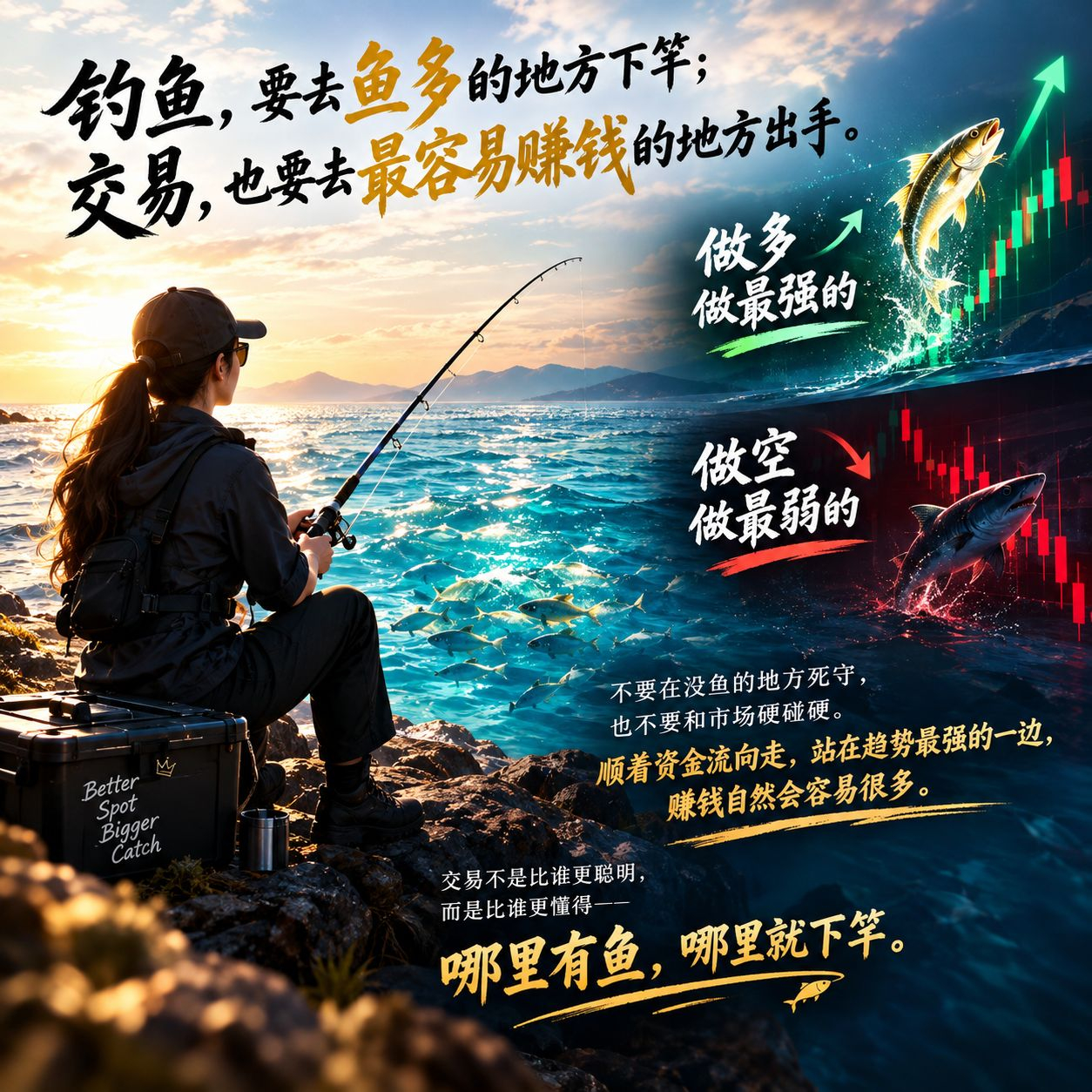
Fishing, you should go to places with lots of fish to cast your line;
Trading, you should go to the places where it’s easiest to make money to place your orders.
Go long—choose the strongest.
Go short—choose the weakest.
Don’t hold your ground where there are no fish, and don’t clash head-on with the market.
Follow the direction of the capital flows; stand on the side where the trend is strongest, and making money will naturally be much easier.
Trading isn’t about who is smarter,
but about who understands better—where there are fish, that’s where you cast your line. 🎣📈
Trading, you should go to the places where it’s easiest to make money to place your orders.
Go long—choose the strongest.
Go short—choose the weakest.
Don’t hold your ground where there are no fish, and don’t clash head-on with the market.
Follow the direction of the capital flows; stand on the side where the trend is strongest, and making money will naturally be much easier.
Trading isn’t about who is smarter,
but about who understands better—where there are fish, that’s where you cast your line. 🎣📈
易琳Ten
·
--
Trade
Be content and always happy,
stable compound interest,
slow and steady progress.
Be content and always happy,
stable compound interest,
slow and steady progress.



Log in to explore more content