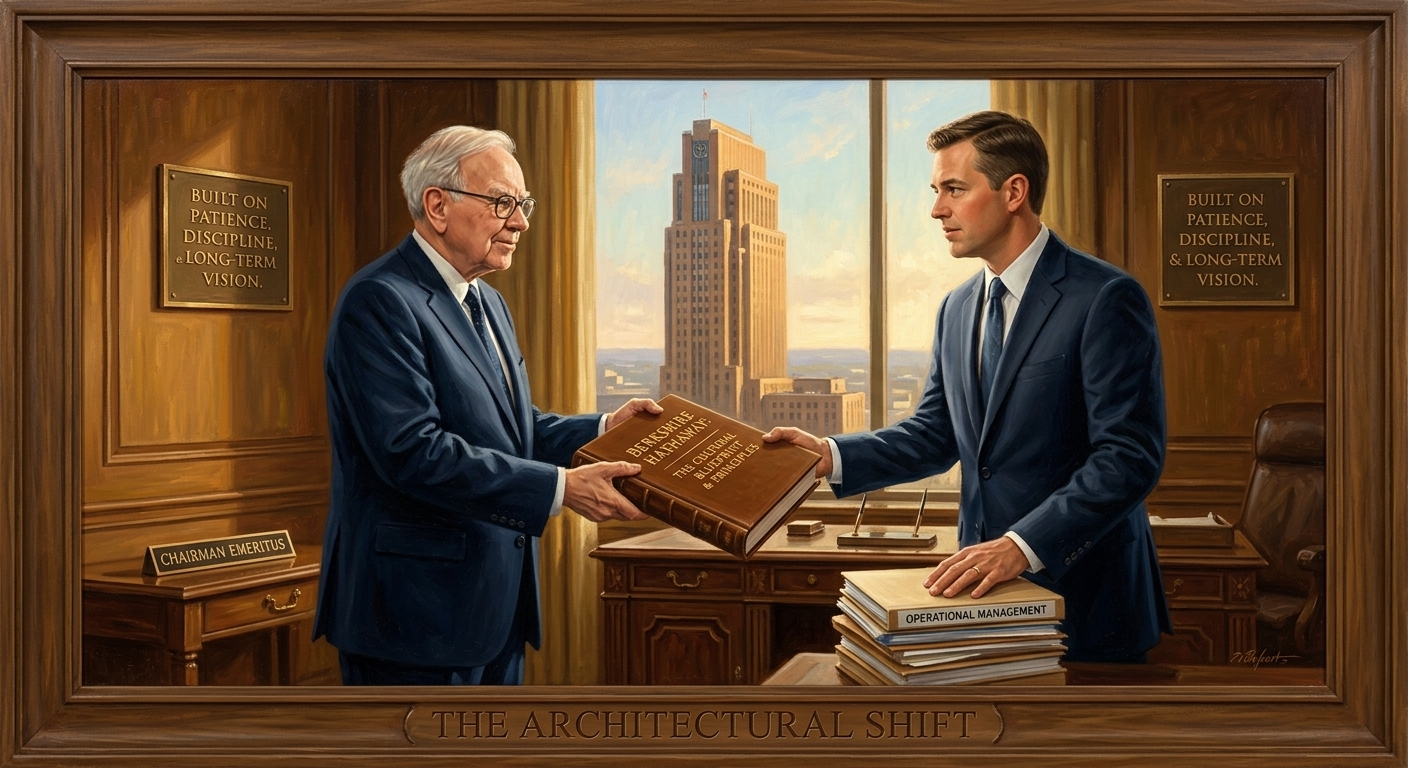
The landscape of American finance changed fundamentally on September 18. Warren Buffett, the "Oracle of Omaha," officially retired from his role as Chairman of Berkshire Hathaway, marking the true end of a corporate era and the beginning of a meticulously designed new phase.
A Legacy Structurally Preserved
Buffett’s departure isn't a simple sunset; it's an exercise in masterful corporate engineering. He is not fully gone; he remains on the board as Chairman Emeritus.
The transition is defined by a strategic separation of power, intended to ensure the conglomerate thrives without him at the absolute helm:
Operation Leadership: Greg Abel remains CEO, the role he has held for some time, continuing to run Berkshire's massive and diverse business operations.
Cultural Stewardship: Howard Buffett, Warren’s son, steps into the role of Non-Executive Chairman. His primary responsibility isn't picking stocks; it's preserving the unique culture, discipline, and principles that his father built over decades.
The Real Legacy: Building for Continuity
For years, investors obsessively asked, "What would Warren Buffett do?" The question has now evolved into a more critical institutional challenge: "Can Berkshire maintain its discipline without Buffett in the driver's seat?"
This structured transition suggests that Buffett's most defining contribution isn't a single brilliant investment. Rather, his true legacy is proving that a long-term, principle-driven investment culture can be enshrined to outlast the individual who created it.
This lesson resonates deeply, even within the volatile world of crypto. While markets shift rapidly, durable financial systems—whether traditional or decentralized—still depend on patience, capital discipline, transparency, and clear leadership continuity.
A great legacy is defined by what remains after the architect leaves the site.
❓ The Debate: What Happens Next?
Do you believe the next chapter of Berkshire Hathaway will be more defined by Buffett's enduring principles, or by Greg Abel's operational decisions?
Disclaimer: This content is for educational and informational purposes only and does not constitute financial advice. All investments carry risk, and market conditions can change rapidly.