
奋斗Hustle-1688
267 Posts

奋斗Hustle-1688
Web3.AI.RWA|币安活跃创作者|BTC与BNB持有者|每日16点---18:30点直播--KOL宣发&项目推广|AMA项目合作--币安广场直播打包宣发
Open Trade
Frequent Trader
5.6 Months
878 Following
28.1K+ Followers
6.6K+ Liked
Posts
Portfolio
All
Quotes
Live

@周周1688
is speaking[LIVE] 🎙️ Let’s talk about trading and do an AMA together!
8.5k listens



奋斗Hustle1688
·
--
[Replay] 🎙️ DCA into BNB. As Buffett said: When others are fearful I am greedy; when others are greedy I am hesitant—so what?
02 h 48 m 57 s · 3.7k listens
🎙️ Dollar-cost averaging BNB, as Buffett said: When others are fearful I’m greedy, when others are greedy I’m used to being fearful?

End
02 h 48 m 57 s
3.6k
17

晚风Vesper_1688
·
--
[Replay] 🎙️ Get the butterflies🦋C to 80M🚀🚀🚀
02 h 44 m 43 s · 1.2k listens

Elena神话MUA
·
--
[Replay] 🎙️ Holding BNB 🤗, let’s build the square together 🤗
04 h 01 m 32 s · 4.2k listens

叮当 Doraemon
·
--
The second half of AI profit distribution: who’s winning, who’s still undecided, and who’s about to be disrupted
Now’s AI and tomorrow’s AI
If we divide the AI industry chain into upstream equipment, midstream cloud providers, and large model companies, then the downstream is application companies. Currently, almost all the profits in the industry are concentrated in the upstream. For example, just Nvidia (NVDA.US) plus the four major storage manufacturers take nearly 70% of the industry’s profits.
This kind of profit distribution shows the typical characteristics of the early stage of a new technology revolution. But let’s think: in the future, the charging entry points for the AI industry won’t be cloud providers or downstream application companies—so will profit distribution still look like this?
Taking a mature internet industry as an example, the approximate proportions of economic profit distribution are:
If we divide the AI industry chain into upstream equipment, midstream cloud providers, and large model companies, then the downstream is application companies. Currently, almost all the profits in the industry are concentrated in the upstream. For example, just Nvidia (NVDA.US) plus the four major storage manufacturers take nearly 70% of the industry’s profits.
This kind of profit distribution shows the typical characteristics of the early stage of a new technology revolution. But let’s think: in the future, the charging entry points for the AI industry won’t be cloud providers or downstream application companies—so will profit distribution still look like this?
Taking a mature internet industry as an example, the approximate proportions of economic profit distribution are:


安然Alpha
·
--
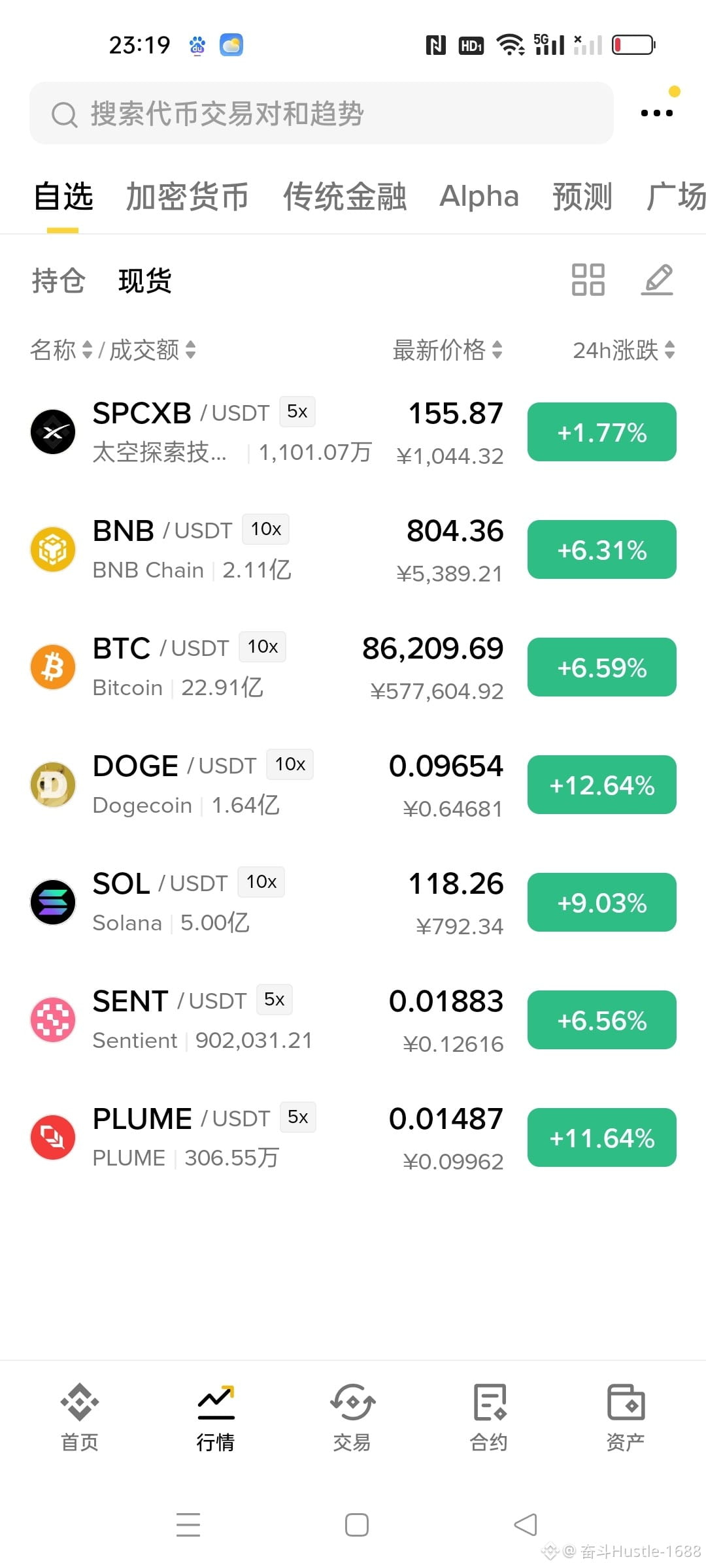
Bullish$BNB This wave has me genuinely getting more and more FOMO.
It’s not because it’s up by how much—it's because these numbers put together are just too interesting.
Binance:
24H net inflow +378 million
7D +1.394 billion
30D +4.259 billion USD
This shows the money is still continuously flowing into the platform.
Now look at BNB:
OI fell from 646k to 622k, nearly -4%, but the price is still holding around 800.
The leverage got washed out, yet the price hasn’t dropped much. I actually like this kind of structure more.
Funding rate is about 0.0097%, not overheated;
Big holders’ long/short ratio is 1.75—still skewed long;
In 1 hour, the active buy/sell ratio is 1.17, and the buy orders are back again.
So my conclusion is very straightforward:
Binance is pulling in capital,
BNB is deleveraging at high levels,
and the funds haven’t clearly withdrawn yet.
As long as it stays above 790, I’ll keep looking for longs;
If it breaks above 808, then watch for 820–830.
What I’m afraid of isn’t a drop.
It’s that by the time everyone reacts, this 800 level won’t be offered anymore.
#bnb
It’s not because it’s up by how much—it's because these numbers put together are just too interesting.
Binance:
24H net inflow +378 million
7D +1.394 billion
30D +4.259 billion USD
This shows the money is still continuously flowing into the platform.
Now look at BNB:
OI fell from 646k to 622k, nearly -4%, but the price is still holding around 800.
The leverage got washed out, yet the price hasn’t dropped much. I actually like this kind of structure more.
Funding rate is about 0.0097%, not overheated;
Big holders’ long/short ratio is 1.75—still skewed long;
In 1 hour, the active buy/sell ratio is 1.17, and the buy orders are back again.
So my conclusion is very straightforward:
Binance is pulling in capital,
BNB is deleveraging at high levels,
and the funds haven’t clearly withdrawn yet.
As long as it stays above 790, I’ll keep looking for longs;
If it breaks above 808, then watch for 820–830.
What I’m afraid of isn’t a drop.
It’s that by the time everyone reacts, this 800 level won’t be offered anymore.
#bnb


花涧空
·
--
🚨 This week in US financial markets: a new plot every day:
On Monday, the Senate voted 49–50 to reject the CLARITY Act. The most comprehensive crypto market-structure bill in history was killed outright.
On Tuesday, they raised rates.
On Wednesday, SEC Chair Paul Atkins left only one line: “Stay tuned.”
On Thursday, the SEC acted on its own without showing up in Congress, issuing an innovative exemption order.
CLARITY had been dead for just two days, and the SEC already moved on its own.
On Friday, the market exploded upward: $BTC
$ETH
What plots were lined up for the weekend?
On Monday, the Senate voted 49–50 to reject the CLARITY Act. The most comprehensive crypto market-structure bill in history was killed outright.
On Tuesday, they raised rates.
On Wednesday, SEC Chair Paul Atkins left only one line: “Stay tuned.”
On Thursday, the SEC acted on its own without showing up in Congress, issuing an innovative exemption order.
CLARITY had been dead for just two days, and the SEC already moved on its own.
On Friday, the market exploded upward: $BTC
$ETH
What plots were lined up for the weekend?

圣克斯Lucky1688
·
--
🧧🎁🌹🧧🎁🌹
Xiaomo is bullish on a Bitcoin short-squeeze scenario: In its latest report, JPMorgan Chase noted that BlackRock’s Bitcoin spot ETF (IBIT) has short positions nearing this year’s high point. This imbalance in open-contract ratios may create more upside for Bitcoin, because once the price rises, the short squeeze will further accelerate its rebound.
ZetaChain proposal approved—transitioning to Solana: With an overwhelming 99.4% support rate, the ZetaChain community passed Proposal No. 68. The vote will close its original Layer 1 blockchain and migrate and convert the ZETA token on a 1:1 basis into Solana-native SPL tokens. In the future, the team will focus on AI applications.
Follow me and answer to take away the $SOL red envelope!
🧧🎁🌹🧧🎁🌹
Xiaomo is bullish on a Bitcoin short-squeeze scenario: In its latest report, JPMorgan Chase noted that BlackRock’s Bitcoin spot ETF (IBIT) has short positions nearing this year’s high point. This imbalance in open-contract ratios may create more upside for Bitcoin, because once the price rises, the short squeeze will further accelerate its rebound.
ZetaChain proposal approved—transitioning to Solana: With an overwhelming 99.4% support rate, the ZetaChain community passed Proposal No. 68. The vote will close its original Layer 1 blockchain and migrate and convert the ZETA token on a 1:1 basis into Solana-native SPL tokens. In the future, the team will focus on AI applications.
Follow me and answer to take away the $SOL red envelope!
🧧🎁🌹🧧🎁🌹


Quoted content has been removed

英鸿³³₇
·
--
[Replay] 🎙️ Learn to wait patiently, and find the trading method that suits you best
02 h 07 m 38 s · 3.7k listens
🎙️ Learn to wait patiently and find the right trading method for yourself

End
02 h 07 m 38 s
3.5k
13

Quoted content has been removed

Mira小白桃
·
--
📈 The broad market is surging hard—can it really be only because the “bad news has been fully digested”?
But I think we can’t just look at this one point.
What’s more worth paying attention to is:
price structure, fund flows, and changes in market selling pressure.
$BTC has moved back above the 50-week moving average. In the historical data, after recapturing this line, many times it means the market’s weakest phase may have already passed.
At the same time, recently BTC spot ETFs have seen renewed inflows, and the selling pace from long-term holders has also clearly slowed.
In short:
Selling pressure is weakening, and buyers are starting to take the initiative again.
So right now I’m actually not very willing to short directly on Monday.
So how should we look at this week?
My idea is very simple:
Don’t rush to short on Monday—wait for trend confirmation on Tuesday and Wednesday.
For BTC support, I’m mainly watching around the 79K area.
As long as after a pullback it can hold, the strong structure hasn’t been broken.
On the upside, I’m watching the resistance zone at 82K—83K.
If it can break through effectively and hold above it, the market may continue seeking room toward higher levels.
So don’t, just because it’s already risen a lot, immediately guess the top.
Rising a lot doesn’t mean it’s going to drop right away.
$ETH is the same as well.
The second coin (二饼) has returned to around 2700. On top, the key focus is the 2700—2800 region.
Because a bull market doesn’t rise in a straight line every day.
In a real uptrend, there will definitely be pullbacks in between.
It might rally high and then fall back, or it might suddenly wick upward to wash out the chasing long positions.
So my approach is still:
First look for longs → hit the resistance zone → guard against a shakeout → pullback and confirm.
If the structure hasn’t broken, then we look at the next leg.
So what I want to say right now is just one sentence:
Wait for shorts.
It’s not that there’s no chance to short—it's that we’re not at the level where I want to short yet.
If BTC and ETH continue to hold key support, it means the bulls are still in control.
Wait until you reach the big resistance overhead and see a clear stall and a volume-backed pullback—then observe the short opportunity.
Trading isn’t about starting to guess the top just because it’s gone up a lot.
What matters is knowing when to act and when to wait.
My plan for this week:
Bias is bullish—wait for confirmation by levels.
Be patient on Monday; confirm on Tuesday and Wednesday.
When the bull run comes, it won’t move only one step.
After the rally, the pullback/shakeout is actually the opportunity we should be waiting for.
But I think we can’t just look at this one point.
What’s more worth paying attention to is:
price structure, fund flows, and changes in market selling pressure.
$BTC has moved back above the 50-week moving average. In the historical data, after recapturing this line, many times it means the market’s weakest phase may have already passed.
At the same time, recently BTC spot ETFs have seen renewed inflows, and the selling pace from long-term holders has also clearly slowed.
In short:
Selling pressure is weakening, and buyers are starting to take the initiative again.
So right now I’m actually not very willing to short directly on Monday.
So how should we look at this week?
My idea is very simple:
Don’t rush to short on Monday—wait for trend confirmation on Tuesday and Wednesday.
For BTC support, I’m mainly watching around the 79K area.
As long as after a pullback it can hold, the strong structure hasn’t been broken.
On the upside, I’m watching the resistance zone at 82K—83K.
If it can break through effectively and hold above it, the market may continue seeking room toward higher levels.
So don’t, just because it’s already risen a lot, immediately guess the top.
Rising a lot doesn’t mean it’s going to drop right away.
$ETH is the same as well.
The second coin (二饼) has returned to around 2700. On top, the key focus is the 2700—2800 region.
Because a bull market doesn’t rise in a straight line every day.
In a real uptrend, there will definitely be pullbacks in between.
It might rally high and then fall back, or it might suddenly wick upward to wash out the chasing long positions.
So my approach is still:
First look for longs → hit the resistance zone → guard against a shakeout → pullback and confirm.
If the structure hasn’t broken, then we look at the next leg.
So what I want to say right now is just one sentence:
Wait for shorts.
It’s not that there’s no chance to short—it's that we’re not at the level where I want to short yet.
If BTC and ETH continue to hold key support, it means the bulls are still in control.
Wait until you reach the big resistance overhead and see a clear stall and a volume-backed pullback—then observe the short opportunity.
Trading isn’t about starting to guess the top just because it’s gone up a lot.
What matters is knowing when to act and when to wait.
My plan for this week:
Bias is bullish—wait for confirmation by levels.
Be patient on Monday; confirm on Tuesday and Wednesday.
When the bull run comes, it won’t move only one step.
After the rally, the pullback/shakeout is actually the opportunity we should be waiting for.


大丽7613
·
--
This is badass!
The Clarity Act was rejected, but the SEC opened an even bigger door for Bitcoin?
Just last Wednesday, after Congress flat-out rejected Clarity, the SEC suddenly made a move and rolled out a five-year “innovation exemption,” allowing eligible platforms to truly move U.S. exchange-listed stocks like Apple and Nvidia onto the blockchain for trading—including dividends and voting rights.
In other words, whether the Clarity Act passes or not doesn’t matter. I’ll just treat it as if it passed—because the SEC says so!
Look at this—this is official, national-level backing, and the market has already answered immediately: Bitcoin is back above $80,000, rising more than 5% at one point during the day. Crypto-related stocks rebounded in sync. Add the recent positive developments from a U.S.-China meeting, and the trend immediately starts to reverse. Bitcoin then quickly tests the major double-top resistance again around $82,000.
What’s even more interesting is that before the SEC’s announcement, the always-stubborn JPMorgan quietly flipped its stance. It said: Bitcoin ETFs are currently still weighed down by a whole bunch of shorts and hedging positions. Once those positions ease and begin to unwind, Bitcoin’s upside momentum could even be more ferocious than gold.
So the situation right now is this:
Congressional legislation can’t get through for the time being, so the SEC and CFTC will push forward using their regulatory authority instead—and the end result is the same!
On top of that, Clairty will also review the decision again in a few months. By then, the crypto market will definitely catch another wave of heat—could we be talking about a 10,000-point surge?
The Clarity Act was rejected, but the SEC opened an even bigger door for Bitcoin?
Just last Wednesday, after Congress flat-out rejected Clarity, the SEC suddenly made a move and rolled out a five-year “innovation exemption,” allowing eligible platforms to truly move U.S. exchange-listed stocks like Apple and Nvidia onto the blockchain for trading—including dividends and voting rights.
In other words, whether the Clarity Act passes or not doesn’t matter. I’ll just treat it as if it passed—because the SEC says so!
Look at this—this is official, national-level backing, and the market has already answered immediately: Bitcoin is back above $80,000, rising more than 5% at one point during the day. Crypto-related stocks rebounded in sync. Add the recent positive developments from a U.S.-China meeting, and the trend immediately starts to reverse. Bitcoin then quickly tests the major double-top resistance again around $82,000.
What’s even more interesting is that before the SEC’s announcement, the always-stubborn JPMorgan quietly flipped its stance. It said: Bitcoin ETFs are currently still weighed down by a whole bunch of shorts and hedging positions. Once those positions ease and begin to unwind, Bitcoin’s upside momentum could even be more ferocious than gold.
So the situation right now is this:
Congressional legislation can’t get through for the time being, so the SEC and CFTC will push forward using their regulatory authority instead—and the end result is the same!
On top of that, Clairty will also review the decision again in a few months. By then, the crypto market will definitely catch another wave of heat—could we be talking about a 10,000-point surge?
大丽7613
·
--
[Replay] 🎙️ Live trading together, AMA
02 h 24 m 57 s · 10.7k listens

Quoted content has been removed
Log in to explore more content