
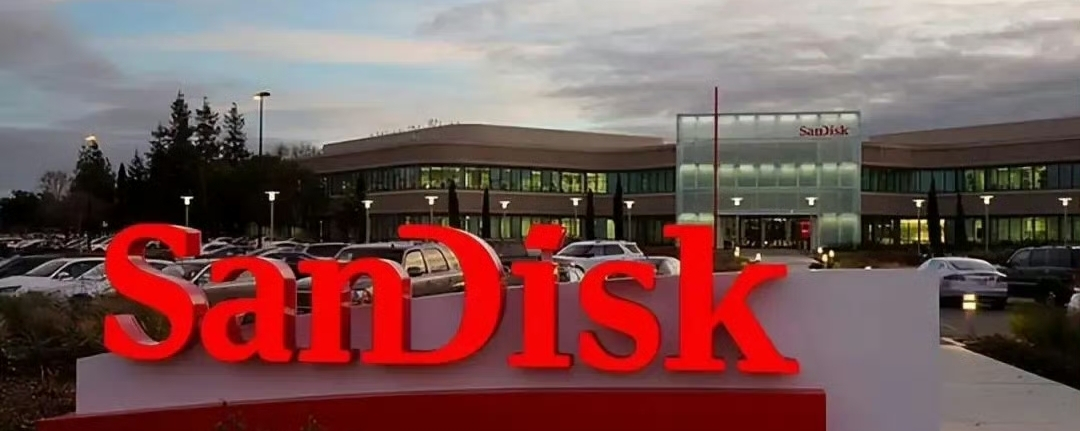


#闪迪9月21日正式纳入标普100 Before the U.S. stock market opened on September 21, SanDisk (SNDK) will be officially added to the S&P 100 index. Also entering in the same batch are Dell, Palo Alto Networks, and Arista Networks. They will replace long-established blue-chip names such as Nike and Colgate. After the news broke, SanDisk surged nearly 8% on September 18, with a market cap of about $250 billion.
If you only understand this as “index inclusion = passive buying = a bullish signal,” then what you may see is merely ripples on the surface. Index adjustments will certainly bring in allocation funds, but it’s more like a mirror—it reflects how storage chips’ position in AI infrastructure is shifting.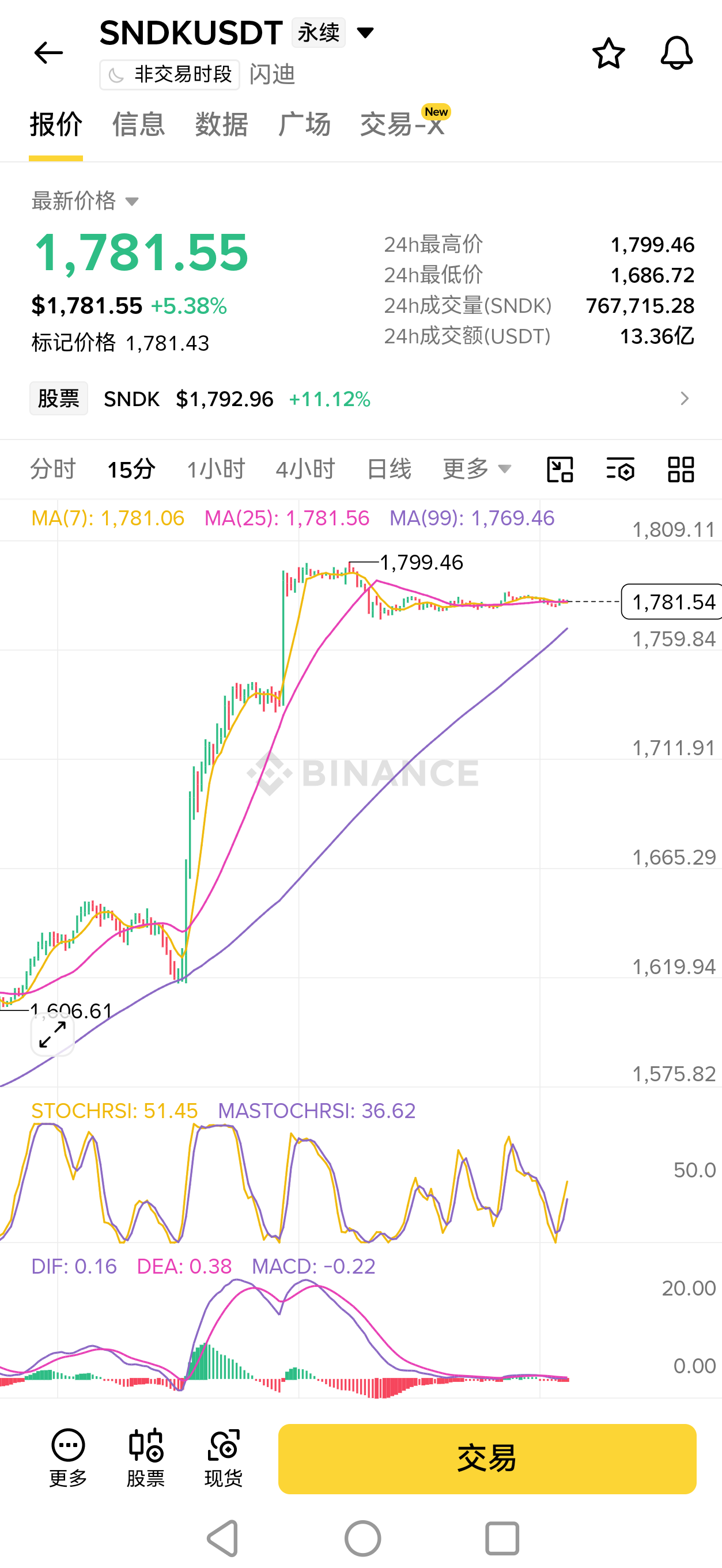
Compared with short-term funding-market pulses, what’s more worth breaking down is the S&P Index Committee’s selection logic. It places SanDisk, a specialist NAND flash manufacturer, into the selected list of the 100 largest blue-chip companies in the S&P 500, while removing the consumer brand Nike. The message behind this is very clear: the strategic role of memory chips in AI infrastructure has been upgraded from a “supporting actor” to a “core asset.” SanDisk’s stock has gained more than 600% this year, making it the best-performing stock in the entire S&P 500.
However, when narrative heat is high enough, what’s truly scarce isn’t consensus—it’s scrutiny of the consensus itself. The market can easily be ignited by being “included in the index,” but there are a few data points worth looking at calmly:
First, the price increase is narrowing. In 2026 Q2, NAND contract prices rose 70%-75% quarter-over-quarter, but the estimated increase for Q3 has fallen to 10%-15%. Prices are still going up, but the pace is slowing.
Second, 2027 could be the true turning point. According to the latest assessment from TrendForce, with new production capacity concentrated and terminal consumer demand weakening, in the second half of 2027 the supply of NAND Flash will tend toward a looser balance, and prices may face downward pressure. The former head of Samsung Semiconductor has also publicly predicted that the super memory cycle may end in the second half of 2027.
Third, SanDisk’s valuation is already priced at a high level. Bank of America set a target price of $2,500, based on an estimated 2027 EPS of about $255 and a 10x P/E ratio. This implies the market has already fully priced in high growth expectations for the next two years, leaving limited room for “upside surprises.”

If the first two points are the natural swing-back of an industry pendulum, then the third point is more like a reminder: when the market prices in high growth for the next two years, the room for “upside surprise” gets squeezed.
So my view is: index inclusion is a short-term catalyst, but it isn’t the steering wheel of the cycle. SanDisk’s fundamentals remain strong—Q4 revenue grew 372% year over year, and gross margin rose to 84.6%—and AI data center demand for NAND is indeed still there. But the “most comfortable phase for odds” may be passing.
The real window to watch isn’t September 21—it’s the first half of 2027. At that time, the pace of new capacity ramp-up, the real growth rate of AI inference demand, and the inventory levels in consumer electronics will collectively determine whether this cycle achieves a soft landing or turns abruptly.
The super cycle for storage chips won’t last forever, but it also won’t end overnight. Inclusion in the S&P 100 is a milestone. And the meaning of a milestone is never the endpoint—it’s a reminder to recalibrate our coordinates 🏁 $SNDK
What do you think about SanDisk getting on board this time? How much farther can the memory cycle run? Let’s discuss in the comments section👇 #加密货币 #加密市场