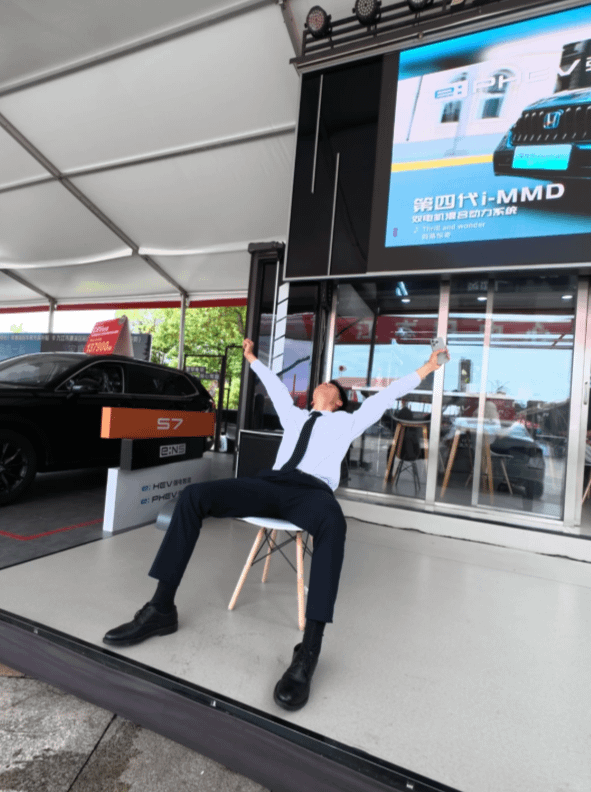

Many industry friends have privately messaged me: “Bro, I’m tight on cash right now. Between my mortgage and car loan payments, I can’t even catch my breath. Can I use contracts to somehow earn enough to cover this month’s expenses?” Every time I see a message like this, my stomach tightens. Today I’ll share the story of a fan, Xiao Liu. Xiao Liu is 26 this year. A few years ago, he worked in car sales. At the height of his success, he could move a dozen or more cars in a single month, and just in commissions he would make several ten-thousand yuan. Young people have more disposable income and tend to spend lavishly. They feel making money is effortless and that they’re basically unstoppable. This mindset is a trap that many people in high-commission industries fall into: mistaking industry tailwinds for personal ability, and lacking respect for cash flow and risk.
Xiao Liu joined the industry purely by chance. There was an older customer at the shop who often asked him to look at cars and handle maintenance. After they got familiar, they started talking about investing. The customer told him the logic behind BTC. At the time, Xiao Liu had a few hundred thousand yuan saved from selling a car. With the mindset of using spare money to test the waters, he put a few thousand U in. Coincidentally, a good run of market action arrived. Spot and low-leverage returns doubled directly. That was the first time he felt the power of asset growth—much faster than sitting in the scorching sun, helping customers test-drive and bring cars home.
The real turning point came when the auto industry entered its off-season lull. For several months, the showroom doors were almost empty, and Xiao Liu’s commissions dropped off a cliff, but his rent, car loan payments, and high-spending lifestyle didn’t ease up. The anxiety of living beyond his means instantly swallowed him. That was when he made the most fatal mistake in trading: treating the contract as a “substitute for wages.” Every time the market opened, he wasn’t thinking about price action—he was thinking, “This deal must make 3,000 yuan to pay the rent,” and “That one needs 5,000 yuan to pay off my credit card.” The more pressure he felt, the more his actions became distorted. To quickly scrape together living expenses, he started going heavy positions frequently, holding trades, and chasing rallies and selling during sell-offs. In the days when the market reversed quickly, after losing several trades in a row, he panicked completely. Trying to make it back fast ended up consuming not only the profits he had built up, but also all the savings he’d accumulated—and he even racked up credit card debt.
In despair, Xiao Liu lay in his rental room, staring at overdue notices, and finally woke up completely. He realized that relying on trading to maintain daily life was like running a marathon in worn-out shoes: the more urgently you try to turn things around, the more easily you’ll end up pressing every last chip all at once. He immediately stopped, adjusted his work rhythm again, and went around nearby used-car markets and showrooms—first bringing his sales performance back to normal. At the same time, he absolutely separated his living expenses from his trading funds: living expenses went into a fixed-term account, and the trading account only held a tiny amount he could afford to lose. After every profitable trade, he withdrew 50% to top up his emergency reserve—never rolling positions blindly. After an entire year of adjustment, he not only paid off his debts, but also saved enough cash-flow reserves to support half a year of living. His trading mindset also shifted from frantic to calm.
Not long ago, Xiao Liu chatted with me and sighed, “Bro, when you’re at a low point, the most likely mistake you’ll make is rushing to turn things around. The more you’re in a hurry, the more likely you are to push all the remaining chips into one go. Let the cash flow get moving first, then talk about doubling your account.” Every word in that sentence hits the mark. Trading requires extremely cool-headed decision-making. When you enter the market with the anxiety of “this will save me,” the market becomes your meat grinder. Cash flow is your backer. Stop-losses are your brakes. Staying patient is the foundation that lets you survive in this circle.
If you’re also in a state of “tight funds, the more you rush the more you lose, and watching the charts makes you anxious,” don’t try to tough it out alone. Our team shares every day rigorous risk-control strategies, position-allocation recommendations, and real-time analysis of what’s happening in the market. Join our community and trade alongside people who respect the rules and stay disciplined. First stabilize your cash flow for life, then slowly rebuild the confidence that truly belongs to you.$龙虾 $牛来 $STAR