
乘风Sunshine
413 Posts

乘风Sunshine
币安合约现货永久八折返佣码:CFCF888 |X推特@KeShiqing57753|接KOL宣发&项目推广|

SOL Holder
Frequent Trader
1.7 Years
367 Following
26.1K+ Followers
10.3K+ Liked
Posts
All
Quotes
Videos
PINNED




路飞社区糖宝Luffy
·
--
The scenery outside the window is so beautiful—$SOL —so much to appreciate. You will only get better and better.


美国大总统
·
--
No matter what you do, you must always maintain a positive and striving mindset. Never complain over a small setback, and don’t give up or slack off. Don’t forget why you entered society in the first place. Only by doing things seriously and taking responsibility for yourself do you have a chance to pull through. Remember: you must keep away from the people around you who bring negativity to yourself.


Hawk 刘哥
·
--
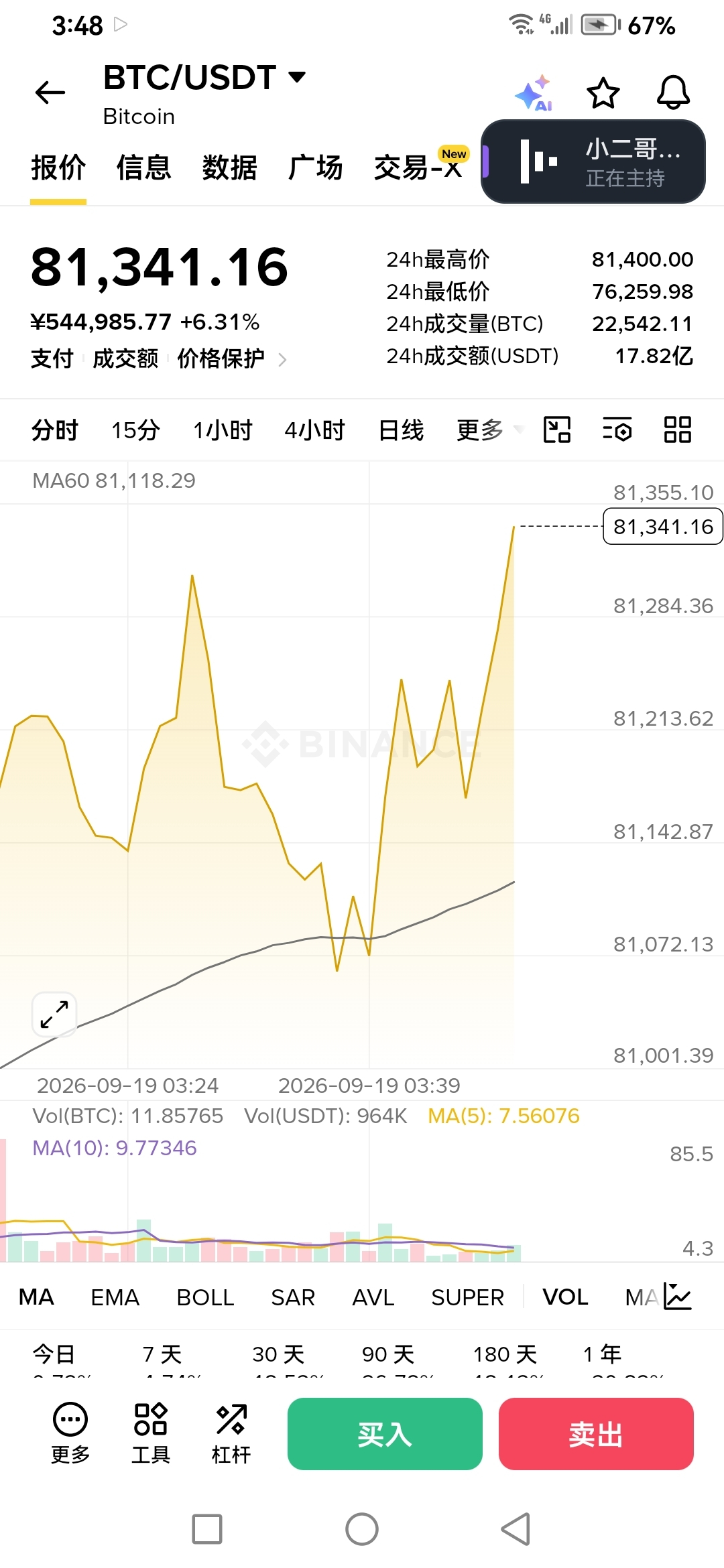
#BTC broke 80k quick delivery】Current price 81341, up 6.3% in 24h🔥
📌 Spot: If it pulls back to 81000 and doesn’t break, you can take it; target 82000-83000.
📌 Futures: Go long at 81200 with a light position, stop-loss 80500; short at 81800-82000 with a stop-loss 82500.
⚠️ Near the previous high, watch out for a price-spike “needle”—strictly use a stop-loss!
🧧 In the comments, type “888” to win red envelopes!
⚠️ For reference only, not investment advice. Risk is yours to bear.
BTC #Binance #Futures
📌 Spot: If it pulls back to 81000 and doesn’t break, you can take it; target 82000-83000.
📌 Futures: Go long at 81200 with a light position, stop-loss 80500; short at 81800-82000 with a stop-loss 82500.
⚠️ Near the previous high, watch out for a price-spike “needle”—strictly use a stop-loss!
🧧 In the comments, type “888” to win red envelopes!
⚠️ For reference only, not investment advice. Risk is yours to bear.
BTC #Binance #Futures


心月势不可挡
·
--
🔩Working Life|Screw Tightening at Work
On the road to making a living, don’t give up your passion
We’ve got to work hard—still, don’t lose the joy ✨
On the road to making a living, don’t give up your passion
We’ve got to work hard—still, don’t lose the joy ✨


NaiPi-奶啤
·
--
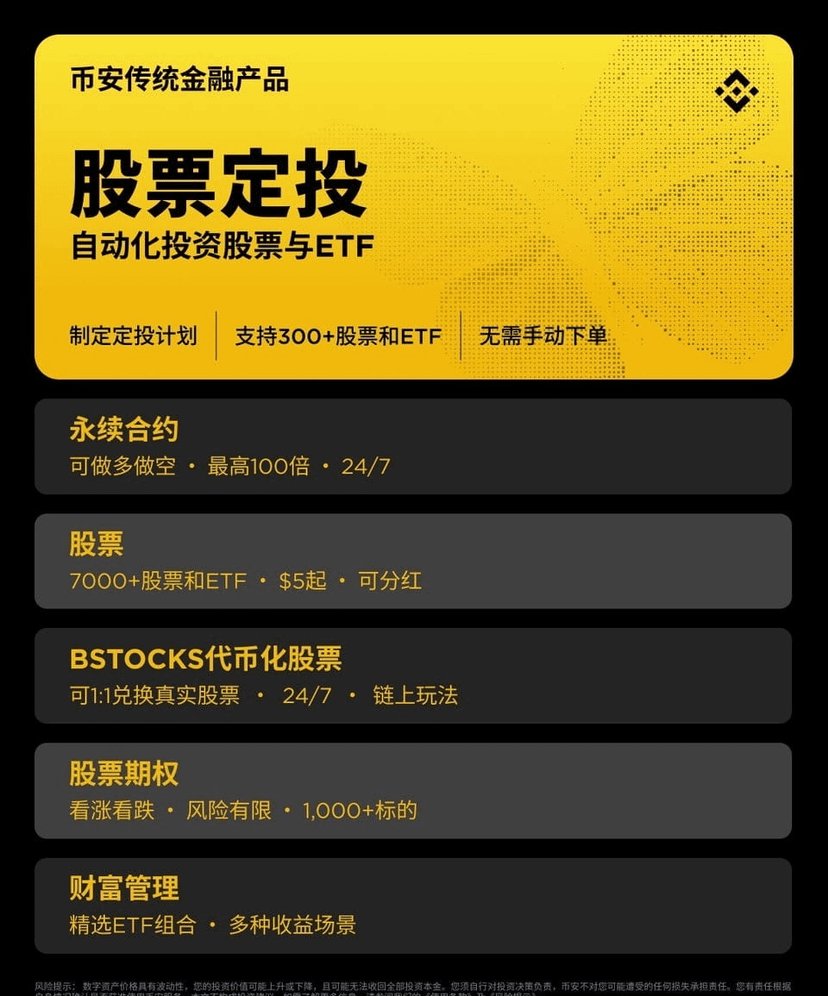
Binance now lets you invest in US stocks via scheduled investing!
Choose your own plan, with 300+ stock ETFs
No manual action needed—easy and quick
#bStocks
Choose your own plan, with 300+ stock ETFs
No manual action needed—easy and quick
#bStocks
@钞机八蛋
is speaking[LIVE] 🎙️ Did you make money on Saturday's market, friends?
8.6k listens

灼见
·
--
🚨 Bitcoin Breaks the $80,000 Mark!
But what’s truly worth paying attention to isn’t just that BTC finally reclaimed 80k.
It’s this:
After all these bad-news catalysts,
it still broke through.
In the past few days, the market faced:
🏦 Federal Reserve rate hikes
🇯🇵 Bank of Japan rate hikes
📈 Global interest rates staying high
💰 ETF flows swinging back and forth
Normally, none of this is the kind of environment Crypto likes.
But $BTC not only didn’t keep sliding lower—
it actually broke back above $80K.
This may signal an important shift:
The market is digesting the bad news, and buyers are starting to regain control.
However, a breakout is only step one.
Next, the real key is:
Can $80K turn from resistance into support?
If BTC can keep holding above 80k, the upside space may reopen.
If it quickly falls back below, then this breakout will need to be reassessed.
So I’m not chasing the first breakout candlestick.
I’m watching instead:
After the breakout—can it hold?
👇 What do you think?
Hold $80K 🟢 / Fakeout pullback 🔴
#BTC #ETH #BNB
But what’s truly worth paying attention to isn’t just that BTC finally reclaimed 80k.
It’s this:
After all these bad-news catalysts,
it still broke through.
In the past few days, the market faced:
🏦 Federal Reserve rate hikes
🇯🇵 Bank of Japan rate hikes
📈 Global interest rates staying high
💰 ETF flows swinging back and forth
Normally, none of this is the kind of environment Crypto likes.
But $BTC not only didn’t keep sliding lower—
it actually broke back above $80K.
This may signal an important shift:
The market is digesting the bad news, and buyers are starting to regain control.
However, a breakout is only step one.
Next, the real key is:
Can $80K turn from resistance into support?
If BTC can keep holding above 80k, the upside space may reopen.
If it quickly falls back below, then this breakout will need to be reassessed.
So I’m not chasing the first breakout candlestick.
I’m watching instead:
After the breakout—can it hold?
👇 What do you think?
Hold $80K 🟢 / Fakeout pullback 🔴
#BTC #ETH #BNB


DK短线复刻
·
--
Follow up to receive the red envelope 🎁🎁


橙子Joyce
·
--
BullishThe U.S. regulatory authorities have repeatedly released positive signals for the crypto market. Bitcoin (BTC.CC) ETF funds have resumed flowing back in. As the market gradually digests earlier negative factors—such as setbacks in crypto-related legislation and the Fed’s interest-rate hikes—crypto assets in the U.S. East Time zone surged collectively on Friday. Bitcoin reclaimed the $80,000 level, and crypto-related stocks also rose across the board.
Besides BTC and ETH, other major assets in the crypto market also moved higher in tandem, indicating that capital is not only concentrated in Bitcoin, but that a broader risk-on preference is being restored.
Allowing qualified platforms to trade tokenized stocks, the SEC’s stance; the CFTC, another major U.S. financial regulator, advancing a new crypto regulatory framework; and the return of Bitcoin ETF inflows—all became key factors behind the improvement in market sentiment. The market had previously feared that the CLARITY Act advancing in the Senate this Tuesday would become another wave of negative news for crypto assets. But judging by Friday’s market performance, this risk appears to have already been partially absorbed in earlier adjustments.
Bitcoin ETF inflows revive, risk appetite heats up in sync
Apart from regulatory updates, there are also signs of improvement in liquidity.
On Thursday U.S. East Time, a group of Bitcoin ETFs managed by firms such as BlackRock together recorded approximately $160 million in net inflows, ending the prior two consecutive days of outflows.
After the crypto market experienced a pullback, with Bitcoin briefly falling to multi-week lows, the return of ETF inflows combined with positive signals from regulators provided both liquidity support and sentiment support for Friday’s rebound.
Meanwhile, the macro environment also saw a temporary easing.
Earlier in the week, Brent crude oil prices had approached $110 per barrel, but on Friday they fell back to below $104. This eased the inflation and interest-rate pressures caused by the earlier rise in energy prices. The decline in oil prices reduced market worries about further rate increases, which also helped risk assets such as Bitcoin rebound.
This suggests that Friday’s rally was not driven solely by positive developments within crypto itself, but rather by the simultaneous rebound in regulatory policy, fund flows, and broader macro risk appetite.
———————————————————————————
We invest regularly in BTC, BNB, ETH, SOL
$BTC
$BNB
$SOL
Besides BTC and ETH, other major assets in the crypto market also moved higher in tandem, indicating that capital is not only concentrated in Bitcoin, but that a broader risk-on preference is being restored.
Allowing qualified platforms to trade tokenized stocks, the SEC’s stance; the CFTC, another major U.S. financial regulator, advancing a new crypto regulatory framework; and the return of Bitcoin ETF inflows—all became key factors behind the improvement in market sentiment. The market had previously feared that the CLARITY Act advancing in the Senate this Tuesday would become another wave of negative news for crypto assets. But judging by Friday’s market performance, this risk appears to have already been partially absorbed in earlier adjustments.
Bitcoin ETF inflows revive, risk appetite heats up in sync
Apart from regulatory updates, there are also signs of improvement in liquidity.
On Thursday U.S. East Time, a group of Bitcoin ETFs managed by firms such as BlackRock together recorded approximately $160 million in net inflows, ending the prior two consecutive days of outflows.
After the crypto market experienced a pullback, with Bitcoin briefly falling to multi-week lows, the return of ETF inflows combined with positive signals from regulators provided both liquidity support and sentiment support for Friday’s rebound.
Meanwhile, the macro environment also saw a temporary easing.
Earlier in the week, Brent crude oil prices had approached $110 per barrel, but on Friday they fell back to below $104. This eased the inflation and interest-rate pressures caused by the earlier rise in energy prices. The decline in oil prices reduced market worries about further rate increases, which also helped risk assets such as Bitcoin rebound.
This suggests that Friday’s rally was not driven solely by positive developments within crypto itself, but rather by the simultaneous rebound in regulatory policy, fund flows, and broader macro risk appetite.
———————————————————————————
We invest regularly in BTC, BNB, ETH, SOL
$BTC
$BNB
$SOL
灼见
·
--
🚨 Bitcoin Breaks the $80,000 Mark!
But what’s truly worth paying attention to isn’t just that BTC finally reclaimed 80k.
It’s this:
After all these bad-news catalysts,
it still broke through.
In the past few days, the market faced:
🏦 Federal Reserve rate hikes
🇯🇵 Bank of Japan rate hikes
📈 Global interest rates staying high
💰 ETF flows swinging back and forth
Normally, none of this is the kind of environment Crypto likes.
But $BTC not only didn’t keep sliding lower—
it actually broke back above $80K.
This may signal an important shift:
The market is digesting the bad news, and buyers are starting to regain control.
However, a breakout is only step one.
Next, the real key is:
Can $80K turn from resistance into support?
If BTC can keep holding above 80k, the upside space may reopen.
If it quickly falls back below, then this breakout will need to be reassessed.
So I’m not chasing the first breakout candlestick.
I’m watching instead:
After the breakout—can it hold?
👇 What do you think?
Hold $80K 🟢 / Fakeout pullback 🔴
#BTC #ETH #BNB
But what’s truly worth paying attention to isn’t just that BTC finally reclaimed 80k.
It’s this:
After all these bad-news catalysts,
it still broke through.
In the past few days, the market faced:
🏦 Federal Reserve rate hikes
🇯🇵 Bank of Japan rate hikes
📈 Global interest rates staying high
💰 ETF flows swinging back and forth
Normally, none of this is the kind of environment Crypto likes.
But $BTC not only didn’t keep sliding lower—
it actually broke back above $80K.
This may signal an important shift:
The market is digesting the bad news, and buyers are starting to regain control.
However, a breakout is only step one.
Next, the real key is:
Can $80K turn from resistance into support?
If BTC can keep holding above 80k, the upside space may reopen.
If it quickly falls back below, then this breakout will need to be reassessed.
So I’m not chasing the first breakout candlestick.
I’m watching instead:
After the breakout—can it hold?
👇 What do you think?
Hold $80K 🟢 / Fakeout pullback 🔴
#BTC #ETH #BNB

正乾商学--四条2
·
--
Are you really suited to make a living by trading?
Part [7]
After reading the previous few articles, let’s use our brains to think together:
Everyone doesn’t have to chase a single, unified “correct” answer—you can simply reply:
① If you currently have no trading income at all, do you still have enough stable sources of income to support your life?
② Does your current daily routine really fit the trading time you’re working with?
③ Do you think your personality is better suited to Scalping, Day Trading, or Swing Trading? Why?
④ What’s your biggest problem right now—are you “not good at trading,” or is your lifestyle environment itself not suitable for the way you’re trading right now?
There is no right answer.
I just hope that the “babes” can use these questions to reorganize your trading logic again.
If you’re interested in trading, feel free to leave a message in the comments or join the chat room to exchange ideas together—learn together and grow together!
#Zcash现货ETF月度净流入超2.3亿美元
#比特币突破8万美元大关
Part [7]
After reading the previous few articles, let’s use our brains to think together:
Everyone doesn’t have to chase a single, unified “correct” answer—you can simply reply:
① If you currently have no trading income at all, do you still have enough stable sources of income to support your life?
② Does your current daily routine really fit the trading time you’re working with?
③ Do you think your personality is better suited to Scalping, Day Trading, or Swing Trading? Why?
④ What’s your biggest problem right now—are you “not good at trading,” or is your lifestyle environment itself not suitable for the way you’re trading right now?
There is no right answer.
I just hope that the “babes” can use these questions to reorganize your trading logic again.
If you’re interested in trading, feel free to leave a message in the comments or join the chat room to exchange ideas together—learn together and grow together!
#Zcash现货ETF月度净流入超2.3亿美元
#比特币突破8万美元大关

静心1688
·
--
💥Give it your all, build up deep reserves, and may all your hard work echo back with results.🎉🎉🎉
#香港拟年底前推出批发CBDC #Bottomline推出Chainlink链上支付平台
#香港拟年底前推出批发CBDC #Bottomline推出Chainlink链上支付平台


圣克斯Lucky1688
·
--
🧧🎁🧧🎁🧧🎁
Around September 18, a series of important infrastructure upgrades, project pivots, and industry ecosystem developments took place in the blockchain sector:
1. The Vanar chain completed a major migration and formally shut down its independent L1 mainnet Vanar project. On September 18, it officially initiated the shutdown and liquidation procedures for its original independent Layer 1 blockchain. Before that, on September 17, the project had completed the migration of its token contracts, and trading of VANRY tokens on Ethereum and Polygon was formally paused, fully transitioning to the Base chain. This move marks its departure from the early era of independent public chains. In the future, its strategy will fully shift toward an AI application ecosystem built on the Base chain and “AI Organizations” (AI orgs) platform (such as the Foundry platform planned for release on October 1).
2. In mid-September, the industry’s pragmatic shift toward real-world Web3 business adoption accelerated. The focus of discussions in the Web3 space is moving faster from pure token speculation and concept hype toward “eliminating real-world friction in commerce.” Developers and startups are increasingly inclined to apply blockchain technology to scenarios that truly require multi-party trust, tamper-proof credentials, supply-chain anti-counterfeiting, and digital identity verification—while keeping sensitive data and core business logic off-chain. The emphasis is on “trust infrastructure is better than token theater.”
3. Global regional Web3 and blockchain conferences continued to advance. With mid-September approaching, Web3 technical events and conferences combining academia and industry (such as regional tech events like Brazil’s Web3 PE, etc.) are also rolling out in close succession. These discussions mainly focus on concrete deployment cases of blockchain in areas such as the digital economy, compliant payments, and the creative industries. Overall, as of September 18, the Web3 industry is undergoing structural adjustments: public-chain ecosystems are converging toward mainstream high-performance networks (such as Base) through architectural upgrades, while the industry’s application layer is becoming more pragmatic and compliant.
Follow me and get the $SOL red envelope in Answer 1!
🧧🎁🧧🎁🧧🎁
Around September 18, a series of important infrastructure upgrades, project pivots, and industry ecosystem developments took place in the blockchain sector:
1. The Vanar chain completed a major migration and formally shut down its independent L1 mainnet Vanar project. On September 18, it officially initiated the shutdown and liquidation procedures for its original independent Layer 1 blockchain. Before that, on September 17, the project had completed the migration of its token contracts, and trading of VANRY tokens on Ethereum and Polygon was formally paused, fully transitioning to the Base chain. This move marks its departure from the early era of independent public chains. In the future, its strategy will fully shift toward an AI application ecosystem built on the Base chain and “AI Organizations” (AI orgs) platform (such as the Foundry platform planned for release on October 1).
2. In mid-September, the industry’s pragmatic shift toward real-world Web3 business adoption accelerated. The focus of discussions in the Web3 space is moving faster from pure token speculation and concept hype toward “eliminating real-world friction in commerce.” Developers and startups are increasingly inclined to apply blockchain technology to scenarios that truly require multi-party trust, tamper-proof credentials, supply-chain anti-counterfeiting, and digital identity verification—while keeping sensitive data and core business logic off-chain. The emphasis is on “trust infrastructure is better than token theater.”
3. Global regional Web3 and blockchain conferences continued to advance. With mid-September approaching, Web3 technical events and conferences combining academia and industry (such as regional tech events like Brazil’s Web3 PE, etc.) are also rolling out in close succession. These discussions mainly focus on concrete deployment cases of blockchain in areas such as the digital economy, compliant payments, and the creative industries. Overall, as of September 18, the Web3 industry is undergoing structural adjustments: public-chain ecosystems are converging toward mainstream high-performance networks (such as Base) through architectural upgrades, while the industry’s application layer is becoming more pragmatic and compliant.
Follow me and get the $SOL red envelope in Answer 1!
🧧🎁🧧🎁🧧🎁



帮帮Bonnie
·
--
BearishLeave room for others, be broad‑minded with yourself. No harshness, no over‑criticism.
Leave leeway for others, be lenient to yourself. No harshness, no over‑criticism.
#BTC🔥🔥🔥🔥🔥 $BTC
Leave leeway for others, be lenient to yourself. No harshness, no over‑criticism.
#BTC🔥🔥🔥🔥🔥 $BTC


币圈现货小旋风
·
--
$牛来 Is this the rhythm of a bull market coming? Recently, the overall market has rebounded strongly, and the price action has been surging especially fast. Not only has Bitcoin and Ethereum been pushing upward, but a whole bunch of lesser altcoins have also collectively taken off. Many people are already getting excited, thinking that the official bull market has just begun, 💥
Everyone must be clear: what’s happening now is more of a rebound driven by capital rotation. Don’t see broad-based gains and blindly rush into altcoins. Whenever the market warms up again, capital usually pulls up the majors first, then goes on to trade smaller coin categories. When altcoins rise, the “profits” look enticing, but when they fall, they can drop much harder too. Many altcoins themselves lack fundamental support—so they rally quickly, but the pullbacks are just as fast! 💥
Even though market sentiment is hot right now, the macro-level pressures haven’t fully disappeared. News could bring a big wave of volatility at any time. A lot of retail traders, the moment they see altcoins spike, chase the price higher. That makes it easy to end up buying right at the top, 💥
For trading, don’t let short-term upward momentum cloud your judgment. If you already hold positions, you can take profits in batches to secure gains. If you haven’t entered yet, please never go all-in with a heavy position on altcoins. A real bull market can’t be confirmed just by a few days of broad-based pumping. Wait patiently for the overall market to hold above key resistance levels, manage your position size well, and remember: preserving your capital is always the first priority, 💥#比特币突破8万美元大关
Everyone must be clear: what’s happening now is more of a rebound driven by capital rotation. Don’t see broad-based gains and blindly rush into altcoins. Whenever the market warms up again, capital usually pulls up the majors first, then goes on to trade smaller coin categories. When altcoins rise, the “profits” look enticing, but when they fall, they can drop much harder too. Many altcoins themselves lack fundamental support—so they rally quickly, but the pullbacks are just as fast! 💥
Even though market sentiment is hot right now, the macro-level pressures haven’t fully disappeared. News could bring a big wave of volatility at any time. A lot of retail traders, the moment they see altcoins spike, chase the price higher. That makes it easy to end up buying right at the top, 💥
For trading, don’t let short-term upward momentum cloud your judgment. If you already hold positions, you can take profits in batches to secure gains. If you haven’t entered yet, please never go all-in with a heavy position on altcoins. A real bull market can’t be confirmed just by a few days of broad-based pumping. Wait patiently for the overall market to hold above key resistance levels, manage your position size well, and remember: preserving your capital is always the first priority, 💥#比特币突破8万美元大关






Log in to explore more content