A newcomer with less than 1500U in capital—#币圈 . The very first thing after entering the market is to completely戒掉 the mindset of going all-in, blindly chasing pumps, and fantasizing about doubling overnight. #新人必看
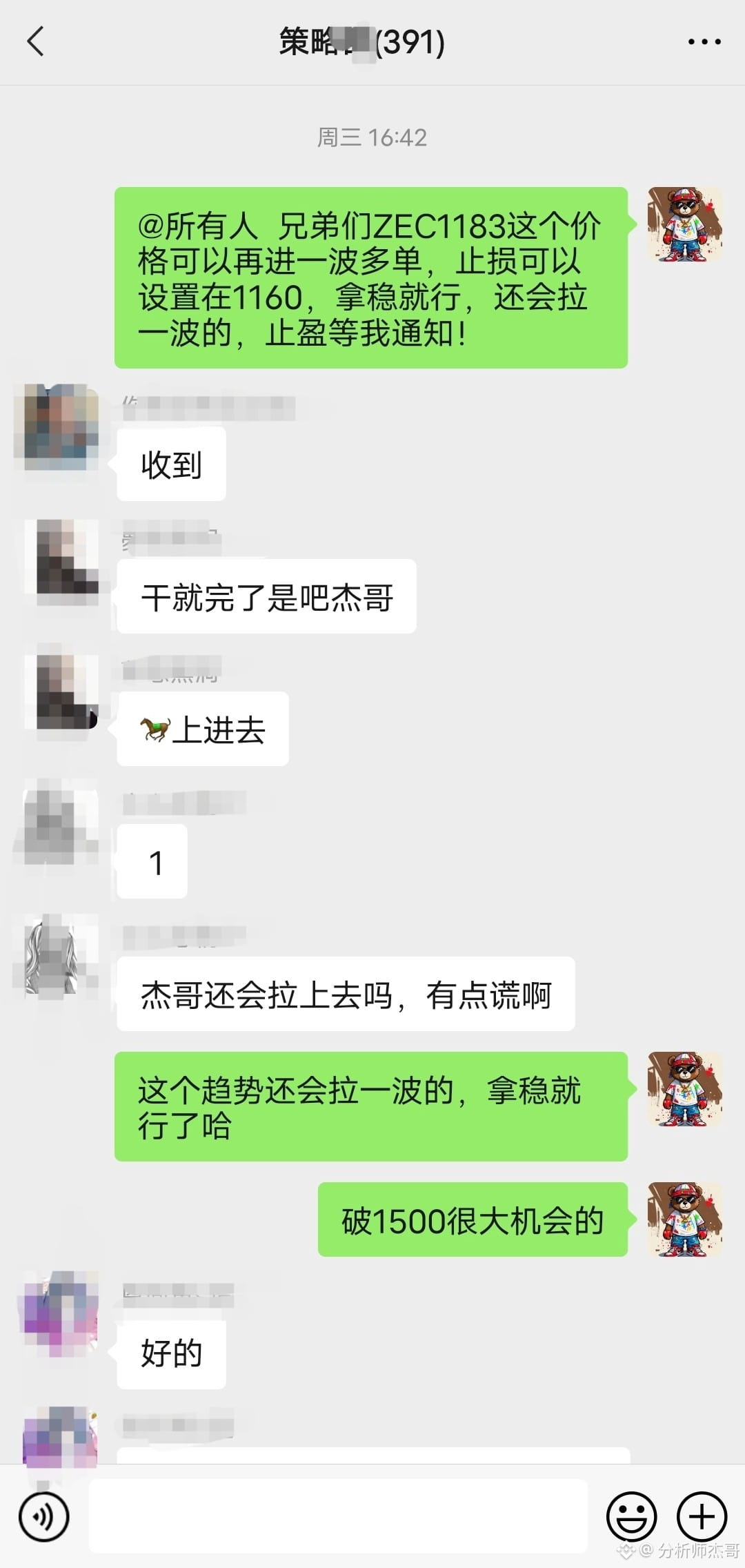
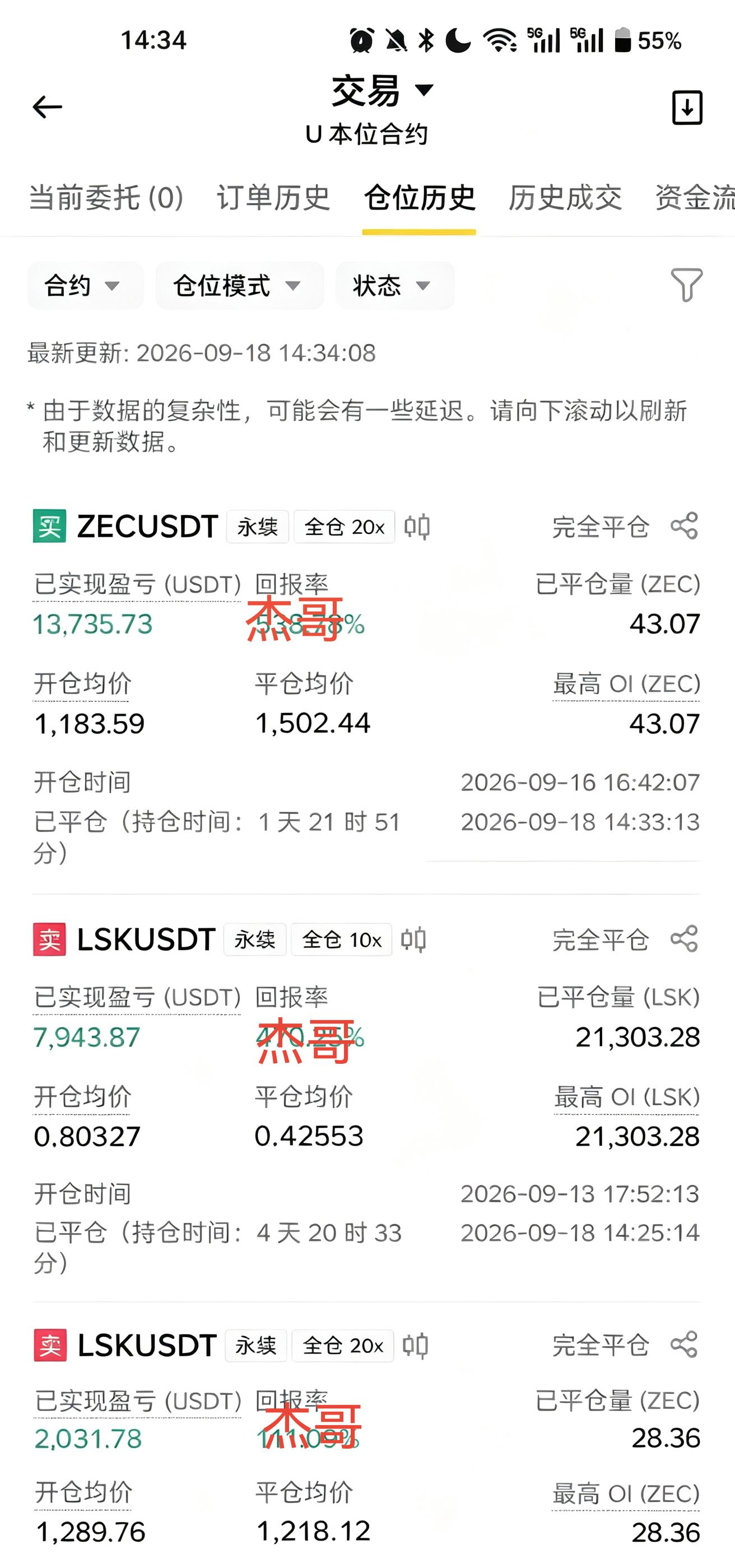
Before, there was a fan whose capital was only 1200U. From the start, he just wanted to make a bit of pocket money and follow the rules steadily. In four months, he reliably grew it to 38,000U, and throughout the whole process he never even came close to liquidation. It wasn’t based on any mysterious indicator—he simply pushed these few things to the extreme: position management, patience to stay in cash, and setting stop-loss/take-profit. $ZEC
First: split the 1200U into three parts—never fire all your bullets at once. Use 400U for intraday trades: only trade highly liquid majors like BTC and ETH. Take profit at around +3% per trade immediately, and if it hits -2%, exit right away. The key is to train execution, not to chase short-term extreme gains. 400U for swing trading: only trade the setups and market conditions he fully understands. If the risk-reward ratio doesn’t reach 1:3, he gives up. If there’s no suitable opportunity, he honestly stays in cash. The remaining 400U is kept as backup and doesn’t participate in any high-risk games. For small capital, the core is never to go all-in at once—it's to always leave yourself the ability to come back.
Second: learn to take initiative to stay in cash and cut out all ineffective actions. In the crypto market, there is simply no opportunity to make money every day. Most of the time, the market is range-bound and grinding. The longer you stare at the screen, the more you get itchy; when you see a big green candle you chase, and when you see a big red one you cut. Remember: if there’s no signal that meets your criteria, don’t move—wait until the daily trend, key support/resistance, and volume breakout all appear together before you act. Better to miss, than to trade just for the sake of trading.
Third: when profit hits the target, take it off the table in time. When the account profit reaches 20% of the principal, immediately withdraw 30% so that the floating gains on paper become real money. The remaining funds keep compounding, but under no circumstances—because of consecutive profitable trades—should you blindly add positions or raise leverage.
Finally, lock in three iron rules for yourself: if a single trade loses 2%, stop-loss decisively—never add to “average down” and dilute the cost. When you reach +4% profit, reduce the position by half first; the remaining position follows the trend. If you have consecutive losses for two days, force a 48-hour suspension—stay away from the screen and cool down to review.
The most deadly problem for small capital is never that you earn slowly—it’s that once you lose your head, you erase all your gains in one go. If your principal is under 1500U, don’t expect to turn everything around with one trade. Control every loss, reduce ineffective trades, and keep your principal alive—you’ll be the one who can wait for the real big move that belongs to you.
Before, there was a fan whose capital was only 1200U. From the start, he just wanted to make a bit of pocket money and follow the rules steadily. In four months, he reliably grew it to 38,000U, and throughout the whole process he never even came close to liquidation. It wasn’t based on any mysterious indicator—he simply pushed these few things to the extreme: position management, patience to stay in cash, and setting stop-loss/take-profit. $ZEC
First: split the 1200U into three parts—never fire all your bullets at once. Use 400U for intraday trades: only trade highly liquid majors like BTC and ETH. Take profit at around +3% per trade immediately, and if it hits -2%, exit right away. The key is to train execution, not to chase short-term extreme gains. 400U for swing trading: only trade the setups and market conditions he fully understands. If the risk-reward ratio doesn’t reach 1:3, he gives up. If there’s no suitable opportunity, he honestly stays in cash. The remaining 400U is kept as backup and doesn’t participate in any high-risk games. For small capital, the core is never to go all-in at once—it's to always leave yourself the ability to come back.
Second: learn to take initiative to stay in cash and cut out all ineffective actions. In the crypto market, there is simply no opportunity to make money every day. Most of the time, the market is range-bound and grinding. The longer you stare at the screen, the more you get itchy; when you see a big green candle you chase, and when you see a big red one you cut. Remember: if there’s no signal that meets your criteria, don’t move—wait until the daily trend, key support/resistance, and volume breakout all appear together before you act. Better to miss, than to trade just for the sake of trading.
Third: when profit hits the target, take it off the table in time. When the account profit reaches 20% of the principal, immediately withdraw 30% so that the floating gains on paper become real money. The remaining funds keep compounding, but under no circumstances—because of consecutive profitable trades—should you blindly add positions or raise leverage.
Finally, lock in three iron rules for yourself: if a single trade loses 2%, stop-loss decisively—never add to “average down” and dilute the cost. When you reach +4% profit, reduce the position by half first; the remaining position follows the trend. If you have consecutive losses for two days, force a 48-hour suspension—stay away from the screen and cool down to review.
The most deadly problem for small capital is never that you earn slowly—it’s that once you lose your head, you erase all your gains in one go. If your principal is under 1500U, don’t expect to turn everything around with one trade. Control every loss, reduce ineffective trades, and keep your principal alive—you’ll be the one who can wait for the real big move that belongs to you.