

When people talk about blockchain security, they often focus on hacks, scams, or stolen assets. But there is another important question:
How can blockchain systems make cryptographic keys easier and safer to manage?
A blockchain wallet ultimately depends on cryptographic keys to authorize actions. That makes key management a fundamental part of Web3 infrastructure.
🧠 Why Key Management Matters
Traditional apps often let users recover accounts with passwords or email verification. Blockchain systems can use very different mechanisms.
Future wallet infrastructure is exploring approaches such as:
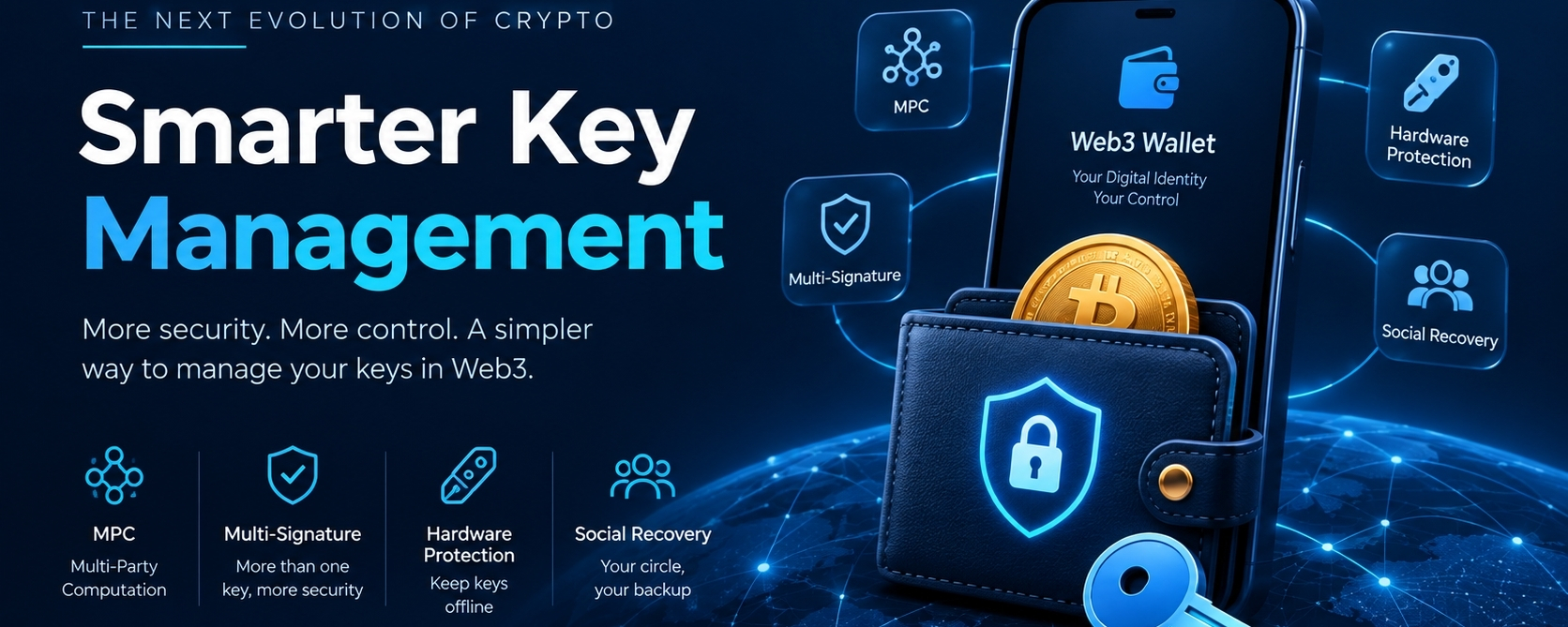
🔹 Multi-party computation (MPC) — distributing key-related control across multiple parties or devices.
🔹 Multi-signature systems — requiring authorization from more than one key before certain actions can happen.
🔹 Hardware-based protection — keeping sensitive cryptographic operations isolated from ordinary software.
🔹 Social recovery concepts — designing recovery mechanisms that don't depend on a single traditional password.
🌐 Beyond “Just a Wallet”
As Web3 applications become more complex, users may interact with many blockchain services through the same digital identity.
That means wallets may increasingly become more than places to store assets — they can act as security and authorization layers for digital activity.
🚀 The Bigger Picture
The future of blockchain isn't only about faster networks or new applications.
It is also about making cryptographic security more practical, understandable, and resilient for everyday users.
💬 Question:
Do you think future blockchain wallets should focus more on advanced security features or keeping the experience extremely simple?
#Crypto #Blockchain #Web3 #CyberSecurity #MPC #DigitalAssets