I came across a picture and suddenly felt it was quite interesting.
From a historical-geographical perspective, different regions within China seem to have formed fascinating “portraits” of people.
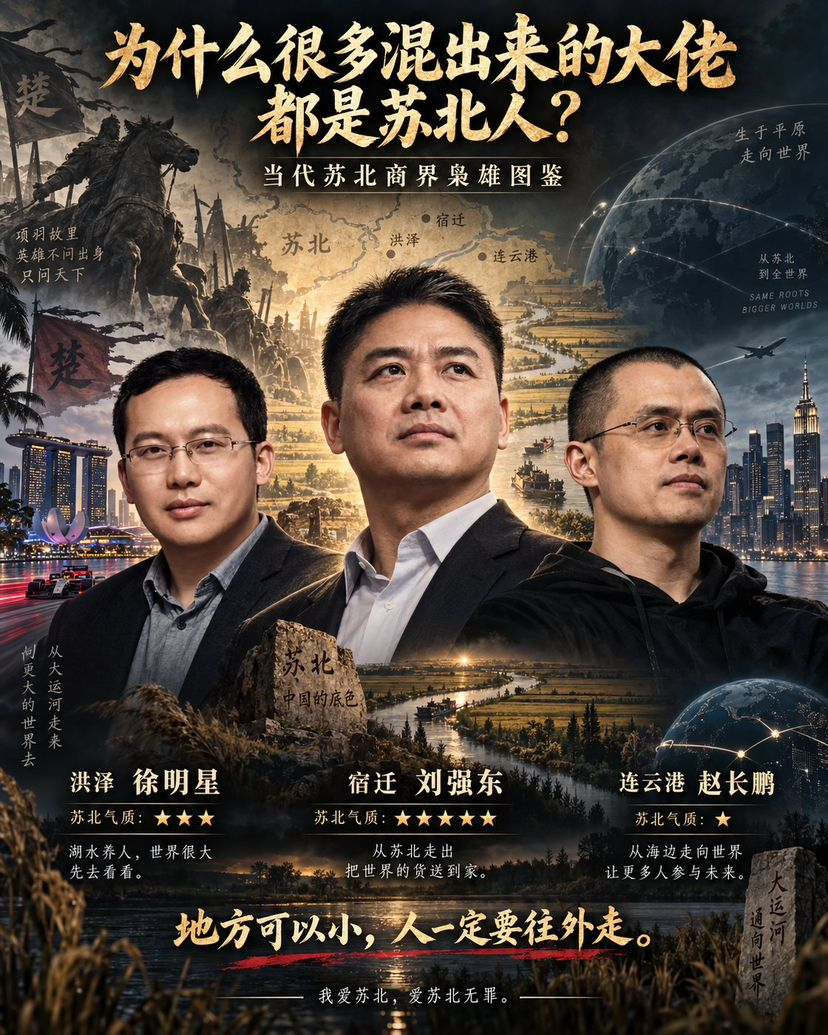
Qi and Lu produce officials; Jiangsu and Zhejiang produce the wealthy; Northern Jiangsu produces bold heroes.
Qi and Lu are at the heartland of Confucian culture—home of Confucius and Mencius. With deep-rooted traditions of the imperial examinations and scholar-officials, they long cultivated a cultural path of “studying—entering public office.”
Jiangsu and Zhejiang have dense river networks and a developed commercial environment. Especially after the Song and Yuan periods, the economic center of gravity shifted southward. In the Ming and Qing dynasties, they formed extremely developed traditions of handicraft industries, commerce, and finance. (Song culture had a very broad impact historically; even today, in places like Fujian, Jiangsu-Zhejiang, Chaoshan, and others, local culture has also been influenced by the Song dynasty’s southern migration.)
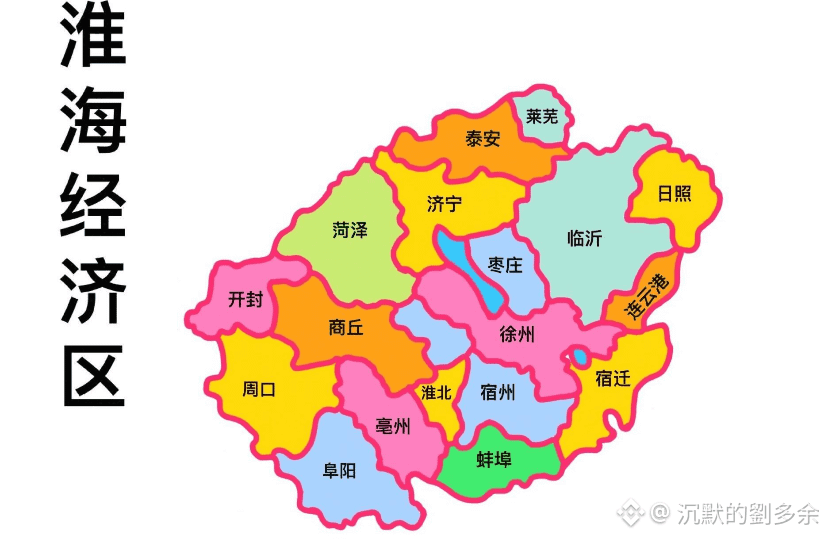
As for Northern Jiangsu, it lies in the hinterland of the Huaihai region.
This is an important passageway connecting the north and the south, as well as a meeting point among the Central Plains, Qi and Lu, Chu territory, and Jianghuai.
Transportation brings wealth, war brings population movement, and in chaotic times, individual competition is amplified.
Historically, the Huaihai region was a crossroads connecting five provinces—an “empire’s hometown.”
Its most important features are dense population, a more orderly society, and therefore easier mobilization and administration.
In the modern era’s civil war between the Kuomintang and the Communist Party, forces could be rapidly expanded and trained—also because troops were stationed in the Huaihai region.
During the Huaihai Campaign, the East China Field Army, the Central Plains Field Army, and local forces投入约60万人左右, mobilizing more than 5 million local people in an extremely short period.
Cultural issues…
$BTC $ETH
From a historical-geographical perspective, different regions within China seem to have formed fascinating “portraits” of people.
Qi and Lu produce officials; Jiangsu and Zhejiang produce the wealthy; Northern Jiangsu produces bold heroes.
Qi and Lu are at the heartland of Confucian culture—home of Confucius and Mencius. With deep-rooted traditions of the imperial examinations and scholar-officials, they long cultivated a cultural path of “studying—entering public office.”
Jiangsu and Zhejiang have dense river networks and a developed commercial environment. Especially after the Song and Yuan periods, the economic center of gravity shifted southward. In the Ming and Qing dynasties, they formed extremely developed traditions of handicraft industries, commerce, and finance. (Song culture had a very broad impact historically; even today, in places like Fujian, Jiangsu-Zhejiang, Chaoshan, and others, local culture has also been influenced by the Song dynasty’s southern migration.)
As for Northern Jiangsu, it lies in the hinterland of the Huaihai region.
This is an important passageway connecting the north and the south, as well as a meeting point among the Central Plains, Qi and Lu, Chu territory, and Jianghuai.
Transportation brings wealth, war brings population movement, and in chaotic times, individual competition is amplified.
Historically, the Huaihai region was a crossroads connecting five provinces—an “empire’s hometown.”
Its most important features are dense population, a more orderly society, and therefore easier mobilization and administration.
In the modern era’s civil war between the Kuomintang and the Communist Party, forces could be rapidly expanded and trained—also because troops were stationed in the Huaihai region.
During the Huaihai Campaign, the East China Field Army, the Central Plains Field Army, and local forces投入约60万人左右, mobilizing more than 5 million local people in an extremely short period.
Cultural issues…
$BTC $ETH