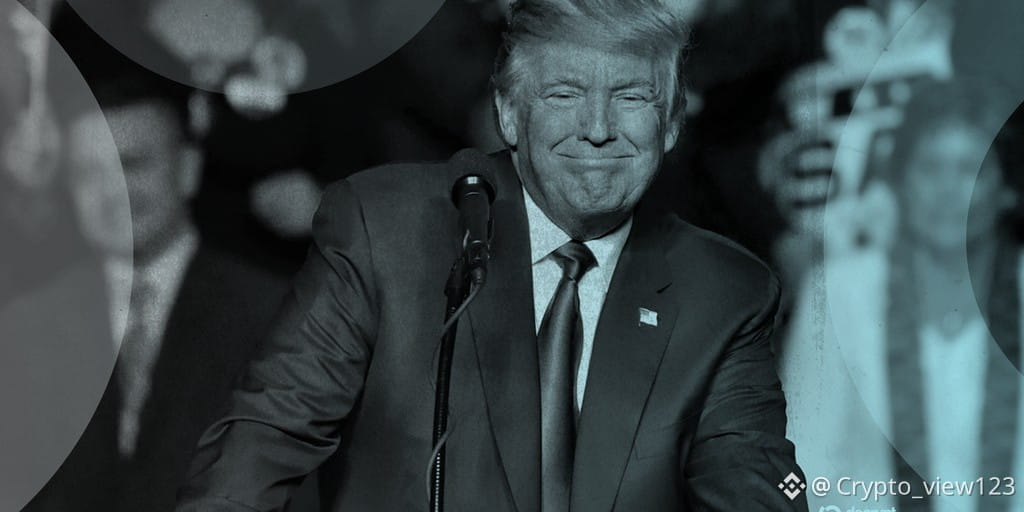
Waas said two sentences: one admitted that the economy under Trump was doing well, and the other completely set aside calls for rate cuts. Put together, these two lines aren’t a slip of the tongue—they’re pricing, like someone first pushes the door open, then gently shuts it.
Acknowledging that the economy is doing well is like laying a foundational pillar for the legitimacy of rate hikes: since the fundamentals are fine, there’s nothing to justify cutting rates. Refusing to cut rates, meanwhile, is the newly appointed chair using an unpopular decision once to trade for long-term credibility. This kind of window is very short; once it closes, every subsequent decision will be read as a response to politics.
For the market, what matters isn’t whether rates were actually raised this time, but that the idea of “rate cuts being systematically delayed” has been confirmed. The loosening expectations embedded in asset prices must eventually be discounted by time; push it back by a quarter and all valuation models that depend on low interest rates have to be recalculated.
So there isn’t much informational content in what he said; the next meeting will have it. If political pressure truly works, it will show up first in the dot plot rather than in news headlines. One observable checkpoint: if the median rate for the next policy meeting is revised downward, then this refusal was purely performative; if not, then the words “central bank independence”—those few—this time have been written in action.
#美联储 #比特币 #macroeconomics
Acknowledging that the economy is doing well is like laying a foundational pillar for the legitimacy of rate hikes: since the fundamentals are fine, there’s nothing to justify cutting rates. Refusing to cut rates, meanwhile, is the newly appointed chair using an unpopular decision once to trade for long-term credibility. This kind of window is very short; once it closes, every subsequent decision will be read as a response to politics.
For the market, what matters isn’t whether rates were actually raised this time, but that the idea of “rate cuts being systematically delayed” has been confirmed. The loosening expectations embedded in asset prices must eventually be discounted by time; push it back by a quarter and all valuation models that depend on low interest rates have to be recalculated.
So there isn’t much informational content in what he said; the next meeting will have it. If political pressure truly works, it will show up first in the dot plot rather than in news headlines. One observable checkpoint: if the median rate for the next policy meeting is revised downward, then this refusal was purely performative; if not, then the words “central bank independence”—those few—this time have been written in action.
#美联储 #比特币 #macroeconomics