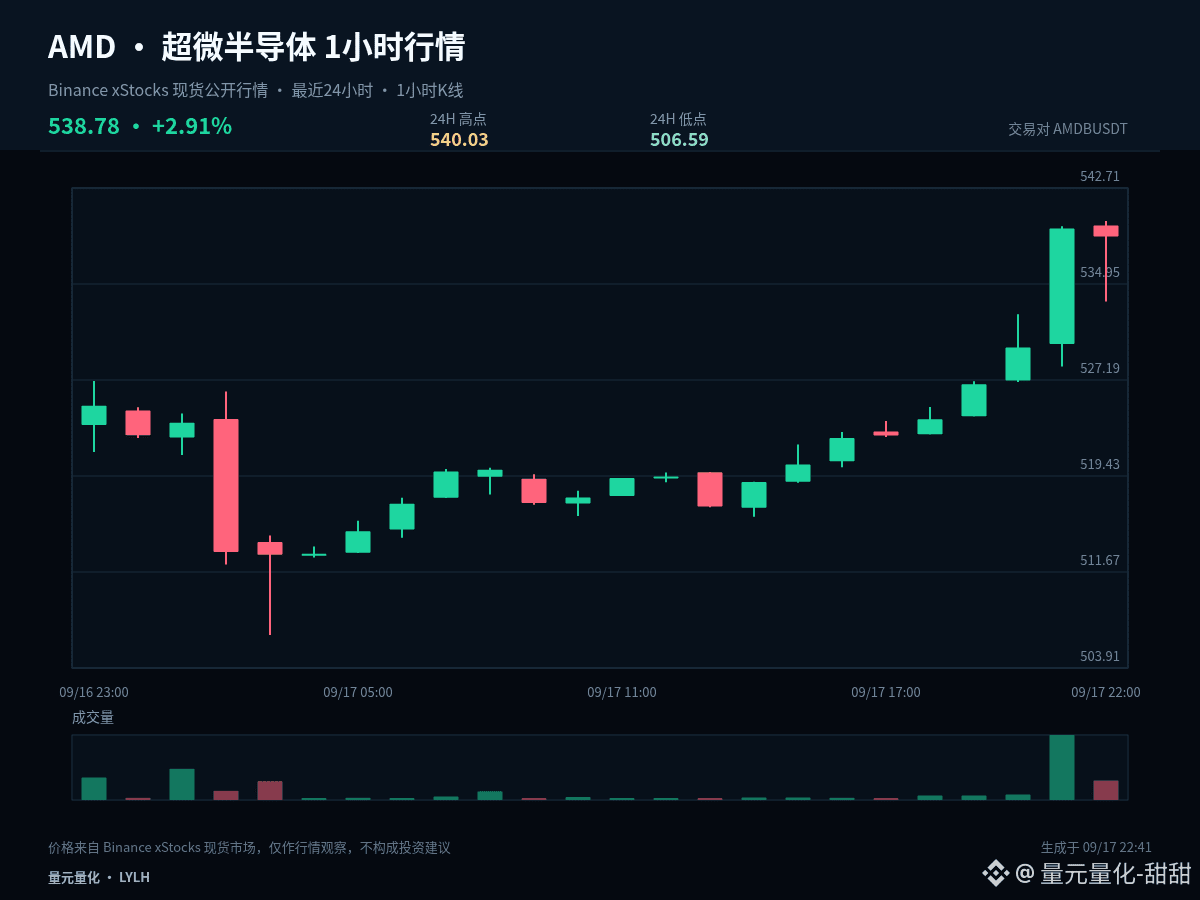
$AMDB #AMD This time, we break down the situation from a position-holding perspective. The same chart shows different key points for existing positions versus being in cash. Current price: 538.78, 1-hour: -0.12%, 24-hour: +3.19%.
The current price is near the upper bound of the last 24 hours of fluctuation. In the past hour it’s -0.12%, and over 24 hours it’s +3.19%. The most important thing at the highs is to confirm “acceptance” after a breakout: if price can stay above the upper band, it indicates the market recognizes a higher range. If it only briefly pierces and then quickly returns, you need to guard against a false breakout.
For holders of existing positions, watch whether 506.59 breaks down. If it does, reduce risk exposure first. For those currently in cash, wait for the low point to stop moving downward and confirm that the price has moved back above 523.31—don’t catch too early while the downtrend structure is still unfolding.
For execution, set clear conditions. After a breakout above 540.03, you need confirmation—not chasing just because of a momentary surge. After a dip to 506.59, you need to see whether it can quickly rebound—not buy just because you see the price falling. When the middle range doesn’t offer sufficient odds, waiting itself is also part of the strategy.
Position management should distinguish between mid-term and short-term. For mid-term positions already held, first assess whether the structure is broken; don’t let repeated swings on a single 1-hour candlestick constantly influence you. For short-term positions, execute around support, resistance, and closing confirmation. If you’re in cash, there’s no need to chase prices in the middle of the range—waiting for a clearer location usually has the advantage.
The focus of short-term positioning is not predicting every single candlestick, but ensuring there are reasons behind entries, trimming, and exits. Do less without confirmation; when a key level fails, rebuild the plan. Control risk per trade first, then discuss the potential upside later.
#HyperliquidUSDCSupplyOvertakesSolana
The current price is near the upper bound of the last 24 hours of fluctuation. In the past hour it’s -0.12%, and over 24 hours it’s +3.19%. The most important thing at the highs is to confirm “acceptance” after a breakout: if price can stay above the upper band, it indicates the market recognizes a higher range. If it only briefly pierces and then quickly returns, you need to guard against a false breakout.
For holders of existing positions, watch whether 506.59 breaks down. If it does, reduce risk exposure first. For those currently in cash, wait for the low point to stop moving downward and confirm that the price has moved back above 523.31—don’t catch too early while the downtrend structure is still unfolding.
For execution, set clear conditions. After a breakout above 540.03, you need confirmation—not chasing just because of a momentary surge. After a dip to 506.59, you need to see whether it can quickly rebound—not buy just because you see the price falling. When the middle range doesn’t offer sufficient odds, waiting itself is also part of the strategy.
Position management should distinguish between mid-term and short-term. For mid-term positions already held, first assess whether the structure is broken; don’t let repeated swings on a single 1-hour candlestick constantly influence you. For short-term positions, execute around support, resistance, and closing confirmation. If you’re in cash, there’s no need to chase prices in the middle of the range—waiting for a clearer location usually has the advantage.
The focus of short-term positioning is not predicting every single candlestick, but ensuring there are reasons behind entries, trimming, and exits. Do less without confirmation; when a key level fails, rebuild the plan. Control risk per trade first, then discuss the potential upside later.
#HyperliquidUSDCSupplyOvertakesSolana