
🟡 @justinsuntron has just announced the Justin Sun Prize, inspired by the Nobel
His idea: the wealth born from mathematics should return to it, remembering that two mathematicians devised elliptic curve cryptography in 1985 and never made a penny from the revolution they made possible
There is no Nobel Prize for mathematics. The Fields Medal is awarded every 4 years, and Abel every year. Justin infers that this pace is now obsolete: today, AI explores ten thousand paths for a theorem, and a conjecture can be proven in days
A prize every four years sounds like a slow bell in a changing world in an instant
The design is radically simple: it rewards the solution, not the person. No galas, no nominations, no age limit—it recognizes two roles: the one who proves and the one who formalizes the theorem so a machine can verify it line by line.
Human, AI, or both: only the result matters
Everything lives on-chain: public, immutable, verifiable funds within 100 years. Sun only decides which problems are included and how much they’re worth; nothing more
Justin says this is his biggest possible contribution to humanity
“No trust is required. Verification is mathematical”
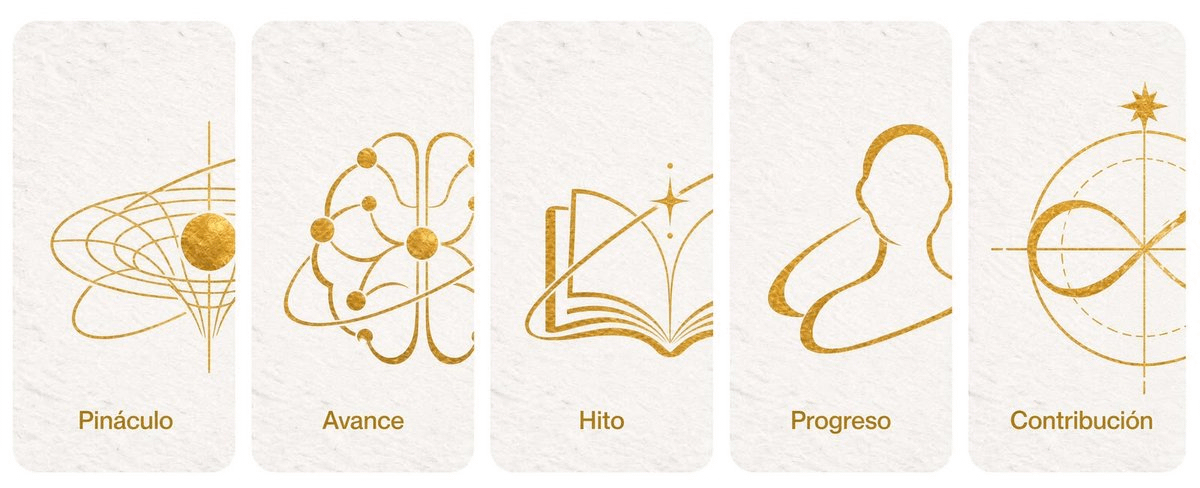
Sun has already published the first 66 problems of the prize, with an open list on GitHub, with the motto: “Quod probatur, solvitur”—what is proved is paid
Everything is publicly accessible: the problem list, verification criteria, and the proofs—non-profit: every dollar goes to the prize
At the top are the 7 “Pinnacle Problems,” each with 1 million USD
They are the great classics: the Riemann Hypothesis, P vs NP, the Birch–Swinnerton-Dyer conjecture, the Hodge conjecture, Navier–Stokes in 3D, Yang–Mills and its mass gap, and the Poincaré conjecture
The announcement says “66,” but the full catalog on GitHub already goes beyond 1,000 problems—the 66 are the inaugural batch
“I’m not a mathematician—I’m just an observer and a benefactor. The rest is up to the proofs” @justinsuntron