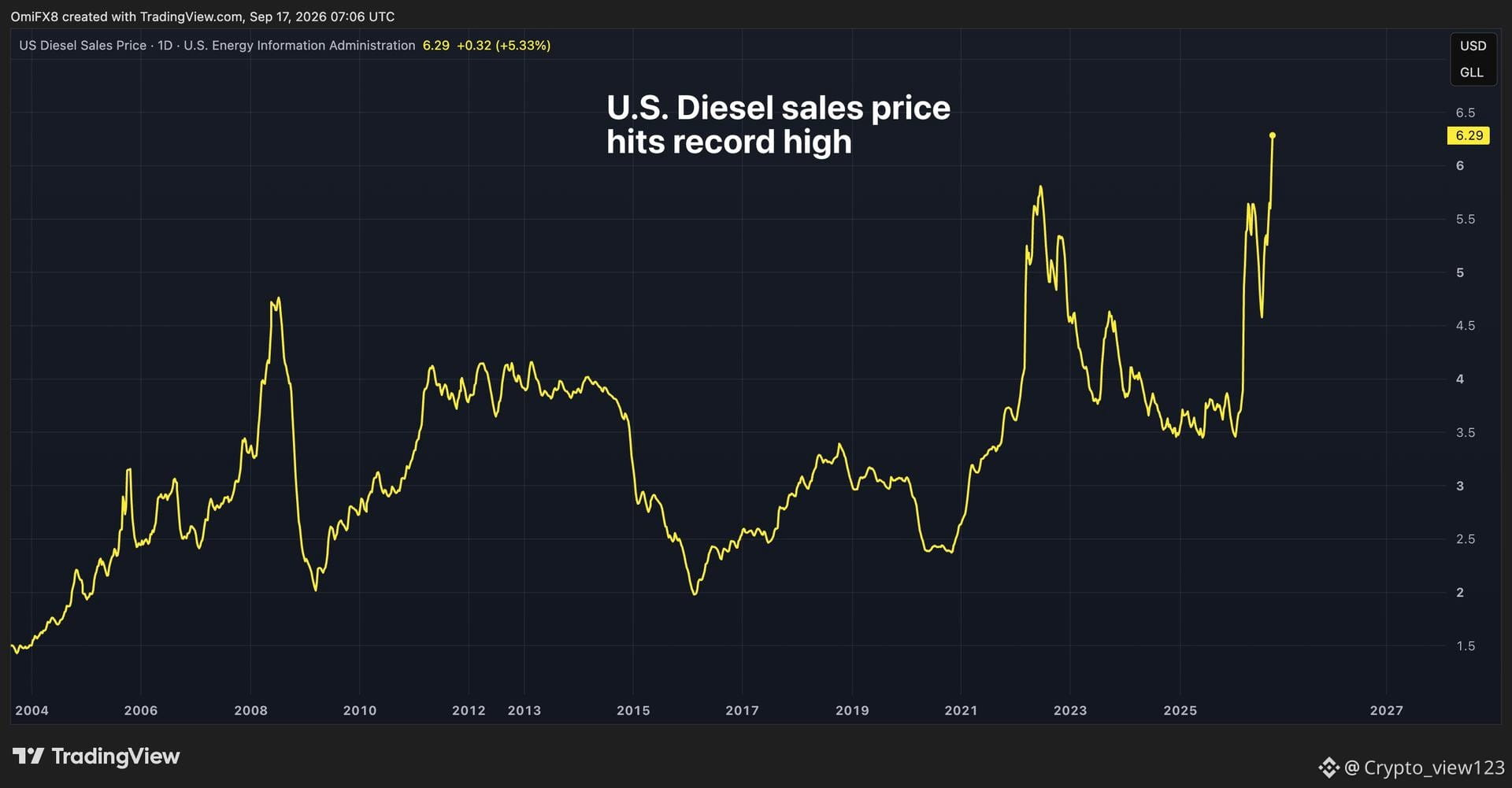
Diesel is the hardest “old furniture” to remove in this round of inflation. Gasoline can be replaced with electric vehicles, and natural gas can be replaced with electricity—but diesel can’t. Trucks, agricultural machinery, and ships are all big machines with replacement cycles measured in decades. So when diesel rises, it’s not just the price of fuel that goes up; it’s the freight cost of everything. With freight costs rising together, like dampness, it seeps from coastal warehouses all the way into inland store shelves.
Diesel is not a consumer good; it’s a cost item. Whatever it rises by will be reflected in as many freight bills, which then seep from those bills into core inflation. The central bank watches diesel even more tightly than crude oil, because freight costs are hard to unwind later.
U.S. diesel prices hit a new high, while both bitcoin and gold weakened at the same time. This unlikely pairing of old partners rarely goes silent together: if it were for hedging, gold should be smiling; if it were about inflation expectations, bitcoin should be smiling. When neither smiles, the market is thinking only one thing—interest rates still need to go higher. In that moment, the safe-haven asset is U.S. dollar cash, not any “anti-inflation” narrative.
So the phrase “digital gold” needs to be discounted in real tightening. It’s more like a long-duration growth stock: when interest rates rise, it falls first; when liquidity returns, it rallies later. Judging by how it responds to real yields is more accurate than judging by inflation.
Verification isn’t hard: if within a month diesel prices clearly drop, while bitcoin is still falling, then this round of decline has nothing to do with inflation—it’s wind blowing in from somewhere else.
#美联储 #比特币 #Macro
Diesel is not a consumer good; it’s a cost item. Whatever it rises by will be reflected in as many freight bills, which then seep from those bills into core inflation. The central bank watches diesel even more tightly than crude oil, because freight costs are hard to unwind later.
U.S. diesel prices hit a new high, while both bitcoin and gold weakened at the same time. This unlikely pairing of old partners rarely goes silent together: if it were for hedging, gold should be smiling; if it were about inflation expectations, bitcoin should be smiling. When neither smiles, the market is thinking only one thing—interest rates still need to go higher. In that moment, the safe-haven asset is U.S. dollar cash, not any “anti-inflation” narrative.
So the phrase “digital gold” needs to be discounted in real tightening. It’s more like a long-duration growth stock: when interest rates rise, it falls first; when liquidity returns, it rallies later. Judging by how it responds to real yields is more accurate than judging by inflation.
Verification isn’t hard: if within a month diesel prices clearly drop, while bitcoin is still falling, then this round of decline has nothing to do with inflation—it’s wind blowing in from somewhere else.
#美联储 #比特币 #Macro